
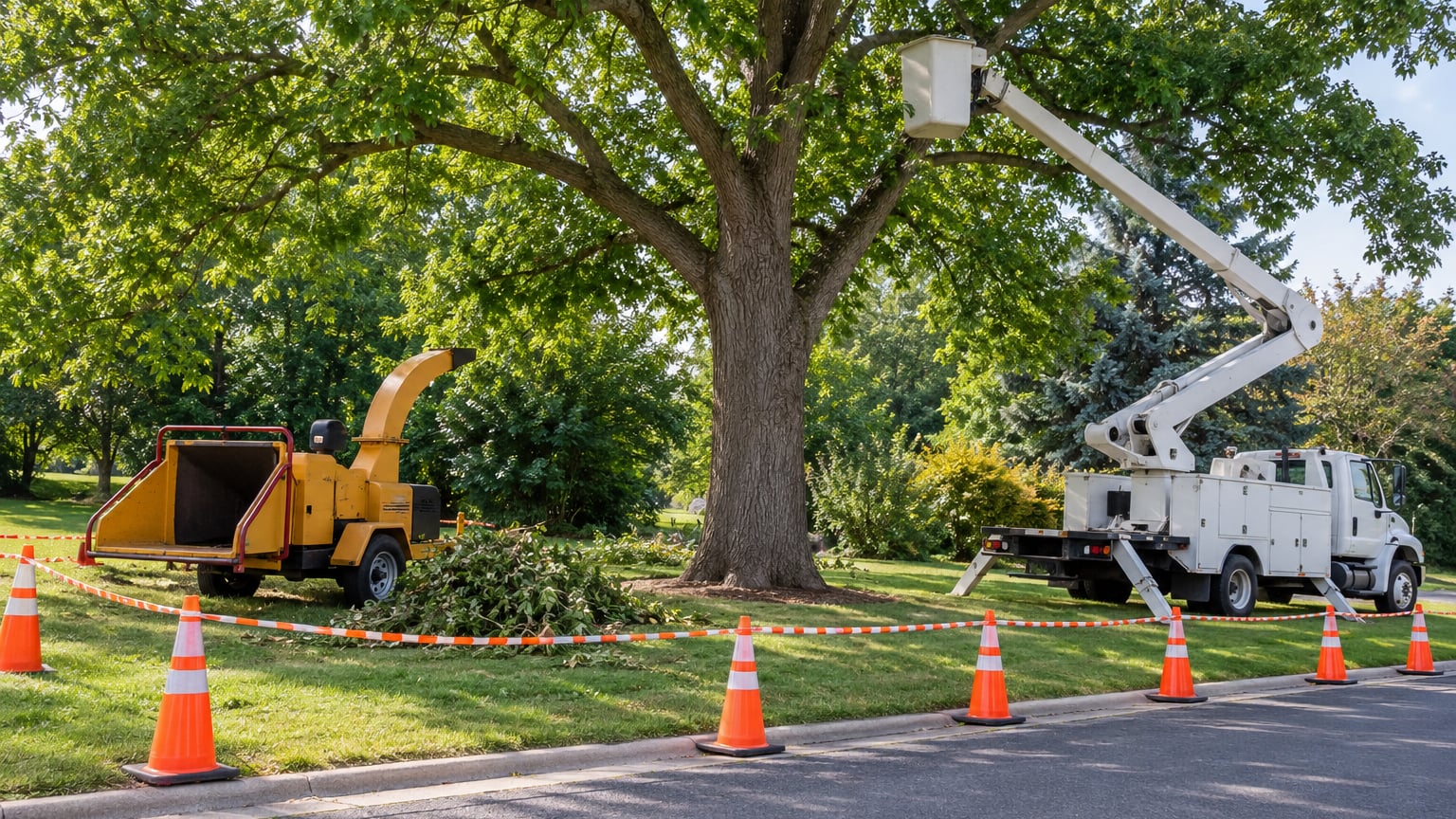
Tree trimming safety tips come down to one habit: decide before the saw starts whether the job is safe to do at all. Safe tree work means assessing the tree and the ground, keeping a hard distance from power lines, inspecting every tool before it is used, controlling the area where material lands, and having a plan for emergencies. That applies to professional crews, utility line-clearance workers, groundskeepers, and to anyone with a pole saw and a ladder in the yard.
The reason this deserves that much attention is not abstract. Industry associations, citing Bureau of Labor Statistics data, report that tree workers are injured at roughly three times the rate of the average worker, and that fatality rates for tree work sit at least 15 times higher than the all-sector average. Falls to lower levels account for roughly 44 percent of fatal tree work injuries. You can read more about the underlying approach in our tool safety inspection checklist guide.
Table of Contents
- Tree Trimming Safety Tips at a Glance
- 1. Assess the Trees and Work Area Before Starting
- 2. Check Weather, Lightning, and Wind Conditions
- 3. Locate Power Lines and Maintain Electrical Clearance
- 4. Inspect Tools, Equipment, and Work Ropes
- 5. Create a Work Zone and Control Access
- 6. Use Fall Protection and Control the Drop Zone
- 7. Plan Chainsaw and Aerial-Lift Operations
- 8. Communicate Clearly and Assign Roles
- 9. Manage Fatigue, Heat, and Hydration
- 10. Handle Material Without Causing Injury or Damage
- 11. Prepare for Injuries and Other Emergencies
- 12. Stop Work and Reassess When Conditions Change
- Tree Trimming Safety Tips Homeowners Can Apply Themselves
- Frequently Asked Questions
- How far should workers stay from power lines while trimming trees?
- Should employers stop tree trimming during rain or high winds?
- What personal protective equipment is required for tree trimming?
- How often should chainsaws, ropes, and harnesses be inspected?
- Who should be kept out of the area while branches are being removed?
- Conclusion
Tree Trimming Safety Tips at a Glance
Each tip below pairs a rule with the moment it applies and the hazard it controls. Use the table as a job briefing outline, then read the section for the operational detail.
| Tip | When to apply it | Hazard it controls |
|---|---|---|
| Assess tree and site | Before tools come out of the truck | Failure of unseen decay and unstable ground |
| Check weather | Start of shift and again at midday | Wind sway, lightning, wet and icy surfaces |
| Locate power lines | At every job site, including small residential work | Electrocution and electrical arcing |
| Inspect tools and ropes | Before first use and after any drop | Chain failure, rope and webbing failure |
| Set a controlled work zone | Before the first cut | Struck-by injuries to the public and crew |
| Use two means of being secured | Any time work happens above ground | Falls from height |
| Plan saw and lift operations | Before each cut and each lift setup | Kickback, crush injuries, lift overturning |
| Assign roles and signals | At the job briefing | Miscommunication with a running saw or a suspended load |
| Manage fatigue and heat | Throughout the day | Poor balance, slow reactions, dehydration |
| Handle material deliberately | During lowering and chipping | Dropped material, pinch points, roller injuries |
| Prepare for emergencies | Before aerial work begins | Delayed rescue and first aid |
| Stop and reassess | Any time conditions change | Committing to work that has become unsafe |
1. Assess the Trees and Work Area Before Starting
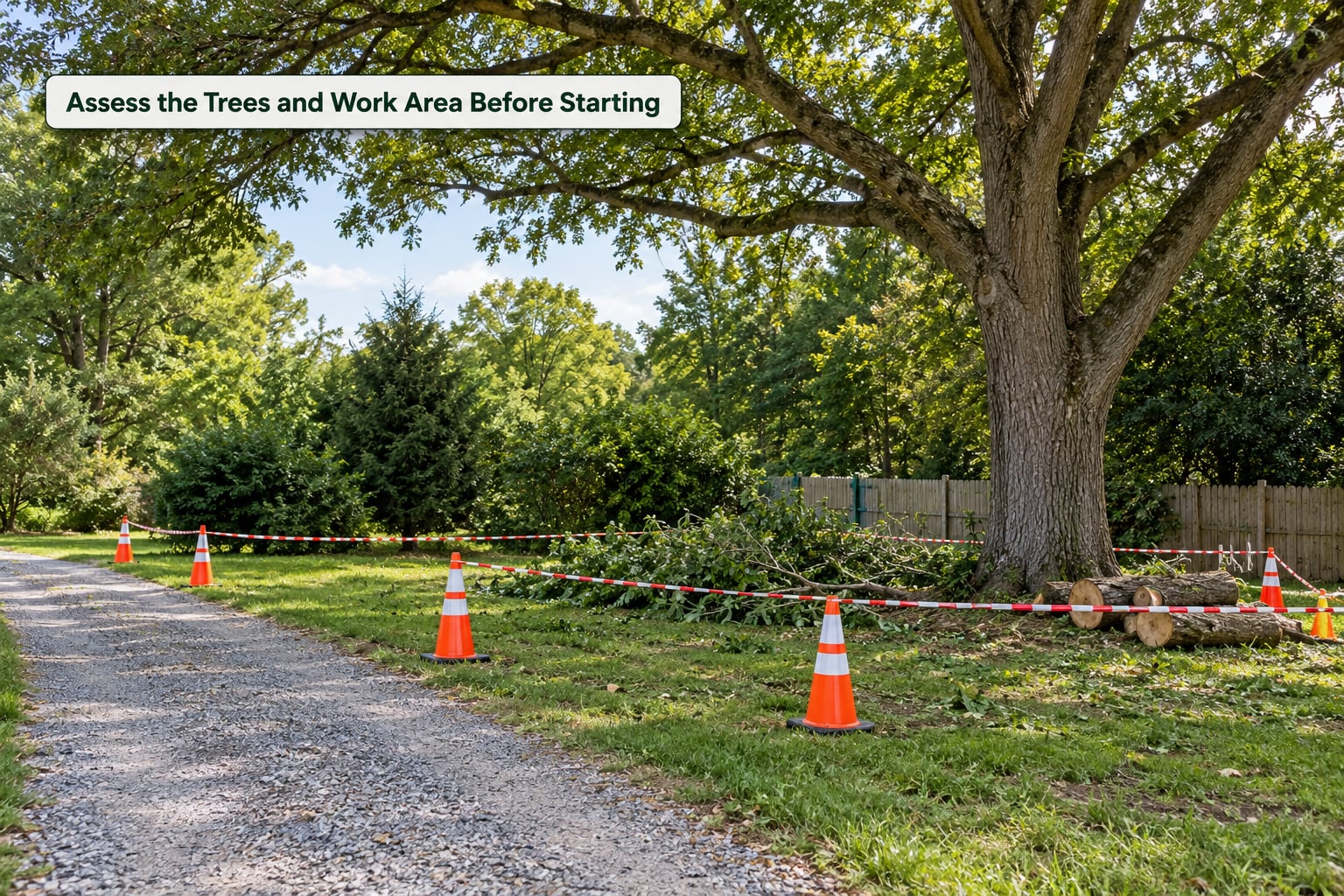
Every tree is a different job, so the assessment starts from the ground and never gets skipped because a crew has trimmed a hundred similar trees. Look at the root collar for excavation damage or soil loss, the trunk for cracks, cavities, and fungal conks, and the limbs for deadwood, included bark, and splits at unions. A hollow trunk can look solid from twenty feet away.
Then work outward. Identify overhead conductors, communication lines, and service drops. Check the access route for mud, ice, slope, and traffic. Walk the escape paths a climber would use and note where a climber can reach the ground in an emergency. Finally, identify who else has a reason to be there: neighbours, parked cars, a bus stop, a school route, a dog on a lead.
Concrete example: a crew arrives to lower two large dead limbs from a mature silver maple over a residential street. The trunk has a longitudinal crack at a union, the ground under the tree is soft after three days of rain, and a parked car sits inside the drop zone. The correct call is to postpone, mark the area, and return once the ground has drained and the crack has been assessed. No cut is a legitimate decision on site.
2. Check Weather, Lightning, and Wind Conditions
Stop work for wind, storms, lightning, rain, ice, or a forecast that is about to change. Wet bark changes grip, rain-soaked climbing lines stay slick, and ice turns every branch surface into a slide. Heat matters too, especially for a climber in chaps working in full sun with no airflow.
A supervisor should set numeric stop-work thresholds in the job briefing rather than relying on judgement alone in the moment. Common practice is to suspend climbing and aerial work when sustained wind makes the tree sway noticeably, when thunder is within hearing distance, or when a storm system is forecast to arrive before the job ends. Anyone on the crew should be able to call the stop.
Check conditions again after lunch. A calm morning does not speak for the afternoon, and rescoping work after the weather turns is competent practice rather than lost production.
3. Locate Power Lines and Maintain Electrical Clearance
Assume every line is energized until the utility confirms otherwise. Ten feet is the working boundary that qualified line-clearance trimmers treat as a hard limit, and anyone closer to that distance is doing utility work, not general tree care, with different training, different rules, and a notification call to the utility first.
Distinguish the three electrocution mechanisms so the risk is concrete: direct contact with a conductor, indirect contact through a conductive tool such as a pole saw, ladder, or climbing line, and electrical arcing where a gap that looked safe is bridged. Wet vegetation conducts, so a tree touching a line is more dangerous after rain, not less.
Stop whenever the position of a line is uncertain or safe separation cannot be maintained. A grower cannot read voltage from the ground, and a spotter on the ground does not make an aerial position safe near conductors.
4. Inspect Tools, Equipment, and Work Ropes
Inspect before first use, not when something feels wrong. For a saw, check chain tension, chain sharpness, bar oil, the chain brake, throttle lockout, and the chain catcher. A dull or worn chain increases kickback risk, so a saw that needs work comes out of service rather than getting a quick field adjustment.
For climbing equipment, examine the full body fall-arrest belt, the work-positioning lanyard, the climbing line, carabiners, and connectors for cuts, glazing, chemical damage, corrosion, or deformed gates. Check labels and retirement dates. Anything damaged or contaminated goes out of service and is tagged so it cannot quietly return to the truck. Our tool safety inspection checklist walks through a documented inspection routine.
Inspect aerial devices too: fluid levels, tyre condition, outrigger pads, controls, and overhead clearance. Record the inspection. A signed log is the difference between a guess and a defensible record when something goes wrong.
5. Create a Work Zone and Control Access
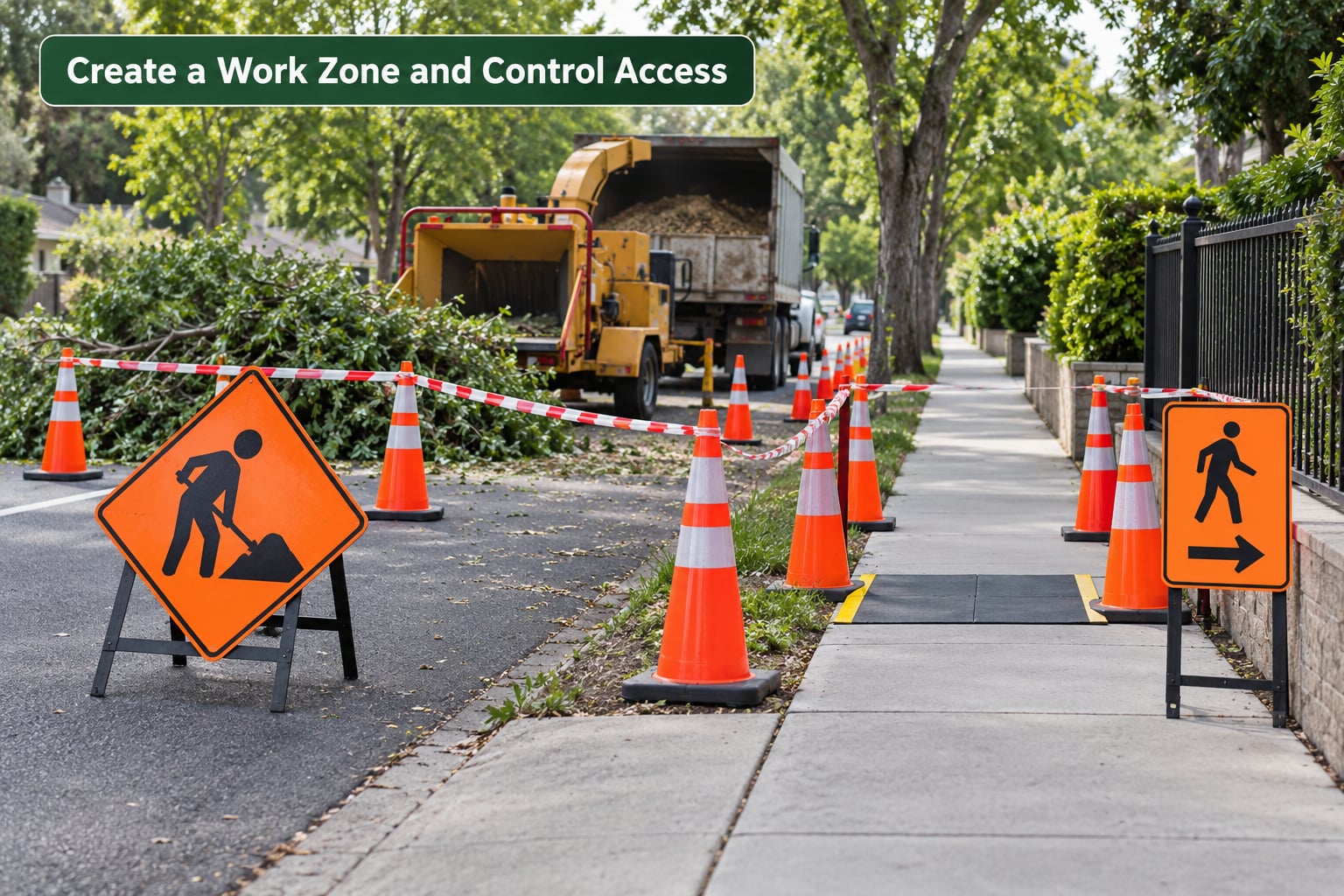
Set up a work zone before the first cut, not after someone walks into it. For felling and large removals, the exclusion zone should be roughly twice the height of the tree. For pruning, size the area to the length of the longest branch that could fall, and add room for the swing of a lowered limb.
Place cones, barricades, and warning signs along the perimeter, then walk it. Check that the boundary blocks pedestrian access while leaving a deliberate opening for emergency vehicles. On a street job, control traffic and use a spotter whose only job is the road. Post signs early, before the equipment arrives, so nobody enters a zone that is not yet set up.
Keep the public, vehicles, pets, and your own crew outside the area where material may land. The ground person who is inside that zone is a hazard, not a helper.
6. Use Fall Protection and Control the Drop Zone
Any work above ground needs two independent means of being secured, typically a climbing line plus a work-positioning lanyard, with the fall-arrest system rated and inspected. Never free climb, and never anchor to the limb you are cutting, because that limb fails or shifts exactly as the saw bites into it.
Falls usually happen when a climber disconnects their line to reposition, or when the anchor point fails or gets cut off. Move deliberately, keep three points of contact, and move one hand or foot at a time. Never climb while holding a saw or other equipment; a ground partner passes tools up after the climb is complete.
Control the drop zone as actively as you control the fall risk. Tether tools so nothing falls on the person below, check under and around the tree between every cut rather than once at the start, and step back to about a 45 degree angle from the trunk so a branch that jumps when released does not land on you.
7. Plan Chainsaw and Aerial-Lift Operations
A saw is operated two-handed, with the chain brake within reach, started on the ground or locked between the legs, and kept away from any fuel or hot surface. Grip the front handle with the thumb wrapped, keep the saw below shoulder level, and never cut overhead while standing in a strained position. Plan for kickback by watching for the upper front quadrant of the bar, cutting on the side that keeps that quadrant out of the wood, and never pushing past the tip of the bar.
For felling, set the notch on the fall side before the back cut, use a control line to confirm the direction of fall, and clear the exclusion zone first. Check for anything that redirects a falling tree, such as a fence, a vehicle, or a slope.
For aerial lifts, set up on level ground, chock and stabilise the unit, deploy outriggers on pads, and confirm overhead clearance before the boom rises. A bucket is not automatically safer than climbing. Workers who overreach from a bucket without restraint cause lift falls, and no one stands on the operator’s blind side or inside the drop zone.
8. Communicate Clearly and Assign Roles
Name the people before the work starts: a qualified lead who runs the job, a ground person, an aerial lift operator where a lift is in use, and a spotter. A qualified tree worker is someone with documented training and on-the-job experience who can identify hazards and has shown correct equipment use, and that status belongs to a named person rather than to whoever is nearest the saw.
Agree on hand and radio signals, including one universal stop signal that anyone can call for any reason. Set stop-work authority for everyone on site. A second trimmer near lines should stay within voice range. Agree the plan for lowering material by rope, who signals each release, and what happens if a rope jams mid-descent.
Re-brief when the plan changes. A new cut, a different method of access, or a swapped piece of equipment is not a small adjustment; it is a new job briefing.
9. Manage Fatigue, Heat, and Hydration
Tree work is heavy, awkward, and repetitive, and most non-fatal injuries in this trade are musculoskeletal rather than dramatic. Repetitive strain, awkward lifting, twisting under load, and working overhead for hours straight all build toward the injury that ends a season or a career.
Rotate crews so nobody spends a full shift aloft, schedule breaks rather than waiting until someone flags fatigue, and keep water and electrolytes on site. Watch for heat stress signs, and pair workers so one person watches for slurred speech, poor balance, slowed responses, or confusion in the other. Shade and rest matter in summer.
Stop work when fatigue or heat affects judgement, balance, or concentration. A tired climber’s mistake happens at ten feet instead of thirty. Our fatigue risk management basics for safety teams framework sets out a fuller approach to shift design and monitoring.
10. Handle Material Without Causing Injury or Damage
Plan where every piece of material goes before you release it. Branches get roped and lowered rather than dropped, and a tag line lets the ground crew steer a swinging limb away from fences, cars, and rooftops.
Wood chippers cause serious injuries every season. Feed material from the side of the hopper with hands outside the intake, keep the feed area clear of other crew, shut the machine down before clearing a jam, and never reach into a hopper that has not been locked out. Position the chip so its discharge does not point at traffic, windows, or footpaths.
Keep away from pinch points at the truck, the chipper chute, and between stacked logs, and never stand where material can roll toward you. Gloves and safety boots matter here more than most people expect, because handling wood is what fills hands with splinters and crushes fingers.
11. Prepare for Injuries and Other Emergencies
Emergencies are rare and unpredictable, which is why the preparation happens before anyone climbs. Confirm that a first aid kit and trained first aider are on site, that emergency services numbers and the site address are known to every worker, and that the access route stays usable for an ambulance at all times.
Crew members must be trained in aerial rescue and in climbing emergency procedures before they are allowed to work at height. A suspension tolerance plan matters too, because a worker hung in a belt has a limited time before circulation problems become serious.
Address communication failure, since a worker without radio contact in the crown is a rescue problem waiting to happen. Plan for fire, vehicle incidents, and equipment failure. Direct severe or concerning symptoms, including loss of consciousness, chest pain, suspected spinal injury, uncontrolled bleeding, or electrical contact, to emergency services and medical care immediately rather than trying to manage them on site. Writing the response down as a procedure is covered in our guide to how to write a standard operating procedure for safety.
12. Stop Work and Reassess When Conditions Change
Stop and reassess whenever a storm arrives, an unexpected utility line shows up, the tree shifts or cracks during cutting, the ground becomes unstable, someone enters the work zone, equipment malfunctions, a worker reports illness or injury, or communication breaks down. None of these are interruptions to be pushed through. Each one invalidates the assessment that made the job safe to start.
Work resumes only after the hazard is reassessed and the plan is rebuilt. Sometimes that means a new approach, new equipment, a second crew, or a different day. The safest tree work is often the work you decide not to do.
Tree Trimming Safety Tips Homeowners Can Apply Themselves
Homeowners cover the same ground with a much smaller scope. Treat any job that needs a ladder, a chainsaw, or proximity to overhead lines as professional work and hire a certified arborist for a written opinion before deciding anything. For small jobs, stay on the ground with hand tools, keep bystanders and pets well clear, work in dry daylight with no wind, and never lean a ladder overreach or set it on uneven ground. If a crew arrives without every person wearing helmets and saw protection, that is a reasonable moment to pause the job and ask questions.
Frequently Asked Questions
How far should workers stay from power lines while trimming trees?
Ten feet is the working boundary that qualified line-clearance trimmers treat as a hard limit. Work closer than that is utility line clearance, not general tree care: it requires different training, a notification call to the utility, and in some cases de-energising the line. Treat every line as energized, watch for indirect contact through a pole saw, ladder, or climbing line, and stop whenever you cannot confirm the line’s position or your separation from it.
Should employers stop tree trimming during rain or high winds?
Yes. Rain makes bark, ropes, and climbing lines slick and changes how a tree loads, while wind adds sway that can throw a branch or a body well outside the normal drop zone. Lightning means everyone comes down immediately. Set numeric stop-work thresholds at the morning briefing, check conditions again after lunch, and treat a forecast storm as a reason to finish early or reschedule.
What personal protective equipment is required for tree trimming?
The core set for all tree work is an impact-rated helmet, safety glasses or a face shield, hearing protection, high-visibility clothing, non-slip safety boots, and leather gloves. Chainsaw work adds cut-resistant trousers or chaps. Work at height adds a full body fall-arrest system with a work-positioning lanyard and a climbing line. Every worker on site, including ground crew and spotters, wears the protective gear their role requires.
How often should chainsaws, ropes, and harnesses be inspected?
Inspect before first use on every shift, and again after any drop, any repair, or any incident that could have loaded the equipment. Look at chain tension and sharpness, bar oil, brake function, and throttle lockout on saws. On ropes, lines, carabiners, and fall-arrest gear, check for cuts, glazing, corrosion, deformed gates, and past retirement dates. Damaged gear is tagged and removed from service, not repaired informally in the truck.
Who should be kept out of the area while branches are being removed?
Everyone who is not part of the working crew, including the crew’s own ground person. Size the exclusion zone to the material: roughly twice the height of the tree for felling, and the length of the longest branch for pruning, plus room for a lowered limb to swing. Set cones, barricades, and signs before the first cut, then walk the perimeter to confirm pedestrians and traffic are outside it and an emergency access point is still open.
Conclusion
Before the first cut, document the work-zone plan with its boundaries and drop zone, confirm the distance to every power line, inspect the saw and the climbing gear, and name the people responsible for communication and for stopping the job. These tree trimming safety tips only work as habits when they happen before the work does, not after something has already gone wrong.