
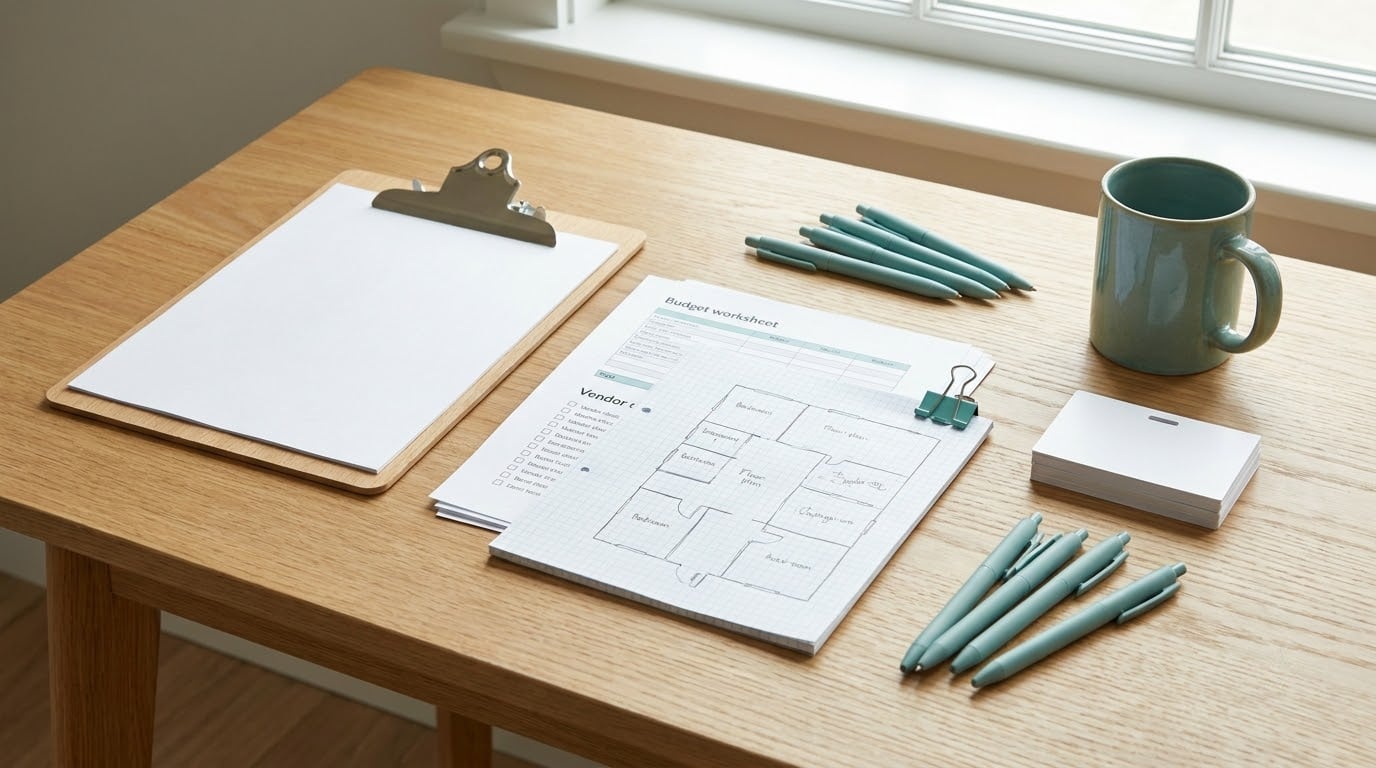
Running a workplace health fair comes down to nine steps: set the goal and the budget, pick a date and an accessible venue, build a planning team, choose topics and booths, recruit and vet vendors, promote it, prepare for privacy and accessibility, run the day, and measure results before you call it done. Most fairs need 8 to 12 weeks of lead time and a handful of named owners, not a full events department.
The part that decides whether it works has very little to do with the giveaways. It is whether employees believe the event is voluntary, free, and private. People skip optional wellness programming when they suspect the results end up in their file, and HR teams hear about that suspicion for years afterwards.
This guide covers the whole operation, from the first planning meeting to the follow-up report. The same procedure works whether you have 20 employees in one room or 2,000 spread across three sites and four shifts.
One note before we start. A health fair connects people to care and to reliable health information. It does not diagnose anyone, and this guide does not give medical advice. Anything personal belongs with a doctor, pharmacist or registered dietitian.
Table of Contents
- The Nine Steps at a Glance
- What You Need to Run a Health Fair at Work
- Step-by-Step
- Define the Fair’s Purpose and Audience
- Build a Planning Team and Work Backward From the Date
- Choose Topics, Booths, and Activities Worth the Space
- Recruit and Vet Vendors
- Create the Budget and Logistics Plan
- Promote the Fair So Employees Actually Show Up
- Prepare for Privacy, Accessibility, and Safety When You Run a Health Fair at Work
- Run the Event and Check the Experience
- Evaluate Results and Follow Up
- Common Mistakes
- Frequently Asked Questions
- What are good ideas for a workplace health fair?
- How do I get employees to actually attend a health fair at work?
- How much does a workplace health fair cost?
- How long should a workplace health fair run?
- Which health screenings are appropriate for a workplace health fair?
- Can workplace health fair screenings create HIPAA or privacy problems?
The Nine Steps at a Glance
- Define the purpose, the audience, and what success looks like in numbers.
- Build a planning team and work backward from a fixed date.
- Choose health topics and booth formats that match what employees actually struggle with.
- Recruit vendors and put credentials, privacy and insurance terms in writing.
- Build the budget and the logistics plan, including the costs nobody quotes first.
- Promote the fair so it reaches shift, hourly, remote and office staff equally.
- Prepare for privacy, accessibility and on-the-day safety.
- Run the event with a run-of-show, named owners and a feedback check at the end.
- Evaluate participation and follow-up, then report back and build the next one.
What You Need to Run a Health Fair at Work
Gather these before you announce anything. A fair that stalls at week four usually stalled because one of these was missing and nobody owned it.
People and ownership
Every item needs a name against it, not a department. You need a project lead who can make decisions, a vendor coordinator, a communications person, a finance approver, an IT or facilities contact, and two or three employee ambassadors from different shifts or sites. Ambassadors are the cheapest trust investment you will make.
Planning documents
Start with a working timeline, a budget worksheet, a vendor roster with contact details and status, a floor plan, a run-of-show, a signage list, a consent form for any screening, and a simple evaluation form. Keep them in one shared folder. Most missed deadlines are communication failures, not planning failures.
Budget categories
Break the budget into lines before you see a single quote: venue and setup, screening fees per test, staffing and overtime, printed materials, interpretation and translation, transportation, accessibility services, sanitation, insurance certificates, prizes and giveaways, technology or registration, food, and a contingency. That last line is not optional. Budget overruns on event day come from power, printing and last-minute staffing, not from the main vendors.
Vendor information
For every screening provider and wellness organization, collect licensing and credentials, the certifications the people performing the tests hold, a certificate of insurance with your company named as additional insured, their privacy and data-retention policy, their accessibility provisions, their cancellation terms, and proof of any insurance coverage claim you intend to make. If the vendor cannot supply a data-handling policy in writing, treat that as a no.
Accessibility and language requirements
Know the route from the nearest transit stop to the room entrance, whether there is an accessible restroom on the same floor, the door width, the elevator situation, and where accessible parking sits. Decide in advance which languages you need. Ask employees which ones through an anonymous survey, because guessing gets it wrong and you will not get a second chance on the day.
Measurement tools
Decide how you will count people before the event. The minimum useful set: headcount at check-in, completion rate per screening, number of follow-up appointments or referrals taken, and a short satisfaction survey. Add a privacy-preserving optional follow-up survey at 60 and 90 days if you want to know whether anything stuck.
Workplace policies to check first
Read your employee handbook for anything touching health data, recording, photography, guest access and visitors, food in the workplace, and attendance during work time. Check whether your insurance carrier already offers a health fair benefit, because many carriers provide screenings or a wellness platform at no cost to you in exchange for visibility.
Step-by-Step
Define the Fair’s Purpose and Audience
Start with the health question, not the event. Write down the three problems your workforce is most affected by, using whatever evidence you already hold: claims data, absence records, your most recent survey answers, or the topics employees asked about in your last engagement pulse. Then name who the fair is for, because “everyone” is not an audience. Front-desk staff, warehouse crews, night-shift operators and fully remote teams face different health questions and reach the event differently.
Set a target participation rate before you plan anything else. For a large workforce, 25 to 40 percent attendance on event day is a realistic aim; for a small company, most of your headcount. Smaller fairs often run 2 to 3 hours inside a shift rather than a full day.
Success check: you can describe the fair in one sentence that names the audience, the topics and the number you want in the room. If the sentence needs the word “and” twice, narrow it.
A note on scope. A fair that is broader than a couple of screening categories plus education becomes a health fair nobody serves well. Decide now what the fair will not do, and put that in writing. Most employers rule out diagnosis, treatment, prescriptions and anything that could read as a fitness-for-duty test.
Build a Planning Team and Work Backward From the Date
Pick the date first and work backward. Anchor it to something already on the calendar: open enrollment week, the kickoff of a wellness month, a safety and wellness day, or a quarterly on-site. Then set the working deadline at 8 to 12 weeks out.
A workable weekly split looks like this. Eight to ten weeks out is goals, budget approval and the venue hold. Six to eight weeks out is vendor outreach, contracts, insurance certificates and the screening menu. Four to six weeks out is promotion launch, floor plan, staffing and printed materials. Two to four weeks out is the run-of-show, volunteer briefing, accessibility review and the final privacy check. Event week is setup, briefing and the fair itself. The following two weeks are results and the report.
Put a ten-minute recurring meeting on the calendar and keep the same six or seven people in it. The failure mode here is a planning group that grows until nobody can make a call.
Success check: every line in the timeline has an owner and a date, and no two tasks depend on each other without a gap of at least a week. Vendor lead times are the usual trap, so start vendor conversations before the budget is finalized, not after.
Choose Topics, Booths, and Activities Worth the Space
Work backwards from the booth list. A useful workplace health fair usually mixes three things: screenings that give a number, brief consultations that turn that number into a next step, and education booths that answer a question the screening raises. Pure education booths get skipped after the first ten minutes unless they are hands-on.
Topics that earn their space repeatedly: blood pressure, blood glucose and cholesterol; nutrition and meal planning; movement and strength; stress, sleep and mental health resources; ergonomics and musculoskeletal comfort; caregiving and family support; smoking and vaping cessation; vaccinations, including flu; and financial wellness alongside health coverage education. Eye and hearing checks work well for roles with screen time, machinery or noise exposure.
Keep education clearly separate from care. An information table is not a consultation, and a screening is not a diagnosis. Staff both kinds of booth accordingly, and make the language on the signage match what is actually happening at the table.
Beyond the booths, three formats earn their keep. A health passport that employees stamp as they visit stations gives people a reason to walk the room. A short movement demo between booths changes the energy and helps with the afternoon slump. A quiet room with chairs, water and no signage does more for attendance than most people expect, because some employees will not stand in a public queue for anything health related.
Success check: every booth answers a question your audience already asked, and each one has a named owner who knows what happens after a result comes back abnormal.
Recruit and Vet Vendors
Source providers from four places: your health insurance carrier, your employee assistance program, the local health department or community health center, and biomedical screening companies that operate mobile screening units. Carrier and EAP partnerships are the easiest wins, and they cost an HR team very little.
Send every vendor the same written question set so you can compare answers side by side. What licenses and certifications do your staff hold? Who performs the tests, and are they licensed for that test? What does a result sheet contain, and how long do you keep it? Will you sign a business associate agreement covering how the data is handled, and can you describe your process for it? Do you carry professional liability and general liability insurance, and can you provide a certificate naming our company? What accommodations do you make for mobility, hearing, vision and language access? What is your cancellation window, and what happens if a test station stops working mid-event? How many employees can you screen per hour, and what happens to the line when that number is exceeded?
Then put the answers in writing. A short agreement should cover the data terms, insurance certificates, indemnification, cancellation, and the fact that no vendor may use employee names, images, employer logo or event attendance for their own marketing without a separate written release. That last clause prevents the event photo from turning into a vendor’s advertising.
Watch for the three red flags. A vendor who cannot name their testing personnel’s credentials, a vendor who wants the employee list in advance so they can follow up by email later, and a vendor whose table is really a product pitch rather than a service. The first two create privacy risk, the third costs you repeat attendance.
Success check: every confirmed vendor has a signed agreement, a current certificate of insurance on file, and a named day-of contact who has actually seen the floor plan.
Create the Budget and Logistics Plan
Price the fair as a set of tiers so you can cut without gutting it. A low tier is a half-day fair with two or three screening stations, a small education set-up, a local health department partner, and digital promotion. A mid tier adds a mobile screening unit, more booths, printed materials, interpretation, giveaways and a short movement program. A high tier adds multi-site or repeated sessions, a wider screening menu, virtual access for remote staff, and a professionally produced evaluation.
Because per-screening pricing varies with test complexity, staffing and region, work from quotes rather than a rule of thumb, and always ask whether the provider prices per test, per person or per day. Per-person pricing protects you from overpaying on a quiet morning; per-test pricing lets you control cost by narrowing the menu. Both exist, and the difference is worth several thousand dollars on a mid-size event.
Budget the lines that get forgotten: overtime or coverage for staff who attend during work time, interpretation, accessible equipment, transportation for a pop-up at a worksite, sanitation and hand-washing stations, a contingency of around 10 percent, and the cost of printing replacements on the morning of the event. A quiet room with water and seating is cheap and disproportionately useful.
Success check: the budget is approved before contracts are signed, every line has an owner, and the contingency has not been quietly spent on giveaways during the planning phase.
Promote the Fair So Employees Actually Show Up
Promotion is where most fairs are won or lost, and the complaint from HR teams is consistent: optional wellness events get skipped because people assume they are a marketing exercise or a performance test. Your promotion has to answer the trust question before it sells the event.
Say plainly, in the first two sentences of every message, that participation is voluntary, free, and not shared with your manager, your insurer or anyone else. Say what happens to the information: the attendee takes their own results, the employer receives only aggregate headcounts. Say what the fair cannot do: no diagnosis, no treatment, no fitness-for-duty decisions. That last sentence removes the main reason people stay away.
Then use a channel mix that reaches everyone. A calendar invitation with a description that says the event happens during work time, so attending is work. A series of three emails: the invitation, a one-week reminder that names the booths, and a day-before reminder with the location. Manager announcements, which matter more than any poster. Posters at entrances, in the break room, in the parking area and on the intranet. A sign-up sheet for anyone who wants a specific time slot, plus a standing invitation for walk-ins. And a remote version: a live video session with a clinician for staff who work from home, because a workplace health fair that only serves people who walk into a building is not serving a hybrid workforce.
Shift and hourly staff need their own version of this. Run the fair across more than one shift, or staff a second short session. The same applies to multiple sites: repeat the event or rotate the mobile unit, because a single midday session at headquarters will reach the office and nobody else.
Success check: the promotion plan names an owner for each channel and a date, and the trust language appears in every single message.
Prepare for Privacy, Accessibility, and Safety When You Run a Health Fair at Work
Write a one-page privacy commitment and put it in the invitation, on the sign-up sheet, and on the signage. State that participation is voluntary, that declining has no effect on employment, that individual results stay with the employee and the screening provider, that the employer receives only anonymous totals, and that results are not shared with the health insurance carrier. Ask your counsel whether your vendor relationship needs a business associate agreement; this is a normal question and providers expect it.
Do not collect health information at a sign-in table. Check people in by name against a list, or let them self-register with no more than a name and a department. A registration form that asks about medical history turns a friendly event into a records question and pulls the whole fair toward a data-compliance review.
Accessibility is a checklist, not an intention. Confirm step-free access from the arrival point, door widths, an accessible restroom on the same floor, seating at every booth, and a route that avoids stairs. Provide materials in large print, offer interpretation in the languages you identified, and make sure any virtual component has captions and a dial-in option. Staff should know who to call when someone needs an accommodation that was not anticipated.
For safety, brief your staff on what to do when someone reports a warning sign. Screening staff follow their own clinical protocol; your role is to make sure they can call emergency services, that the room has a clear exit path, that the venue’s emergency procedure has been reviewed, and that nobody delivers medical advice on the employer’s behalf. Keep first aid, water and hand-washing supplies on site.
Success check: the privacy commitment went out with the invitation, the accessibility list has a name against every line, and every screening provider has confirmed its escalation procedure in writing.
Run the Event and Check the Experience
Open the doors, register, and start. A simple run-of-show for a half-day fair: 30 minutes before the opening, staff briefing, booth setup check and vendor arrival confirmation. At the start, a short welcome, housekeeping, the privacy commitment read aloud, and an explanation of what the fair does not do. Then screening blocks and education booths run in parallel, with a movement demo at the midpoint to reset the room. In the final 30 minutes, closing reminders, a last-call for anyone who wants a screening, and a one-question feedback slip or QR survey. After the close, booth breakdown, room reset, and a 20-minute debrief with the vendors.
Staff the fair by function rather than by booth. One person on arrival and registration, one on flow and queue management, one on accessibility and attendee support, one floating on vendor coordination, and one designated point for health or safety concerns. Give every booth an owner from your own team so the vendor is never the only person responsible for that station.
Watch the room rather than the plan. The three things that make people leave early are a queue with no visible wait estimate, a booth where nobody can say what happens next, and a room that is too hot or too loud. Small fixes on the day beat a perfect run-of-show.
Success check: nobody waited more than about 15 minutes at any station, every attendee knew their next step, and your team has a short list of what to change next time before the vendors have loaded their vans.
Evaluate Results and Follow Up
Measure what happened, then be honest about what it did not prove. A one-day fair is a program touchpoint, not evidence of a health outcome, and reporting it as one damages credibility with the people who showed up.
Track a small set of numbers: headcount and participation rate against your target, completion rate per screening station, the number of attendees who took a follow-up referral or appointment, average wait time, and satisfaction. Note which booths drew a queue and which sat empty, since that is your clearest signal about what to keep. Record operational problems in writing, because they are worth more than the satisfaction score.
Then do the part that decides whether the fair was worth running: follow up. Send results to attendees on the vendor’s secure channel, not by company email. Within a week, offer a follow-up session, a nurse line, or a booking link for the screenings that matter most. Within 30 to 90 days, run one concrete program tied to the fair’s top topic, such as a walking group, a nutrition workshop series or a stress-management cohort. Repeat events at the sites and shifts that missed the first one.
Share results with leadership in one page: attendance against target, the highest-interest topics, the follow-up uptake, the problems, and what you are doing next. Employees who see a report instead of just swag tell you the program was real.
Success check: someone owns each follow-up action with a date attached, and the next fair is already on the calendar.
Common Mistakes
Trying to cover everything. Twelve screening types in one room produces queues, rushed staff and results nobody follows up on. Pick the three or four that match your stated purpose and let the rest wait for another year.
Overpromising what happens after a result. If a blood pressure reading comes back high, somebody has to tell the person what to do next, and that has to be planned before the event, not improvised at the booth. Every abnormal result needs a defined next step and a written referral path.
Choosing an inaccessible venue. Upstairs with no elevator, a single narrow entrance, a long queue in the sun. Walk the route yourself a week before, at the same time of day, and again at the busiest hour.
Collecting more data than you need. Registration forms asking for medical history, age or condition information turn a friendly event into a records project and hand you a privacy problem you did not need. Check people in by name. Take anonymous totals.
Depending on one vendor. A single provider who cancels leaves you with an empty room. Have a backup for every screening station and keep the agreement short enough that a substitute can sign quickly.
Promoting only office hours. The fair runs from 10 to 2, the shift crew works 2 to 10, and half your workforce never sees it. Repeat the session, rotate the mobile unit across sites, and add a live virtual option.
Measuring only headcount. Attendance tells you the promotion worked, not the program. Count screening completions, follow-up uptake and wait times, and report the problems alongside the numbers.
A few final planning tips. Start vendor conversations in week one even if the budget is not final, because vendor availability is the real constraint on dates. Keep a printed and a digital version of the floor plan, the run-of-show and the contact list in the room. Brief every employee volunteer on the same page, because inconsistent answers about privacy do more damage than a missing booth. And schedule the debrief within 48 hours of the event, while people still remember what went wrong.
Frequently Asked Questions
What are good ideas for a workplace health fair?
The strongest workplace health fair ideas combine a few high-value screening stations with short consultations and a small number of education booths. Blood pressure, blood glucose, cholesterol and a brief health risk assessment are the usual core. Add nutrition, movement, stress and sleep resources, ergonomics checks, and a vaccination clinic. Give people a reason to walk the room, such as a stamp card, and include a quiet room with seating.
How do I get employees to actually attend a health fair at work?
Attendance is a trust problem more than a marketing problem. Say in every message that participation is voluntary, free, and never shared with managers or the insurer. Explain that the employer receives only anonymous totals, that no fitness-for-duty decisions follow, and that the event runs during work time. Then promote through managers, calendar invitations and reminders, and repeat the session for shifts and sites that cannot attend the first one.
How much does a workplace health fair cost?
Cost depends on the screening menu, whether a mobile unit travels to you, how many sessions you run, and whether you add interpretation, accessibility services and giveaways. Build the budget by line item, from venue and staffing through printing, translation, transportation, insurance certificates and a contingency of around 10 percent. Get written quotes on per-person versus per-test pricing, and ask your insurance carrier and EAP whether they contribute at no cost.
How long should a workplace health fair run?
Most workplace health fairs work best as a half day of 3 to 5 hours inside a shift, or a full day when the population is large or spread across several sites. Two hours is enough for a small team with one or two screening stations. Whatever the length, four to six hours with a movement break in the middle prevents the queue build-up that ends participation early, and a second short session reaches staff the first one misses.
Which health screenings are appropriate for a workplace health fair?
Common choices are blood pressure, blood glucose, total cholesterol, body mass index, a health risk assessment, and brief mental health or stress screening, plus vaccinations such as flu. Add eye, hearing or nicotine cessation services for job-specific populations. These are screenings, not diagnoses: any abnormal result needs follow-up with a clinician, so agree the referral path and the wording of the results sheet before the event, and offer a nurse line or booking link afterward.
Can workplace health fair screenings create HIPAA or privacy problems?
A fair does not have to create a problem, but sloppy data handling does. The employer should never receive individual results, and registration should collect no more than a name and department. Ask each provider how results are stored, for how long, and whether they will sign a business associate agreement, and require a current certificate of insurance. Put the privacy commitment in writing and repeat it at the event so employees can hear it directly.
To run a health fair at work, start with a fixed date and a named owner, then write the privacy commitment. Everything else can be adjusted later; the date, the owner and the trust message are what make the rest possible.
Your working checklist: timeline with owners and dates, budget with a 10 percent contingency, vendor agreements plus certificates of insurance and data-handling terms, a screening menu with a follow-up path for abnormal results, a floor plan checked for step-free access, a promotion plan that covers every shift and site, a run-of-show with named staff, and a one-page results report within two weeks of the event.