
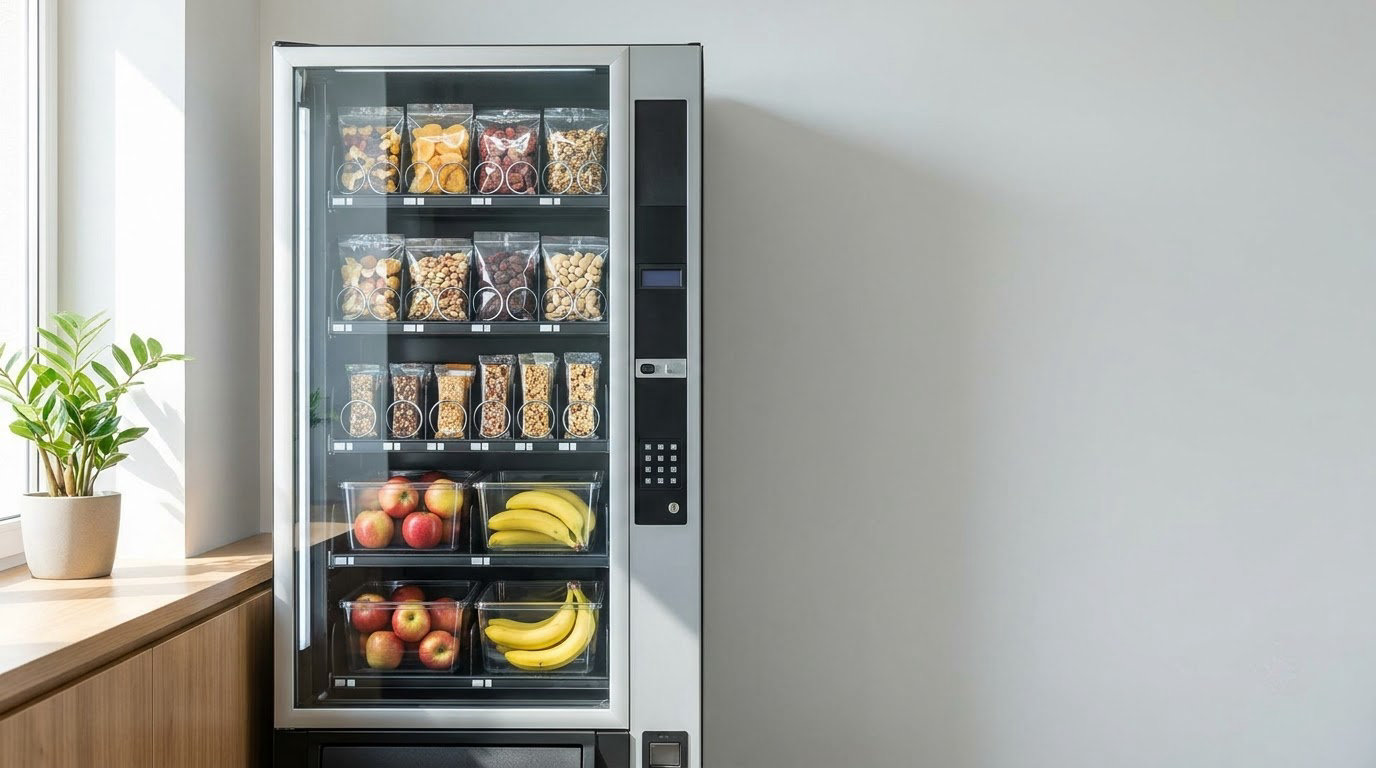
The healthiest workplace vending setup is the one that puts fruit, plain yogurt, unsweetened nuts, whole grains, vegetables and water where people can see them first, priced close to the indulgent items beside them. Most machines fail on arrangement, not on nutrition. A break room where chips and candy sit at eye level sends a message about what counts as a break here.
Healthy vending machine options for the workplace fall into two groups: items that need refrigeration and items that do not. Which group matters depends on your floor plan, your shift patterns and whether an operator can service a chilled unit on a schedule you can actually rely on. The ten categories below work for most sites, and the notes on each one flag where the practical problems show up.
Nothing here is medical or dietetic advice. Individual nutrition needs vary, and anyone managing a specific condition, allergy or blood sugar goal should get guidance from a registered dietitian or their doctor.
Table of Contents
- Healthy Vending Machine Options for the Workplace at a Glance
- 1. Fresh Fruit Cups
- 2. Plain Greek Yogurt
- 3. Unsweetened Nut Mixes
- 4. Air-Popped Popcorn
- 5. Low-Sodium Vegetable Snacks
- 6. Whole-Grain Sandwiches and Wraps
- 7. Low-Sugar Protein Bars
- 8. Dry-Roasted Chickpeas
- 9. Whole Fruit
- 10. Bottled Water and Unsweetened Drinks
- Frequently Asked Questions
- What is the healthiest option for an office vending machine?
- How can employers choose snacks with low added sugar?
- Which healthy vending snacks accommodate common food allergies?
- Do fruit, yogurt, and sandwich vending options require refrigeration?
- How should a workplace evaluate whether healthy vending options are popular?
- Conclusion
Healthy Vending Machine Options for the Workplace at a Glance
Here is the short version. The strongest starting range mixes whole fruit, a plain protein option, something savory, and a drink with no added sugar.
| Option | Main nutritional strength | Workplace consideration | Portion control | Best fit for |
|---|---|---|---|---|
| Fresh fruit cups | Fiber and vitamin C | Chilled, sealed, use-by dates | Fixed 4 to 6 oz cup | Afternoon snackers, hydration-driven staff |
| Plain Greek yogurt | Protein, calcium | Cold chain held at 1-4 C | Single cup, no added sugar | Staff wanting a filling, dairy option |
| Unsweetened nut mixes | Unsaturated fat, protein | Ambient, watch for rancidity | 1 oz single serve | Almost every site; major allergen caveat |
| Air-popped popcorn | Whole grain, fiber | Ambient, best in small bags | 2 to 3 oz bag | Late-shift and warehouse teams |
| Low-sodium vegetable snacks | Fiber, micronutrients | Refrigeration for cut packs | 1 oz pack | Sodium-conscious employees |
| Whole-grain sandwiches and wraps | Complex carbohydrates, lean protein | Chilled, short date window | Half wrap is a serve | Meal breaks, shift sites |
| Low-sugar protein bars | Protein, portioned calories | Ambient, label-driven | Set by the bar itself | Gym-adjacent and desk-based staff |
| Dry-roasted chickpeas | Plant protein, fiber | Ambient, crush-prone | 1 oz single serve | Plant-forward ranges |
| Whole fruit | Fiber, vitamin C | Ambient, needs a firm rotation | One piece | Everyone, zero refrigeration |
| Bottled water and unsweetened drinks | Hydration, no added sugar | Ambient or chilled, plastic-heavy | Bottle size, not ounces added | The default drink for any site |
1. Fresh Fruit Cups
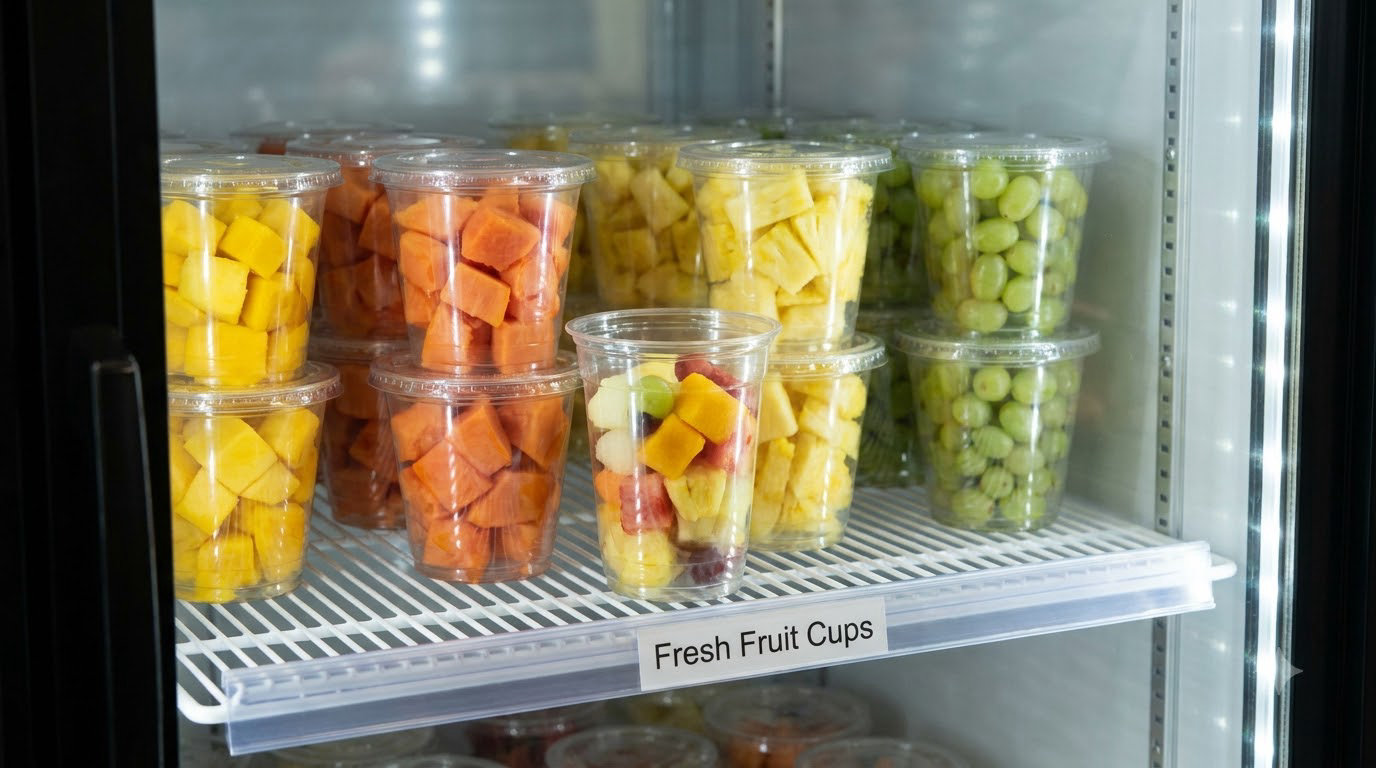
Sealed fruit cups add fiber and vitamin C with no knife, no plate and no cleanup, which is why they outperform loose fruit in almost any machine. The cup is already a portion, so there is no plate, no core and no half-eaten apple going brown in a drawer.
Mango, pineapple, papaya, watermelon and seedless grapes hold up well in a cup because they do not brown or collapse quickly. Berries do not, which is why most office cups are berry-free. Watch the drainage: fruit sitting in syrup or juice gets soft, so cups with a drain layer keep texture better than ones packed wet.
Two things decide whether fruit cups work. Cold chain matters more than most people expect, because the quality drops noticeably once fruit spends time warm. And the use-by date has to be visible from the front of the machine, not printed on a lid nobody opens.
On sugar, read the label rather than assuming. Whole fruit in its own juice carries a small amount of natural sugar; fruit in added syrup carries more. Both fit a workplace range. Most operators sell single cups of 4 to 6 oz, and that size works well as an afternoon snack alongside something with protein.
2. Plain Greek Yogurt
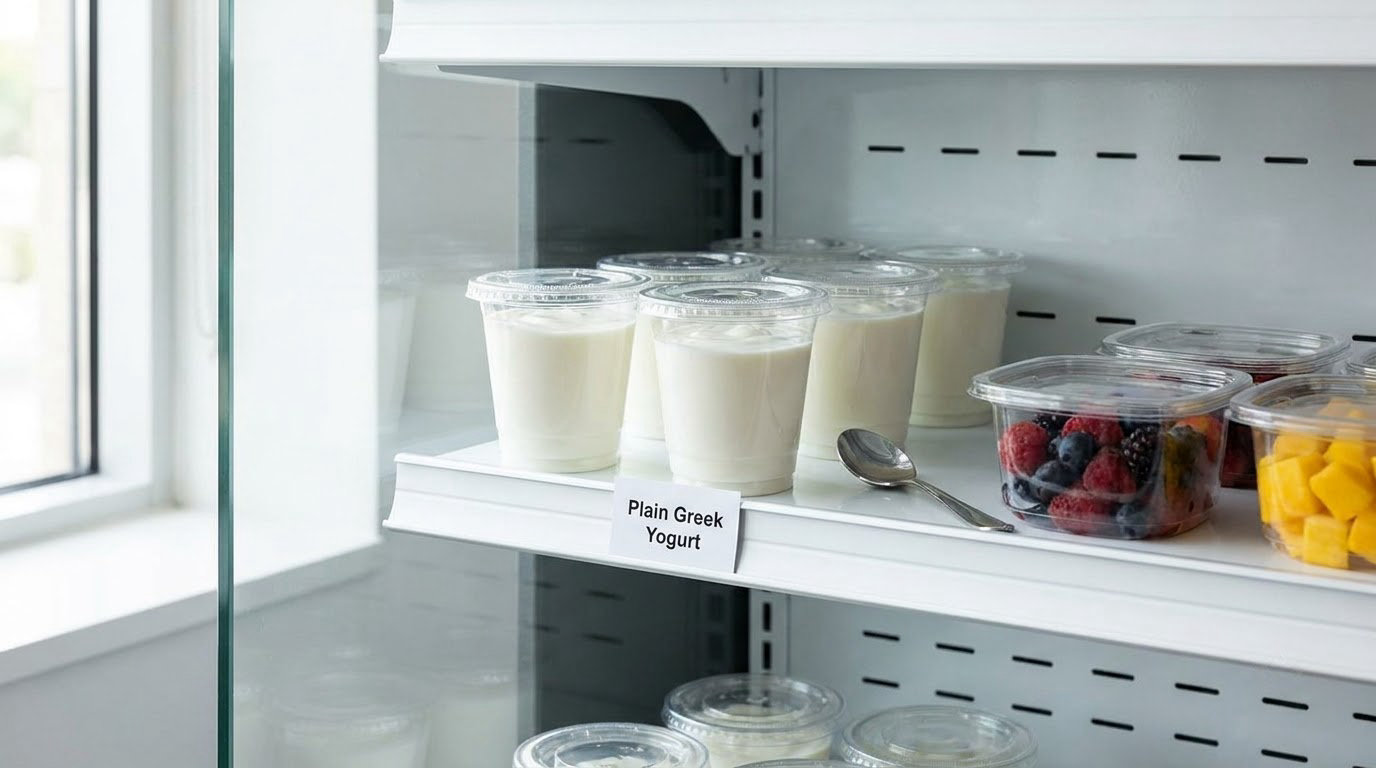
Plain yogurt is one of the few vending items that delivers real protein in a single serve, which is why it belongs on a short break list. The selection rule is simple: buy plain, and let employees add their own fruit from a separate cup.
Comparing labels takes about ten seconds per SKU. Check added sugars per serving first, then protein per serving, then serving size, because companies reformat cups and quietly change both numbers. Flavored varieties run meaningfully higher on added sugar than plain ones, which is the whole reason for stocking plain.
Two practical points on storage. Refrigerated vending sections are usually held around 1-4 C, and a machine that sits in a sunlit lobby can drift warm, so ask how temperature is monitored and who responds to an alarm. And the allergen statement matters: dairy is a major allergen, so keep it clearly labelled and away from any nut-adjacent messaging in the signage.
Offer a spoon and a fruit cup alongside. Plain yogurt on its own is fine, but paired it becomes a small meal rather than a snack, which is the difference people notice at a 3 pm break.
3. Unsweetened Nut Mixes
Single-ingredient nuts and dry roasted mixes give you unsaturated fat and plant or dairy protein in one of the cheapest shelf-stable formats a vending machine can carry. They are the item most sites should never drop.
Keep the bag small and single-serve. A 1 oz portion is the standard serving on a nut nutrition label, and oversized bags invite people to eat several servings at once. Read sodium per serving too, because dry roasted mixes with salt and seasoning blends vary widely, and flavored trail mixes often add sugar as well as salt.
Allergens are the serious caveat here. Tree nuts and peanuts are among the most common severe food allergens, and a nut mix in an open-format machine can be a problem for someone with a severe allergy nearby. Ask how the operator handles segregation and whether nut products sit in a sealed helical or coil-style slot rather than an open tray.
For freshness, buy smaller bags and more frequent restocks rather than large bags on a slow cycle. Nut oils go rancid, and rancid nuts taste bad enough that employees stop buying them, which quietly kills your numbers.
4. Air-Popped Popcorn
Plain air-popped popcorn delivers a whole grain serving and a decent fiber hit for very few calories, which makes it one of the strongest picks per calorie on the whole list. Three cups of popped popcorn typically land around 90 to 120 calories.
Stick close to plain. Lightly buttered and lightly salted versions still work well, but anything described as kettle corn, caramel or cheese-flavored is a confection in a bag, and it belongs in the treat section if you keep one.
Bag size decides a lot here. Oversized bags get shared, stale and spilled, and a spilled bag of popcorn in a break room is the fastest way to lose an operator’s willingness to restock the machine. Single-serve bags of 2 to 3 oz are the practical unit.
Packaging affects how it tastes. Air-popped kernels are very light, so bags with poor seals go stale fast and pick up odors from adjacent products. Look for sealed bags with a straightforward film, and ask about shelf life, since freshness matters more here than with nuts.
5. Low-Sodium Vegetable Snacks
Carrot, snap pea and cucumber packs give you a vegetable-forward option that most offices never stock, and that gap is exactly why employees describe break rooms as all chips and no vegetables. They also add fiber without much energy.
Sodium is the number to compare. Fresh-cut vegetable packs are usually seasoned with salt or a vinegar blend, so check sodium per serving against the chips next door rather than assuming a vegetable is automatically lower. Some packs are genuinely lower, some are not.
Refrigeration is required for cut packs. Fresh-cut carrots, snap peas and cucumbers need a chilled section held at 1-4 C, and once cut they have a short life compared with whole fruit. If your site cannot refrigerate, whole fruit is the better vegetable choice.
Texture is the deciding factor. Raw carrot sticks are crisp, cucumber is wet, snap peas snap. Mixed packs solve it. And check how the packaging is disposed of, because a pack that needs a knife and a bin outside is less convenient than a single-serve bag someone can open at a desk.
6. Whole-Grain Sandwiches and Wraps
A whole-grain sandwich or wrap is the only item on this list that reads as a meal, which makes it the one most likely to replace a trip to a shop rather than supplement an existing breakfast. It also carries the most handling risk.
Evaluate the bread first. Look for whole grain or wholegrain as the first ingredient, not a brown-sounding roll that is mostly refined flour. Then look at the filling: lean protein, some vegetables, and sauces you can identify. Mayonnaise and heavy dressings turn an otherwise sound wrap into a high-fat option.
Portion and shelf life are the operational issues. Many operators stock half wraps or smaller single serves for exactly this reason, and refrigerated units are held around 1-4 C with a short date window. Date labels need to be readable from the machine. Allergens are a heavier issue here than anywhere else on the list, with wheat, dairy, egg and sesame all common in a single wrap.
Expect waste. Sandwiches have a short life, so a site that orders too many will throw them away and the operator will stop carrying them. Start with a smaller range and let sales data tell you what to add.
7. Low-Sugar Protein Bars
Protein bars earn their slot because they solve a problem no other item does: a filling, portion-controlled, shelf-stable option that needs no fridge and no cutlery. The selection work happens entirely at the label.
Look for an ingredient list you could read aloud without pausing. Bars with a long list of compounds in the middle, several of them sugar alcohols, are not automatically bad, but they are harder to explain and harder for some people to tolerate. Prefer short lists with recognizable ingredients.
Then compare protein per bar, added sugar per bar and serving size, because a bar is often two servings and half a bar is a normal portion. Watch for bars where added sugar sits near or above 10 g per bar, and bars where protein is high enough to justify that.
Allergen labelling here is unusually important. Peanuts, tree nuts, milk, soy and wheat all appear in this category, so make the label visible before purchase. Finally, be skeptical of health claims on the wrapper. Statements about energy, focus or recovery are marketing until something credible supports them, and staff deserve a bar whose label they can check rather than a promise they have to trust.
8. Dry-Roasted Chickpeas
Dry-roasted chickpeas give you plant protein and fiber in a shelf-stable, vegan format that fits a range without dairy or nuts, which is useful for sites with a lot of dietary restrictions. That is genuinely the reason to stock them.
Sodium and oil are the two things to check, and they move together. A chickpea roasted in a meaningful amount of oil carries more calories per serving than the equivalent portion of air-popped popcorn. Added sugar shows up in some sweet and barbecue seasonings, so read past the flavor name.
Portion and packaging matter more than they look. One ounce is a normal serving, and chickpeas are hard and brittle enough to break a bag if it is thin. Resealable or rigid-sealed single-serve pouches work far better than film bags in a coil slot.
Texture divides people. Some staff find them chalky, others are delighted, and chickpeas can be tough in a cold machine. They also carry peanut and gluten cross-contact questions, so check the allergen statement and how the operator handles shared equipment.
9. Whole Fruit
Whole fruit is the easiest upgrade in any vending program: no refrigeration, no extra packaging, no prep, and a portion that is already sensible. Apples, bananas, oranges, clementines and pears all travel and store well enough for a machine.
Peel matters for choice. Apples, oranges and clementines are fine with skin, and the skin is where much of the fiber sits. Bananas come pre-peeled by nature, but a banana in a machine becomes a soft mess within a day or two, so a banana is a daily replenishment item rather than a restock-every-three-days one.
Allergy and accommodation questions come up more with whole fruit than with packaged snacks. Peanuts and tree nuts are the obvious ones, and any fruit program should be reviewed by whoever manages allergies on site. For staff managing blood sugar, single pieces like a clementine or a small apple are usually more workable than a large piece of fruit, and that is a question for their own clinician rather than for a vending plan.
Bruising and waste are the real operational problems. Fruit gets knocked around in a machine, so expect bruised apples and a few that never sell, and pick sturdy varieties like clementines and oranges where you can. Fruit that spoils visibly undermines trust in the whole machine.
10. Bottled Water and Unsweetened Drinks
Water and unsweetened drinks are the default, and the reason so many machines fail on nutrition is that sugary drinks still occupy the eye-level rows. If the drink rows are not the healthiest rows, the food rows will not save the program.
Compare on three things. First, serving size, because a large bottle changes how much people drink without any change in nutrition. Second, added sugar, which is zero for plain and sparkling water, tea and unsweetened drinks, and high for anything sweetened. Third, caffeine, since late afternoon coffee choices can wreck sleep for staff working late shifts, which is a workplace issue and not just a personal one.
Electrolyte drinks sit in their own category. They are useful during heat, heavy physical work or long shifts, but they are not a general default and often carry sugar, so treat them as a targeted item rather than a volume product.
Plastic is worth a decision rather than an assumption. Large bottles use a lot of it, and where recycling or a refill point exists, employees can be pointed there instead. Placement matters too: put water where the eye goes first, on the same rows as fruit, and the whole range feels healthier without changing a single label.
How to Choose Healthy Vending Machine Options for the Workplace
Work through this checklist before you sign anything, and again before the contract renewal. It is short on purpose.
- Nutrition labels first. Require added sugars, energy and sodium per serve, not per package, and make the label readable before the employee pays.
- Set a healthy slot target. Many operators work to a share of slots for healthier items, commonly 50-75%, with those items placed at eye level.
- Hold price parity. A healthier item that costs noticeably more than the snack beside it will lose, even when people prefer it in theory. Ask for parity or a small discount.
- Cover dietary needs deliberately. Vegan, gluten-free and nut-free options need planned slots, not luck. Ask how many slots carry each.
- Match the format to the site. If the machine cannot hold 1-4 C reliably, drop dairy, cut fruit and sandwiches, and lean on whole fruit, nuts, popcorn, bars and ambient drinks.
- Test demand before you order. Most employees are never asked what they want. A short survey or a taste table before stocking costs nothing and usually saves a bad range.
- Write it into the contract. Healthy slot percentages, planogram approval, restocking frequency, expiry dates, audit rights and a named contact for out-of-stock items.
- Set a waste limit. Agree on how much unsold stock gets removed, and check dates yourself on a monthly walk-through.
Once the checklist is agreed, roll it out in four steps rather than changing the whole machine at once.
- Survey before you stock. A two-question pulse survey on the products people actually want, plus a taste table if you can get one. Ten minutes of asking prevents a range nobody buys.
- Agree the planogram. Set the healthy slot share, decide which items go at eye level, and get the layout in writing before the first delivery.
- Launch small, then measure. Six to eight slots for one cycle, tracking sell-through per slot, out-of-stocks and waste.
- Reorder the winners. Replace anything that stalls, add a slot only where demand is proven, and walk the machine monthly to check dates and prices.
What actually sells, and where
Vendors report that healthy sellers change noticeably by site type, so a range built for a head office rarely transfers cleanly to a warehouse or a clinic.
- Corporate offices: mixed nuts, plain yogurt, low-sugar protein bars, whole fruit, sparkling and still water, air-popped popcorn.
- Shift and manufacturing sites: smaller portioned items that survive a long time unrefrigerated, plus hot-drink options if the site allows them, because the food gap after hours is the real problem there.
- Clinics, warehouses and gyms: higher-fiber and higher-protein items, and more vegetable packs than a desk-based office typically needs.
Frequently Asked Questions
What is the healthiest option for an office vending machine?
Water and whole fruit are the easiest place to start because neither needs refrigeration and both keep well in a machine. For something filling, plain yogurt with a separate fruit cup or a low-sugar protein bar adds protein and satiety. The healthiest machine is usually the one where water, fruit and a protein option sit at eye level and the sugary drinks do not.
How can employers choose snacks with low added sugar?
Compare added sugars per serve, not per package, because serving sizes change and a large bag may hold two or three. Plain versions of yogurt, popcorn and nut mixes almost always beat flavored ones. Give the package to your operator in writing, ask what the threshold is, and check labels again at restocking, since recipes and formats shift.
Which healthy vending snacks accommodate common food allergies?
Whole fruit, air-popped popcorn and dry-roasted chickpeas generally carry fewer major allergens than nut mixes, dairy yogurt and wheat-based sandwiches, though chickpea products often raise gluten and peanut cross-contact questions. Ask the operator how products are segregated and whether slots are sealed, and give the full list to whoever manages allergies on your site.
Do fruit, yogurt, and sandwich vending options require refrigeration?
Sealed cut fruit cups, plain yogurt, fresh-cut vegetable packs and sandwiches do, and refrigerated vending sections are typically held around 1-4 C. Whole fruit, nuts, popcorn, dry-roasted chickpeas, protein bars and bottled drinks are ambient. If your site cannot refrigerate reliably, plan an ambient-only range instead of risking spoiled chilled stock.
How should a workplace evaluate whether healthy vending options are popular?
Track sell-through per slot rather than total sales, since a popular item can hide a dead one. Ask the operator for monthly data, note out-of-stocks and waste, and ask staff directly in a short pulse survey. If an item repeats for two cycles without moving, replace it rather than adding more, because extra choice quietly lowers sales on everything.
Conclusion
A solid starting assortment for healthy vending machine options for the workplace is small and deliberate: water and one unsweetened drink at eye level, whole fruit, plain yogurt or a low-sugar protein bar, an unsweetened nut mix, and air-popped popcorn. Six slots that sell is worth more than twenty that sit.
Then check current nutrition labels yourself rather than trusting a planogram from two years ago, run a quick survey before you reorder, and replace anything that stalls for two cycles before you add anything new. Healthy choices only become the default when they are the visible, affordable and convenient ones.