How to Get Leadership Buy In for a Wellness Program (2026)

how to get leadership buy in for a wellness program

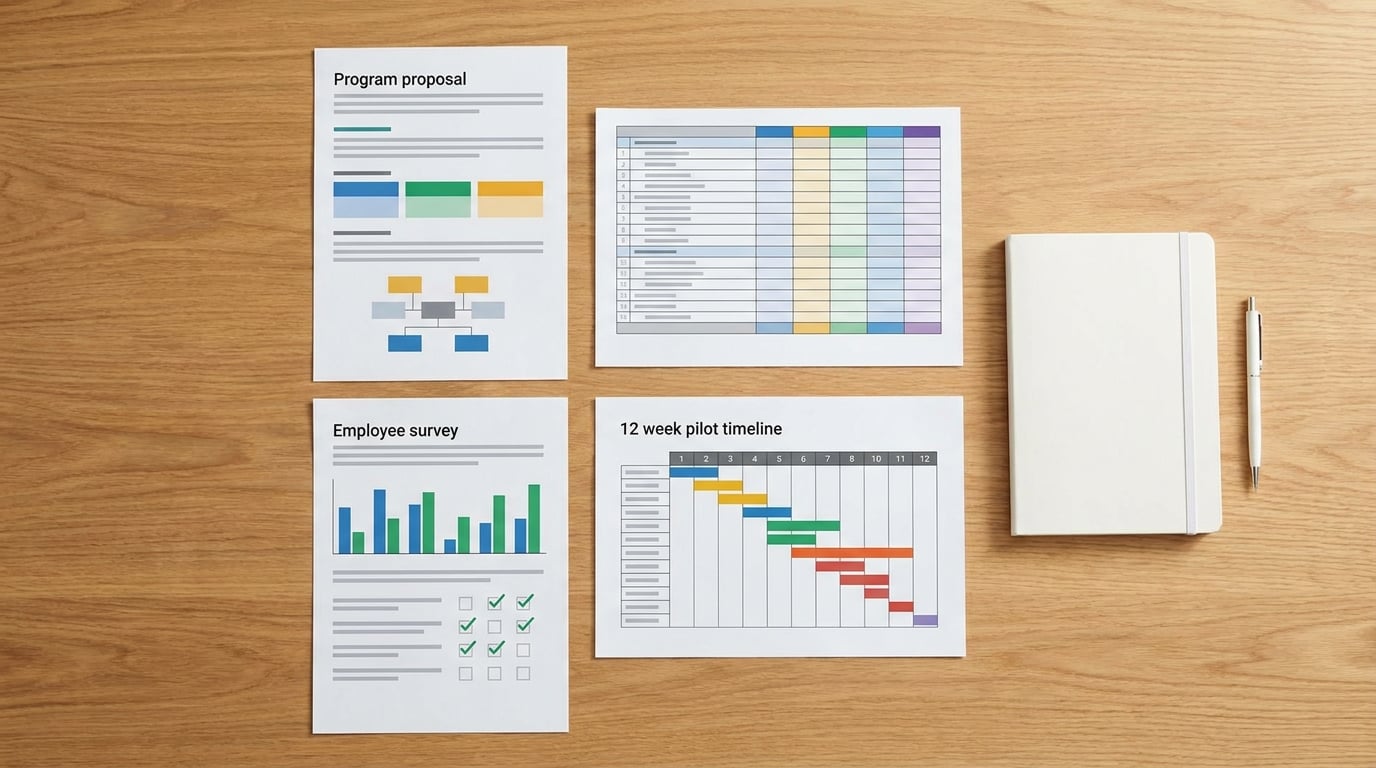
Leadership buy-in is the visible, ongoing commitment from senior leaders: approved budget, a public endorsement, and their own participation. To get it, stop pitching wellness as a benefit and build a proposal around a business problem leaders already track, back it with data you collected yourself, and ask for one small, reversible decision rather than … Read more

Wellness Programs for Shift Workers: A Practical Guide (2026)

wellness programs for shift workers

Wellness programs for shift workers are workplace health initiatives built around non-day schedules: sleep support timed to when a night crew goes home, nutrition designed for overnight meals, counseling access at 3am, movement that fits a 20-minute break, and scheduling rules that protect recovery time between shifts. Standard daytime programs fail on night crews because … Read more

10 Best Lunch and Learn Topics for Employee Health (October 2026)

lunch and learn topics for employee health

If you are searching for lunch and learn topics for employee health, start with the ten sessions below: stress and mental health, sleep and shift work, workstation ergonomics, nutrition, movement breaks, injury prevention, psychological safety, substance use support, heat and air quality, and personal wellness planning. Each one is short enough for a 30-to-45-minute slot, … Read more

Wellness Program Participation Rate How to Calculate (2026)

wellness program participation rate how to calculate

Wellness program participation rate = unique participants ÷ eligible employees × 100. If 325 of your 500 eligible employees completed at least one program activity during the reporting period, the participation rate is 65%. That is the whole formula, and the entire difficulty sits in deciding who belongs in the denominator and who counts as … Read more

How to Benchmark Your Wellness Program (October 2026)

how to benchmark your wellness program

Benchmarking a wellness program means comparing your participation, engagement, absence and cost metrics against published external benchmarks and against your own pre-program baseline, using definitions and measurement periods that match on both sides of the comparison. You pick a small metric set, freeze a definition and a period for each one, establish roughly 12 months … Read more