
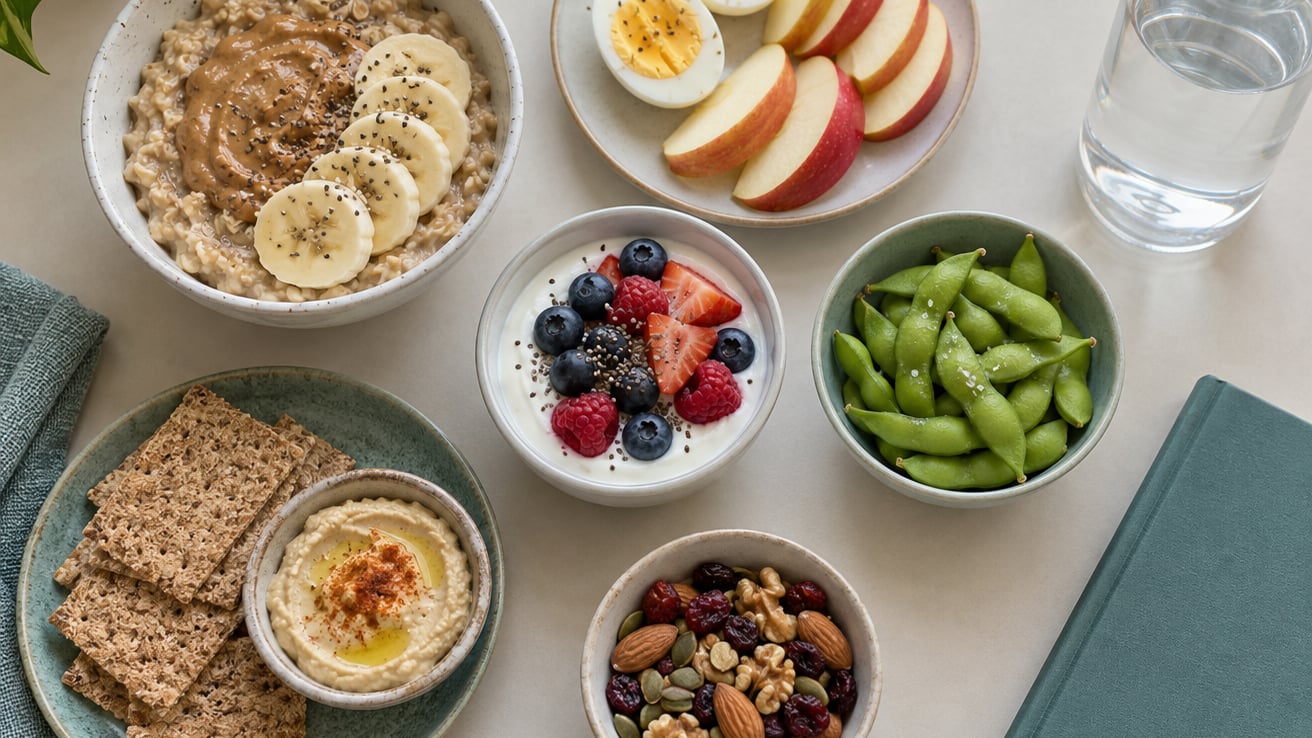
The foods that boost energy at work are the ones that fuel you slowly: fiber-rich carbohydrates, protein, and unsaturated fat, eaten with enough water to get through the shift. The 12 on this list all pack at least two of those three into something you can eat at a desk, in a break room, or out of a locker at 3 a.m. I have ordered them roughly by how well they survive a real workday, not by how impressive they look in a photo.
There is no magic food. What matters is the pairing. Carbohydrates alone burn fast and drop you back down, so the reliable move is a carb plus a protein or a fat, plus something to drink. That combination is the thread running through every item below.
Table of Contents
- Foods That Boost Energy at Work: Quick Guide
- 1. Oats with Nut Butter
- 2. Hard-Boiled Eggs with Fruit
- 3. Greek Yogurt with Berries
- 4. Tuna and Bean Wraps
- 5. Apple with Peanut Butter
- 6. Cottage Cheese with Pineapple
- 7. Hummus with Whole-Grain Crackers
- 8. Trail Mix Without Too Much Added Sugar
- 9. Edamame with Sea Salt
- 10. Banana and Oat Energy Bites
- 11. Whole-Grain Toast with Avocado
- 12. Soup with Beans, Vegetables, and Whole Grains
- How to Choose Foods That Boost Energy at Work for Your Shift
- Frequently Asked Questions
- Conclusion
Foods That Boost Energy at Work: Quick Guide
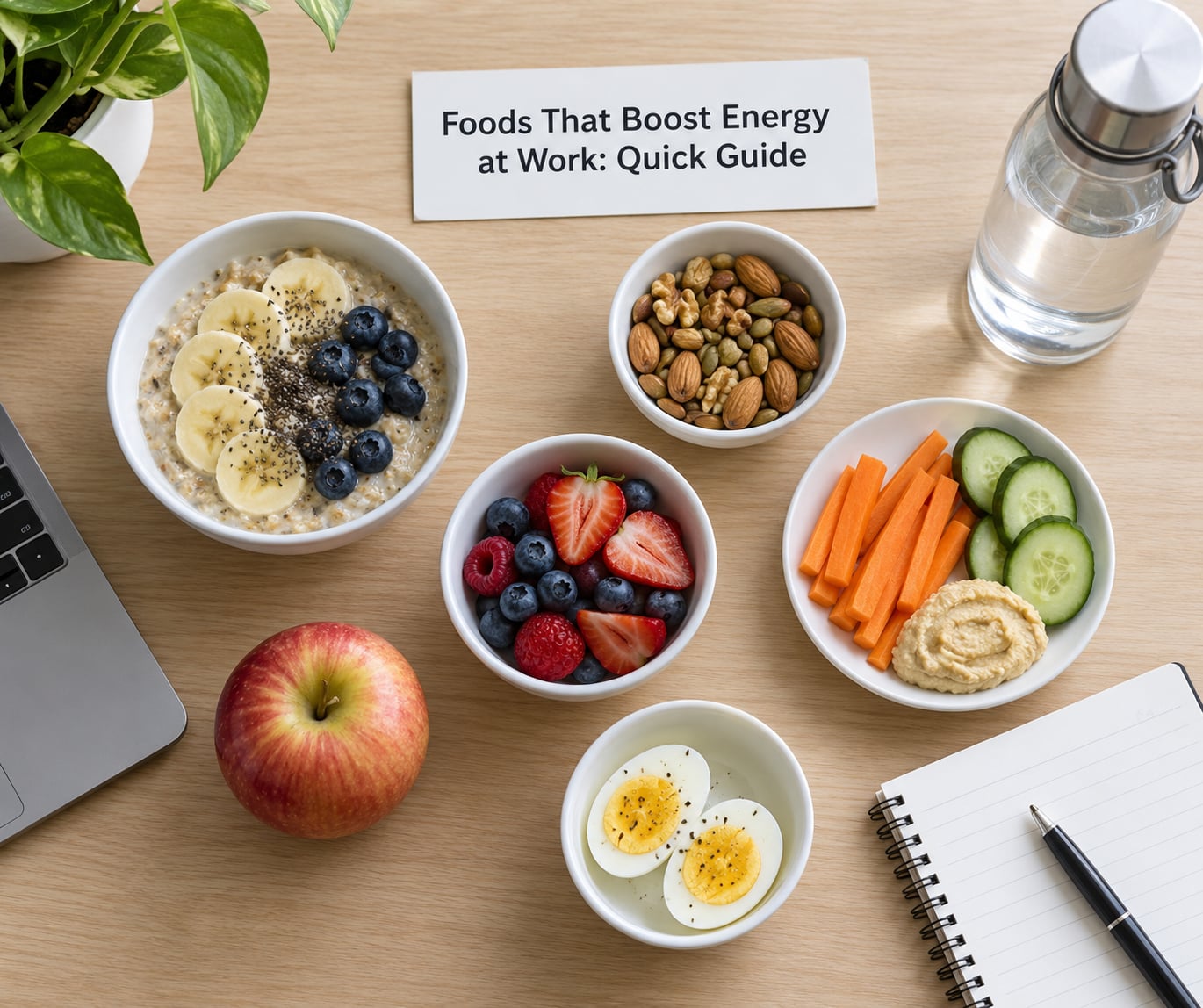
Here is the whole list at a glance, with the nutrient each item is leaning on and how it behaves in a workplace setting.
| Food | Main nutrient | Best workplace use | Storage note |
|---|---|---|---|
| Oats with nut butter | Fiber and unsaturated fat | Pre-shift or mid-morning | Refrigerate overnight oats; eat rolled-oat version within a day |
| Hard-boiled eggs with fruit | Protein and fat | Mid-shift on a busy floor | Keep chilled in an insulated bag with a pack |
| Greek yogurt with berries | Protein and carbohydrate | 3 p.m. slump | Needs a workplace refrigerator or a cold pack |
| Tuna and bean wraps | Protein, fiber, whole grains | Long block shifts, driving, fieldwork | Chill until the last break; use a cold pack |
| Apple with peanut butter | Soluble fiber and healthy fat | Between meetings | Cut fruit browns; use lemon water or eat same day |
| Cottage cheese with pineapple | Protein and fluid | Second or third break | Dairy must stay cold |
| Hummus with whole-grain crackers | Plant fat, fiber, complex carbs | Shared break-room snack | Sealed dip survives a few hours unrefrigerated |
| Trail mix, low added sugar | Fat, protein, fiber | Desk drawer or locker | Shelf-stable; portion into a small container |
| Edamame with sea salt | Plant protein and fiber | Walking or driving shift | Steamed pods keep well chilled |
| Banana and oat energy bites | Carbohydrate, fat, fiber | Pre-shift, then two mid-shift | Refrigerate for a week, freeze for longer |
| Whole-grain toast with avocado | Complex carbs and monounsaturated fat | Meal break, break room | Avocado browns; acid slows it |
| Bean and vegetable soup | Fiber, protein, complex carbs | Overnight shift, cold night stretches | Cool fast, refrigerate, reheat to 165F |
Two rules run through the table. Anything dairy, cooked fish, or cooked beans needs to stay cold until you eat it, and anything fresh-cut browns within a couple of hours, so slice fruit right before the shift if you can.
1. Oats with Nut Butter
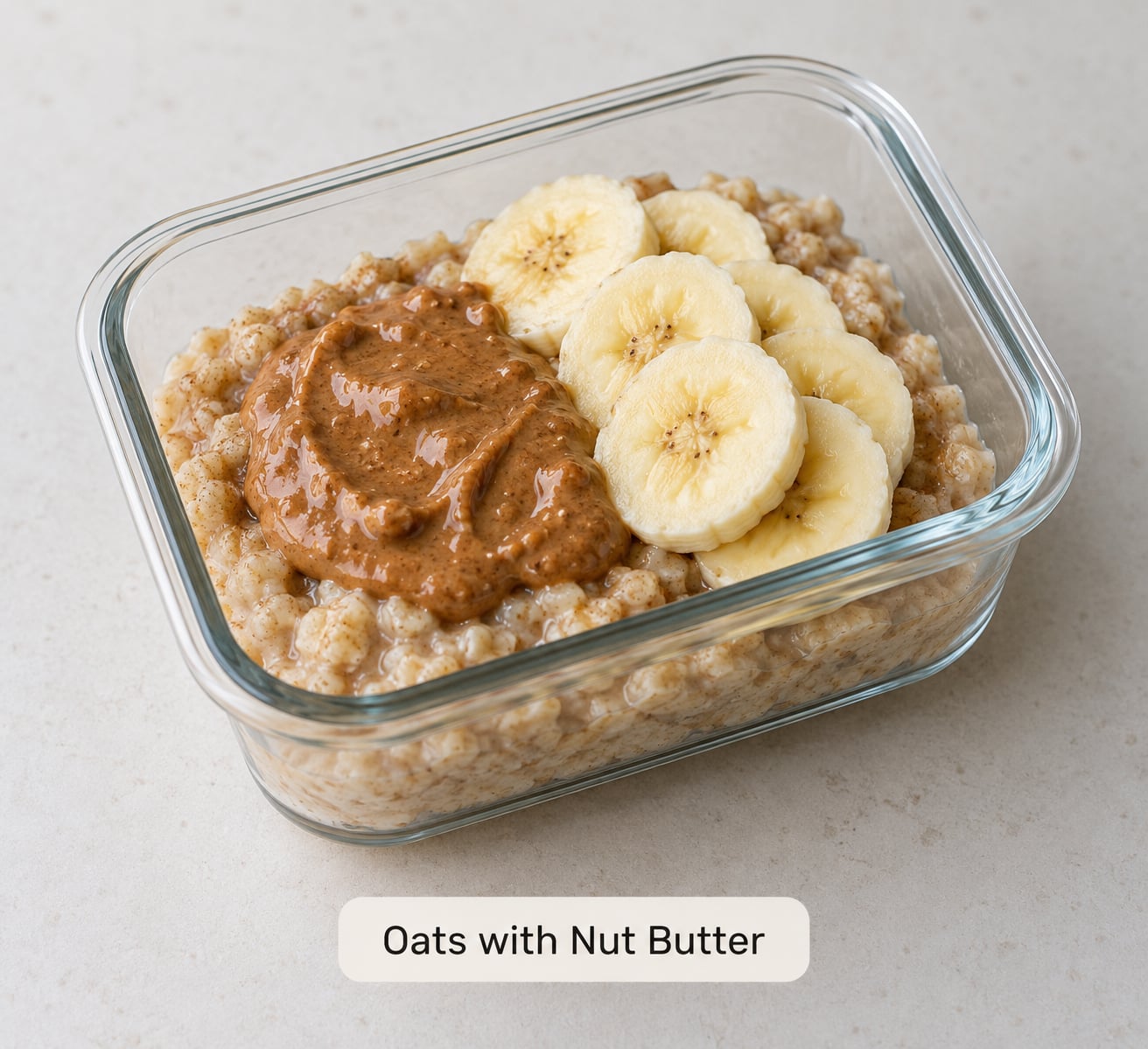
Oats give you slow-digesting carbohydrate and soluble fiber, which is why they hold you steady past the 10 a.m. hunger gap. Peanut or sunflower-seed butter adds unsaturated fat and a lot of the flavor people actually want at 6 a.m.
A make-ahead jar: half a cup of rolled oats, two tablespoons of nut butter, a sliced banana or a small chopped apple, and enough milk or water to cover it. Stir it in the morning and eat it cold, or make it the night before and refrigerate. Overnight oats keep about four days chilled, so Sunday prep covers a work week. A rolled-oat jar without the overnight step is fine for the same day only, because the texture gets pasty by the next morning.
2. Hard-Boiled Eggs with Fruit
Two eggs give you roughly 12 grams of protein along with fat that slows digestion, and the fruit supplies the carbohydrate. Reviewers and workers on forums consistently pair one with the other, and the reason is not subtle: the fruit alone crashes you, the eggs alone feel heavy.
Boil a batch on Sunday, refrigerate in the shell, and pack two eggs with an apple, an orange, or a banana. Peel at the break, not before, since peeled eggs dry out. Keep them chilled the whole time. If you are packing them in a bag without a refrigerator, use an insulated bag with a frozen pack, and if that is not possible, choose something shelf-stable for that day.
3. Greek Yogurt with Berries
Greek yogurt is one of the few desk foods with real protein plus carbohydrate in the same cup, which is why it turns up so often in steadiness complaints about energy. Berries add water, fiber, and enough sweetness that you do not need added sugar.
A single 150-gram container with half a cup of fruit is a reasonable portion for a 3 p.m. pick-me-up. Check the label for added sugar, because flavored versions can carry as much as a small snack does on their own. Plain with fruit you add yourself avoids that. Frozen berries thaw in about ten minutes and cost less, and dairy has to stay refrigerated, so use the office fridge or bring a cold pack if you are on the road.
4. Tuna and Bean Wraps
This is the most complete sandwich on the list: fish and beans for protein, beans and a whole-grain wrap for fiber and slow carbohydrate. It travels, it does not need a microwave, and it holds up through a shift that runs past dinnertime.
Assembly takes about four minutes. Drain a can of tuna, stir in half a cup of rinsed beans and a spoonful of mustard or salsa, then pile it onto a whole-grain tortilla with some shredded lettuce. Wrap it in parchment or foil so it survives a bag. Tuna and cooked beans are both perishable, so keep them cold until you eat and discard the wrap if it has sat at room temperature past two hours.
5. Apple with Peanut Butter
An apple brings soluble fiber that slows how quickly carbohydrate reaches your blood, and peanut butter adds fat and a little protein to keep the effect going. It is the most repeated pairing in worker forums, and the reason is practical rather than nutritional.
Slice a medium apple, dip it in two tablespoons of peanut or sunflower-seed butter, and you have a snack that fits a ten-minute break. Slice it in the morning for the same-day shift; if you prep the night before, a squeeze of lemon water slows browning. Peanut and tree-nut allergies are serious, so sunflower-seed butter is the easy swap, and if you are avoiding nuts entirely, a slice of cheese on whole-grain crackers does the same job.
6. Cottage Cheese with Pineapple
Cottage cheese carries a high protein content for its volume and a lot of water, so it fills you without weighing you down after. That matters on a shift where the temptation is a heavy lunch that turns into post-meal drowsiness at your keyboard.
Half a cup of cottage cheese with a half cup of fresh or canned-in-juice pineapple chunks is plenty. Fresh pineapple is more filling and less sweet; canned in juice rather than syrup keeps the added sugar down. This is a dairy food, so it needs the office refrigerator or a cold pack, and it is worth keeping the portion modest if you are drinking a lot of water through the shift, since it adds to the same effect.
7. Hummus with Whole-Grain Crackers
Hummus is a plant-based option that still hits all three energy levers: fat from chickpeas and oil, fiber from the chickpeas, and carbohydrate from the crackers. It is also the easiest item here to share, which makes it a good break-room addition.
Two tablespoons of hummus with six or seven whole-grain crackers is a normal portion. For seed allergies, look for a sunflower-seed based dip, and for gluten-free diets use a gluten-free cracker rather than assuming. Read the label before buying: some dips carry 300 milligrams or more of sodium per serving, and flavored versions can add sugar. Choose the plain variety and pair it with vegetables, since raw carrots and peppers add more fiber and crunch for the same calories.
8. Trail Mix Without Too Much Added Sugar
A good trail mix combines nuts, seeds, dried fruit, and a whole grain, which means fat, protein, fiber, and carbohydrate in a form that fits in a pocket and does not need refrigeration. It is the most genuinely shelf-stable option on this list.
Build your own rather than buying a bag: a handful of almonds or walnuts, pumpkin seeds, dried cranberries or raisins in a small ratio, and something like roasted chickpeas or a cereal cluster. About a quarter cup is a reasonable portion, and this is where people overdo it, since trail mix is easy to eat by the handful until it is gone. Choose mixes with no added sugar or honey coating if you can, and skip the chocolate-heavy versions, which are candy with nuts mixed in.
9. Edamame with Sea Salt
Edamame is a compact source of plant protein and fiber that you eat straight from a pod in two minutes, which makes it one of the few foods on this list that works for a shift where your break happens on a loading dock or in a vehicle.
Steam a large batch, cool it, and season with sea salt, a squeeze of lemon, and a little garlic powder or chili. Eaten chilled, the pods keep well for a couple of days refrigerated, and salted-on-the-way versions travel fine in a thermos for the first break. If you are buying frozen edamame, they cook in three to five minutes in a microwave, which is faster than most break-room appliances.
10. Banana and Oat Energy Bites
These are the most useful thing you can make the night before a rotating schedule, because they portion themselves and survive a locker. Mash one ripe banana into a cup of rolled oats, add a third of a cup of nut or seed butter and a tablespoon of chia or ground flax, then roll into a dozen balls.
Two bites is a serving; three is a bigger snack before a physical shift. Refrigerate them and eat within a week, or freeze them on a tray and move a few at a time to the fridge overnight. Two things to watch: the dough is very soft, so chill it thirty minutes before rolling, and check labels on the nut butter and oats if anyone in your household reacts to peanuts or tree nuts, since cross-contact is common in shared facilities.
11. Whole-Grain Toast with Avocado
Whole-grain bread gives you complex carbohydrate and fiber, and avocado adds monounsaturated fat plus potassium, which is enough to turn bread into an actual meal. On a shift where you only get one break, this is the item most people leave out and most people would benefit from adding.
Mash one avocado onto two slices of whole-grain toast with a squeeze of lemon, a pinch of salt, and chili flakes if you have them. Make it within an hour of eating if you can, and squeeze lemon over the cut side if you must assemble it earlier, because acid slows the browning that makes people skip it. A boiled or canned egg on the side turns this into a real meal for a demanding shift.
12. Soup with Beans, Vegetables, and Whole Grains
Batch-cooked soup is the answer to the 2 a.m. problem, when nothing sounds good but you still need protein and carbohydrate. Lentil, tomato, or minestrone built with beans and a grain covers fiber, protein, and slow carbs in one warm container, and it reheats in a break-room microwave in three minutes.
Cool leftovers in shallow containers within two hours and refrigerate them promptly. Reheat to 165F and keep it hot until you eat it, and use a shallow container so the middle actually gets to temperature. A thermos keeps soup hot for the length of an overnight stretch, which solves the same problem for people without a microwave. Lentil and white bean soups also freeze well, so a Sunday batch can cover several weeks of early starts.
How to Choose Foods That Boost Energy at Work for Your Shift
Match the food to the shape of the shift first, then to what you have available. An eight-hour shift with a full refrigerator and a break room is a different problem from a twelve-hour overnight stretch with a locker and a microwave, and the same snack will not do both jobs.
Matching foods that boost energy at work to your shift length
Under four hours, one real meal and a fruit works. Longer shifts need something every two to three hours, because the hunger you feel at hour five is usually blood sugar and boredom rather than genuine calorie need. Overnight shifts deserve the same spacing, and the light in a night shift distorts appetite signals enough that a planned snack beats whatever the machine offers at 4 a.m.
Checking what you can actually store
Sort your options into three groups: shelf-stable, chillable, and hot. Trail mix, whole-grain crackers, and energy bites are shelf-stable. Yogurt, cottage cheese, eggs, tuna wraps, and edamame need a refrigerator or a cold pack. Soup and beans need a microwave or a thermos. If your workplace lacks reliable refrigeration, plan around the first group rather than eating dairy out of a bag at the third break.
Choosing quick energy or sustained energy
Quick energy is fine before a physical task or a long drive: a banana, a date, or a handful of raisins. Sustained energy is what you want for reading, writing, or a four-hour meeting block, and that is where protein and fat matter. The crash people complain about is usually the gap between the two, meaning they picked the fast option for a job that needed the slow one.
Working around diet, allergy, and hydration limits
Vegetarian, vegan, and gluten-free versions of every item here exist, and sunflower-seed butter or roasted chickpeas cover most nut allergies. If you are managing diabetes, pregnant, or working with a history of disordered eating, the general pairing advice still holds but the portion and timing are worth discussing with a registered dietitian rather than taking from a listicle.
Hydration deserves its own note because mild dehydration reads exactly like fatigue: headache, poor concentration, tiredness. Keep water within reach at all times, since why water access at work matters for worker health covers the workplace side of that. Sip steadily through the shift instead of waiting for thirst, and remember that a heavy lunch plus coffee is not the same as energy.
When fatigue is not a food problem
If you are eating well, drinking water, and still tired every day, food is unlikely to be the cause. Persistent tiredness can point to iron deficiency or anemia, thyroid problems, sleep apnea, or blood sugar disorders, all of which need a clinician rather than a snack. Getting adequate sleep matters as much as what you eat, and for rotating schedules, sleep hygiene tips for workers that fit shifts and how to fix shift work sleep problems are worth reading before you blame your lunch.
Frequently Asked Questions
Is there one strongest food for energy at work?
There is no single strongest food, but if you had to pick one for most shifts, plain Greek yogurt with fruit added by you covers the most ground: protein plus carbohydrate in one container, no added sugar, and easy to eat fast. Oatmeal with nut butter is the better pick when you need something that keeps you full for four hours, such as on an overnight shift or a physical job.
What to drink to get energy at work?
Water comes first, sipped steadily through the shift, because mild dehydration mimics fatigue. Sparkling water helps people drink more. Green tea or coffee in the first half of the shift adds alertness without the sleep disruption of a late afternoon cup, and energy drinks are the worst option because the sugar and caffeine usually land together. On a night shift, cut caffeine in the second half so sleep after the shift is not wrecked.
What foods provide quick energy?
Bananas, dates, dried fruit, and honey give the fastest lift, followed by coffee. They work well in the hour before a physical task or a long drive. For mental work that needs steady attention, fast carbs are the wrong tool because they arrive with a rebound. Pair them with protein or fat, such as a banana with peanut butter, and the quick energy lasts considerably longer.
What are five foods that fight fatigue?
Greek yogurt for protein, lentils or bean soup for iron and fiber, eggs for choline and protein, oats for sustained carbohydrate, and edamame for compact plant protein. Each also works best with water, since dehydration produces the same tired feeling as a poor lunch. Anyone with ongoing fatigue despite eating well should see a clinician rather than keep adjusting snacks.
Why do I feel tired after lunch at work?
A large, high-carbohydrate or greasy meal draws blood to the digestive system and often triggers a blood sugar rise and drop afterward, which is the familiar post-lunch dip. A big serving also makes you sleepy. Splitting lunch into two smaller meals earlier in the day, adding protein and fiber, and skipping sugary drinks usually does more than any single afternoon food.
How do I avoid the afternoon crash without another coffee?
Eat a real snack around 2 p.m. that pairs carbohydrate with protein or fat, such as apple slices with peanut butter or cottage cheese with pineapple, and drink a glass of water first, since the crash is sometimes thirst. Caffeine earlier in the day is more useful than caffeine during the dip. If the slump arrives daily no matter what you eat, that pattern is worth mentioning to a doctor.
Conclusion
Start smaller than feels impressive. Before your next shift, prepare two portable snacks from this list, one carbohydrate-based and one protein-based, and keep a bottle of water where you sit. That is enough to test whether the 3 p.m. dip improves without changing anything else about your day.
From there, the pattern that holds up best across schedules is a carb plus a protein or fat every two to three hours, with refrigeration planned for anything perishable. If you have diabetes, are pregnant, or manage a condition that affects how you eat, take the pairing idea to a registered dietitian or your doctor rather than a list.