
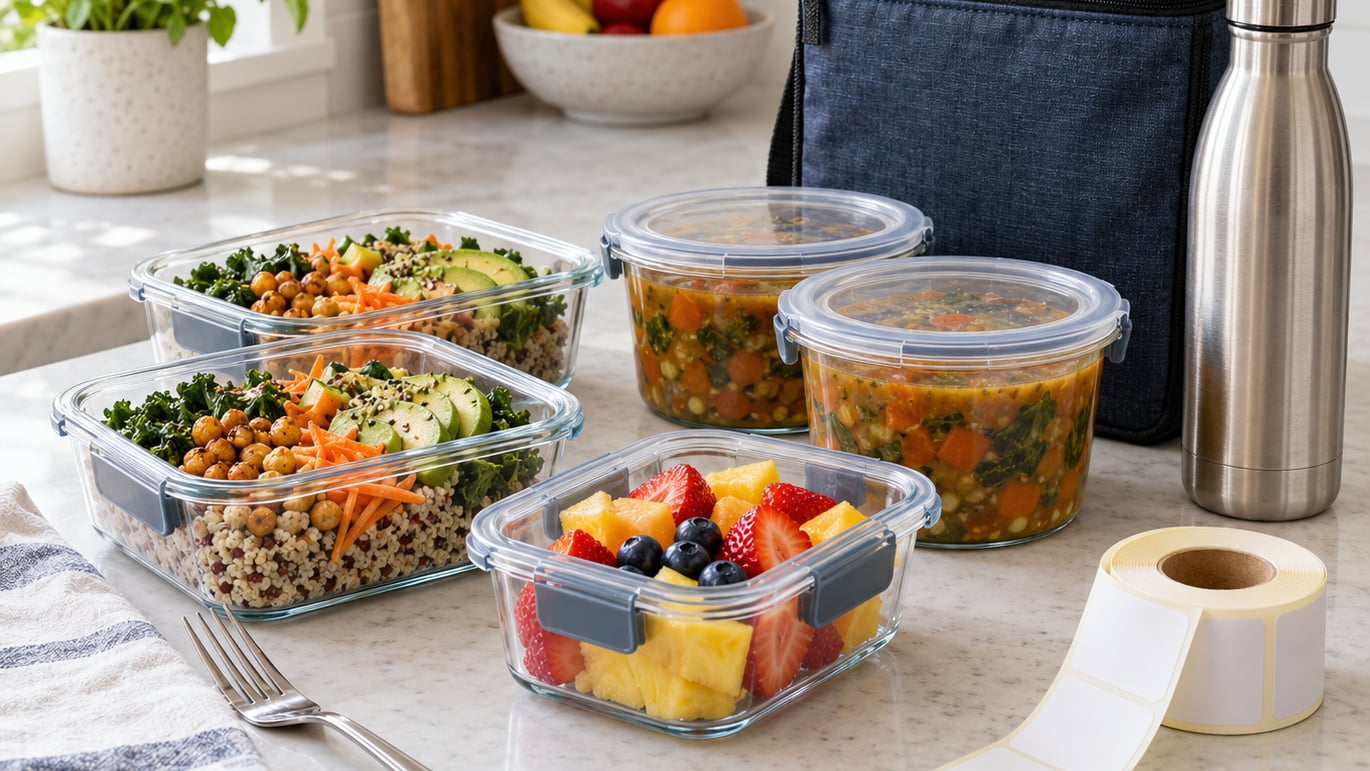
Learning how to meal prep for night shift is mostly a logistics problem, not a cooking one. You cook once on a day off, pack components into containers you can eat at clock times that match your roster, and take the decision-making out of 3am entirely. Most night workers who get this right eat a proper meal before the shift, graze on protein and fibre through the small hours, and keep the post-shift meal small enough that it doesn’t wreck daytime sleep.
This guide covers the whole system: what equipment you actually need, a seven-step prep process, what to eat at each hour of the night, and how to adapt it when your breaks are theoretical, your workplace has no microwave, or you are working eight hours instead of twelve. Everything here is general nutrition and food-safety guidance, not individual medical advice. If you manage diabetes, coeliac disease, IBS, reflux or a food allergy, talk to a registered dietitian about your own plan before you start.
Last updated: October 2026
Table of Contents
What You Need
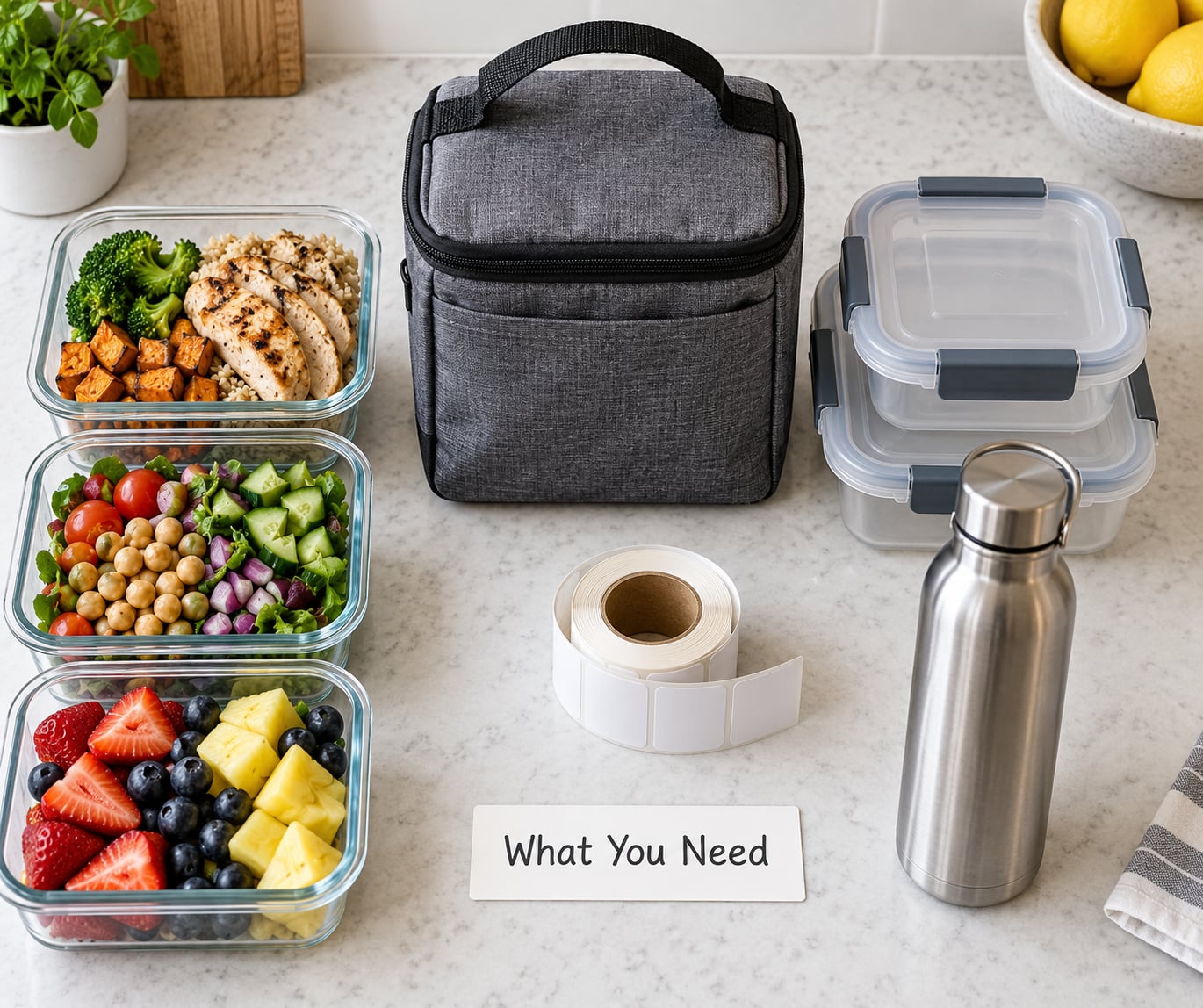
The list is short, and most people already own most of it. What matters is that each item solves a specific night-shift problem rather than being a nice-to-have.
- Containers sized to one break. Shallow, leakproof, and shaped so they fit in a break room fridge or on a desk. Glass is fine if it survives your commute; plastic is lighter if you carry a lot.
- An insulated lunch bag or food jar. This is the item that decides whether your pasta is edible at 4am or congealed. Pair the bag with two or three frozen gel packs if there is no fridge at work.
- A microwave-safe container, if there is a microwave. Check that the lid is vented or removed. A sealed lid traps steam and can splatter food across a break room.
- Masking tape or a label maker. Every container gets a day number, a meal name, and a use-by date. On the fourth night of a run you will not recognise lentil stew from chili by colour alone.
- A refillable water bottle. Dehydration drives hunger, and most people mistake thirst for a need to eat.
- A fork, a folding spoon, and any condiments you rely on. Pack the utensils in the same place every time so they leave the house with the bag, not in a drawer on the counter.
- A sheet pan or two, and a slow cooker or pressure cooker if you have one. Not required, but they turn a two-hour prep block into a mostly hands-off one.
Before any of that, write down the food-safety baseline you are working to. Cook poultry to 165°F, ground meat to 160°F, and whole cuts of meat or fish to 145°F. Keep refrigerated food at or below 40°F and hot food at or above 140°F. Anything perishable that sits in the danger zone between 40°F and 140°F for more than two hours, or one hour if the temperature is above 90°F, goes in the bin.
Those numbers matter more on nights than during the day. A twelve-hour shift with a long commute can put food in that range far longer than a normal workday does, so the container and ice pack choices above are food-safety tools, not just comfort upgrades.
How to Meal Prep for Night Shift: Step-by-Step
1. Map Your Shift and Breaks
Start with the roster, not the kitchen. Write down your start and finish times, then count the breaks you actually get, not the ones printed on the schedule.
For a 7pm to 7am shift with two genuine twenty-minute breaks, you are looking at two eating opportunities plus a commute in each direction. For a 7pm to 7am shift where breaks get covered, you are looking at a bag you can eat from without opening it. Those are two different meal plans, and the second one is far more common than rosters admit.
Add your commute time to the total time food will be unrefrigerated. A forty-minute drive home changes what you pack entirely, because perishable food is still out of temperature control when you walk in the door.
Then decide, for each eating window, whether the meal is eaten hot, eaten cold, or has to survive with no refrigeration at all. Most people pack a hot main for the first break, a cold assembly for the second, and shelf-stable snacks in between. Write the three answers down; they become your shopping list in step three.
If sleep is the bigger problem on your roster, fix that before you fine-tune the meals. Our guide to shift work sleep problems and how to fix them covers the light and timing side, which constrains when you can eat and for how long.
2. Choose Meals That Travel Well
Good night-shift food is protein plus slow-release carbohydrate plus something raw or cooked-soft, because that combination keeps you steady for hours without a heavy feeling at 4am.
Proteins that hold up: roast chicken thighs, poached salmon, hard-boiled eggs, lentils, chickpeas, black beans, firm tofu, and Greek yogurt in a sealed pot with an ice pack. Proteins that fall apart: flaky white fish, braised brisket, anything in a tomato-heavy sauce.
Carbohydrates that stay edible cold: brown rice, quinoa, sweet potato, wholemeal pasta, oats, couscous, whole-grain wraps, and crackers. Avoid large amounts of refined white bread and pastry, which spike and drop your energy while you are trying to stay alert.
Fruit and vegetables: roasted peppers, cucumber, baby carrots, cherry tomatoes, apple slices with lemon, berries, bananas, and any vegetable you have roasted until soft. Raw onion and large amounts of cruciferous vegetables are common culprits behind the bloating and stomachache people report on nights.
Stability is the deciding factor. Ask one question about every component: would this still be pleasant to eat cold, at 4am, after eight hours in a bag? If the answer is no, swap it.
3. Build a Simple Menu
Now write the menu, and make it deliberately boring. Two dependable main meals for the whole run of nights, one assembly-style meal you can mix from components, one or two snacks, and one unopened backup.
A realistic seven-night menu looks like this:
- Night 1: chicken and quinoa bowl with roasted vegetables
- Night 2: lentil and vegetable soup with a wholemeal roll, plus a hard-boiled egg
- Night 3: cold pasta salad with tuna and cucumber
- Night 4: black bean and sweet potato bowl with yogurt and salsa
- Night 5: repeat the lentil soup, with a different vegetable in it so it does not feel identical
- Night 6: overnight oats with yogurt and fruit, plus a boiled egg
- Night 7: whatever is left in the fridge, assembled cold
That is the whole plan, and it is short on purpose. Repetition removes the 3am decision, which is the decision that reliably ends up being a vending machine.
Then plan each clock time, because a menu and a timeline are different things. For a 7pm start:
| Time | What and why |
|---|---|
| 6pm, before leaving | Largest meal of the day: protein, complex carbohydrate, vegetables. About an hour before the shift. |
| 9pm, first break | Light protein and fibre — yogurt with oats, or a small portion of the soup. Small enough to eat in ten minutes. |
| 11pm to midnight | Snack: nuts, cheese, fruit, a protein bar. This is the window where most people make the bad vending machine decision. |
| 3am, second break | Main meal if the hours are long enough. This is the one you want to have pre-portioned. |
| 5am, last break | Smaller: yogurt, an egg, crackers with cheese. You want to be able to sleep. |
| 7am, post-shift | Small, easy to digest, then sleep. Roughly a quarter of what you ate at 6pm. |
The post-shift row is where most night workers go wrong. People arrive home ravenous and eat a full dinner at 7:30am, then lie there with reflux while their body is trying to drop into daytime sleep. A smaller meal with some protein and a modest amount of carbohydrate settles better and still does the recovery work.
4. Prep and Cook in Batches
Two hours of ordered prep covers four to seven nights. The order matters because everything that goes in the oven starts first.
- Preheat and start the oven, 10 minutes. Put the tray in before you chop anything. Put grains and a pot of water on to cook at the same time.
- Wash and chop produce, 20 minutes. Do it while the oven and the rice are already working. Put raw vegetables on the sheet pan, then move on.
- Cook proteins, 25 to 35 minutes. Chicken thighs to 165°F, salmon or thick fish fillets to 145°F. Use a thermometer rather than the time on the packet, since ovens lie.
- Cook grains and legumes, 20 to 30 minutes, mostly unattended. Brown rice, quinoa, or a pot of red lentils. If you have a pressure cooker, beans go in here and you get them in 25 minutes without watching.
- Make one pot dish, 30 minutes, mostly unattended. A lentil or bean soup is the highest-value item you will cook because it reheats well and covers two or three nights on its own.
- Hard-boil a batch of eggs, 12 minutes. These are your emergency protein for nights when a break disappears.
- Cool and assemble, 30 minutes. This is step five, below, and it is the part most people rush.
The whole block runs about two hours, and about forty minutes of that is hands-on chopping and assembling. The rest is waiting, which is when you can also make the overnight oats for two nights and portion the dry snack boxes.
5. Cool, Portion, and Label
Safe cooling is where most home-prepped food goes wrong. Food goes into the fridge in a deep, steaming container, the centre stays warm for hours, and it sits in the danger zone long enough to be a genuine risk on a run of nights.
Spread food into shallow containers so it cools fast, and get it into the fridge within two hours of cooking. If you have a lot of soup or stew, divide it into several shallow containers rather than one deep pot. Lid off while it cools in the fridge, then cover it once it is cold.
Then label. Every container gets the night number, the meal name, and the date. Use different-coloured lids or a strip of tape in a different position for each night so you are grabbing the right one without reading.
Be realistic about fridge times. Cooked leftovers and prepped meals generally keep three to four days in a refrigerator at or below 40°F, so plan to eat them inside that window. Cooked beans and lentils keep about three to four days too. Freezing is the answer for the back half of a long run: portions freeze well flat in a freezer bag and thaw overnight in the fridge, not on the counter. On day four of four you are not cooking, and by then you will not want to anyway.
6. Pack Meals in Shift Order
Load the bag the night before, in the order you will eat it, and put it by the door or in the car so leaving with it is automatic.
Bottom of the bag for the later meals, top for the first thing you need. Temperature-sensitive items go straight from your fridge into the bag with a gel pack, not on the counter while you make coffee. Condiments in a separate small pot so a leak does not ruin a whole bag. Utensils in the outside pocket. Backup snack bar in a side pocket where you can reach it without unpacking everything, because it exists for the shift where the breaks disappear.
If you have no fridge at work and the shift is long, build the bag around shelf-stable food: whole-grain crackers, nut butter in single portions, dried fruit, unsalted nuts, canned fish with a pull-tab, wholemeal wraps, shelf-stable milk or soy milk in a small carton, and a vacuum flask for soup or a hot drink. Keep perishable components for the first few hours only, and put an ice pack in the bag from the moment you leave home.
7. Reheat and Eat During Breaks
Reheat until the centre is steaming hot all the way through, which means 165°F for leftovers. Stir it halfway, because microwave reheating heats unevenly and the cold centre is the part that worries you.
Never microwave food in a sealed container, in a container not marked microwave-safe, or in anything with metal in or near it. Take the lid off or vent it. If the break room microwave has been running hot for a while, stir and check again rather than trusting a single minute.
Watch the clock on the out-of-fridge time, not just on the meal. Perishable food that has been between 40°F and 140°F for more than two hours should be discarded, and one hour is the limit in a hot vehicle or an unrefrigerated break room above 90°F. That means that if your break is scheduled for 2am and the meal came out at 9pm, you have a narrow window — eat it earlier, or bring something you can eat cold.
Front-load your caffeine rather than spreading it. Have your last caffeinated drink at least six hours before you intend to sleep, which on an overnight schedule often means nothing after the small hours. Drink water steadily through the shift instead of chugging at break, and eat your planned snacks on a rough clock whether or not you feel hungry, because hunger on nights lags badly behind hunger in real time.
Quick reference: what to eat at each hour
Not every roster starts at 7pm. Shift the pattern by the same amount. For an 11pm start, move the pre-shift meal to 9pm and the main meal to 5am. For a 9pm to 5am shift, you need one pre-shift meal, a snack at 11pm, a main meal around 2am, and a light post-shift meal at 5am.
Adapting for 8-hour shifts, 12-hour shifts and rotating rosters
Eight hours. One substantial meal before the shift, one mid-shift main, one light post-shift meal. Two to three containers total.
Twelve hours. Three eating windows plus two snack breaks, which means a pre-shift meal, a light first break, a main meal in the small hours, and a light last break. This is where mix-and-match components beat set meals, because you can adjust portion size to the hunger rather than forcing a whole container at 3am.
Rotating roster. Prep for the longest run on the roster and keep everything frozen and unlabelled in date order, so whichever way the rota moves you have meals ready. It also means you cannot follow the clock at the same time every night, so anchor the pre-shift meal to your departure time rather than to a wall-clock hour.
No microwave, no fridge, no break. This is a packaging problem. Everything shelf-stable, everything eaten cold or from a vacuum flask, one snack portioned out rather than brought in a full bag, and one unopened backup.
When you have no free block at all. Fifteen minutes is enough for a hard-boiled egg, a tub of yogurt, a handful of nuts, a wholemeal wrap with hummus, and a piece of fruit in a pot. Prep that the night before in one small container and treat it as the floor, not the goal.
Common Mistakes
Eating the same thing every night, forever. Food fatigue on nights is real and it is the main reason people abandon prep. Fix it cheaply: cook one soup with a different vegetable in it each week, or rotate between two proteins and keep the carbohydrate the same. You are protecting the structure, not the recipe.
Packing meals too early in the morning. If you assemble food before a night shift and then spend eight hours commuting and being awake, you have created a food-safety problem to save five minutes. Prep the night before and store it cold.
Putting hot food straight into the fridge or straight into a bag. Deep, steaming food cools too slowly and warms everything around it. Spread it into shallow containers, cool it quickly, then cover and refrigerate.
Forgetting utensils. A meal you cannot open is a meal you skip and replace with whatever is in the vending machine. Keep the fork in the outside pocket permanently.
Packing foods that sit badly. Raw onion, heavy tomato and chili sauces, greasy fried food, and large portions of cruciferous vegetables are the usual reasons people report bloating and stomachache on nights. Swap the onion for scallion or garlic-infused oil, and go lighter on chili in a meal you will eat at 2am.
Not planning for the shift where breaks disappear. This one is not a personal failing. Break coverage is a workplace issue, and where it is worth raising it, employer-side measures are the subject of our piece on wellness programs built for shift workers. Meanwhile, the fix is the unopened backup: one snack bar or portioned nuts in a side pocket that costs you nothing if you never need it.
Drinking your calories. A sweetened coffee at 4am is a snack without the protein and fibre that keeps you full. Keep coffee and tea unsweetened, and eat the planned snack instead.
Letting the hunger get away from you, then overeating before bed. The 3am raid on a full bag of chips is what arrives home with you at 7am. Portion the snack out, put the rest of the bag in the fridge at home before you leave, and eat the post-shift meal already measured out so it is not a judgement call at 7am with no sleep.
Ignoring weight gain on nights. The mechanism is not mysterious. Night workers are awake during hours when the body is least ready to metabolise a meal, they tend to lose sleep, and boredom during quiet stretches turns food into a pastime. Structure fixes more of this than willpower: a real meal before the shift, snacks on a fixed clock, and a smaller post-shift portion.
Frequently Asked Questions
What is the 3-3-3 rule for meal prep?
The 3-3-3 rule is a meal-prep guideline meaning three main meals, prepared across about three days of a work pattern. It is a simple way to stop cooking every night without buying a week of food that goes off. On a night rota, adapt it: cook once, prepare three main meals, and cover roughly three shifts or three days between prep sessions. It is a planning convenience, not a nutrition rule, and the food-safety times that follow it matter more.
What foods are good to eat on a night shift?
Protein plus slow-release carbohydrate plus vegetables or fruit, in portions you can eat in ten minutes. Roast chicken, lentils, black beans, eggs, Greek yogurt, tofu, salmon or tuna paired with brown rice, quinoa, sweet potato, wholemeal pasta or oats. Add cucumber, cherry tomatoes, berries or apple slices. Choose components that taste acceptable cold, at 4am, after eight hours in a bag.
What is the best eating schedule for night shift?
Eat your largest meal about an hour before you leave home, a light protein-and-fibre snack at the first break, a proper main meal in the small hours for long shifts, something lighter at the last break, and a small easy-to-digest meal after the shift before you sleep. Put your last caffeinated drink at least six hours before you plan to sleep, which on nights usually means nothing after the early morning hours.
Can eating late at night cause stomach issues?
Yes, and night workers report it constantly. Your digestive system follows a rhythm too, and it is least ready to handle a large meal during the hours it is normally asleep, which is exactly when a night shift puts you. Big, greasy, spicy or high-volume meals in the small hours are the most likely to cause bloating, cramping and reflux. Smaller portions, lower fat, less raw onion and less chili usually resolve most of it.
What to eat at 10pm when hungry on a night shift
Something small, protein-based and low in fat, because anything heavy at that hour tends to sit badly. Greek yogurt with oats, a hard-boiled egg with a few crackers, unsalted nuts with a piece of fruit, a wholemeal wrap with hummus, or a few slices of cheese with apple. Avoid fried food, large burger-style sandwiches and sugary energy drinks, which tend to come back up two hours later.
How long can packed meals stay out without a fridge?
Perishable food should stay at or below 40 degrees Fahrenheit, and anything left in the danger zone between 40 and 140 degrees for more than two hours should be discarded — one hour if it is above 90 degrees. Count your commute in both directions as unrefrigerated time. For long shifts with no fridge at work, pack an insulated bag with frozen gel packs, or choose shelf-stable food such as crackers with nut butter, canned fish, dried fruit, nuts and vacuum-flask soup.
Start With One Prep Session
Do not plan seven nights tonight. Open the roster for your next run of shifts, count the breaks you actually get, and choose two meals you already know you can cook. Then set aside two hours, cook them in the order above, portion into shallow containers, and label each one with the night number and the date.
Pack the bag the night before in the order you will eat it, with a gel pack and the fork already inside. That single session is most of how to meal prep for night shift in practice, and it takes far less planning than most night workers expect.