
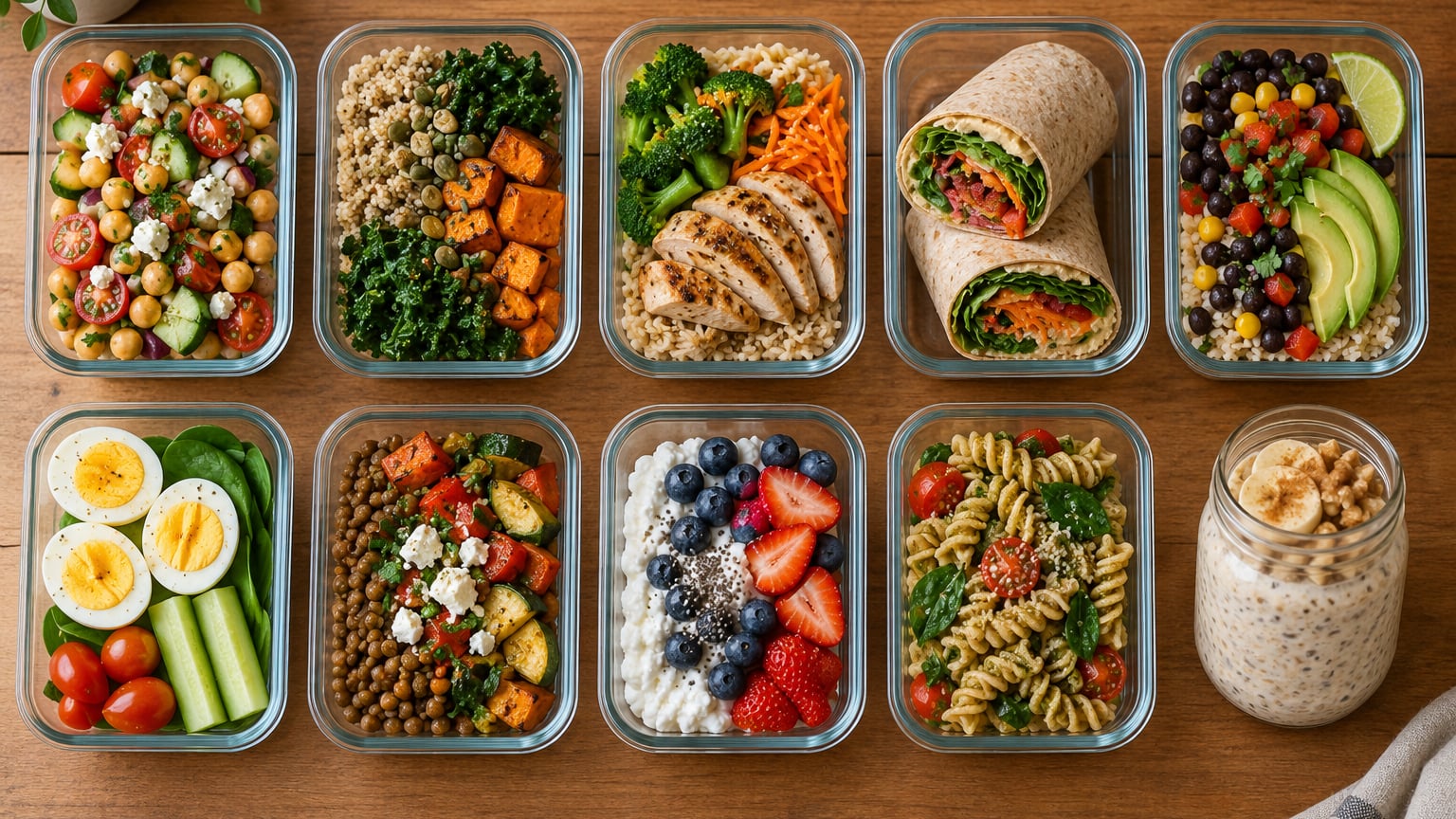
The best cheap healthy lunches to bring to work are built from the cheapest things in the shop: canned beans, eggs, canned tuna, cooked grains, frozen vegetables and tortillas. Ten lunches built on those staples land somewhere between two and four dollars a serving, keep for three to four days in the fridge, and travel without a microwave.
The meals below are written for a real weekday, not a perfect one. Each one names the protein anchor, the prep time and what it costs per serving so you can pick the night before. I rotate these myself, and the leftovers-first approach — cook once at dinner, carry a portion forward — does most of the work.
Table of Contents
- 10 Cheap Healthy Lunches to Bring to Work at a Glance
- 1. Chickpea and Cucumber Grain Bowls
- 2. Turkey and Hummus Wrap
- 3. Tuna and White Bean Salad
- 4. Lentil and Vegetable Soup with Bread
- 5. Egg and Potato Breakfast Bowl
- 6. Peanut Butter Banana Oat Wraps
- 7. Chicken and Rice Bowl From the Night Before
- 8. Cottage Cheese and Fruit Snack Box
- 9. Black Bean and Corn Taco Cups
- 10. Overnight Oats with Berries
- Frequently Asked Questions
- How long can a packed lunch sit out at room temperature?
- What can I eat at work if there is no microwave?
- What is the cheapest lunch to take to work?
- What is the healthiest lunch I can take to work?
- How do I plan lunches so I actually eat them instead of wasting them?
- How much should a packed lunch cost per day?
- A Simple Weekly Lunch-Plan Routine
10 Cheap Healthy Lunches to Bring to Work at a Glance
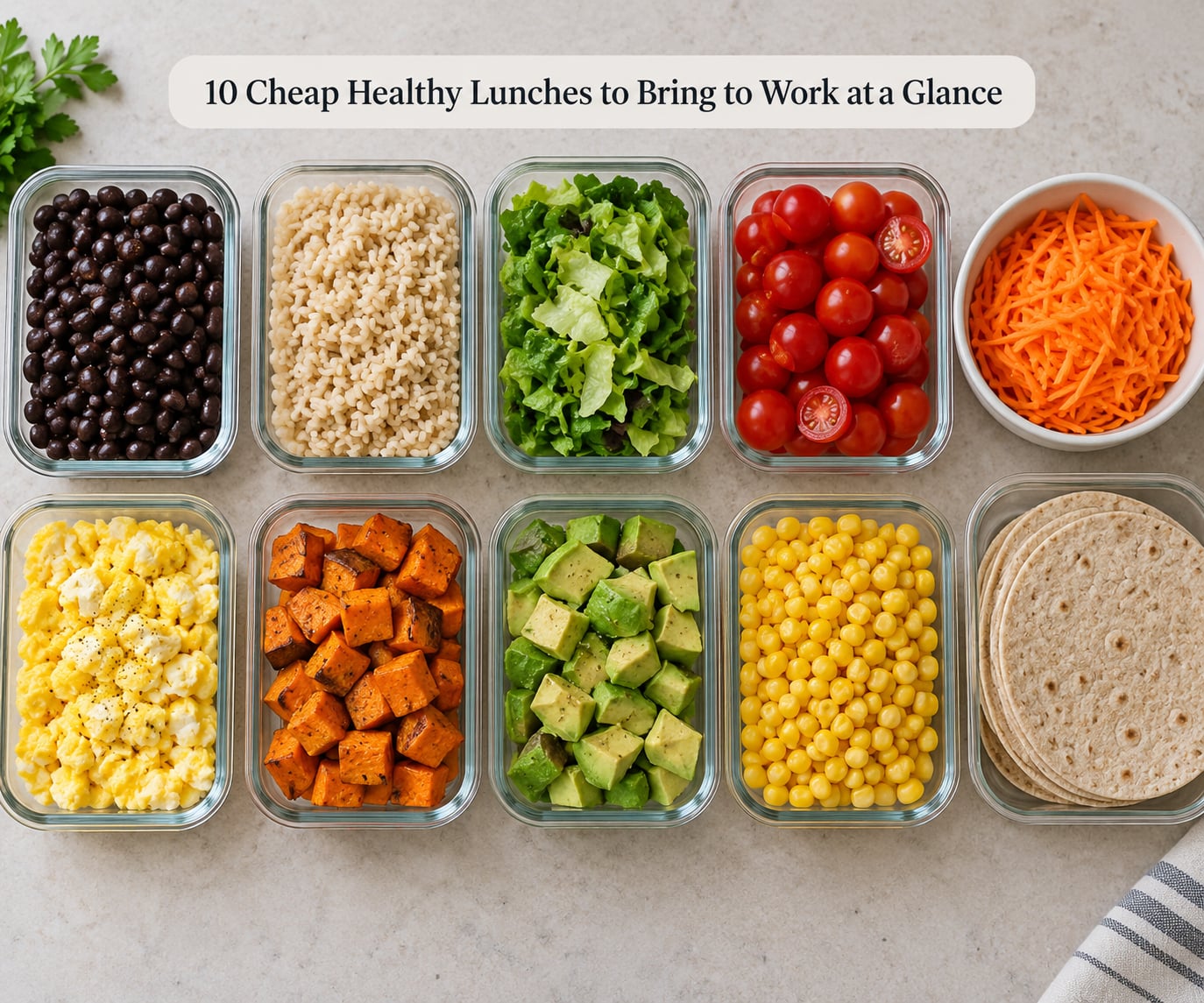
Every cost below is an estimate based on average US supermarket prices, and every one shifts with where you shop and what is on offer. Prices change, so treat them as a guide rather than a quote.
| Lunch | Estimated cost per serving | Prep time | Main nutrition advantage | Best use |
|---|---|---|---|---|
| Chickpea and cucumber grain bowl | About two dollars | 15 minutes | Fibre plus plant protein | A hot or cold desk lunch |
| Turkey and hummus wrap | About three dollars | 5 minutes | Protein with wholegrain carbs | A lunch with no reheating |
| Tuna and white bean salad | About two dollars | 10 minutes | Protein and fibre, no dairy | Warm days or no microwave |
| Lentil and vegetable soup with bread | About two dollars | 40 minutes for the batch | Legume protein, low cost per portion | Chilly days and one-pot cooking |
| Egg and potato breakfast bowl | About two dollars | 35 minutes for the batch | Whole-food protein and carbs | Early shifts and long mornings |
| Peanut butter banana oat wraps | Under two dollars | 3 minutes | Fibre-rich oats and healthy fat | The mornings you cannot cook |
| Chicken and rice bowl from dinner | About three dollars | 10 minutes | Lean protein with reheatable carbs | Using what you already cooked |
| Cottage cheese and fruit snack box | About three dollars | 4 minutes | Protein, calcium, no cooking | Light lunches and afternoons off |
| Black bean and corn taco cups | About two dollars | 10 minutes | Fibre, iron, plant protein | Cold lunches and vegetarian days |
| Overnight oats with berries | About two dollars | 5 minutes the night before | Fibre and slow-release carbs | Smooth texture that reheats well |
Cost is only half the calculation. What matters for a full afternoon is protein and fibre together, which is the framework behind every item here. Our guide to weight management support at work goes deeper on why that pairing keeps hunger off your desk in the small hours of the afternoon.
1. Chickpea and Cucumber Grain Bowls
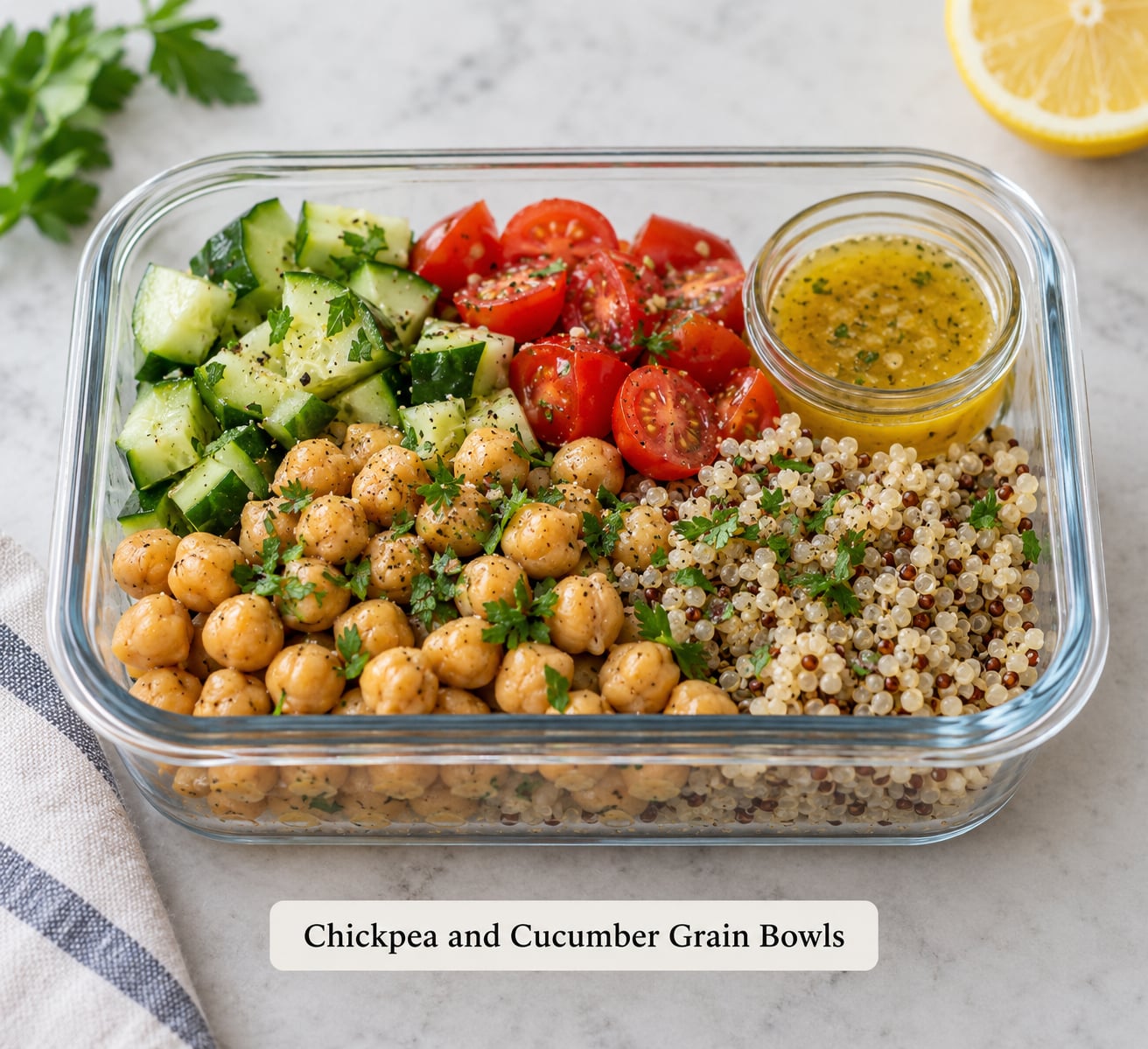
A grain bowl is the cheapest way to hit protein, fibre and carbohydrates in one container. Cook a batch of brown rice or quinoa on Sunday, rinse a can of chickpeas, and chop a cucumber and a few tomatoes.
Dress it at the table rather than in the bowl. Two tablespoons of olive oil, the juice of half a lemon, a pinch of salt and a spoonful of any hot sauce you have left in the fridge makes a dressing that costs pennies and keeps the cucumber crisp instead of turning it watery.
How to portion a grain bowl that fills you up
Use about three-quarters of a cup of cooked grain, half a can of chickpeas, a handful of chopped vegetables and two tablespoons of dressing. That combination lands near twenty grams of protein, which is roughly what most people need to stay comfortable until dinner.
Buy grains in the larger bags and cook them in a batch you freeze flat in a freezer bag. Frozen grain transfers to a container in the morning and is edible cold if you forget to heat it, which is a useful property on a busy day.
Refrigerate the bowl within two hours of packing it and keep it under 40F or 4C. Chickpeas and cooked rice both carry bacteria quickly once they leave the fridge, so a packed bowl that sits on a desk all morning is the one lunch in this list I would not leave unrefrigerated.
2. Turkey and Hummus Wrap
Sliced turkey, hummus and a wholemeal tortilla is a five-minute assembly that costs roughly three dollars a serving. Spread the hummus across the tortilla first, then add turkey, shredded carrot, lettuce and a little pepper.
The hummus does the work that mayonnaise does on a sandwich, and it holds moisture in the wrap instead of letting the tortilla go soggy by lunchtime. Pack any wetter vegetables, like tomato or cucumber, in a separate small pot and tip them in when you eat.
Deli turkey is the safety item to think about here. Keep the wrap at or below 40F or 4C until you eat it, use an insulated bag with a cold pack if the office fridge is questionable, and throw it away rather than eating it if it has sat warm for more than two hours.
3. Tuna and White Bean Salad
Mix one can of tuna and one can of drained white beans with chopped celery, a diced pepper, a handful of spring onion and a vinegar dressing. A tablespoon of olive oil and a squeeze of lemon is enough.
This is the lunch I pack most often in summer, because it needs no heat at all. Tuna and beans both improve after a night in the fridge as the vinegar dressing works into them, so make it the evening before rather than the morning of.
How to keep the dressing from turning the salad to mush
Pack the dressing in a small lidded pot and shake it in at your desk. A squeeze of lemon and a dash of vinegar in the bottom of the container works almost as well if you dislike extra pots, and the beans sit on top where they do not touch the dressing until you mix it.
Eat it within three to four days of making it. Beyond that the beans go soft and the celery loses its bite, and you have lost your money as well as your lunch.
4. Lentil and Vegetable Soup with Bread
One pot of lentil soup covers four or five workdays and costs about two dollars a serving. Sweat onion, carrot and celery in a little olive oil, add red lentils with diced tomatoes, cumin and stock, and simmer for twenty-five minutes.
Red lentils need no soaking and collapse into a thick soup that reheats in a minute, which makes them a better weekday choice than green or brown. Freeze the portions you will not eat that week rather than cooking a fresh batch every Sunday.
Soup needs either a microwave or a way to heat it, so if your workplace has neither, skip to the cold options. When you do have a microwave, reheat until steaming throughout and let it stand for a minute before eating.
5. Egg and Potato Breakfast Bowl
Roast a tray of diced potatoes with olive oil and salt, boil a dozen eggs, and put both in the fridge. Assembly in the morning is two eggs, a cup of potatoes, a handful of salsa and done.
This is the lunch that suits people who eat breakfast foods all day and still want something hot. Roast a whole tray of potatoes and a whole muffin pan of eggs on a Sunday and you have four or five servings from about three dollars of ingredients.
Hard-boiled eggs keep in their shells in the fridge for about a week, and USDA guidance puts unpeeled eggs at around four to five weeks in the coldest part of the fridge, so a mid-week top-up from boiled eggs you already have is easy. Keep them away from raw meat in the fridge, and peel at your desk rather than before you leave.
6. Peanut Butter Banana Oat Wraps
Mash one banana with two tablespoons of peanut butter, spread it on a wholemeal tortilla, add a small handful of oats or a spoon of granola for bulk, and roll. It takes three minutes and costs under two dollars a serving.
Oats add fibre and slow the sugar spike that comes from banana alone, which is the whole point of the combination. A drizzle of honey is optional and unnecessary if the banana is ripe.
If peanut is out, sunflower seed butter does the same job for most people. Check that the seed butter is made in a facility that also handles peanuts if anyone at your desk has a serious allergy, and mention the swap in passing rather than assuming.
7. Chicken and Rice Bowl From the Night Before
This is the model most budget forums recommend for cheap healthy lunches to bring to work, and it is the cheapest one on the list. When you cook chicken and rice for dinner, put a portion in a container before you eat and refrigerate it straight away.
Next morning, add frozen vegetables straight from the freezer and a spoonful of salsa. They thaw against the warm rice and need no cooking time at all, which turns a ten-minute lunch into a two-minute one.
Reheating chicken leftovers without drying them out
Reheat until the centre reaches 165F or 74C, and stop there. Chicken that has cooked all day loses water fast, so a damp piece of paper towel in the bottom of the container keeps the steam in and the meat edible.
If the workplace has no microwave, this bowl still works served at room temperature for the first hour of the day as long as it went into the fridge at home and stays cold in transit. Do not leave a cooked chicken and rice bowl at desk temperature past two hours.
8. Cottage Cheese and Fruit Snack Box
Half a pot of cottage cheese, a piece of fruit and a small handful of nuts or seeds makes a light lunch that costs about three dollars and takes four minutes to pack. Add three or four wholegrain crackers if you want more of it.
Cottage cheese is one of the higher-protein foods you can buy per dollar, and it is a reasonable stand-in for a filling lunch rather than a diet food. Half a cup gives you roughly fourteen grams of protein.
Grapes and berries travel better than apples and bananas, which brown and bruise. For nut allergies, pumpkin seeds or roasted chickpeas do the same job, and salted sunflower seeds are cheap and last in the cupboard for weeks.
Pair it with a full bottle of water through the day. Our piece on water access at work and why it matters covers the small habits that make a lighter lunch work through a long afternoon.
9. Black Bean and Corn Taco Cups
Drain a can of black beans and a can of corn, mix them with salsa and a spoon of plain yogurt or a little shredded cheese, and spoon the mixture into crunchy tortilla cups. Add shredded lettuce at the desk.
It costs about two dollars a serving and comes together in ten minutes with no cooking at all. The tortilla cups are the part that makes it travel, because they hold the filling without going limp the way a soft taco does.
Drain the beans properly and hold the lettuce back until the last second. Moisture trapped under a lid is what turns a bean salad into beige porridge by Thursday, and that is exactly the failure people describe when they say packed lunches go off.
10. Overnight Oats with Berries
Half a cup of oats, half a cup of milk or fortified plant milk, a spoonful of yogurt and a layer of fruit in a jar, mixed the night before and eaten straight from the fridge in the morning. Berries on top, or stirred in, so they do not dye everything purple.
It costs about two dollars a serving and takes five minutes the night before. The jar survives a commute without a bag of ice and reheats in a microwave if you want it warm.
Five ways to stop cheap healthy lunches to bring to work going boring by Wednesday
Change one component a day rather than the whole meal. A different salsa, a handful of seeds, a spoonful of pesto stirred into the grain bowl, or a different vinegar in the bean salad costs almost nothing and changes how the lunch tastes.
Keep two dressings in separate pots and swap them mid-week. Most lunch fatigue is really sauce fatigue, and two dressings cover most of it.
Freeze two of the week’s portions as raw overnight oats in a jar. Thaw in the fridge overnight with the milk already added and it is set by morning, which means you can cook four servings of oats on Sunday and pack five days.
Frequently Asked Questions
How long can a packed lunch sit out at room temperature?
Two hours is the limit, and one hour if the room is above 90F or 32C. That rule applies to anything with meat, dairy, eggs or cooked rice and beans in it. Cold items like whole fruit, unopened shelf-stable drinks and most crackers are the exceptions. An insulated lunch bag with a frozen gel pack keeps a box cold for most of a workday and is the cheapest fix available.
What can I eat at work if there is no microwave?
Cold lunches do the job: tuna and white bean salad, chickpea grain bowls eaten at room temperature, peanut butter banana wraps, cottage cheese and fruit, black bean taco cups and overnight oats served cold. Choose items where the dressing sits in a separate pot. If you want something hot without a microwave, a wide-mouth insulated thermos filled with boiling water at lunchtime cooks oats or instant noodles in about ten minutes.
What is the cheapest lunch to take to work?
Peanut butter on a wholemeal tortilla or slice of bread with a banana comes in under two dollars a serving and takes three minutes. Chickpea and cucumber grain bowls, black bean taco cups and lentil soup with bread all land near the same figure when cooked in batches. The trick is buying beans, tuna, oats and eggs in larger sizes and cooking the grain once for the week rather than per portion.
What is the healthiest lunch I can take to work?
The healthiest packed lunch combines a protein of about fifteen to twenty grams, a whole grain or starchy vegetable, and at least two vegetables or fruit portions. A chickpea grain bowl, a chicken and rice bowl with frozen vegetables, or lentil soup with wholemeal bread all meet that shape. For personal conditions, allergies or specific nutrient needs, a registered dietitian can tell you what fits you.
How do I plan lunches so I actually eat them instead of wasting them?
Cook for three days first, not five. A lot of packed food gets abandoned on Thursday because nobody wants the same bowl twice more. Prep two different lunches, repeat them twice each, and only add a fifth day once the first four are being eaten. Keeping visible snacks, like nuts or crackers, alongside the lunch also stops the afternoon vending machine run.
How much should a packed lunch cost per day?
Most packed lunches built on pantry staples land between two and four dollars a serving, so a five-day week runs between ten and twenty dollars before snacks and drinks. Buying lunch from a shop on the same five days usually costs considerably more, and the gap is where the savings accumulate across a year. Buying in bulk and cooking one batch of grain or soup changes the figure faster than swapping items.
If your office runs meetings that end in shared platters, our list of healthy meeting food ideas for modern workplaces handles that side of eating at work.
A Simple Weekly Lunch-Plan Routine
Pick two grains and two proteins on your next grocery trip, buy three kinds of vegetables, and cook once on a Sunday. One grain pot, one tray of roasted vegetables and a hard-boiled egg batch give you the raw material for most of the list above.
Then rotate rather than repeat. Two grain bowls, a wrap, a cold bean salad and an overnight oats jar covers a full week without anything tasting the same twice. Add the soup or the breakfast bowl when you want something hot.
Do the small jobs first: buy an insulated bag and two gel packs, keep dressing in separate pots, and label containers with your name if you share a fridge. Then start with the three-minute peanut butter wrap tonight and build the rest as the week goes.
Updated for 2026. Cost figures are US estimates and change with the market, so check current prices before you plan a week around them. This is general information about food, not medical advice.