
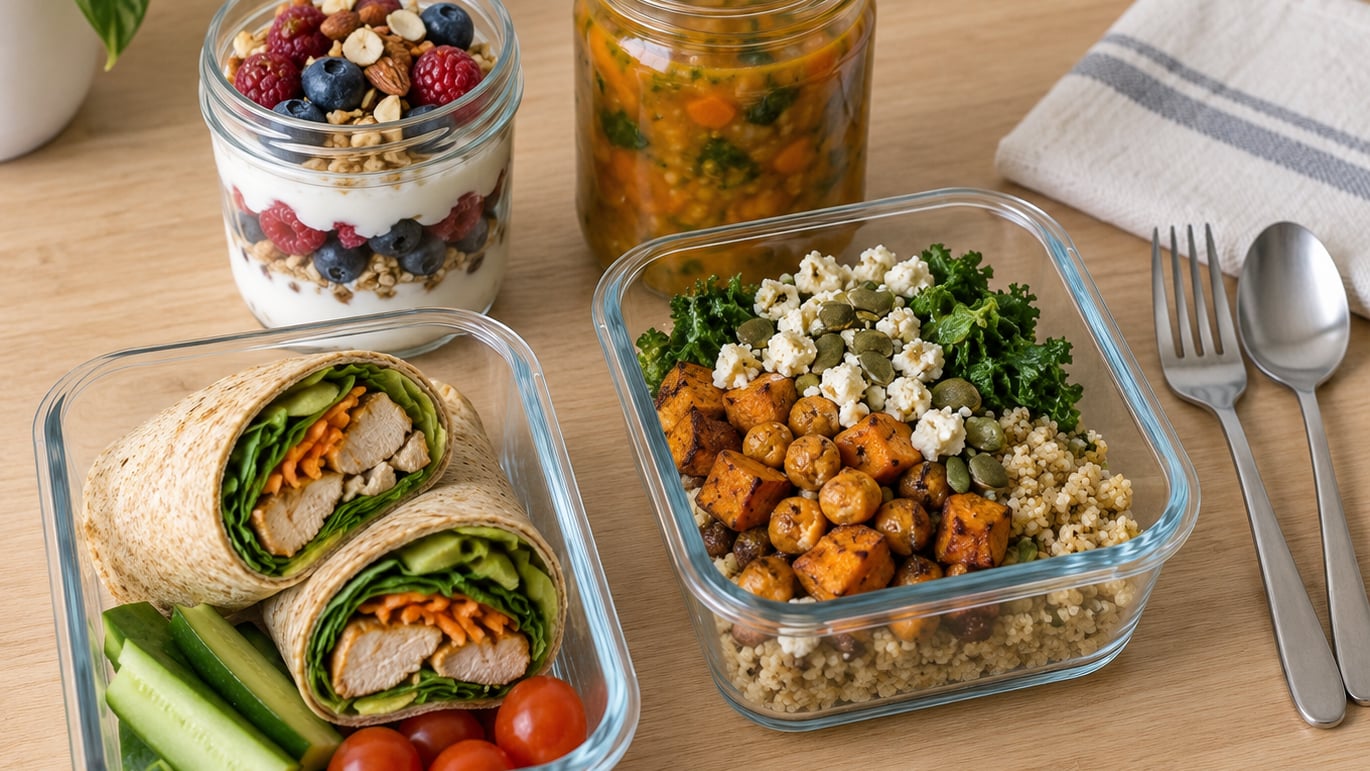
A 12-hour overnight shift does not care about your appetite, and the vending machine at 3am will happily hand you something fried and salty. The meal ideas for nurses on night shift that actually work follow one simple pattern: eat a protein-forward meal before you go, keep portable food you can eat with one hand during short breaks, and come home to something light you can digest while you fall asleep.
The theory is straightforward. The logistics are where it falls apart. You get a real break maybe twice in twelve hours, so the food has to be edible standing up at a nurses station in a fluorescent-lit break room.
The plan below splits eating into three phases and covers twelve specific meals, with prep times, containers, and safe storage notes. Most take under ten minutes to assemble.
Table of Contents
- Meal Ideas for Nurses on Night Shift at a Glance
- 1. Turkey Avocado Crunch Wrap
- 2. Overnight Oats with Berries and Peanut Butter
- 3. Chicken Burrito Bowl
- 4. Greek Yogurt Parfait with Fruit and Granola
- 5. Lentil and Vegetable Soup
- 6. Tuna and White Bean Salad
- 7. Vegetable Egg Muffins with Cheese
- 8. Cottage Cheese Bowl with Pineapple and Nuts
- 9. Black Bean and Sweet Potato Tacos
- 10. Hummus, Veggies, and Whole-Grain Pita Box
- 11. Salmon Rice Salad with Cucumber and Sesame
- 12. Overnight Peanut Butter Banana Chia Pudding
- Frequently Asked Questions
- Conclusion
Meal Ideas for Nurses on Night Shift at a Glance
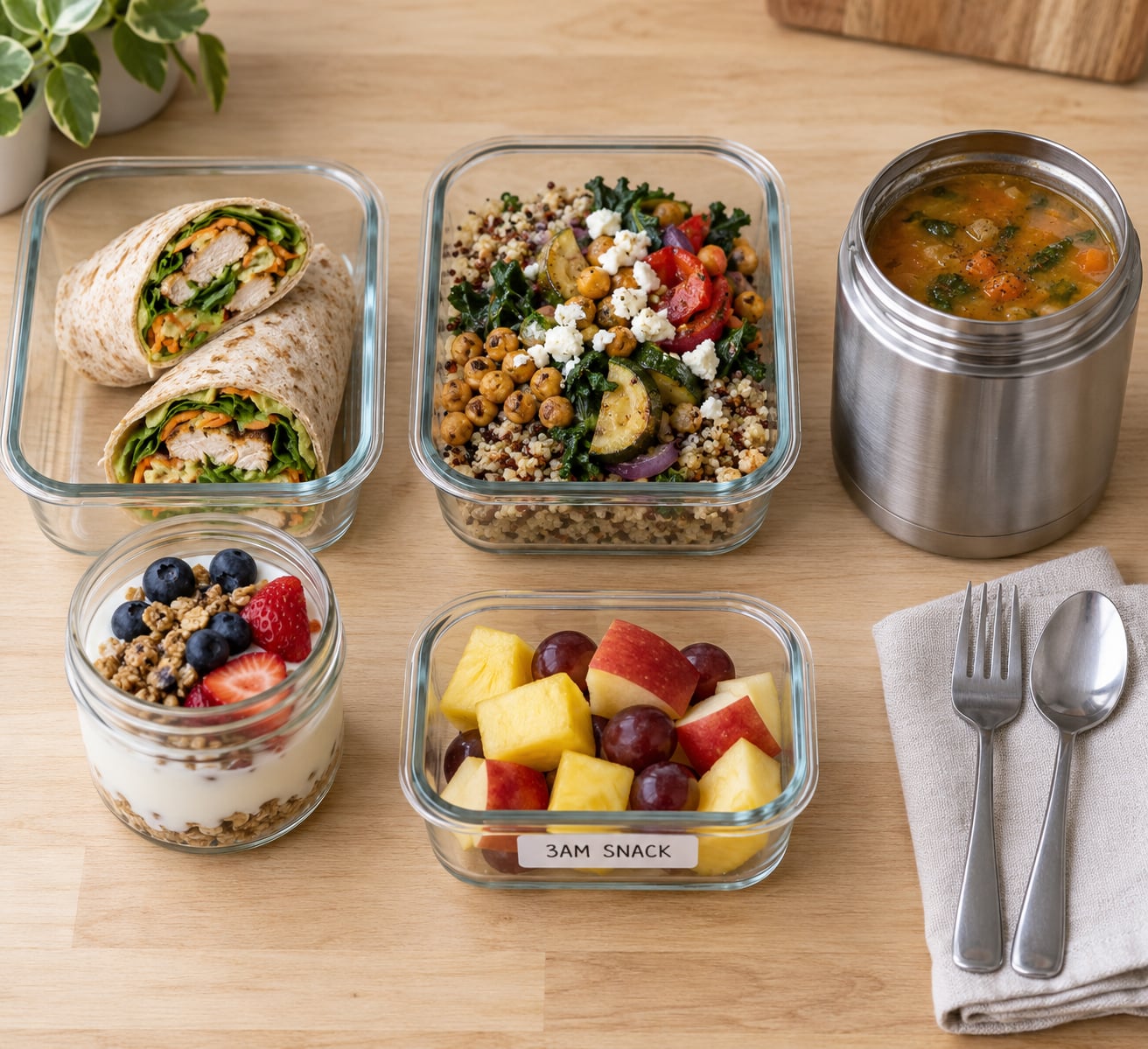
| Meal | Prep time | Best time to eat | Eats cold | Make ahead |
|---|---|---|---|---|
| Turkey avocado crunch wrap | 8 min | Early shift | Yes | Yes |
| Overnight oats with berries | 5 min | Start of shift | Yes | Yes |
| Chicken burrito bowl | 25 min | Mid shift | Either | Yes |
| Greek yogurt parfait | 3 min | Snack break | Yes | Yes |
| Lentil and vegetable soup | 35 min | Mid shift | Either | Freezes well |
| Tuna and white bean salad | 10 min | Mid shift | Yes | Yes |
| Vegetable egg muffins | 30 min | Snack or breakfast | Either | Yes |
| Cottage cheese bowl | 2 min | 3am trough | Yes | Yes |
| Black bean sweet potato tacos | 30 min | Mid shift | Either | Yes |
| Hummus and veggie box | 6 min | Mid shift | Yes | Yes |
| Salmon rice salad | 20 min | Mid shift | Either | Yes |
| Peanut butter banana chia pudding | 5 min | Snack or pre-shift | Yes | Yes |
Why these meal ideas for nurses on night shift hold up cold
The entries above were chosen for two properties that matter more than novelty: they survive without reheating, and they keep for a full shift in a bag. A sandwich that goes soggy by hour eight is a wasted sandwich, and a rice bowl that has to hit a microwave you may never get to is a lunch that does not exist.
Pick food you can eat in three or four bites with a paper napkin. That rules out most fork-and-knife meals, and honestly it rules out most of what is on the menu at 4am anyway.
Portability is the whole game, and it is the same problem people solve with 12 healthy meeting food ideas for modern workplaces, just with shorter breaks and a lot less patience for a leaky container.
What to do about the 3am hunger and the breaks you never get
Ask any night nurse when they get hungry and you will usually hear the same hour: somewhere between 2 and 4am. That trough is not a character flaw or a failure of planning, it is what happens when a body calibrated to daytime eating meets a schedule that puts hours ten through twelve of waking in the small hours.
Plan for it deliberately rather than hoping you make it to the cafeteria. Pack a protein-plus-fiber snack for that window even if you are not hungry when you leave home. Cottage cheese, a boiled egg, nuts, or a chia pudding all do better than a sugary option that spikes and drops your energy while you are charting.
For the breaks you never get, keep food that needs nothing: no microwave queue, no knife, no plate. Most breaks on a busy unit are eight to twelve minutes and get cut short by a call light. A wrap, a jar, or a container you can eat standing up converts a missed break into a meal. Meals that require a table are meals that do not happen.
On hydration, the boring answer is that most nurses on nights under-drink by accident, because water bottles get forgotten during a busy stretch and coffee takes over. Keep a filled bottle within arm’s reach of wherever you chart, and take a few sips every time you sit down rather than trying to catch up at once. If you are going to use caffeine, keep it in the earlier half of the shift and expect your sleep afterward to suffer if you are still drinking coffee in the last two hours.
Sleep after nights is its own problem, and eating timing is only one lever. Shift work sleep problems and how to fix them covers the rest of what helps, from light exposure to bedroom temperature.
What to do about food safety when a break room has no reliable fridge
Anything with meat, dairy, eggs, or cooked rice needs to stay cold, and most hospital break rooms cannot promise that for twelve hours. An insulated lunch bag with a frozen ice pack is the minimum, and for a full night you may want two packs or a bag large enough to hold them separately from your drinks.
General guidance is to keep perishable food at or below 40°F and reheat leftovers until they reach 165°F throughout. Cool cooked food in shallow containers within two hours, and skip anything that has been sitting warm for longer than that. When in doubt, throwing food away costs less than a bad night of sleep, and on night shifts a stomach bug is genuinely miserable.
1. Turkey Avocado Crunch Wrap
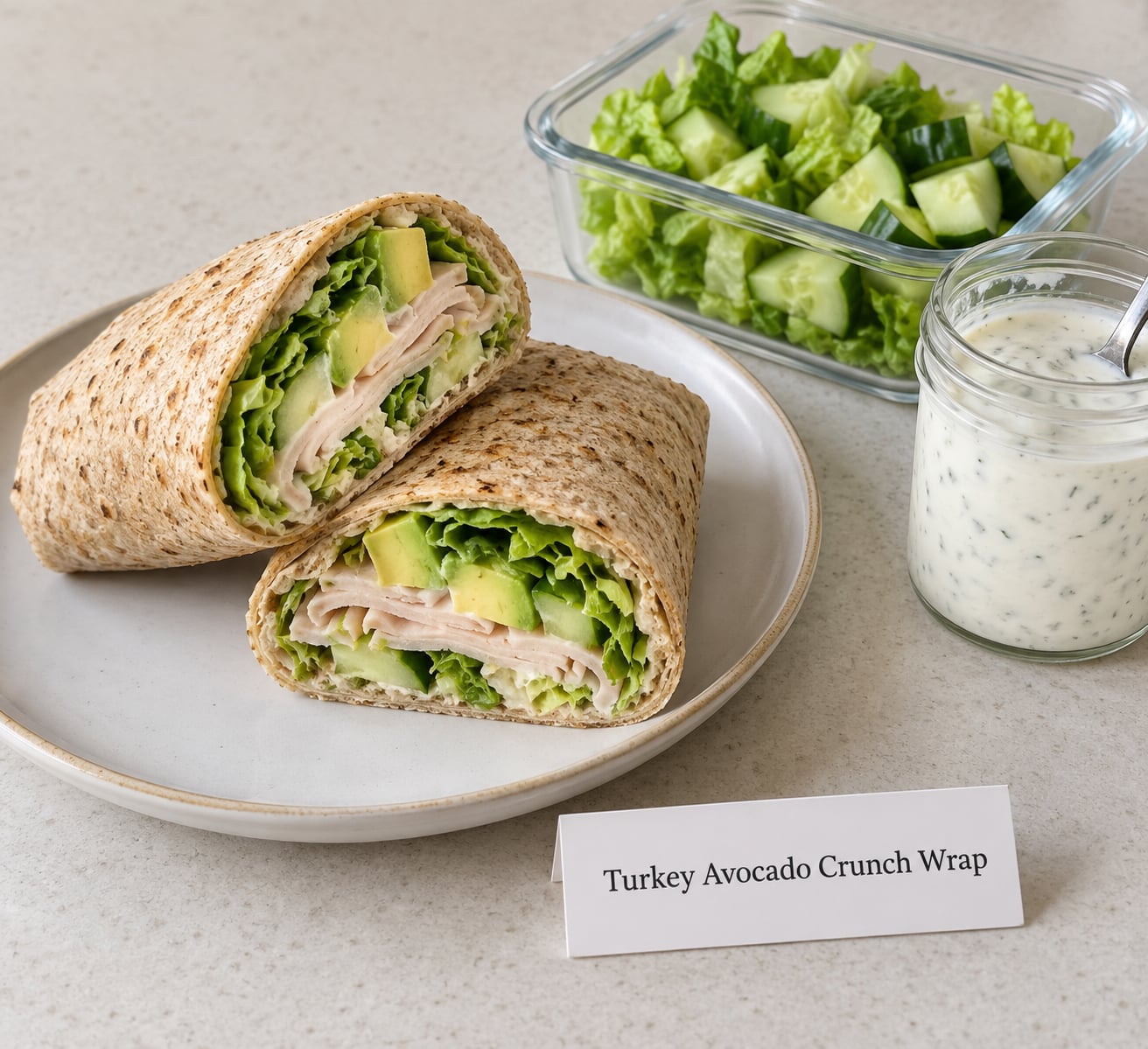
This is the meal for nurses who want zero reheating and about eight minutes of work. Slice turkey, mash avocado with a yogurt-based spread, and pile both onto a large whole-grain tortilla with shredded lettuce, cucumber, and a handful of chopped peppers.
The trick is prep, not assembly. Shred the lettuce and peppers on a day off, brown the ground turkey in a batch, and keep both in separate containers. Then the wrap itself takes about two minutes at 11pm when you are too tired to slice anything.
Roll it in parchment or wax paper rather than foil. It unrolls without tearing crumbs everywhere, and it fits into the side pocket of a bag without squashing. Cut it diagonally after wrapping so you can eat one end at a time.
How to prep a week of wraps in under an hour
Line a container with sliced turkey, another with shredded lettuce and peppers, and a third with mashed avocado mixed with the yogurt spread. That is the whole system. Each morning you take one of each, add a tortilla, and roll.
If you are short on time in the morning, roll six the night before and keep them in a sealed container in the fridge. They hold well for a day or two, though the tortilla softens after that, so plan your heaviest wrap-eating early in a run of nights.
2. Overnight Oats with Berries and Peanut Butter
Oats are the consensus default among night shift nurses, and for good reason. The jar sits in the fridge overnight, so you grab it and go, and you eat it with a spoon at a counter while charting.
Use rolled oats rather than steel-cut, and add more liquid than feels right, because the oats keep absorbing it while they sit. A ratio of roughly half a cup of oats to a full cup of milk or yogurt gives you something that is soft rather than gluey by 2am.
Layer it: oats and milk at the bottom, peanut butter and fruit on top. Fruit on the bottom releases juice and makes the whole jar wet, and soggy oats are a losing proposition. If you want crunch, pack the granola separately in a small zip bag and tip it in at the last second.
3. Chicken Burrito Bowl
A burrito bowl solves the problem of a meal that needs heat but should not depend on a microwave being free. Roast a sheet pan of chicken thighs at 400°F until they hit 165°F internally, then shred them, or use leftover rotisserie chicken from a homecooked night.
Build it over brown rice or black beans with corn, salsa, shredded cabbage, and avocado. Make the base in bulk: a large batch of rice and a tray of chicken will cover four or five shifts if you portion them out rather than scooping from the big container each time.
Cool leftovers quickly in shallow containers and refrigerate them within two hours. When you reheat at work, stir the middle and make sure it is steaming hot all the way through, not just hot at the edges. A microwave heats unevenly and a cold center is where bacteria likes to sit.
Making the bowl ahead for four shifts
Cook a big tray of chicken and a big pot of rice on a day off, then portion everything into shift-sized containers with the dry ingredients only. Add salsa, avocado, and any wet topping after you have eaten, or pack them in a small separate cup.
Avocado browns fast once it is cut, which is why it goes on last. If you want the bowl to travel without any reheating at all, leave out the avocado and add it when you sit down to eat.
4. Greek Yogurt Parfait with Fruit and Granola
Plain Greek yogurt plus chopped fruit plus granola is the fastest thing on this list, and it needs no microwave at all, which removes the most common reason nurses skip a meal mid-shift.
Keep the granola out of the yogurt until you eat. A container packed together in the morning will have a layer of wet crumbs at the bottom by hour six, and that is exactly the texture that makes you not want to eat it.
Use full-fat yogurt if the low-fat version leaves you hungry an hour later, and add a tablespoon of nut butter stirred through for staying power. On a hard stretch when you are running on four hours of fragmented sleep, the fattier version is the one that keeps you upright.
5. Lentil and Vegetable Soup
Soup is the most forgiving batch-cooking option, and it freezes better than almost anything else in this list. Simmer lentils with carrots, celery, onion, diced tomatoes, and whatever greens are in the crisper drawer until the lentils break down.
Portion into microwave-safe containers and freeze flat so they stack without turning to ice blocks. Bread and crackers go in a separate bag, because a cracker that has been sitting on soup in a bag since 8pm is a cracker nobody wants.
Reheat until the center is thoroughly hot and gives off steam, and heat it longer than you think you need. If the unit smells strongly of lentil soup the next day, the microwave is not clean and that is a separate problem you should also deal with.
Freezing soup for a run of nights
Lentil soup freezes better than creamy soups because there is no dairy to split, and thawed portions reheat in under three minutes. Freeze in quantities that match one serving per night, so thawing takes overnight in the fridge rather than in a microwave you are competing for at lunchtime.
6. Tuna and White Bean Salad
This one takes ten minutes, needs no stove, and travels better than almost anything with a dressing. Drain a can of tuna, rinse a can of white beans, and combine them with diced cucumber, halved cherry tomatoes, a spoonful of olive oil, and a squeeze of lemon.
Season with salt, pepper, and a little paprika. Skip heavy creamy dressings entirely, since they weep out of the container and make a mess of everything else in your bag.
Pack it the night before and keep it chilled with an ice pack. A canned-tuna salad also travels well as a sandwich filling if you would rather eat it with bread in hand while walking.
7. Vegetable Egg Muffins with Cheese
Egg muffins are the meal that handles a rotating schedule well, because a dozen of them in the fridge covers breakfast for several shifts and snacks for the rest. Whisk eggs with chopped bell pepper, onion, spinach, and a handful of shredded cheese, then pour into a greased muffin tin.
Bake until the centers are set, which for an egg dish means no liquid remaining and a temperature of at least 160°F in the middle. Cool them on a rack before they go in the container, or the top turns soft and slightly rubbery.
Refrigerate for up to four days, freeze for longer, and reheat until the center reaches 165°F before serving. Reheat one at a time rather than the whole batch, since you will never eat twelve muffins in one break.
What to pack alongside the muffins
Fill the remaining spaces in the muffin tin with halved grape tomatoes, a few olives, or raw carrot sticks, and the tin becomes a box covering both the savory hunger and the sweet one. Egg muffins are fine at room temperature for about an hour, but keep them chilled for anything longer than that.
8. Cottage Cheese Bowl with Pineapple and Nuts
This is the answer to the specific hunger that hits at 3 or 4am, when you are genuinely starving and nothing with substance is available. Cottage cheese is filling, shelf-stable for a few hours in a cooler, and takes about two minutes to assemble.
Drain it well, add diced pineapple and a spoonful of chopped walnuts or pumpkin seeds, and finish with cinnamon or a crack of black pepper. The sweet version tastes like a dessert, the savory version tastes like lunch, and both keep you full for a couple of hours.
Bring the bowl and a fork to your break rather than eating at the desk, and pair it with a handful of raw vegetables if you can manage it. Soluble fiber plus protein is a combination that settles the stomach instead of spiking it.
9. Black Bean and Sweet Potato Tacos
Mash a can of black beans with cumin, garlic powder, and a squeeze of lime, then spoon them into small tortillas alongside roasted sweet potato cubes. Top with shredded cabbage, salsa, and either yogurt or avocado.
Assemble six at a time on a day off and keep the shells separate from the fillings in your containers. A tortilla stored directly against wet salsa turns to mush by the middle of the shift, and this is the single most common way a packed taco lunch gets wasted.
Warm the shells in a dry pan for thirty seconds before filling them, and reheat the filled tacos only if the break room is quiet enough to eat them while they are hot. Otherwise this is a perfectly good cold meal, especially in a hospital with unreliable microwaves.
Cooking sweet potato for the whole run
Roast a tray of cubed sweet potato at 400°F until the edges brown, about half an hour, and keep it separate from the beans. It reheats better than it steams, and a few minutes in a dry pan brings it back without needing a microwave.
10. Hummus, Veggies, and Whole-Grain Pita Box
A bento-style box of hummus, raw or roasted vegetables, fruit, and pita needs no cooking at all, which makes it the fastest reliable option when you have already spent the morning on prep.
Cut the pita into cubes so it can travel alongside the hummus rather than on top of it. Then nothing gets soggy, and you can dip each bite instead of dealing with a folded pita that has fused to itself in your bag.
Fill the bottom section with hummus, keep carrot and cucumber sticks in a separate well, and add apple slices or grapes on the side. Add a hard-boiled egg or a handful of nuts if you want this to count as a real meal rather than a snack.
Vegetarian, dairy-free, and gluten-free swaps
The box is naturally the most adaptable item on this list. Sunflower seed butter stands in for nut butter, rice cakes for pita, and carrots and peppers stand in for cucumber. Swap in olives or extra seeds if you want it to read as a meal and not a snack box.
11. Salmon Rice Salad with Cucumber and Sesame
Cook salmon until it reaches 145°F internally, flake it into a bowl over cooled brown rice, and add diced cucumber, scallions, a teaspoon of sesame oil, a splash of soy sauce, and a few sesame seeds.
It works warm or cold, and served room temperature it is one of the few meals that is genuinely pleasant to eat at 2am, which is more than you can say for most leftovers. Serve it on greens to keep the rice from getting soggy in the container.
Keep it under an ice pack for the duration of the shift, and if you are short on time, canned salmon packed in olive oil works in a pinch. Nothing here needs a microwave, though a thirty-second blast helps if you prefer it warm.
Canned salmon instead of cooked
One drained can of salmon flaked into cooked and cooled rice gives you the same dish with none of the work, and the cost difference between it and fresh fillet is substantial. Tuna and white bean salad makes the same substitution if you are out of both.
12. Overnight Peanut Butter Banana Chia Pudding
Mix chia seeds with milk and a mashed banana until no dry pockets remain, stir in a spoonful of peanut butter and a splash of vanilla, then refrigerate overnight in a jar or container.
Give it a stir in the morning. If it is thicker than yogurt, loosen it with a tablespoon or two of milk, and if it is loose, top it with more banana. Texture is the only thing that takes any work here.
This one travels best with the banana layered on top so it does not soak in overnight, and it is filling enough to work as a light meal before a shift when you do not have time to cook. Keep it chilled, and eat it within a few days rather than a few weeks.
Swapping it when you cannot do dairy
Use an unsweetened plant milk and check that the nut butter is not processed in a facility that also handles dairy if that matters to you. The texture will be slightly looser without dairy thickener, so add an extra spoon of chia seeds and let it set for longer in the fridge.
Frequently Asked Questions
What is the best food for night shift nurses?
There is no single best food, but a protein-forward pre-shift meal plus portable mid-shift options works best. Think chicken, eggs, beans, yogurt, or tuna for protein, paired with slow carbs like oats, brown rice, sweet potato, or whole-grain bread. Skip the heavy fried option at 3am, which arrives with a crash ninety minutes later.
What is a good meal to eat during the overnight shift?
A wrap, a grain bowl, a soup, or a composed salad all work, as long as you can eat them in a few bites without utensils and they taste decent cold. Most nurses eat their main meal in the first third of the shift, when digestion is still efficient, then snack lightly through the small hours rather than eating a heavy meal at 4am.
What is a good eating plan for night shift workers?
Eat a substantial protein and complex-carbohydrate meal about two to three hours before the shift. Have your main shift meal early, around 11pm or midnight, and snack through the 2am to 4am trough with protein plus fiber. Come home to something light and easy to digest about an hour before you sleep.
What are some quick lunch ideas for nurses?
Quick options that need no reheating include a turkey and avocado wrap, tuna and white bean salad, a Greek yogurt parfait with fruit and granola packed apart, or a hummus and vegetable box with pita cut into cubes. Each takes between two and ten minutes to assemble and survives a full shift in a bag.
How do you meal prep for night shift nursing?
Prep on your days off and build components rather than finished meals: cooked chicken, seasoned black beans, chopped vegetables, hard-boiled eggs, and portioned snacks. Refrigerate what you will eat within four days and freeze the rest flat. Reheat only until the center is steaming hot, and cool cooked food in shallow containers within two hours.
What should I eat after a night shift to sleep better?
Keep the post-shift meal small, light, and carbohydrate-focused rather than greasy or high in protein. Rice, toast with honey, a banana with oatmeal, or a small bowl of soup settles well if you eat it an hour or so before lying down. Large fatty meals close to bedtime are a common cause of that wired-but-exhausted feeling nurses describe.
Conclusion
If you only try three of these meal ideas for nurses on night shift, start with the cottage cheese bowl, the overnight oats, and the hummus box. All three assemble in minutes, eat cold, survive a bag, and fill you up enough to get through the 3am stretch.
Before a stretch of nights, prep components rather than full meals, then pack two or three options per shift and rotate them so you are not eating the same packed lunch five days running. Keep one backup item in a locker or bag for the nights when everything else falls apart. If your employer runs anything for rotating staff, wellness programs for shift workers covers what usually gets built into them.
Choose food that is portable, filling, safe to store, and edible during a short break. That constraint is narrow, but it is the difference between eating well on nights and grabbing whatever the cafeteria is serving at midnight.