
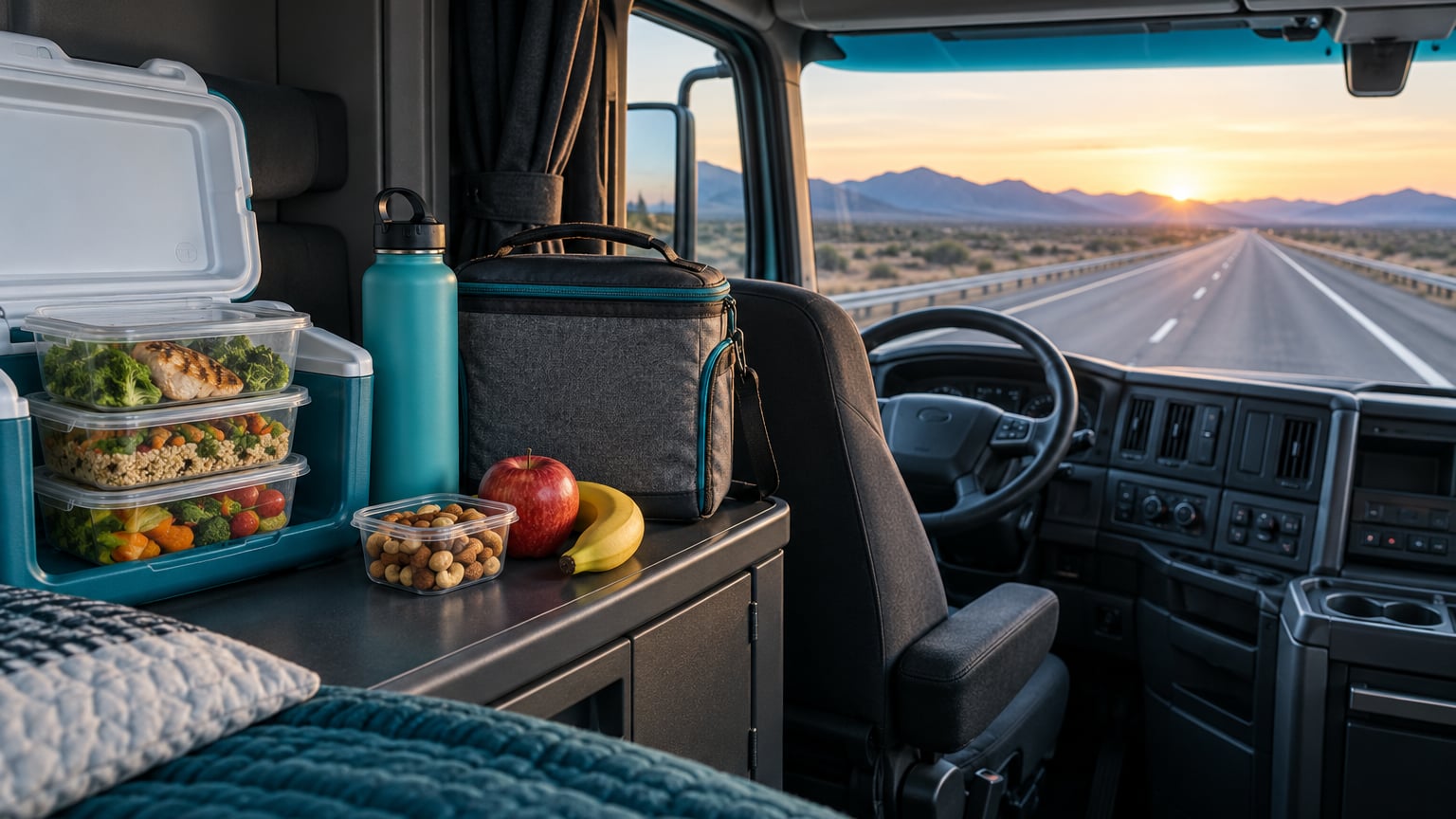
Eating well on the road comes down to three habits: plan your meal windows around your driving hours, pack food that survives a hot cab, and know exactly what to order when you pull into a truck stop. None of that takes a kitchen. It takes a cooler, a list, and about ninety minutes at home before you leave.
The drivers who do this well are not cooking gourmet meals at rest stops. They eat the same simple food most days, so nothing is a decision at 11pm when the parking lot is quiet and the only option is fluorescent.
That matters more than it sounds. Professional drivers sit for ten or eleven hours a day and have irregular access to fresh food, which is why weight gain, blood pressure problems and digestive complaints are so common in the industry. Nutrition is the one health lever you fully control between dispatch and delivery.
If fatigue is also part of your problem, our guide to prevent driver fatigue on long hauls covers the non-food half of the problem.
Table of Contents
What You Need
You need less gear than most drivers assume. The basics are a hard-sided cooler or a thermoelectric unit that plugs into your 12-volt socket, a leakproof water bottle you can fill at every stop, and a set of containers that seal properly and stack inside the cooler.
On the food side, aim for items that are fine at room temperature for a day or two: canned tuna and beans, nut butter, whole-grain crackers, dried fruit, roasted chickpeas, shelf-stable milk, and vacuum-packed meats. Fresh food is a bonus, not the foundation of the plan.
Storage rules are simpler than most guides make them sound. Keep perishable food at or below 40°F (4°C), and follow the USDA minimum internal temperatures when you do cook: 165°F (74°C) for poultry, 160°F (71°C) for ground meat, and 145°F (63°C) for whole cuts of meat and fish.
One thing worth checking before you install anything: many carriers restrict cab modifications, particularly anything that needs wiring into the tractor. A plug-in unit on the accessory circuit is usually a smaller question than cutting into the dash, and asking your maintenance department before your first long run saves an argument later.
Step-by-Step: A Road-Ready Eating Routine
Seven steps, repeated the same way every trip. The system matters more than any single food, because the drivers who stick with it are the ones who stop making decisions at midnight.
1. Plan Meals Around Driving Hours
To eat healthy as a truck driver, write your eating windows into your schedule the way you write your fuel stops. Under hours-of-service rules you have an 11-hour driving limit inside a 14-hour window, and you need a 30-minute break after 8 hours of driving, so there are natural meal points you can plan around.
For a typical 10-hour driving day, eat a real breakfast before you leave, a substantial meal at your first break, a lighter midday meal, and a proper dinner near the end of your drive. Two or three snacks in between keep you from arriving at the next stop starving.
Long gaps between meals cause two problems: you overeat when you finally stop, and your blood sugar swings on a fast-then-feast cycle that leaves you foggy behind the wheel. It works when you reach the end of a drive feeling fed and able to park safely, rather than lightheaded and looking for the nearest food.
2. Build a Balanced Road Meal
A road meal is not complicated. Aim for four things on the plate: a protein, a high-fiber carbohydrate, some produce, and water.
Chicken or tuna plus a whole-grain wrap with spinach and salsa works. So does rice and beans with a side of carrots. Cottage cheese with fruit and a handful of almonds is a full meal, not a snack, and it needs no reheating at all.
Eat slowly when you can. Ten minutes at a picnic table beats three minutes in the cab with the engine running, because your body registers fullness before you swallow the last bite. Feeling alert, comfortable, and ready for the next two hours of driving is the sign the balance is right.
3. Shop and Prep Before the Route
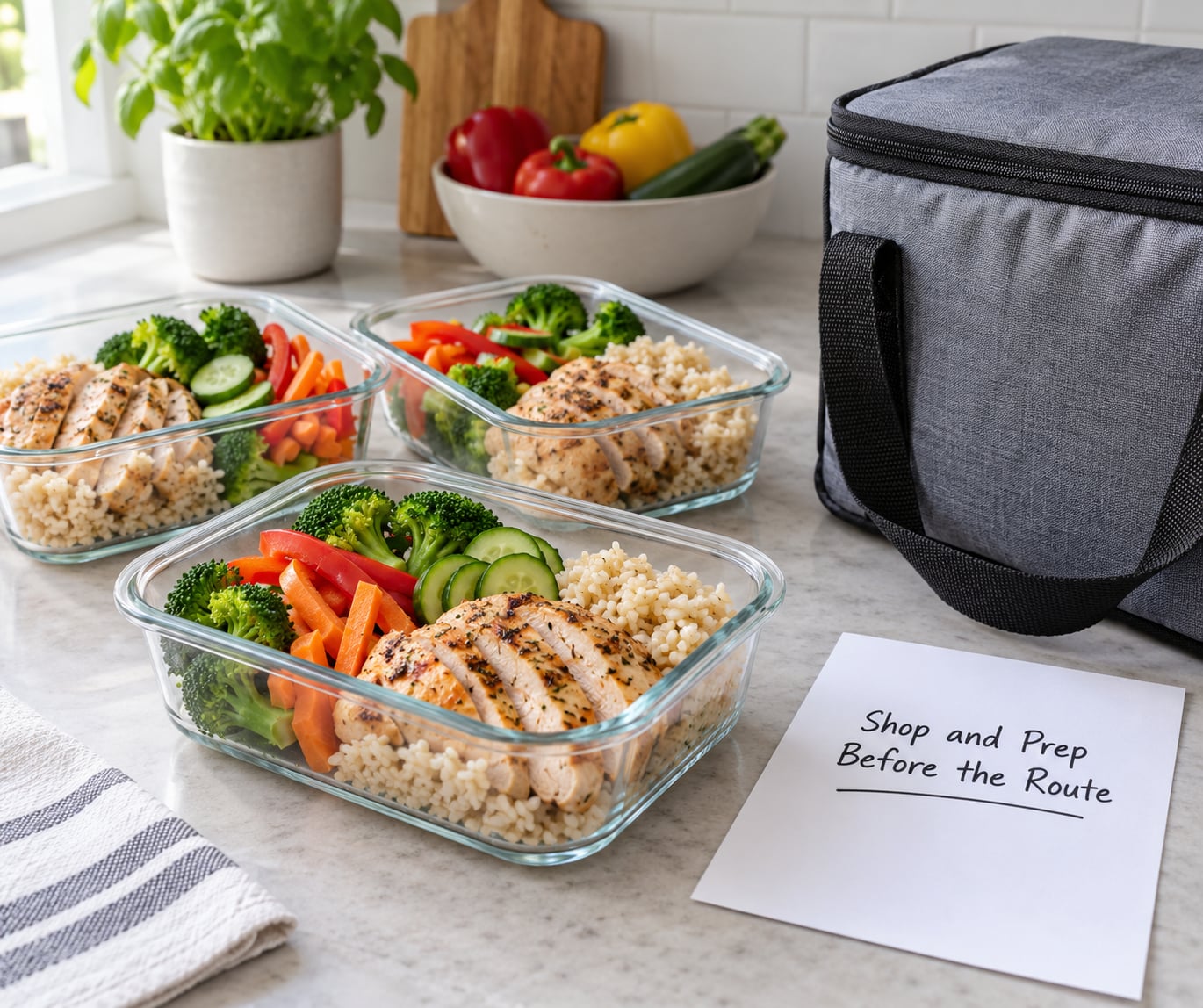
Batch cooking is the step that separates drivers who eat well from drivers who say they meant to. Most people prepare two nights of food and hope for the best. Prepare five.
A workable grocery list for five days: cooked chicken breast or ground turkey, eggs, canned beans and tuna, brown rice or whole-grain pasta, rolled oats, two kinds of fruit, pre-washed salad greens, carrots, peppers, onions, and a couple of tubs of hummus or salsa.
Roast a sheet tray of chicken and vegetables, cook a pot of rice, and portion everything into containers while it is still warm. The containers go straight into the cooler, and you have most of a week’s eating done in under an hour.
4. Store Food Safely in the Truck
A truck cab gets hot fast, and a cooler is only as good as its packing. Put the food you need most at the top, keep it in sealed containers, and refill ice rather than topping off a puddle of melted water.
The two-hour rule is the one to remember. Perishable food should not sit above 40°F (4°C) for more than two hours, and in hot conditions above 90°F (32°C) that window shrinks to one hour. When food has been warmer than that for too long, throw it out rather than tasting it.
Reheat leftovers until steaming hot all the way through, which means 165°F (74°C) for a combined dish. A microwave in a truck is fine for that; it just needs the food to reach temperature evenly, not just around the edges.
5. Choose Smart Options at Truck Stops
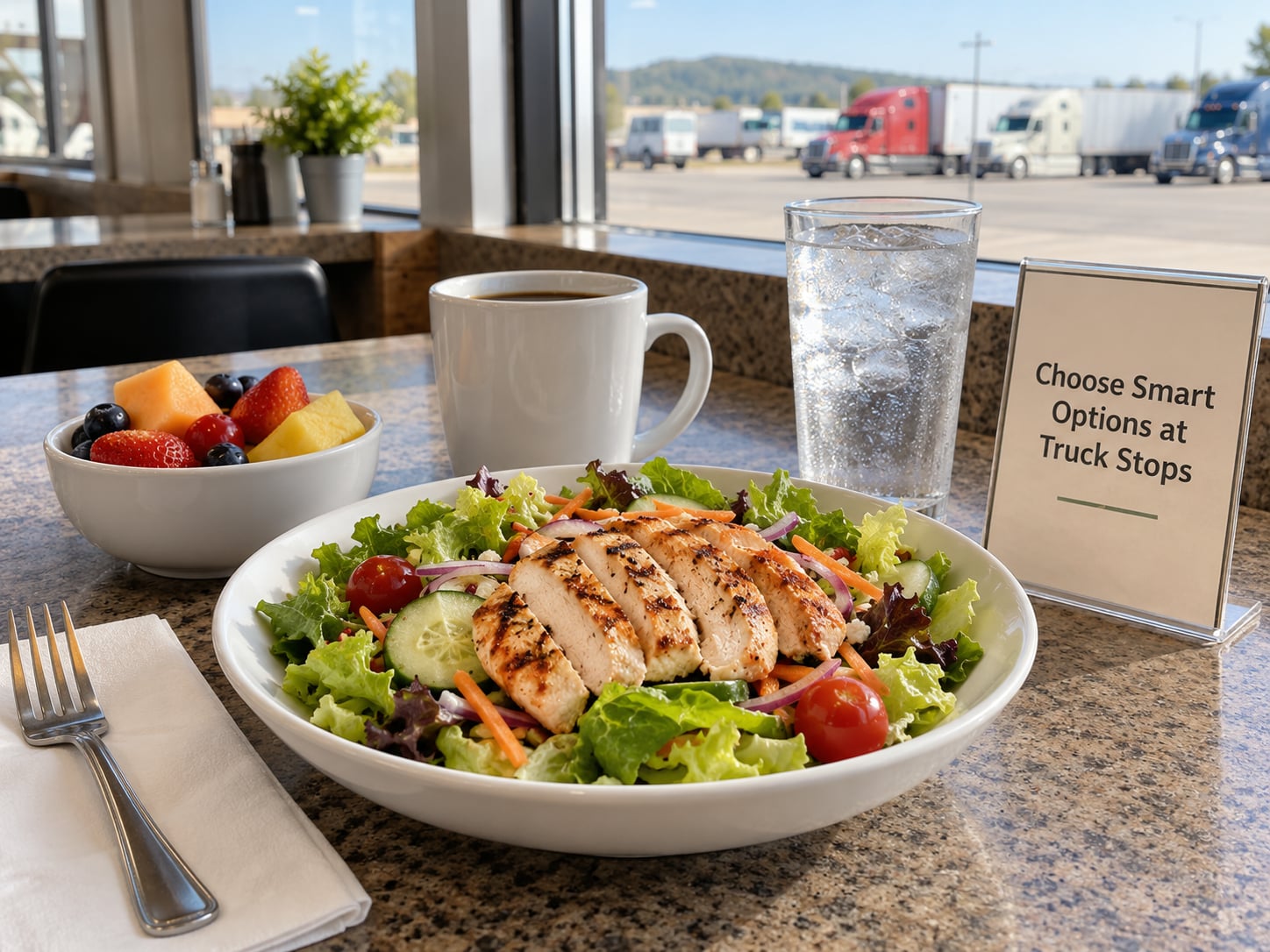
You will still eat at truck stops. The trick is ordering like you mean it: protein first, vegetables second, fries as a side rather than the meal, and water or unsweetened tea instead of soda.
Grilled chicken salad, a burger with no bun and a side salad, a slice of pizza with a salad alongside, or a plate of vegetables with grilled meat all work. If the menu is a burger chain, order the burger no bun, add a side salad, and skip the shake.
Drivers on forums keep repeating the same point: eating healthy on the road takes consistent effort, and one sit-down meal a week keeps you sane as much as it keeps you fed. Budget for that meal rather than resenting it.
For anyone managing diabetes, kidney disease, or another condition affected by diet, the general framework here is not a substitute for your own plan. Talk to a doctor or registered dietitian before changing what you eat on the road.
6. Manage Hunger, Energy, and Hydration
Water first, everything else second. Keep a filled bottle within reach and refill it at every fuel stop, which usually means every 150 to 200 miles. Slight thirst is often the only warning sign you get before concentration starts slipping.
A portable snack formula that works: a protein plus a fiber plus a little fat. String cheese and apple slices. Beef jerky and a handful of nuts. Hummus with whole-grain crackers. Those three combos keep you steady for two or three hours without the spike and drop that comes from a candy bar.
Know when to stop sooner rather than pushing through. If you are yawning repeatedly, drifting between lanes, or losing track of the last few miles, hunger and dehydration are likely part of it. Pull into the next rest area, eat, drink water, and take the break. Our delivery driver safety tips cover the other warning signs worth taking seriously.
7. Reset Your Plan Between Trips
The reset happens at home, and it takes one evening. Empty the cooler completely, wash everything, and discard anything that sat in a warm cooler longer than two hours rather than trying to make it last one more run.
Then write your next week’s list before you go to the store. Check the route first, because produce regions are worth a bigger buy and desert stretches are not.
If hunger, weight changes, digestive problems, or fatigue persist despite a decent routine, that is a reason to see a doctor or registered dietitian rather than a reason to try harder. Some of it is medical, and drivers put off that appointment longer than anyone else.
How to Eat Healthy as a Truck Driver: Truck-Friendly Foods That Keep You Full
The easiest way to eat healthy as a truck driver is to build a shelf of foods you genuinely like, because you will eat the same things for two weeks. Good choices are dense, filling, and boring in the best way.
Reliable in the cab: nuts and peanut butter, whole-grain crackers, roasted chickpeas, vacuum-packed tuna, string cheese, beef jerky, dried apricots, bananas, apples, oranges, oatmeal pouches, whole-grain wraps, hard-boiled eggs kept cold, and vacuum-packed cooked chicken.
Keep cold or eat first: fresh vegetables, dairy, fresh meat, and cut fruit. These are the first things to use up on day one, not day nine.
Skip or limit: anything that makes you drowsy or thirsty, plus anything messy in a moving cab. Heavy fried food sits badly, and salty snack food leaves you drinking more water than you should have to.
A One-Week Eating Plan for Truck Drivers
This is a template, not a prescription. Portions flex with your hunger, your health needs, how long the route runs, and how much refrigeration you have. Shift anything that does not fit your week.
| Day | Breakfast | Lunch | Dinner | Snacks |
|---|---|---|---|---|
| Day 1 | Overnight oats with banana and peanut butter | Prepped chicken and rice container with carrots | Truck stop grilled chicken salad | Almonds, string cheese |
| Day 2 | Eggs cooked at home, whole-grain toast | Whole-grain wrap with turkey, spinach, tomato | Prepped rice and beans with peppers | Apple slices with peanut butter, roasted chickpeas |
| Day 3 | Oatmeal pouch with nuts added | Tuna pouch with whole-grain crackers, side salad | Truck stop burger, no bun, side salad | Beef jerky, orange |
| Day 4 | Eggs cooked at home, banana | Prepped chicken and vegetable container | Cottage cheese with fruit and seeds | Hummus with crackers, handful of walnuts |
| Day 5 | Overnight oats with berries or dried fruit | Whole-grain wrap with leftover chicken | Truck stop plate of vegetables with grilled meat | Banana, string cheese |
| Day 6 | Oatmeal pouch with peanut butter | Prepped rice and beans container | Eggs and vegetables cooked in the cab | Trail mix, apple |
| Day 7 | Eggs cooked at home, whole-grain toast | Tuna pouch with crackers and fruit | Prepped chicken and rice container | Roasted chickpeas, water bottle refill |
Common Mistakes and Better Fixes
Mistake: relying on energy drinks to get through a shift. Fix: water first, coffee second, energy drinks rarely. The spike is short and the drop lands while you are still driving.
Mistake: skipping meals and eating once, huge, at night. Fix: three smaller meals plus two or three snacks beats two or three large fast-food meals, and it keeps your energy even through the afternoon.
Mistake: eating only takeout. Fix: keep two or three shelf-stable meals in the cab as a default. Truck stops become a choice instead of the only option, which is also better for your wallet.
Mistake: choosing low-fiber meals. Fix: add one fruit, one vegetable, or a legume to every meal. It fills you up longer and helps with the constipation that long-haul drivers complain about constantly.
Mistake: drinking too little water. Fix: refill at every fuel stop until it becomes automatic. Caffeinated drinks and sugary sodas do not count toward your fluid needs.
Mistake: treating the cooler as a black box. Fix: open it rarely, pack it full, and replace ice on a schedule. Half-empty coolers warm up faster.
Three habits that make the rest easier. Shop at grocery parking lots when a full grocery run is more useful than a restaurant meal. Load up on fresh produce when your route passes through growing regions. And keep one item that is purely for morale, because a plan with no give in it does not survive a ten-day run.
Frequently Asked Questions
What should truck drivers eat before a long haul?
Most drivers do better with a real breakfast than with coffee alone: a protein, a high-fiber carbohydrate, and some produce. Overnight oats with nuts, or eggs with whole-grain toast and fruit, travel well and hold hunger for hours. Eat it before you leave rather than at the first stop, and skip the heavy fried breakfast that leaves you drowsy two hours into the drive.
How can truck drivers keep food cold in a cooler?
Pack the cooler full, keep the food you use most on top, and use sealed containers instead of loose items. Replace ice regularly rather than letting it turn into cold water. A plug-in thermoelectric unit runs off your 12-volt socket and holds a steady temperature year-round, which many drivers find worth it for runs longer than a few days.
What are the healthiest options at a truck stop?
Look for a protein and a vegetable on the same plate. Grilled chicken salad, a burger ordered without the bun with a side salad, or a plate of grilled meat with vegetables all work. Skip sugary drinks and fries as the main event, and add water or unsweetened tea. Even a chain restaurant menu has something decent if you order it deliberately.
Can truck drivers eat healthy without cooking every day?
Yes, and most drivers mix the two. Keep shelf-stable meals ready in the cab: tuna pouches, peanut butter, whole-grain crackers, dried fruit, and vacuum-packed proteins. Add a microwave or a lunchbox cooker only if your carrier allows the install, and use it for two or three hot meals a week rather than every meal.
How much water should a truck driver drink during a long shift?
Keep a refill at every fuel stop, which usually means every 150 to 200 miles, and drink before you feel thirsty. Caffeine and sugary sodas do not count toward fluid needs. Watch for yawning, drifting between lanes, or trouble focusing: these are warning signs that need a rest area, a meal, and water, not another coffee.
Conclusion: Start With One Planned Route
Pick one upcoming route and do this before you leave: pack two portable balanced meals, prepare two backup snacks, fill the water bottle, and identify one safe place along the way to refrigerate perishables. That is the whole habit, and it works better than any complicated diet.
Repeat it next trip. If hunger, weight changes, digestive symptoms, or fatigue keep sticking around despite a decent routine, talk to a doctor or registered dietitian. Eating well on the road supports your alertness and your long-term health, but it does not replace medical advice for an individual concern.