

Knowing how to stop stress eating comes down to one thing between the feeling and the food: a short, repeatable pause that lets you name what is actually going on and pick a different response. The six steps below take about two weeks to set up and less than five minutes a day to maintain.
This is written for working adults, because that is where most stress eating happens. Desk jobs, deadline weeks, back-to-back meetings and shift rosters all build the exact conditions that turn a snack into a coping mechanism.
Nothing here asks you to eat less, ban a food, or lose weight. The goal is awareness and better coping. Food is not a moral choice, and the plan works without any of that.
Table of Contents
What You Need
You need five things, and none of them cost money or require a gym membership. Most people already own four of them.
- A regular meal. Hunger that arrives late and hard is what most people are reacting to when they call it a craving. Eat something before the afternoon dip, not after it.
- Easy non-food snacks. A small stash of nuts, fruit or crackers you can eat without pausing matters, because it removes the “nothing is available” problem.
- Water within reach. A refillable bottle on the desk cuts the automatic grab for whatever is nearest.
- A tracking tool. A notes app, a paper notebook or a spreadsheet. The medium does not matter; the repeatability does.
- Ten minutes. One pause of ten minutes before eating does more work than a month of willpower.
The frame matters as much as the toolkit. You are replacing one coping mechanism with a slightly better one, not tightening rules about what you are allowed to eat. Restriction reliably makes stress eating worse, because it adds hunger to an already loaded system.
If your workday includes a commute, the stress often starts before the office does. Our guide to reducing commute stress is a reasonable place to start if mornings are the trigger.
Step-by-Step: How to Stop Stress Eating in Six Steps
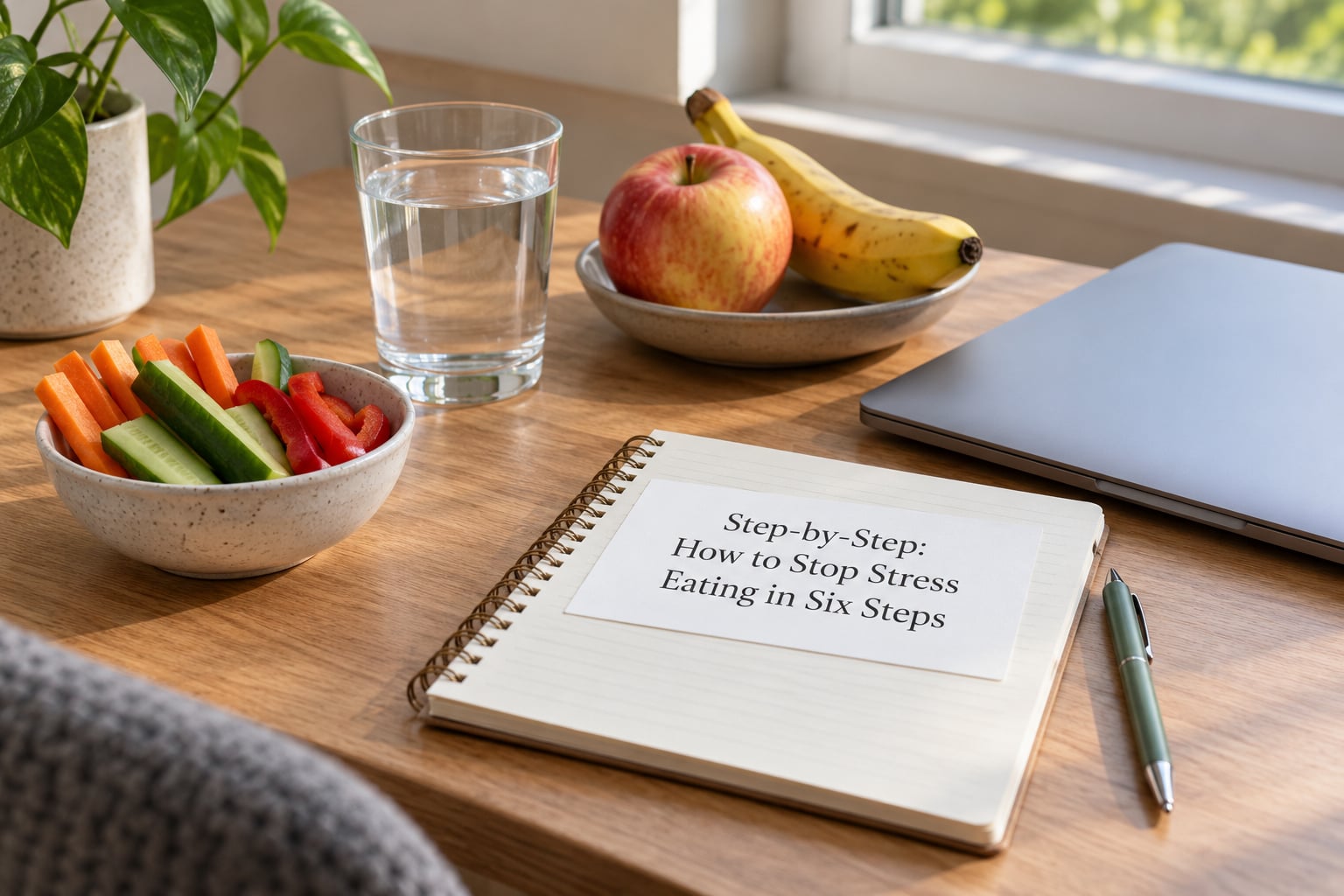
Work through these in order. Each step depends on the one before it, and skipping ahead usually fails because people try to change behaviour without understanding the cue that drives it.
1. Identify Your Triggers
Start by recording what happens before you eat, not what you eat. For one week, log four things: the time, the situation, the feeling and the food. Three columns is enough if you are short on patience.
Look for the ordinary stuff. A difficult meeting at 10am. Inbox messages that keep climbing. Boredom on a slow afternoon. A coworker conflict you have not processed yet. Forum discussions on workplace coping keep surfacing the same pattern: people discover they eat at exactly 3pm every day after a hard client call, and they could not see it without writing it down.
Also separate real hunger from stress hunger. Physical hunger builds gradually, can wait, and does not care what you eat. Emotional hunger arrives suddenly, wants a specific food, and disappears after the mood passes. If your log shows you eating at the same desk, in the same spot, within minutes of a stressful message, that is a cue worth rebuilding.
How to tell it worked: after a week you can name at least two triggers that repeat, and you know the time of day each one lands.
2. Build a Regular Eating Routine
Regular meals and planned snacks reduce the intensity of hunger, which removes most of the crises you were reacting to. Missing lunch at a busy desk does not produce calm eating at 4pm. It produces reactive eating.
Fit the structure to your actual schedule rather than an ideal one. If meetings run through your break, eat a planned snack before the block. If you work nights, anchor your main meal to your waking hours and keep a second one within reach. If you travel, eat something substantial before departure rather than surviving on airport food until you land.
Keep the food boring and available. Protein, whole grains and something with fibre hold better through a long afternoon than a pastry eaten standing up. Drink water through the afternoon before you read anything as hunger.
How to tell it worked: you go more than four waking hours most days without eating straight from a wrapper without noticing.
3. Pause Before You Eat
This is the anchor tactic: wait ten minutes before eating anything you did not plan. The urge usually peaks and then fades, and a ten-minute delay is often enough to let it pass.
Use the pause to run a quick check-in. Is this hunger, boredom, anxiety, tiredness, frustration or loneliness? The answer changes what you do next. Boredom needs a task. Frustration needs movement. Fatigue needs rest, not food.
Four things work well inside the pause: drink a glass of water, walk to the kitchen and back, breathe slowly for two minutes with a longer exhale, or write one sentence about what just happened. Community advice consistently favours changing the channel rather than fighting the thought, because the thought does not argue back.
Some readers add a magnesium supplement as an immediate intervention. Ask a doctor or pharmacist before adding any supplement, especially if you take medication or have a health condition.
How to tell it worked: at least three times a week you wait the full ten minutes and then decide, on your own, whether to eat.
4. Replace the Automatic Food Response
Add options, never bans. You are not removing chocolate from your life; you are giving the stressed version of you something else to reach for.
- Movement: a short walk, stairs, or five minutes of stretching between two tasks.
- Connection: a message to someone outside work, or a two-minute conversation with a coworker who is not part of the problem.
- Occupation: sugar-free gum, a crossword, tidying one drawer, sorting an inbox.
- Sensory shift: a short video, music, a shower, ten minutes of daylight.
- Writing: three lines in your trigger log naming the feeling, which is often enough to reduce its grip.
When you do eat a comfort food, eat it on purpose, sitting down, without a screen. That single change turns mindless snacking into an actual meal, which is where mindful eating begins. Eating in front of a screen is the strongest predictor of the pattern, because attention is the thing that keeps the loop running.
How to tell it worked: on a stressful day you have at least two coping options available that involve no food at all.
5. Plan for High-Stress Moments
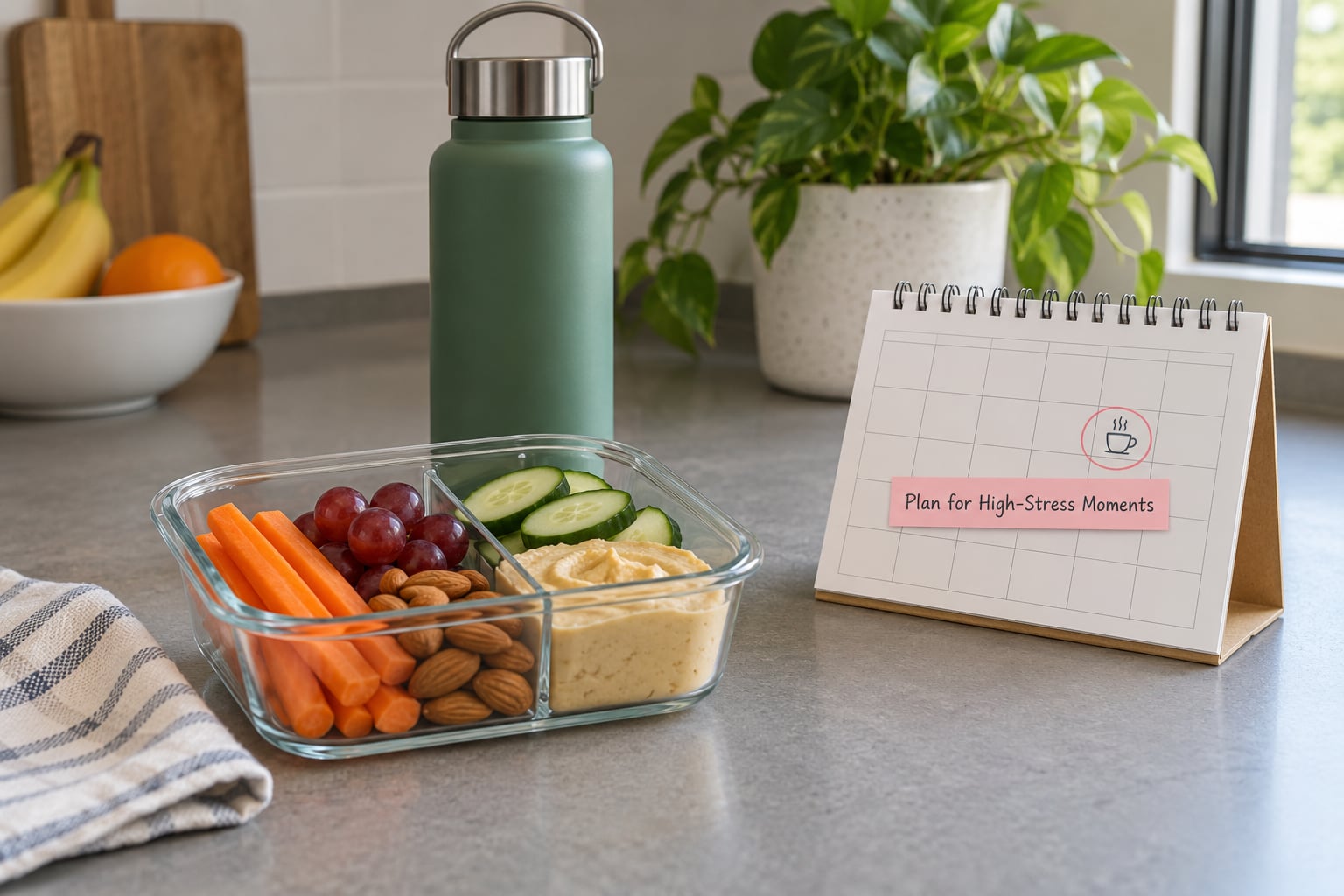
Deadlines, difficult conversations, overtime and inbox pressure come with advance cues. Write your plan before the pressure arrives, because nobody makes a good decision at hour nine of a bad week.
Block the break on the calendar as a real meeting with your own name on it. Tell one person you are stepping away for ten minutes. Decide in advance what you will do in the moment: one specific action, chosen when you are calm.
Cut the cues you control. Close the delivery app after lunch so it is not one tap away. Move the biscuit tin out of your sightline. Sit somewhere for meetings where food is not handed to you. Keep a snack box in the office fridge so the healthy option is not a project.
Most workdays carry a predictable rhythm: inbox triage, a hard meeting, a low-energy stretch, then the late-afternoon dip. If you can name your three worst hours, you can pre-load coping actions for them specifically.
If the pressure itself is the problem, not just the eating, our guides to reducing stress at work without quitting and workplace stress management techniques for teams go deeper on the source.
How to tell it worked: you have a written plan for your next known high-stress moment, and you used it at least once.
6. Review Progress Without Blame
Once a week, read the log and ask three questions. Which trigger came up most? What happened when you used a non-food option? What needs adjusting for next week?
Look for reduction, not perfection. Fewer episodes counts. A shorter episode counts. Reaching for food and then pausing counts, even if you still end up eating. Every attempt inserts a little more delay into the habit loop, which is how the loop weakens.
Expect a bad week after a rough one. The pattern that matters is the trend over two months, not any single day. What does not work is the guilt spiral: eat, feel ashamed, feel more stressed, eat again. Shame is fuel for this behaviour, so treat a slip as data, not a verdict.
How to tell it worked: you can point to two specific changes in the log that happened without anyone forcing you.
Common Mistakes
Skipping meals to “save room” for later. This creates the intense hunger that makes reactive eating feel unavoidable. Fix: eat at regular intervals, and treat a planned snack as a normal part of the day rather than a failure of discipline.
Banning trigger foods entirely. A hard rule against one food tends to end in a rebound episode, and it usually comes with a week of low-level tension. Fix: keep the food you actually enjoy in the house, in a smaller pack, and eat it deliberately sometimes.
Setting rules too rigid to survive a deadline week. A plan that assumes calm days collapses the first time the calendar fills up. Fix: build a simple version for bad days, and use that one when the week goes sideways.
Eating at the desk without noticing. This is the most common workplace pattern and the easiest one to fix. Fix: no eating in front of a screen, and use the pause rule whenever you cannot remember starting.
Blaming yourself afterwards. Stress eating is a common, biologically driven coping mechanism, not a character flaw. Fix: note what happened, what would have helped, and move on the same day rather than carrying it into tomorrow.
One more thing worth fixing: the standard advice list, on its own, feels useless. Water, a walk and mindfulness are fine tools, but they fail when you have heard them a hundred times and have no reason to believe any of them this time. The fix is specificity. One named action, written down in advance for a specific hour, beats a generic list every time.
Frequently Asked Questions
How can I stop stress eating during a busy workday?
Use a ten-minute pause plus a planned eating routine. Eat a proper meal before your busiest block, keep water and a simple snack within reach, and write a short plan for your known hard meetings. When the urge arrives, name it, drink a glass of water, move for five minutes, then decide whether you actually want food. Most workplace stress eating tracks specific hours, so a written plan for those hours does most of the work.
What should I eat when I am stressed at work?
Aim for something that holds together for a few hours and needs little preparation: a sandwich with protein, yogurt with fruit, nuts, or whole grains with cheese. Very sweet or very salty foods are what most people reach for, because cortisol raises appetite for quick energy, so having a satisfying option planned reduces the crash that follows. Keep portion size normal rather than tiny, because restriction usually rebounds harder later in the day.
Is stress eating the same as an eating disorder?
No, though they can overlap and both deserve support. Stress eating means food responds to feelings, which many people do occasionally. An eating disorder involves sustained patterns such as loss-of-control episodes, rigid rules about food, guilt, distress about body image, or eating that disrupts daily life. If any of that describes you, a doctor or registered dietitian can assess what is going on. Seeking help early is not an overreaction.
How can employers help employees reduce stress eating?
Managers control workload and culture more than they control individual snacks, and that is where the real control sits. Protect real breaks, block them on calendars, and normalise stepping away from a desk. Give teams access to water, food storage and somewhere other than a desk to eat. Normalising food breaks helps more than policing them, and offering confidential mental health support addresses the coping behaviour at its source.
Does drinking water help with stress eating?
Often, yes, because mild thirst is frequently read as hunger, especially during a long afternoon at a desk. A glass of water with a two-minute wait is a cheap first step, and some people pair it with a short walk. It is not a fix on its own, though. Water works best as part of the ten-minute pause, alongside regular meals, rather than as a standalone substitute for eating when you are genuinely hungry.
When should I talk to a doctor or registered dietitian?
Talk to a professional if eating feels compulsive or out of your control, if you feel guilt or shame after eating, if you skip meals to compensate, or if eating is affecting your sleep, work or relationships. Also worth raising if stress eating comes with major mood changes, or if food avoidance has become rigid. A doctor or registered dietitian can help work out what is happening and what support fits, and asking early tends to make it easier.
Start With One Change This Week
Pick the ten-minute pause and nothing else. Run it for five workdays, keep a one-line note of what triggered each urge, and see what the week tells you.
How to stop stress eating is rarely a matter of willpower. It is usually a matter of adding one delay and one better option to a routine that currently offers neither.
If eating is starting to feel compulsive, distressing, or tied to bigger mood or physical changes, that is the point to talk to a doctor or registered dietitian. Nothing in this guide is a substitute for individual medical advice.