
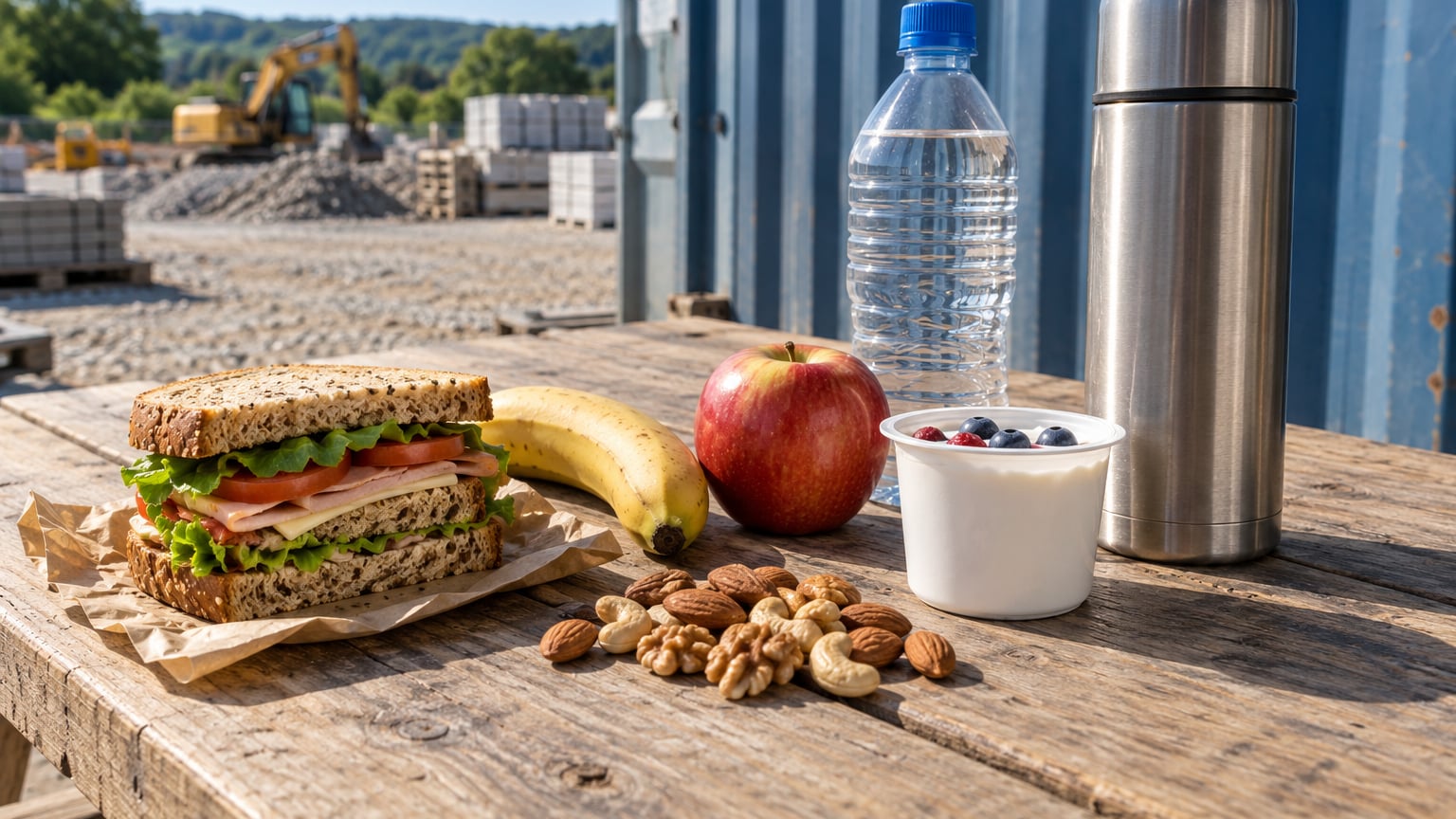
High calorie meals for physical labor jobs are calorie-dense, nutrient-dense meals built to replace the energy heavy work burns. Most manual workers land somewhere between 2,400 and 3,600 calories a day, depending on workload, body size, shift length and weather, and the plan that works is the one you can actually eat on a site with no kitchen.
This guide is general information about food and work, not medical advice. If you have a condition that affects what you eat, take regular medication, or are recovering from injury, ask your doctor or a registered dietitian before changing how you fuel a shift.
Table of Contents
- High Calorie Meals for Physical Labor Jobs at a Glance
- How Many Calories Do Physical Labor Jobs Require?
- What Foods Should You Pack for a Physically Demanding Shift?
- Should High-Calorie Meals Be Eaten Before, During, or After Work?
- How Can You Make Filling Meals More Nutritious?
- What Should Employers and Worksite Wellness Teams Do?
- What Food-Safety and Health Risks Should You Avoid?
- Frequently Asked Questions
- Are high-calorie meals good for every physical job?
- What is the best meal before a physically demanding shift?
- How can I gain calories without eating more junk food?
- Are energy drinks or protein drinks necessary for hard labor?
- What can I eat during a shift when there is no refrigerator?
- What if a heavy work meal causes stomach discomfort?
- Conclusion
High Calorie Meals for Physical Labor Jobs at a Glance
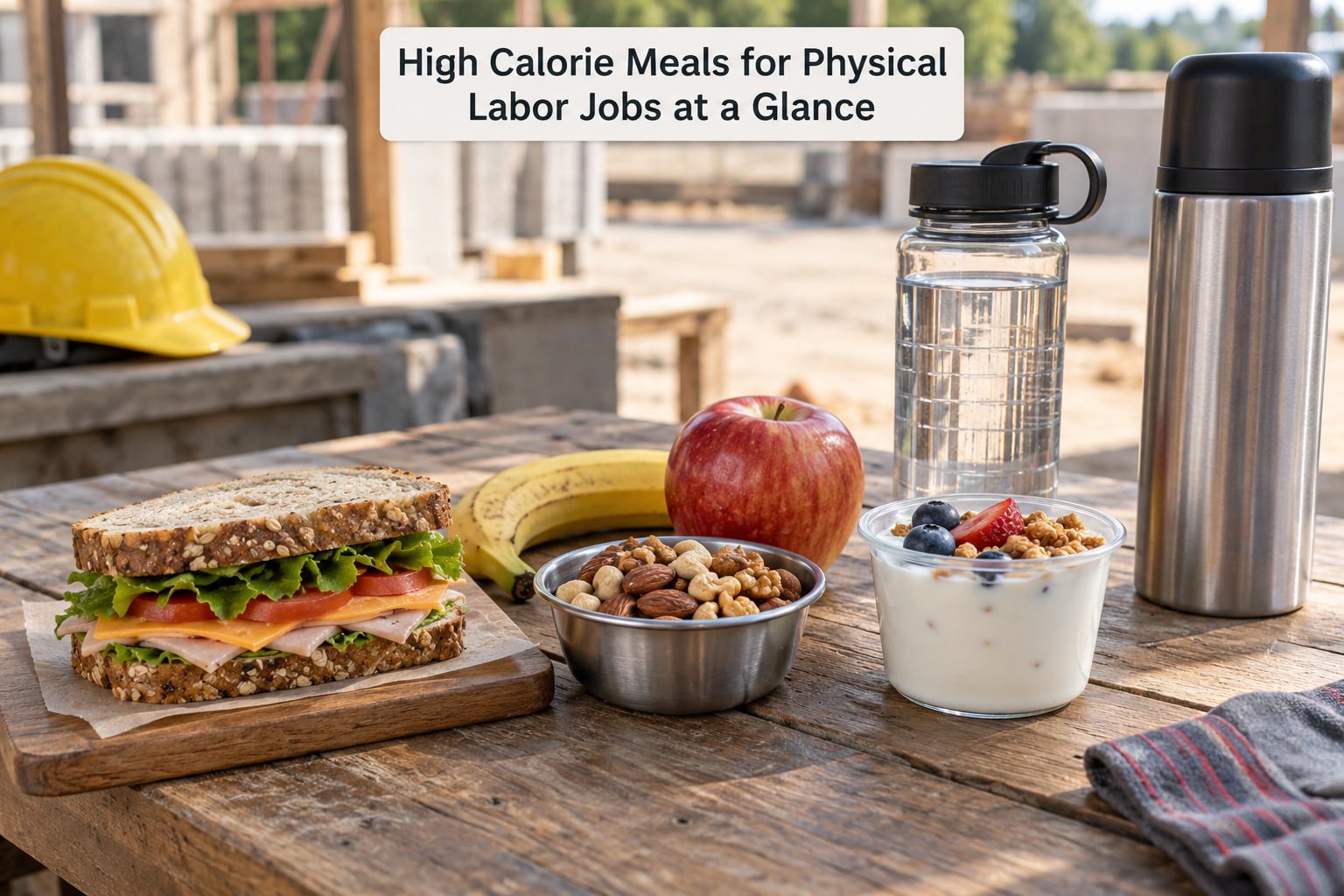
There is no single calorie figure that fits every laborer. What matters is whether your intake matches the work you did that day, spread across the hours you were awake, and made mostly of food that still has something in it. Use the ranges below as a starting point, not a scorecard.
| Factor | How it changes your planning |
|---|---|
| Light-duty work, mostly sitting or driving | Closer to the lower end of the range, with lunch as the main addition |
| Steady movement, such as warehouse picking, site labor or farming | Middle of the range, eaten steadily across the shift instead of in one sitting |
| Heavy work, such as digging, roofing or loading | Upper end of the range, plus a recovery meal after the shift |
| Shift length | A twelve-hour shift needs food planned around it; an eight-hour shift usually does not |
| Body size | Larger workers usually need more, but individual needs vary widely |
| Hot or humid conditions | Extra fluid loss and extra energy spent on cooling push needs up |
| Health, medication and age | These change what is safe, not only how much |
A useful calorie addition carries protein, fibre or fat that keeps you full for a few hours. A less useful one delivers a quick spike and a slump, which is exactly the energy crash people describe two or three hours into a shift. If your needs are unclear or you are managing a health condition, a registered dietitian can turn the ranges above into a plan for you.
How Many Calories Do Physical Labor Jobs Require?
Heavy manual work burns more energy than desk work because your muscles work continuously and your body spends extra effort regulating temperature. Rather than chasing a fixed number, most people do better by watching three things: whether you feel hungry mid-shift, whether you finish the shift without shaking, and whether you recover overnight without feeling wiped out.
Factors that push the number up:
- Duration. Ten to twelve hours on your feet uses considerably more than a short shift on the same job.
- Intensity. Repetitive lifting, digging and climbing cost more than standing, walking slowly or driving.
- Environment. Heat, humidity, poor ventilation and heavy protective gear raise expenditure even when the task itself is not hard.
- Body size and fitness. Bigger bodies use more energy at rest and during work.
- Shift pattern. Overnight and rotating shifts tend to suppress appetite, so under-eating happens by accident rather than choice.
- Recovery load. Hard days followed by heavy training or second jobs need more, not less.
Planning a range beats guessing a target. If you consistently feel hollow three hours in, eat more earlier in the shift rather than more at the end of it.
How to Build High Calorie Meals for Physical Labor Jobs
Every meal that works for manual work follows the same four-part formula: a carbohydrate-rich base for readily available energy, a substantial protein source for fullness and repair, produce or another fibre source, and a portable fat or calcium-rich addition.
A sample lunch built on that formula: two thick slices of brown bread filled with peanut butter and banana, a handful of unsalted nuts, a piece of fruit and a full bottle of water. That combination sits in the 800 to 1,000 calorie range, travels without a fridge, and can be eaten one-handed in a break as short as fifteen minutes.
Plain-language portion cues help more than numbers:
- A base the size of your fist, or two full handfuls of rice, pasta, potatoes or oats.
- Protein roughly the size and thickness of your own palm.
- A fat addition measured in a small handful of nuts, a spoon of nut butter, or a cheese slice.
- Produce you can hold in one hand, which also means it survives the glove box.
What Foods Should You Pack for a Physically Demanding Shift?
Pack by food group, because each group does a different job in the meal. Carbohydrates fuel the work, protein keeps you full and supports recovery, produce supplies fibre and micronutrients, and fats make the meal filling rather than hollow.
- Carbohydrates: brown bread, wraps, bagels, oats, rice, potatoes, tortillas, dried fruit and energy-dense options such as dates.
- Protein: canned tuna, salmon or sardines, hard-boiled eggs, roast or rotisserie chicken, deli meat, cheese, nut butter, powdered mixes, beans and lentils.
- Produce: bananas, apples, oranges, carrots, cucumber, tomatoes and berries, all of which travel well.
- Fats: nuts, seeds, nut butter, olive oil packets, avocado and cheese.
- Drinks: water as the default, with a drink containing electrolytes added for long shifts, heat or heavy sweating.
What people actually eat is less polished than most advice suggests. Recipes shared by workers on forums come down to peanut butter and jelly sandwiches, banana yogurt, salami and crackers, rice with plenty of beans, baked chicken with vegetables, pork and rice, hard-boiled eggs, nuts and fruit. Rotisserie chicken tacos show up repeatedly as a cheap, high-calorie option that needs no reheating.
| Option | Best use | Limitation |
|---|---|---|
| Shelf-stable, eaten cold | No fridge, no microwave, no storage at all | Fewer options than a kitchen allows |
| Insulated bag with ice packs | Full meals including cooked food and dairy | Needs replacing ice packs during long shifts |
| Thermos of hot food | Cold sites, winter outdoor work, soups and stews | Heavy to carry, needs a break to heat |
| Bought near the site | Emergency refills, convenience shops, food trucks | Costs more, takes longer, often fried |
Two practical notes. Check allergens before you build a routine around a nut butter or a sesame-based product, and label anything containing nuts, dairy or eggs if you share a cooler. If a colleague reacts badly to a food you keep bringing, that is a safety issue, not a preference.
Should High-Calorie Meals Be Eaten Before, During, or After Work?
Eat before, during and after, with the size of each meal matched to the gap between them. Rigid schedules matter less than not spending six hours with nothing in you.
Before work. A pre-shift meal should be substantial enough to carry you to the first break but light enough that you can still lift. Oats with milk, a peanut butter sandwich, or eggs with bread all work. For a 5 a.m. start, something you can eat half-awake still beats skipping it.
During work. Break the shift into thirds and eat in each third rather than saving everything for lunch. A twelve-hour shift with a thirty-minute lunch needs at least two additional snacks. Choose combinations of carbohydrate and protein, drink steadily rather than in large swallows, and stop eating solid food during the last hour before heavy exertion if it tends to sit badly.
After work. The recovery meal replaces what the shift took out: protein with carbohydrate and normal fluids. If you cannot eat a full meal right away, a drink containing both carbohydrate and protein covers you until you can.
Shift patterns change the shape of the plan. On an early split shift, the bigger meal belongs after the shift ends. On a night shift, keep the pre-shift meal light and place the main meal around the point where you would normally have slept. During strenuous shifts, eat before you are starving, because by then your appetite is usually gone.
How Can You Make Filling Meals More Nutritious?
Filling is not the same as good for you, but it can be. Most high-calorie meals fall short on fibre, protein and produce, and fixing that costs almost nothing extra.
| Instead of | Try | What changes |
|---|---|---|
| A sugary drink | Water or a milk-based drink | Same or more calories without a sharp sugar spike |
| Fried food as the main event | Roasted or baked meat, beans, eggs | Keeps the calories, drops the mid-shift sluggishness |
| White bread only | Wholegrain bread, oats, brown rice | More fibre, steadier energy over a long shift |
| Chips or crackers as the only snack | Nuts, seeds, cheese, fruit | Fat and protein hold fullness longer |
| Nothing from the produce group | A banana, apple or handful of berries | Fibre and micronutrients, plus quick potassium |
Dietary preferences can be met without losing calories. Plant-based workers can lean on rice and beans, lentil spreads, tofu, soy milk and nut or seed butters, which are among the most calorie-dense everyday foods available. Lower-sodium packers benefit from unsalted nuts and plain rice rather than salted crackers. Anyone avoiding dairy can pick fortified alternatives and canned fish with bones for calcium, though the amounts vary enough that a dietitian can help.
Batch cooking is where this holds together. Cooking a large batch of rice and beans, roasting a tray of chicken, boiling a dozen eggs and portioning nut butter into small tubs on a rest day takes an evening and covers several shifts. Assembly takes two minutes at 5 a.m. and costs a fraction of buying food near the site.
What Should Employers and Worksite Wellness Teams Do?
The worksite is where meals succeed or fail, so small management decisions matter more than any handout. Protected meal breaks that people are allowed to take, drinking water that is cold and within reach, shaded or heated seating, and somewhere to store food safely all raise how well a crew fuels itself.
Other useful measures: scheduling that builds in real break time rather than nominal time, access to a tap or cooler on hot sites, and a food option that suits the actual crew, not a single menu. Culturally varied food choices are a practical inclusion measure, since a worksite canteen serving only one cuisine forces some workers to skip the meal entirely.
Wellness teams can help by sharing information and subsidising better options, not by running nutrition treatment. That work belongs to a doctor or a registered dietitian, and any employer programme worth having will say so plainly. On standing and walking-heavy jobs, ergonomic and foot-care measures matter alongside food; our guides on how to reduce foot pain from standing jobs and ergonomics for cashiers and standing jobs cover that side. Benefits teams also have a role to play, and resources on high deductible health plan education for employees are worth pointing people toward when a dietitian visit is not covered.
What Food-Safety and Health Risks Should You Avoid?
The most common food-safety mistake on site is a packed lunch that stays unrefrigerated all morning and gets eaten in the afternoon. Keep perishable food out of the danger zone of 40°F to 140°F (4°C to 60°C) for more than two hours, or one hour if the temperature is above 90°F (32°C). An insulated bag with ice packs is the simplest fix.
Cook food to safe minimum internal temperatures: 165°F (74°C) for poultry, 160°F (71°C) for ground meat, and 145°F (63°C) for whole cuts of meat and fish. Cool leftovers quickly, keep raw and ready-to-eat food separate in the bag, and wash your hands before eating, not just at the break.
Other risks worth taking seriously:
- Allergens. Peanuts, tree nuts, dairy, eggs, fish and wheat are the usual culprits. Check labels, and use separate utensils.
- Choking. Eat seated, not while operating a machine, driving a forklift or climbing. Small, hard snacks are worse than sandwiches.
- Heat and dehydration. Water first, in small and regular amounts. Urine that is very dark is a sign you are behind.
- Overeating into nausea. Forcing calories does not help. Feeling sick, dizzy or shaky is a signal to stop, sit down, drink, and get help if it does not pass.
Anyone with persistent fatigue, unexplained weight change, repeated stomach problems, dizziness during exertion or symptoms that appear only on workdays should see a doctor. A registered dietitian is the right person for adjusting amounts and food choices, especially during long rotations with no access to a shop.
Frequently Asked Questions
Are high-calorie meals good for every physical job?
Only if the job actually burns the extra energy. A person hauling roofing material for ten hours needs more food than someone sitting in a van all day, and forcing calories on a sedentary shift leads to weight gain rather than better work. Match intake to workload, and treat the ranges in this guide as a starting point.
What is the best meal before a physically demanding shift?
Something with carbohydrate, protein and a little fat, eaten two to three hours before you start. Oats with milk and banana, a peanut butter sandwich with fruit, or eggs and toast all work. For a 5 a.m. start, pick what you will genuinely eat half-awake, and keep it lighter than usual so it sits comfortably before heavy lifting.
How can I gain calories without eating more junk food?
Add volume in the forms that carry nutrients: nut butter, nuts, olive oil, whole grains, beans, avocado, cheese and dried fruit. Swap sugary drinks for milk-based drinks, and choose roasted food over fried. These changes add several hundred calories to a day without the sharp rise and fall that comes from cakes, fizzy drinks and chips.
Are energy drinks or protein drinks necessary for hard labor?
No. They are convenient, not essential. Water is your default drink, and a drink with electrolytes earns its place on long shifts in heat or after heavy sweating. Protein drinks are useful when you cannot eat a proper meal, such as after a night shift, but food usually delivers protein and everything else alongside it. Follow the label and do not exceed it.
What can I eat during a shift when there is no refrigerator?
Peanut butter sandwiches, canned tuna and crackers, hard-boiled eggs, nuts, dried fruit, rice and beans, thermos stew, and oat or breakfast drink mixes. All travel without cooling and eat cold. Keep perishable items in an insulated bag with ice packs, and follow the two-hour rule for anything that does need refrigeration.
What if a heavy work meal causes stomach discomfort?
That usually means too much volume, too much fat, or eating too close to exertion. Split the same calories into three smaller portions, choose lower-fat cooking, and stop eating solid food in the hour before very hard work. If discomfort continues, gets worse, or comes with vomiting or weight loss, stop pushing calories and speak to a doctor.
Conclusion
The best higher-calorie work meal is balanced, portable, safe and timed around the shift. Pick one substantial base, add protein and produce, adjust the amounts to your workload, and plan the eating across the hours rather than around lunch alone.
Start tonight: choose your pre-shift meal, pack two snacks that need no cooling, and put an insulated bag by the door. If your needs are unclear or you have a health condition, a registered dietitian can turn this into a plan that fits your work.