
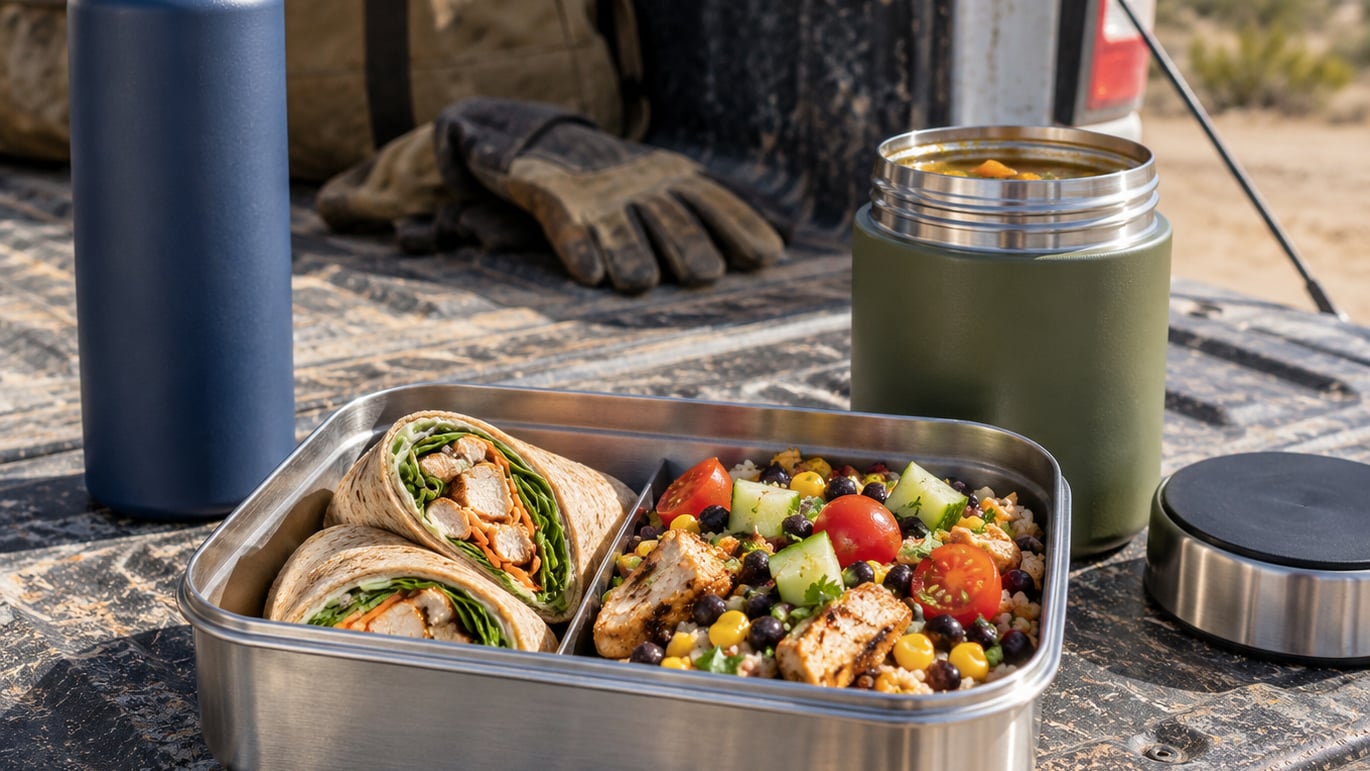
The best lunch ideas for construction workers are hearty, high-protein and completely portable: no microwave, no refrigerator and no table required. On most large commercial sites a microwave is prohibited, there is no cold storage in the trailer, and you have about 30 minutes to eat standing up beside a truck.
That rules out leftovers that need reheating and anything that has to stay cold. What works instead is a lunch built around protein, complex carbohydrates and healthy fat, packed into a container that survives a hot truck cab, and eaten with one gloved hand.
I have packed and unpacked enough of these to know where the good ones fail. Soggy wraps, leaking tuna water, quesadillas that turn to mush in a plastic tub. The 12 below all survive a shift, and each one tells you what to pack with it.
Table of Contents
- Lunch Ideas for Construction Workers at a Glance
- 1. Chicken Burrito Bowls
- 2. Turkey and Hummus Wrap
- 3. Tuna White Bean Salad
- 4. Peanut Butter Banana Oat Wraps
- 5. Lentil Pasta Salad
- 6. Chicken and Rice Lettuce Cups
- 7. Egg Salad on Whole-Grain Bread
- 8. Black Bean and Cheese Quesadilla
- 9. Salmon Potato Salad
- 10. Mediterranean Snack Box
- 11. Oatmeal Power Bowl
- 12. Taco Bar Jar Salad
- Frequently Asked Questions
- What food is safe to leave in a lunch box all day?
- How should construction workers keep lunch hot or cold?
- What are easy lunch ideas for workers without microwave access?
- Which construction lunch ideas are high in protein and filling?
- How can lunch ideas for construction workers accommodate gluten-free or dairy-free diets?
- How long can a packed lunch safely sit unrefrigerated?
- Conclusion
Lunch Ideas for Construction Workers at a Glance
| Lunch | Best use | Main ingredients | Portability | Storage | Dietary fit |
|---|---|---|---|---|---|
| Chicken burrito bowl | High-protein, big appetite | Chicken, rice, black beans, corn, salsa | Excellent in a bento box | Keep below 40F with ice packs | Gluten-free, dairy-free |
| Turkey and hummus wrap | Quick 5-minute pack | Whole-grain tortilla, turkey, hummus, veg | Hand-held, no utensils | Refrigerate or pack cold | High fiber, no gluten with GF wrap |
| Tuna white bean salad | Shelf-stable, no fridge | Canned tuna, white beans, peppers, olives | Spoon or fork, seated or standing | Safe at ambient for short periods | High protein, gluten-free |
| Peanut butter banana oat wrap | Early start, no cooking | Peanut butter, banana, oats, chia | Best of the list for travel | No refrigeration needed | Vegetarian, dairy-free |
| Lentil pasta salad | Batch cook on Sunday | Lentil pasta, greens, tomato, Italian dressing | Good, keep dressing on the side | Keep cold, holds 3 days | Vegetarian, vegan option |
| Chicken and rice lettuce cups | Lighter option, hot weather | Chicken, rice, cucumber, peppers | Spoon, minimal mess | Keep below 40F | Gluten-free, dairy-free |
| Egg salad on whole grain | Cheapest option in the list | Eggs, Greek yogurt, celery, whole-grain bread | Excellent, two hands | Refrigerate, use ice pack | Vegetarian, low cost |
| Black bean quesadilla | Warm without a microwave | Black beans, cheese, peppers, salsa | Good if cooked in the morning | Eat within 2 hours of cooking | Vegetarian option available |
| Salmon potato salad | Omega-3 and heavy fuel | Canned salmon, potatoes, green beans, celery | Solid, does not tip easily | Keep cold, or pack warm in a thermos | Gluten-free, dairy-free |
| Mediterranean snack box | No reheating, no utensils | Falafel, crackers, hummus, fruit, veg | Best one-handed option | Hummus needs ice packs | Vegetarian, halal-friendly |
| Oatmeal power bowl | Early shifts, gut-friendly | Oats, yogurt, berries, nuts, seeds | Eat with a spoon anywhere | Refrigerate overnight oats | Vegetarian, gluten-free with GF oats |
| Taco bar jar salad | Feeds two or three people | Beans, corn, tomato, cabbage, cheese, salsa | Excellent, eats cold from the jar | Keep salsa packed separately | Vegetarian, gluten-free |
Read that table as a filter rather than a menu. If your site has a working cooler with real ice, almost everything is on. If you are hauling your lunch in a truck with no ice at all in July, start with the rows marked as no-refrigeration and build from there.
1. Chicken Burrito Bowls
A burrito bowl is the answer when somebody on your crew eats like they are loading a truck. Seasoned chicken thigh, white or brown rice, black beans, corn and salsa add up to a full plate of food, and nothing needs heat at lunch.
The one mistake is packing everything together hours early. Rice goes into the container at night, salsa goes in a separate small pot in the morning. That keeps the rice from turning to paste and the bottom of the bowl from turning to soup.
How to keep it safe and eatable
Cook chicken to 165F (74C) and cool it before it goes in the container. A bento box with a divided section for wet ingredients plus two or three frozen gel packs held against the chicken side is what keeps a burrito bowl worth eating at hour seven.
2. Turkey and Hummus Wrap
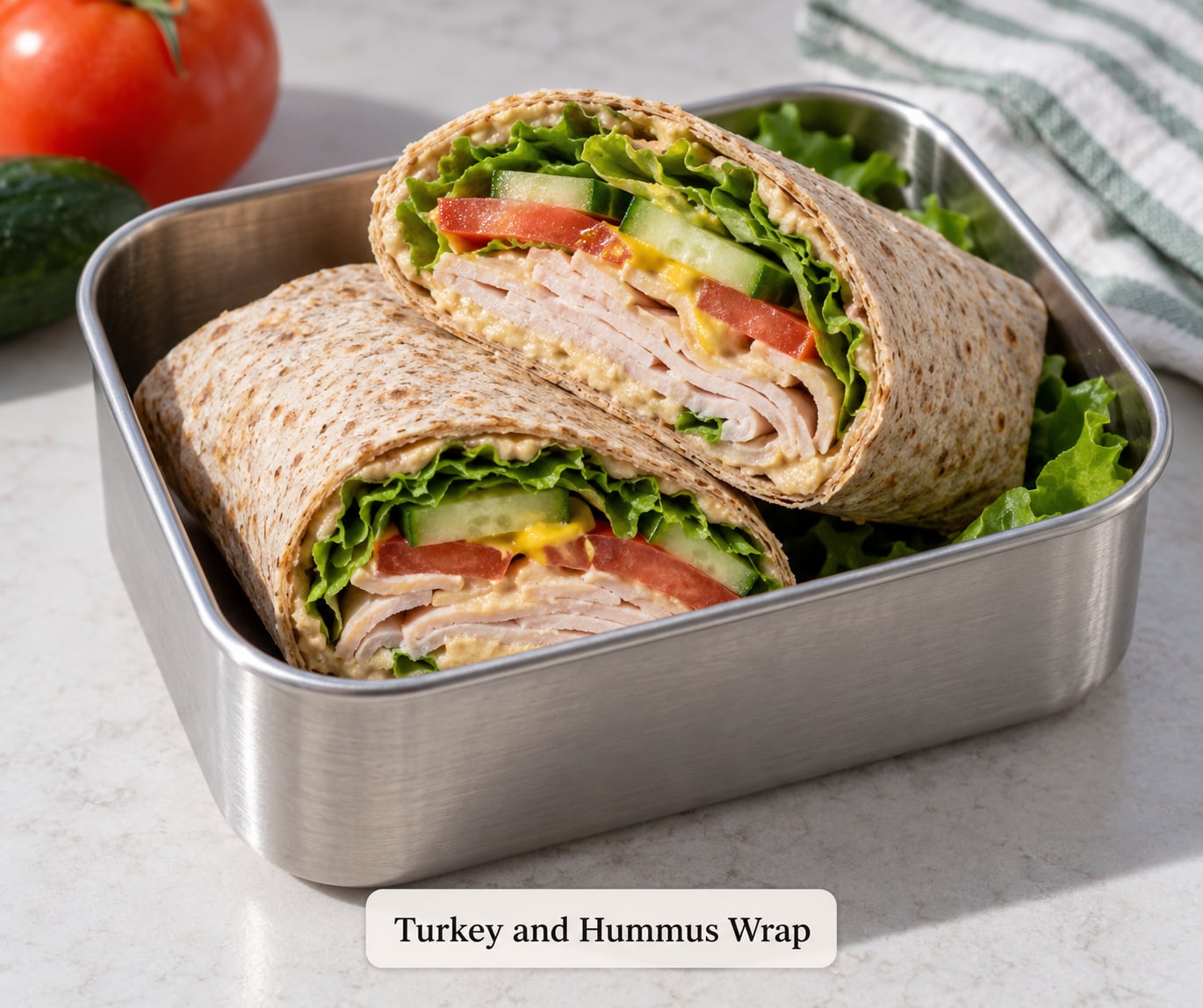
The turkey and hummus wrap is the fastest reliable lunch on this list to put together, usually five minutes, and it is the one that survives the roughest truck ride. Hummus does the work that mayo cannot: it holds the tortilla together without making it soggy two hours in.
Spread hummus on a whole-grain tortilla, add two or three slices of turkey, then lettuce, tomato and cucumber. A thin line of mustard along one edge keeps the wrap from opening on the first bite. A little more protein comes from a slice of cheddar if you want it.
Roll it tight, wrap the whole thing in a layer of parchment or a beeswax wrap, and cut it on the diagonal. Cold is fine here, which makes it one of the few lunches that does not need an ice pack if you eat it within a few hours.
3. Tuna White Bean Salad
The easiest lunch ideas for construction workers to pack the night before
Tuna white bean salad is the most overlooked lunch on this list, and it is the one that travels best. Canned tuna, cannellini beans, diced peppers, sliced olives and a simple olive oil and lemon vinaigrette give you protein, fiber and fat in one dish, and none of it needs refrigeration for a short period.
Drain the tuna properly and mash it with a fork before anything else goes in. A can you did not drain well will leak into the beans and turn the whole thing watery. Dress it lightly, keep the lid tight, and pack a plastic fork.
This is the lunch a roofer can eat in a truck with the windows up. It also absorbs seasoning well, so a crew that likes spice can add chipotle, cumin or whatever hot sauce is going around.
4. Peanut Butter Banana Oat Wraps
Peanut butter banana oat wraps exist for the days you leave the house at 4:30 in the morning and there is no coffee, no cooler and no ambition. Spread peanut butter on a tortilla, lay on a banana, add a spoon of oats and chia, and roll it.
The oats and chia are what turn a candy bar into something with staying power. They thicken the filling so it does not slide out, and the fiber slows the sugar from the banana. It eats cold, travels in a glove box, and costs less than anything else here.
Two swaps worth knowing. Sunflower seed butter does the same job with no nut allergy in the room, and a gluten-free wrap keeps the option open for someone who avoids wheat. If the texture turns you off mid-bite, a folded tortilla with the same filling beats a wrap that falls apart.
5. Lentil Pasta Salad
Lentil pasta salad is the batch-cook answer. Boil a large pot on a Sunday, drain it, and mix it with chopped greens, halved tomatoes, shredded cheese and Italian dressing while it is still warm. It keeps three days in the fridge and travels well cold.
Dress it the night before for flavor, but hold back an hour of the liquid. Pasta salad in a sealed container gives off water, and the bottom gets heavy. Pack the extra vinaigrette in a small bottle and pour it at lunch.
For a fully vegan version, skip the cheese and add a handful of chickpeas or a spoon of white bean mash for protein. Lentil pasta is gluten-free by definition, which makes this the safe pick for a mixed crew with different diets.
6. Chicken and Rice Lettuce Cups
Chicken and rice lettuce cups are what to pack when it is 95 degrees and a heavy bowl feels like punishment. Shredded chicken, cold rice and diced crunchy vegetables go into leaves, or into whole-grain cups if you want a sturdier version.
Keep cooked chicken at or below 40F (4C) until you reheat it, and eat it cold in this application rather than trying to warm it. This is a dish where the ice pack is not optional, because cooked poultry left in a hot cab for hours is where foodborne illness starts.
Use romaine hearts or butter lettuce rather than iceberg, which does not hold enough to eat from. Add a drizzle of lime and a pinch of chili powder, and it tastes like a meal instead of a diet experiment.
7. Egg Salad on Whole-Grain Bread
Egg salad on whole-grain bread is the cheapest real lunch in the list and the one most crews already know. Chopped hard-boiled eggs bound with Greek yogurt and a little mayonnaise, plus diced celery, green onion and a spoon of mustard, gives you about 6 to 8 grams of protein per egg.
Greek yogurt keeps it from being a mayo brick. Two cups of water for six eggs, then drain, then chop. The celery is not decoration; it is what keeps the sandwich from being dry by noon.
Pack it in the morning on a paper towel inside a sealed container and keep it cold. Egg salad is one of the safest and one of the worst choices if it sits warm, so this one always gets an ice pack and always gets eaten within the shift.
8. Black Bean and Cheese Quesadilla
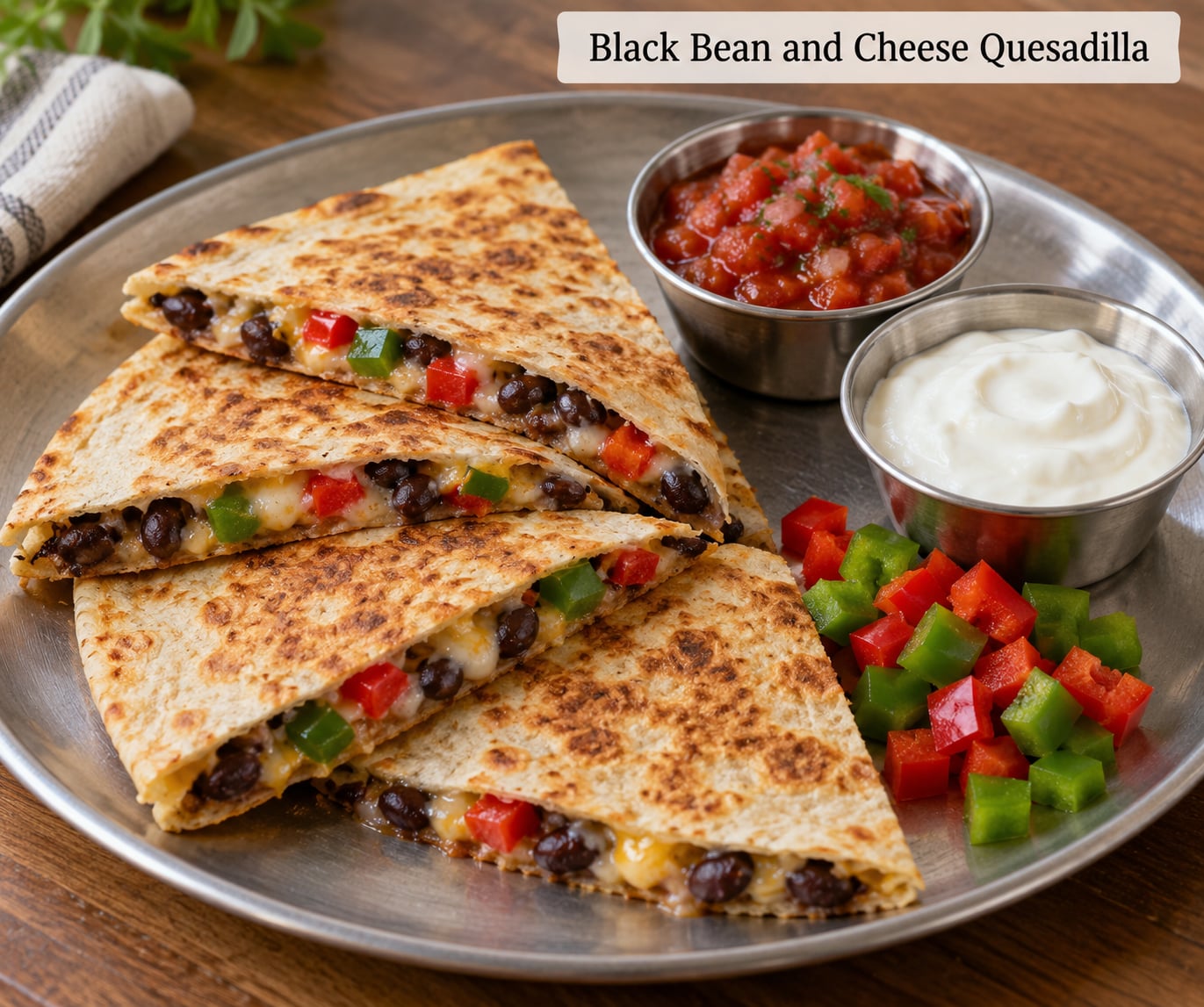
A black bean and cheese quesadilla gives you a warm lunch without a microwave, which is the problem this list has to solve more often than any other. Cook it on a dry skillet or a griddle before you leave, and let it cool completely before it touches a container.
Mash the beans with a fork and a splash of the salsa liquid so the filling stays put. Too wet and the tortilla turns soft in the middle; too dry and it cracks when you cut it. Cheese is what binds the two sides, so do not skip it even for the vegetarian version.
For the sogginess problem, cook it early, cool it fully, and slice it only at lunch. If your site has a microwave in the trailer office, use a microwave-safe container and give it 30 to 40 seconds, which softens the tortilla without melting it into rubber.
9. Salmon Potato Salad
Salmon potato salad is the heaviest, most substantial meal here, and it earns its place on long lift days. Canned salmon, cooked potatoes, green beans, celery and a vinaigrette make a lunch that holds together in a wide-mouth container without a leak.
Canned salmon with bones removed, flaked and checked for bones, works as well as baked fillet here and costs a fraction of it. Cool the potatoes before mixing so the fish does not warm and go pasty.
Eat it cold, or pack it warm in an insulated food thermos in the morning and open it at lunch. If you are running it warm, get the salmon to 145F (63C) before it goes in the thermos. It is a strong pick for crews doing repetitive heavy work where a light lunch gets eaten by 2pm.
10. Mediterranean Snack Box
The Mediterranean snack box is built for the guy with a 30-minute break and no place to sit. Falafel or olives, whole-grain crackers, raw vegetables, hummus, a piece of fruit and something like a protein bar go in a divided container, and you eat it standing up out of the box.
Everything is finger food, which matters when your hands have been on rebar. Nothing needs a utensil, nothing drips, and nothing goes soggy if you drop it. A wide-mouth insulated bag keeps the hummus and cut vegetables in spec with a couple of ice packs.
Swap falafel for extra olives or jarred artichokes and it works for a vegetarian crew or anyone avoiding meat on a particular day. Keep the wet items in small sealed pots, and leave the fruit out of the wet section, or everything around it goes soft.
11. Oatmeal Power Bowl
An oatmeal power bowl is the option for early starts and crews that get hungry fast. Make overnight oats with rolled oats, yogurt, milk, a spoonful of chia and honey, then top it in the morning with berries, nuts or seeds.
It is a strange pick for a construction site until you notice it has no cooking, no microwave and no crash. Steady carbohydrate, real protein from the yogurt, and it keeps you full through a long afternoon, which a plain granola bar does not.
For gluten-free, buy certified gluten-free oats rather than assuming regular oats are fine. Peanut butter and pumpkin seed butter both add protein and fat, and a handful of pumpkin seeds costs a fraction of a handful of almonds. This is the one lunch that is just as good on the second or third day of a long week.
12. Taco Bar Jar Salad
The taco bar jar salad is the smart move when a crew is eating together. Layer seasoned pinto or black beans, corn, diced tomatoes, shredded lettuce or cabbage, cheese and a mild salsa in wide-mouth jars, and each person tops their own at the truck.
The problem is liquid, and the fix is to keep the salsa on the side until the moment of eating. Pack it in a small sealed pot, or spoon it over the top just before the first bite. Put the crunchy items in their own layer, above anything wet, and add tortilla chips on top so the steam does not reach them.
Because one jar can be scaled to two or three servings, this is also the cheapest shared lunch. Make the base at home, keep the jars in the fridge, and add the jars to a cooler with ice packs in the morning.
Frequently Asked Questions
What food is safe to leave in a lunch box all day?
Perishable food is safe unrefrigerated for about 2 hours at room temperature, or 1 hour if the air is above 90F (32C). Lunches that must stay cold, including meat, poultry, tuna, egg salad, cooked rice and cut fruit, need to be held at 40F (4C) or below. Use a cooler or insulated bag with frozen gel packs, freeze the packs overnight, and pack them above the food so the weight presses down on it. Shelf-stable options like peanut butter, crackers, whole fruit, nuts, canned tuna in oil and unopened condiments need no cooling.
How should construction workers keep lunch hot or cold?
For cold food, pre-chill it at home, pack it in an insulated bag with a cold source, and open the bag as little as possible. A wide-mouth insulated food thermos works for hot meals, but only if you preheat it with boiling water for 10 minutes, empty it, add the hot food and close it while it is still steaming. A small crock pot on a low setting is the other option. Neither is enough on their own if food sits in a 100-degree truck cab all morning.
What are easy lunch ideas for workers without microwave access?
Skip anything that must be reheated and choose meals that are good cold or room temperature. Wraps, sandwiches, tuna and white bean salad, pasta salad, jar salads, snack boxes and overnight oats all work with no heat at all. If you want something warm, a wide-mouth insulated food thermos is the only reliable option on most sites, filled in the morning and preheated first. Cooked chicken needs 165F (74C), ground meat 160F (71C), and fish or whole cuts 145F (63C) before they go in.
Which construction lunch ideas are high in protein and filling?
Aim for roughly 30 grams of protein at lunch and pair it with complex carbohydrates and fat, which is the combination that keeps you full through a physical shift. The strongest options here are the chicken burrito bowl, the turkey and hummus wrap, the tuna white bean salad and the salmon potato salad. A chicken thigh alone runs close to 25 grams, a can of tuna around 25 grams, and two eggs about 12 to 14. Low-protein, carb-heavy lunches are what cause the mid-afternoon crash.
How can lunch ideas for construction workers accommodate gluten-free or dairy-free diets?
Most of the meals here convert with a swap. The burrito bowl, tuna white bean salad, lettuce cups, salmon potato salad and taco bar jar salad are naturally gluten-free, and Greek yogurt replaces mayonnaise in egg salad. Use corn or gluten-free wraps for the tortilla options, cheese or nutritional yeast for the quesadilla, and certified gluten-free oats for the power bowl. For halal, dairy-free or vegetarian needs, pack an extra jar or pot rather than one shared dish.
How long can a packed lunch safely sit unrefrigerated?
The rule is 2 hours, or 1 hour when it is above 90F (32C). That clock starts the moment the food leaves a refrigerator or a cooking pot, not when you sit down to eat, so a morning pack for a 7am start has about two hours before anything perishable is questionable. If your shift is 10 or 12 hours, cold storage is not optional for meat, poultry, egg salad or cooked grains. Ambient-safe options, like nut butter, whole fruit, crackers and canned fish, remove the problem entirely.
Conclusion
Pick two or three meals from this list that match your shift, your storage situation, the diets on your crew and whatever microwave access you actually have. Make them twice in a row before you commit, because the first attempt always teaches you something about sogginess and leaking.
If you are packing for someone else, focus on the two variables that decide whether they eat: cold storage and mess. Keep the wet items in separate pots, and read our wellness programs for shift workers guide for how meal timing and hydration work on long or rotating shifts.
On hot sites, lunch is only half the fluid and fuel problem. Our cold stress prevention plan for outdoor workers covers the other seasons, and our healthy meeting food ideas for workplaces work when lunch is a group event rather than a solo one.