
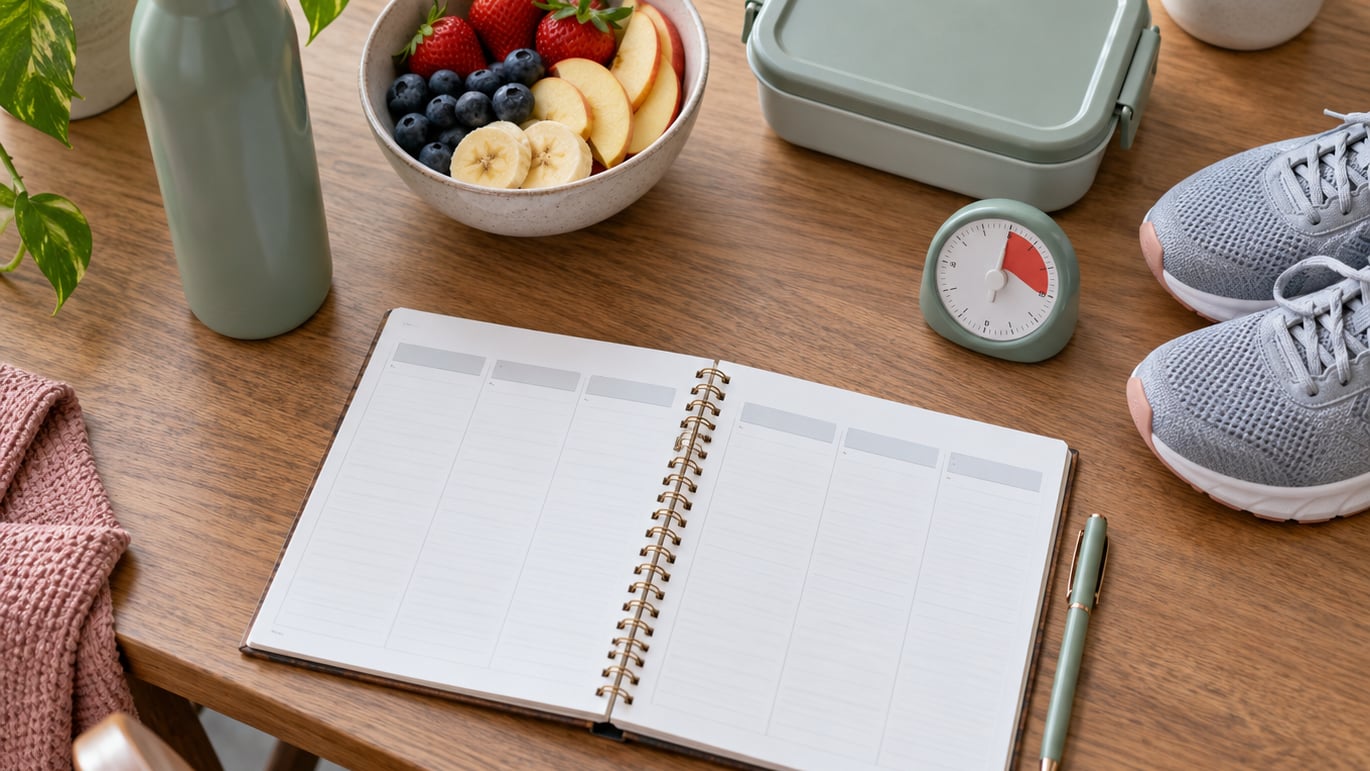
Working from home makes weight gain more likely for two reasons: you lose the walking you used to do on a commute, and food is never more than a few steps from your desk. The answer is not a strict diet. It is rebuilding the four things an office used to give you for free, which are separation from food, scheduled meals, regular movement, and a defined end to the workday.
This guide covers how to avoid weight gain working from home in seven steps you can start this week, whether you are fully remote, hybrid, or working from a shared family kitchen. It takes about ten minutes of setup. The difficulty is low; the hard part is repeating it on an ordinary Tuesday when nothing is wrong.
Table of Contents
- What You Need
- How to Avoid Weight Gain Working From Home: Step-by-Step
- 1. Set Fixed Meal and Snack Times to Avoid Weight Gain Working From Home
- 2. Build a Balanced, Convenient Meal Pattern
- 3. Keep Water and Low-Calorie Drinks Within Reach
- 4. Break Up Sitting With Short Activity Breaks
- 5. Create a Workday Boundary That Supports Energy
- 6. Plan Ahead for the Moments That Trigger Weight Gain
- 7. Track Patterns, Not Perfection
- Common Mistakes
- Frequently Asked Questions
- Can working from home cause weight gain?
- What should I eat while working from home to maintain a healthy weight?
- How can I exercise during a sedentary workday at home?
- What can I do when work meetings keep me from taking a lunch break?
- How can an employer support remote workers in maintaining healthy habits?
- When should I talk with a doctor or registered dietitian about weight changes?
- Conclusion
What You Need
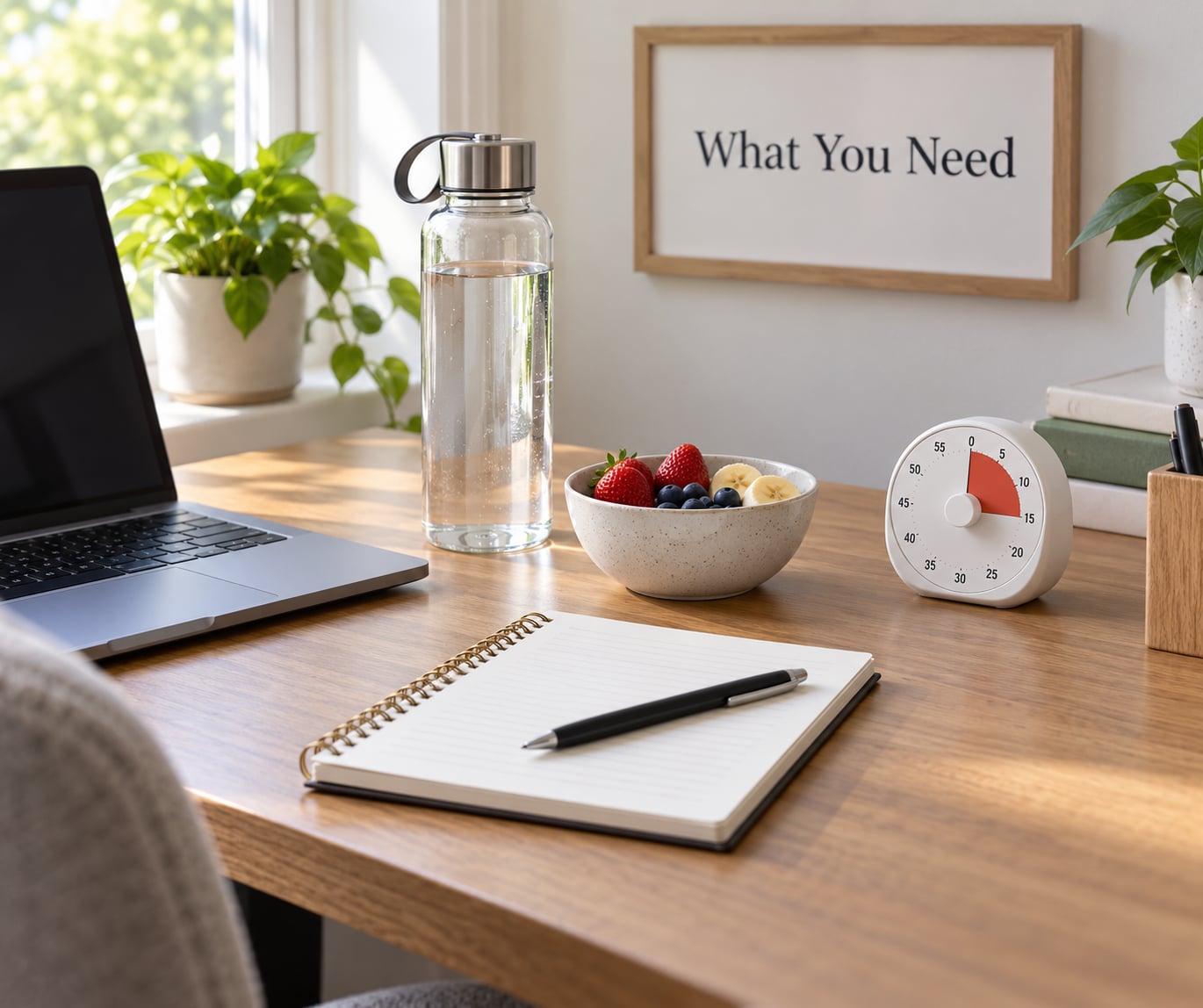
You need very little to run this plan, and none of it costs real money or a gym membership.
- Three fixed meal and snack times. Write them on paper or in your calendar so hunger does not get a vote.
- A water bottle that stays in sight. A filled bottle on the desk beats a reminder app.
- A dedicated work spot, ideally away from the kitchen. Even a corner of the table or a closed door helps.
- Comfortable clothes and shoes for short walks. You should be able to step outside without a warm-up argument.
- A timer or step counter. Set it for 30 to 60 minutes to remind you to move.
- Two or three easy-to-assemble meals in rotation. Cooked rice, a grain bowl, and yogurt with fruit cover most days.
No special diet, no meal plan subscription, no fitness tracker and no diagnosis are required. If you have a medical condition, take advice from your doctor or a registered dietitian before changing what you eat.
How to Avoid Weight Gain Working From Home: Step-by-Step
Start with one or two of these, not all seven at once. Most people get further by adding one change every week or two, because habits built on top of a stable day survive a bad meeting.
1. Set Fixed Meal and Snack Times to Avoid Weight Gain Working From Home
Irregular hours plus constant availability is the most common route to unintentional weight gain. Nobody sits down to eat four times, but plenty of people pick at the kitchen counter eight times between meetings and call it a normal day.
Block three eating times in your calendar like any other meeting: a mid-morning snack, lunch at roughly the same hour each day, and an afternoon snack. Then decide in advance what each one is.
If a meeting lands on your lunch, move the meeting or move the lunch. One option is to eat a small planned lunch at 11:30 and take a real break at 12:30 instead of pushing lunch into a 4pm gap.
When hunger makes it hard to focus, do not fight it silently. Eat the planned snack, then go back to work. Hunger at a desk is a scheduling problem far more often than it is a willpower problem.
2. Build a Balanced, Convenient Meal Pattern
The goal is meals that hold you for a few hours without a second thought. Think vegetables and fruit, whole grains, beans, eggs or other lean protein, and yogurt. You do not need to weigh anything or count anything to build that pattern.
Work out your fridge staples first, because most remote lunches fail on preparation, not on intention. A useful baseline is cooked grains, frozen vegetables, canned beans, eggs, plain yogurt, fruit, and one or two vegetables you actually like eating.
Add a short list of shortcuts. Sheet-pan vegetables, microwave grain cups, soup with beans, or a wrap with pre-cooked chicken take ten minutes and clean up fast. Delivery is fine when it is planned around a real meal, and worse when it is the default answer at 3pm.
Protein and fibre do the heavy lifting on satiety. A lunch of crackers alone will send you to the cupboard by mid-afternoon, while beans, yogurt, or eggs with vegetables usually hold for a few hours.
3. Keep Water and Low-Calorie Drinks Within Reach
Thirst often disguises itself as a low-energy afternoon slump, and so does mild hunger. A glass of water before a snack break is a cheap test that takes thirty seconds.
Keep a filled bottle where you can see it, and drink during transitions such as after a call ends or when you switch tasks. Use meetings between calls as your cue rather than waiting until you feel dry.
Choose water or unsweetened drinks as the default at your desk. If coffee or tea carries you through the morning, that is fine. Individual fluid needs vary, and some people are told to limit fluids for medical reasons, so follow your own guidance.
4. Break Up Sitting With Short Activity Breaks
Incidental movement is the thing a commute gave you: parking, transit, stairs, hallways. Remote work removes it without removing the sitting. A 45-minute workout in the evening does not cancel ten hours in a chair, which is the point people miss.
Replace it in small blocks. Walk for ten minutes between calls, stand during phone calls that do not need video, or set a two to three minute movement reset every hour. Standing on a call while shuffling weight between feet counts; watching a webinar at a standing desk also counts.
Use the time you got back. An hour that used to be a commute is enough for a proper walk on a familiar route, which is easier to repeat than a long workout you dread.
For setup ideas, our guide to preventing eye strain from computer screens covers the screen breaks and desk-position changes that pair well with standing and walking breaks.
5. Create a Workday Boundary That Supports Energy
A workday with no edges tends to expand until it fills the evening, and a longer workday means more food opportunities. Structure is the fix that costs nothing.
Give the day a fixed start, a fixed lunch, and a fixed shutdown time. A short start-of-day ritual helps, such as water first, then the three tasks that must happen today. A shutdown ritual helps more than people expect: close the laptop, write tomorrow’s first task, and walk out of the room.
Take lunch away from the desk even if your kitchen is one room away. Sitting somewhere else is what makes it a break instead of more work with a sandwich in hand. Our step-by-step guide to disconnecting from work after hours has more detail on the evening side of this.
Keep screens out of the final hour before bed and keep your wake time steady. Poor sleep and late-night work eating reinforce each other, and both make weight management harder the next day.
6. Plan Ahead for the Moments That Trigger Weight Gain
Deadlines, boredom, loneliness, and family meals all predict a snack episode. You cannot remove the trigger, but you can decide in advance what happens next.
Use a short before-the-event plan. Before a deadline stretch, put a portioned snack on the desk and set a timer for a five-minute break at the halfway point. Before a family meal, decide whether you are hungry or simply eating along with everyone else.
Ask one question before reaching for food: am I bored or am I hungry? People who use that pause in remote-work forums report it works better than expected, because boredom eating is rarely about hunger. When it is boredom, a two-minute walk, a glass of water, or a short fun video closes the loop.
Alcohol during work hours is a quiet one. A drink at noon feels harmless and it stacks up quickly. If drinking is part of your routine, set a rule, such as nothing before the workday ends, and tell one person so somebody notices.
Constraints count too. In a shared kitchen, keep your planned snack in a container in your room. In a small apartment with no spare room, work at the table and move your snacks to a shelf out of sight. Parents working with kids at home can plan snacks that the kids will not finish.
7. Track Patterns, Not Perfection
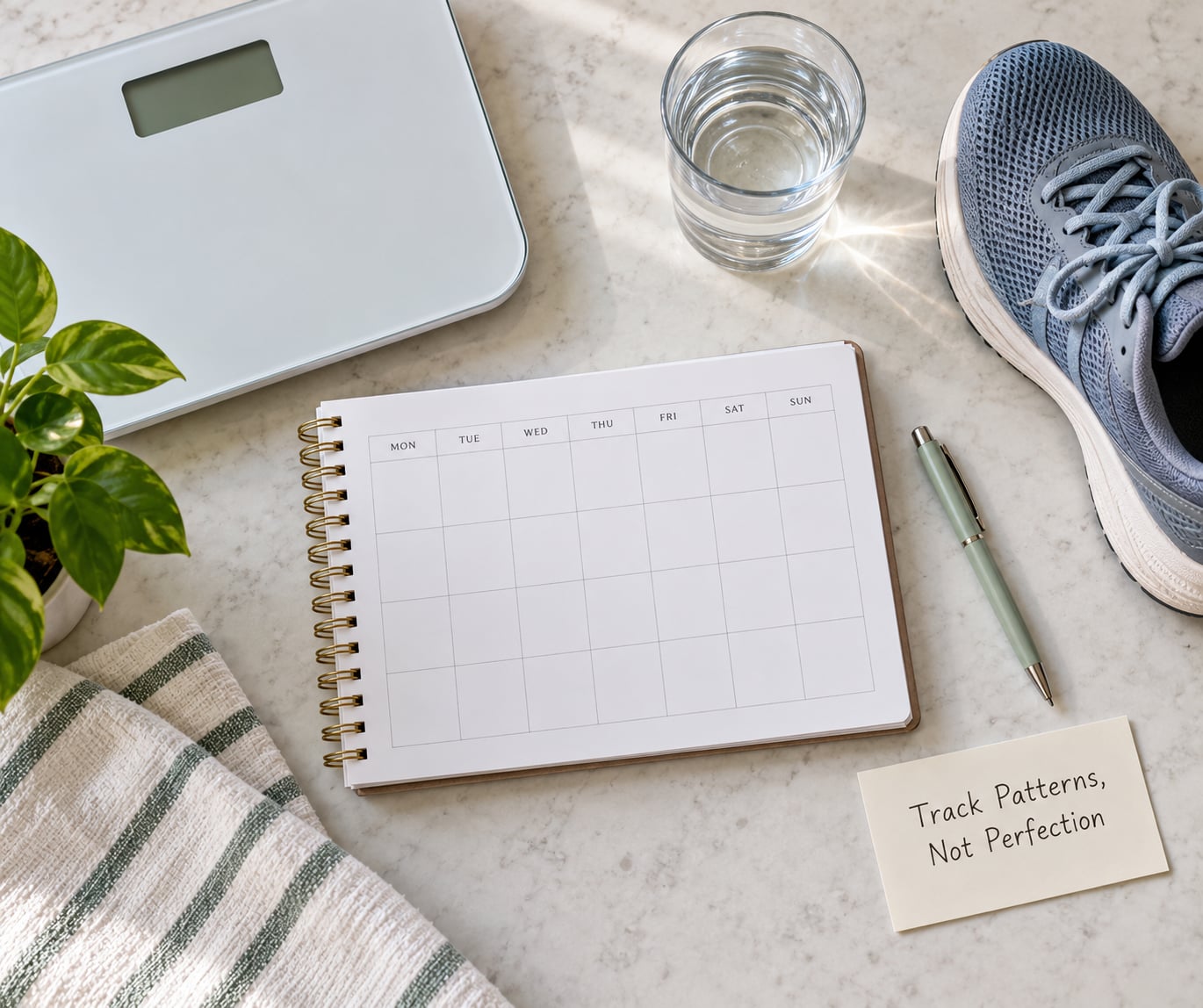
A ten-minute weekly check-in tells you more than daily anxiety about a number. Look at four columns: meal times, movement, sleep, and how you felt. Patterns show up fast this way, and single bad days stop looking like a verdict.
Weigh yourself a fixed number of times a week if that helps you, or skip the scale and track habits instead. Daily weigh-ins and obsession with a single number push people toward crash approaches that do not last.
Ask your employer what is available. A workplace weight management support plan can mean a better schedule, a wellbeing stipend, or access to a dietitian, and it is reasonable to ask what exists.
Talk to a doctor or registered dietitian if the change is sudden and unexplained, if you have gained a lot of weight quickly, or if you feel short of breath or unusually tired during ordinary activity. Sudden fluid retention, changes in medication, thyroid conditions, and sleep apnea all deserve a professional look rather than a stricter diet.
Common Mistakes
Almost every remote worker I have watched make the same six errors. Each has a simple correction.
- Grazing all day instead of eating meals. Fix it by setting three eating times and treating snacks as planned portions rather than as anything within reach. Remote workers on forums say grazing usually starts when the first real meal gets skipped at a meeting.
- Treating delivery as the default afternoon answer. Fix it by keeping one no-cook backup ready, such as yogurt with fruit, soup, or a prepared container in the fridge.
- Saving all movement for the end of the day. Fix it by adding movement first and working out second. A short walk between calls beats a hard session you skip.
- Keeping snacks in sight at the desk. Fix it by portioning into a small container and closing the bag before sitting down.
- Skipping lunch and eating at 4pm. Fix it by moving lunch earlier rather than deleting it, since a skipped lunch usually becomes a much larger evening meal.
- Using the scale as the only measure. Fix it by tracking energy, sleep, and meal consistency too. A week of good habits can show nothing on the scale and still be working.
One more pattern deserves a mention: if you have already gained weight, prevention tactics alone are not enough. Move from stopping the gain to reversing it by fixing one meal habit and one movement habit at the same time, keep portions visible, and get a professional baseline if the gain was fast. Beating yourself up costs energy you need for the change.
Frequently Asked Questions
Can working from home cause weight gain?
Yes. The two biggest drivers are losing the incidental walking of a commute and having food within reach all day. Remote days also tend to add unstructured time, late meals, stress eating, and less sleep. None of it is inevitable, and rebuilding scheduled meals and short movement blocks usually reverses the pattern.
What should I eat while working from home to maintain a healthy weight?
Keep a simple rotation of vegetables, fruit, whole grains, beans, eggs or other lean protein, and yogurt. Build two or three meals you can assemble in under ten minutes, and keep planned snacks in a portioned container. The goal is a meal that holds you for a few hours so you are not grazing by mid-afternoon.
How can I exercise during a sedentary workday at home?
Split it up. Walk ten minutes between calls, stand during phone calls that do not need video, and set a two to three minute movement reset every hour. Standing desks and walking pads make movement passive, though standing alone rarely does enough on its own. Aim toward the widely used baseline of 150 minutes of moderate activity per week.
What can I do when work meetings keep me from taking a lunch break?
Move the meeting or move the lunch, and do not delete both. Eat an earlier small lunch, or ask for the first ten minutes of a call back for yourself. Eat away from your desk even when the kitchen is one room away, since location is what turns lunch into a break rather than more work with food in hand.
How can an employer support remote workers in maintaining healthy habits?
Useful support is practical rather than motivational. Shift meeting times so lunch is possible, allow movement between calls, offer wellbeing benefits that cover food or fitness, and share flexible working policies that protect start and finish times. A standing desk option or a one-off healthy meal delivery for team deadlines goes further than a generic wellness newsletter.
When should I talk with a doctor or registered dietitian about weight changes?
Talk to a professional if the change was sudden and you cannot explain it, if you gained a lot of weight in a short period, or if you feel short of breath or unusually tired during normal activity. Medication changes, thyroid conditions, and sleep apnea can all play a part. A doctor or registered dietitian can give you guidance suited to your own health.
Conclusion
Start tomorrow with three moves: put lunch in the calendar at a fixed hour, keep a filled water bottle in sight, and set one movement break for every hour you work. Do those first, then add the rest of the steps a week at a time.
How to avoid weight gain working from home comes down to replacing what the office used to do for you: separation from food, scheduled meals, hourly movement, and a real stopping point. Consistent routines beat short-term dieting, and any individual medical concern belongs with a doctor or registered dietitian.