

A 12-hour shift works against your body in three ways: it interrupts your circadian rhythm, it removes normal meal and movement patterns, and it stretches your exposure to clinical stress. Staying healthy through one is not a matter of willpower — it comes down to four habits you control: fuel, fluid, sleep and movement, plus a short recovery routine at the end of every shift.
That matters beyond your own comfort. Nurses working long shifts are consistently found to sleep less and report more fatigue, and fatigue is tied to more medication errors and patient falls. If you have wondered how to stay healthy as a nurse working 12 hour shifts, the honest answer is that you plan the shift before it starts, not during it.
The routine below takes about ten minutes of preparation. Most nurses who make it work say the hard part is not the routine, it is protecting the two or three things in it that nobody else can do for them.
Table of Contents
- What You Need Before Working 12-Hour Nursing Shifts
- How to Stay Healthy as a Nurse Working 12-Hour Shifts, Step by Step
- 1. Protect Your Sleep and Schedule Before the Shift
- 2. Build a Meal and Hydration Plan That Works on a 12-Hour Shift
- 3. Use Movement and Posture Breaks During the Shift
- 4. Protect Your Breaks and Mental Energy
- 5. Wind Down Without Letting the Shift Follow You Home
- 6. Notice When Fatigue and Health Problems Need Attention
- Common Mistakes on 12-Hour Nursing Shifts
- Frequently Asked Questions
- How can I stay healthy during 12-hour nursing shifts?
- What should I eat before and during a 12-hour nursing shift?
- How do nurses sleep after 12-hour shifts?
- Is it healthy to drink coffee during every nursing shift?
- How can I prevent back and neck pain from standing all day?
- When should fatigue or other health symptoms make me see a doctor?
What You Need Before Working 12-Hour Nursing Shifts
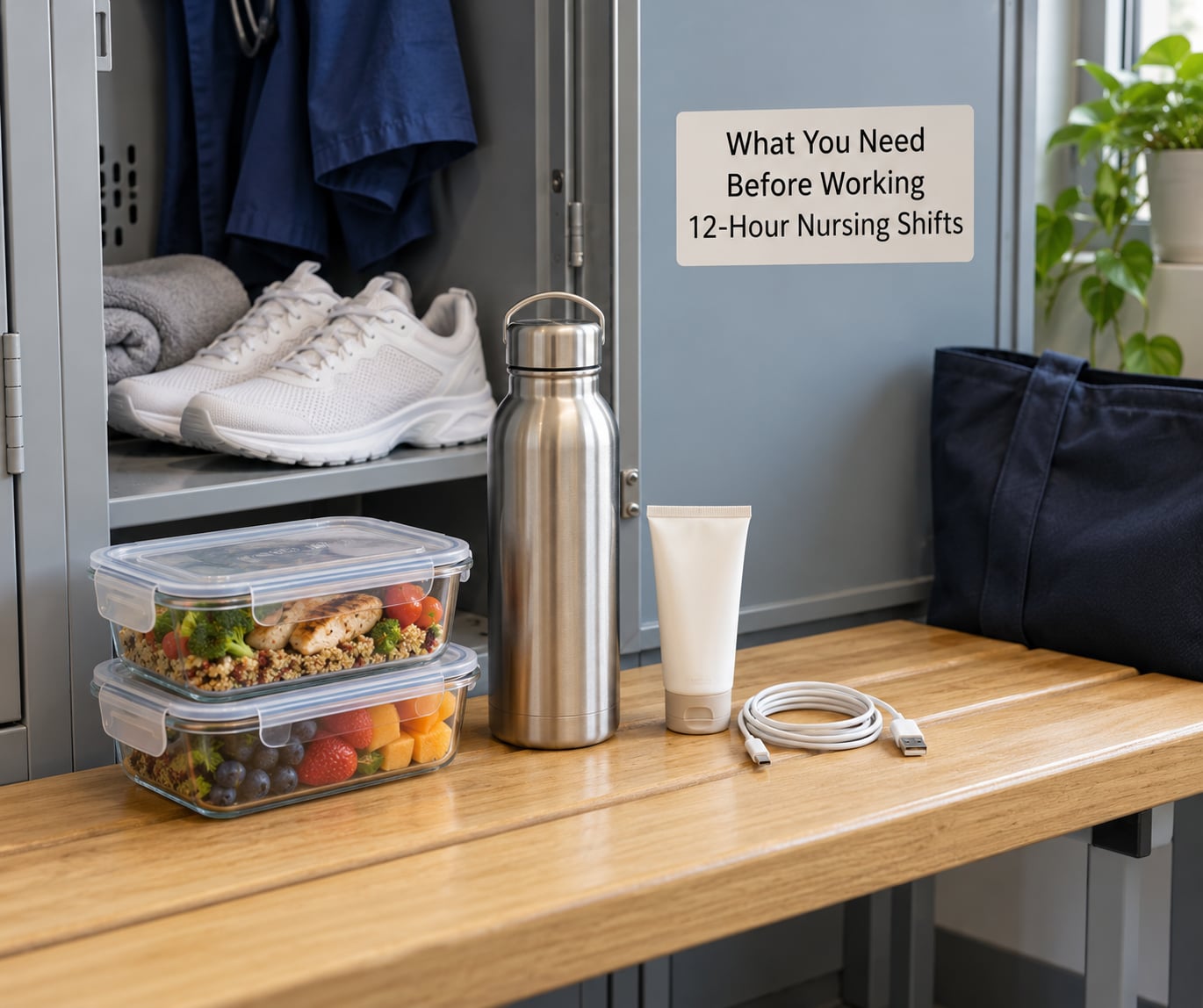
Most of what helps is cheap, small enough for a locker and lasts longer than a set of scrubs. Start here.
- Food that travels. Two or three containers of real food plus shelf-stable snacks. Trail mix, nut butter packets, oatcakes, protein bars, dried fruit, plain yogurt in a cooler, hard-boiled eggs. A registered dietitian writing for the British Dietetic Association pointed to exactly this kind of protein-and-fibre list for people working long clinical shifts.
- A bottle you can track. A marked reusable bottle beats a paper cup, because paper cups let you lose count without noticing.
- Supportive nursing shoes and compression socks. Feet and lower back are the two things nurses complain about most on 12s, and both are largely a gear problem.
- A sleep kit. Blackout curtains, a sleep mask that seals out light, earplugs or a white noise machine. For night shift, this kit is what makes a daytime sleep possible at all.
- A charger and a cheap backup. A dead phone at 3am on a night shift is a genuine safety problem, not just an annoyance.
- A shift plan you actually wrote. Ten minutes the night before beats a scramble at 6am — what you are eating, when, and where you are sleeping afterwards.
Arrange the rest in advance where you can: a protected day off after a stretch of nights, a ride home after a night shift when you will be driving tired, or someone who understands that you are asleep through the afternoon.
How to Stay Healthy as a Nurse Working 12-Hour Shifts, Step by Step
1. Protect Your Sleep and Schedule Before the Shift
Sleep is the thing 12-hour shifts take first, and it is the hardest to get back. The most useful thing nurses report doing is keeping their sleep schedule deliberately consistent, including on days off, instead of trying to flip back to normal hours after a stretch of nights.
For a 7pm to 7am run, protect the day before and the day after as much as you can. Stay awake later into the evening before a first night shift, keep the bedroom dark and cool, and treat your daytime sleep after nights like an appointment you have to keep. Our guide to 12 sleep hygiene tips for workers that fit shifts has the room setup details.
Melatonin is widely used by night shift nurses and is available without a prescription in many places. Talk to your doctor or pharmacist before starting it, especially if you take other medications, and follow the label rather than a dose you read online. The American Academy of Sleep Medicine is a good source for what is known about sleep aids for shift workers.
New nurses often get advised to pick either days or nights rather than a rotating schedule, because rotation is harder on the body. If your schedule rotates, plan your recovery time before you accept the rotation, not after you feel wrecked by it.
2. Build a Meal and Hydration Plan That Works on a 12-Hour Shift
Most nurses who lose energy on a 12-hour shift did not skip food on purpose — the break got cut, then it got shortened, then it disappeared. So decide your eating plan before the shift, when you still have control. Here is roughly how a day nurse spreads it out:
- Before the shift: protein plus fibre, not just sugar. Oatmeal with nut butter, eggs and toast, or a yogurt and banana. Skip the heavy fried meal right before.
- Hours 0 to 3: water, and your main caffeine if you need it. Your appetite is low but your fluid needs are climbing.
- Hours 4 to 7: your main meal, eaten sitting down even if it takes 15 minutes. This is the block most nurses skip.
- Hours 8 to 12: smaller, protein-heavy snacks. Blood sugar crashes are the reason for the slump at hour 9.
- On night shifts: shift the whole plan later rather than eating the same hours as a day nurse. Protect the meal at the start of the shift.
For fluids, aim for steady small amounts rather than chugging at once. Water, sparkling water, milk, and plain tea all count. Sugary drinks give you a spike and a drop, which is the opposite of what you want at hour 10. If the break room is a vending machine and a free pizza, our list of healthy vending machine options for the workplace is a realistic backup plan.
For caffeine, the useful rule is the cutoff. Caffeine stays in your system for roughly five to six hours, so stop it five to six hours before you intend to sleep. If you are off at 7am, that means nothing after roughly midnight. Energy drinks are the worst option because the dose is unpredictable.
3. Use Movement and Posture Breaks During the Shift
Standing for 12 hours does real damage to your feet, ankles and lower back, and it is not fixed by sitting down at the end of the shift. What helps is interrupting the standing with short, frequent movement.
Use the pauses that already exist: medication passes, waiting on a lift, the walk from the nurses station to the far end of the unit. Roll your shoulders, take ten slow calf raises, or walk two flights of stairs. None of it takes more than 90 seconds and none of it needs permission.
For posture, keep the working foot on a small footrest when you stand charting, and change which foot you lead with when standing. When you lift, widen your stance, bend at the knees, keep the load close, and avoid twisting while holding a patient. Nurses who do manual lifting carry a noticeably higher burden of low back pain, and body mechanics is the part of that you can actually control.
Compression socks and supportive nursing shoes are worth the money. Both reduce the dull end-of-shift ache that so many nurses describe, and neither needs a prescription or a gym membership.
4. Protect Your Breaks and Mental Energy
Your break is not a reward for finishing your work. It is the only part of the shift that is yours, and it is usually the first thing sacrificed when the unit gets busy.
Decide what your break is for before you start. If it is food, eat away from the workstation. If it is rest, stay off your phone — nurses commonly say scrolling through their phone means they sat for 20 minutes and came back more tired. If it is movement, take the stairs. Trying to do all three in 20 minutes is how breaks turn into nothing.
Fatigue and distraction rise together on a long shift, so a short breathing reset has a real purpose. Box breathing, four counts in, four counts hold, four counts out, repeated a few times, takes under a minute and lowers the physical edge of a stressful moment. You can do it in the hallway without anyone noticing.
Notice emotional exhaustion early. Feeling worn out after a hard shift is ordinary. The signs worth taking seriously are cynicism about your patients, dread that builds days before a stretch, and the sense that nothing outside work is worth doing. Those are burnout and compassion fatigue, not a bad week.
5. Wind Down Without Letting the Shift Follow You Home
The drive home after a night shift is a known risk. Twelve hours of clinical work and no sleep will make you tired at the wheel, so treat it like the hazard it is. Ask for a ride, use public transport, or share the drive with another nurse finishing the same shift.
Then run a short decompression routine. Shower, change out of scrubs, eat something, and do one deliberately mindless thing. Scrolling your phone straight from a 12-hour shift keeps you wired; a shower and a sit down with something you enjoy cuts the thread better.
On nights, sleep as soon as you are home, with the blackout kit and a plan for who is allowed to wake you. After days, sleep on a consistent time even on your days off, which is the single habit nurses say makes the biggest difference across a stretch of 12s.
When you have a day off, protect it. Hobbies scheduled in advance, not decided in the morning, are the thing nurses keep coming back to as their protection against burnout. Cooking for a family after a stretch of nights is also a real struggle, so meal prep in one two-to-three hour block on your first day off, and eat easy meals on the others.
6. Notice When Fatigue and Health Problems Need Attention
Some fatigue is the expected cost of the schedule. Some fatigue means something else is wrong, and no amount of routine will fix it.
Talk to a doctor if you regularly sleep seven or eight hours and still feel unrefreshed, if you snore or wake gasping, if you fall asleep while driving or waiting at a red light, or if you cannot sleep on your days off even when you have the chance. Sleep apnea and shift work sleep disorder are both common in nurses and both are treatable. Persistent back or neck pain, headaches that started after a schedule change, and low mood that does not lift are also worth a visit rather than another month of gritting your teeth.
If burnout is showing up, your employee assistance program and your professional association both offer confidential support. Talking to your manager about schedule patterns such as back-to-back 12s is legitimate too, and knowing your unit’s staffing policy before you need it makes that conversation easier.
Common Mistakes on 12-Hour Nursing Shifts
Almost every mistake nurses describe comes from the same place: treating a 12-hour shift as eight hours with extra time at the end.
- Skipping the meal break. The fix is to schedule the meal at hour four or five in your calendar before the shift starts, so it is a commitment rather than something you earn.
- Relying on coffee and vending machine food. The fix is a packed container and a caffeine cutoff five to six hours before your sleep window.
- Sitting or standing still for 12 hours. The fix is short, frequent movement during natural pauses rather than one long break at the end.
- Sacrificing sleep repeatedly. The fix is a consistent sleep schedule, including on days off, rather than flipping back and forth.
- Pushing through warning signs. The fix is to name the symptom — falling asleep at the wheel, unrefreshing sleep, persistent pain — and book an appointment instead of normalising it.
- Having no post-shift plan. The fix is a fixed decompression routine and a protected ride home after nights, decided in advance.
One more is worth calling out: assuming 12-hour shifts are simply hard and nothing can be done. Your control over meal timing, sleep timing, movement, footwear and recovery is real, and so is your right to raise shift patterns and break coverage with your manager.
Frequently Asked Questions
How can I stay healthy during 12-hour nursing shifts?
Protect four things every shift: fuel, fluid, sleep and movement. Eat a planned protein-and-fibre meal around hours 4 to 7 instead of relying on vending machine snacks, drink steadily through the shift, move in 90-second breaks at natural pauses, and keep a consistent sleep schedule including on your days off. A short post-shift routine stops work stress following you home.
What should I eat before and during a 12-hour nursing shift?
Before the shift, eat protein with fibre, such as oatmeal with nut butter, eggs with toast, or yogurt and fruit. Pack two real meals plus shelf-stable snacks like trail mix, nut butter packets and oatcakes. Aim for your main meal around hours 4 to 7, then smaller protein-heavy snacks late in the shift. A registered dietitian is the right person for advice tailored to your health conditions.
How do nurses sleep after 12-hour shifts?
Blackout curtains and a sleep mask that seals out light come first, along with earplugs or white noise. After nights, sleep as soon as you get home and keep that time consistent, including on days off. Most night shift nurses find that keeping the shifted schedule beats flipping back to normal hours. Melatonin is widely used, but check with your doctor or pharmacist before starting it.
Is it healthy to drink coffee during every nursing shift?
Caffeine stays in your system for roughly five to six hours, so timing matters more than the amount. Stop it five to six hours before your planned sleep, which on a 7am finish means nothing after around midnight. Energy drinks are the worst option because the dose is unpredictable. Steady water, sparkling water and plain tea do more for sustained alertness than repeated coffee.
How can I prevent back and neck pain from standing all day?
Short frequent movement beats one long break at the end. Roll your shoulders, do calf raises and walk the unit during existing pauses. Put one foot on a small footrest when charting, alternate your leading foot while standing, widen your stance when lifting, bend at the knees, keep the load close and avoid twisting while holding a patient. Supportive nursing shoes and compression socks reduce the end-of-shift ache.
When should fatigue or other health symptoms make me see a doctor?
Book an appointment if you sleep seven or eight hours and still feel unrefreshed, if you snore or wake gasping, if you fall asleep while driving, or if you cannot sleep on your days off. Sleep apnea and shift work sleep disorder are common in nurses and treatable. Persistent back or neck pain, headaches that followed a schedule change, and low mood that will not lift also deserve a professional look.
Start with one thing: put your main meal in the calendar for hour five of tomorrow’s shift and pack the food tonight. Everything else — the shoe rotation, the blackout kit, the caffeine cutoff, the ride home after nights — stacks on top of that one habit.
This is general information about shift work and everyday health habits, not medical advice. Talk to your doctor, pharmacist or a registered dietitian about anything that applies to your own health, and check with your employer or professional association about break coverage and scheduling rules where you work.