
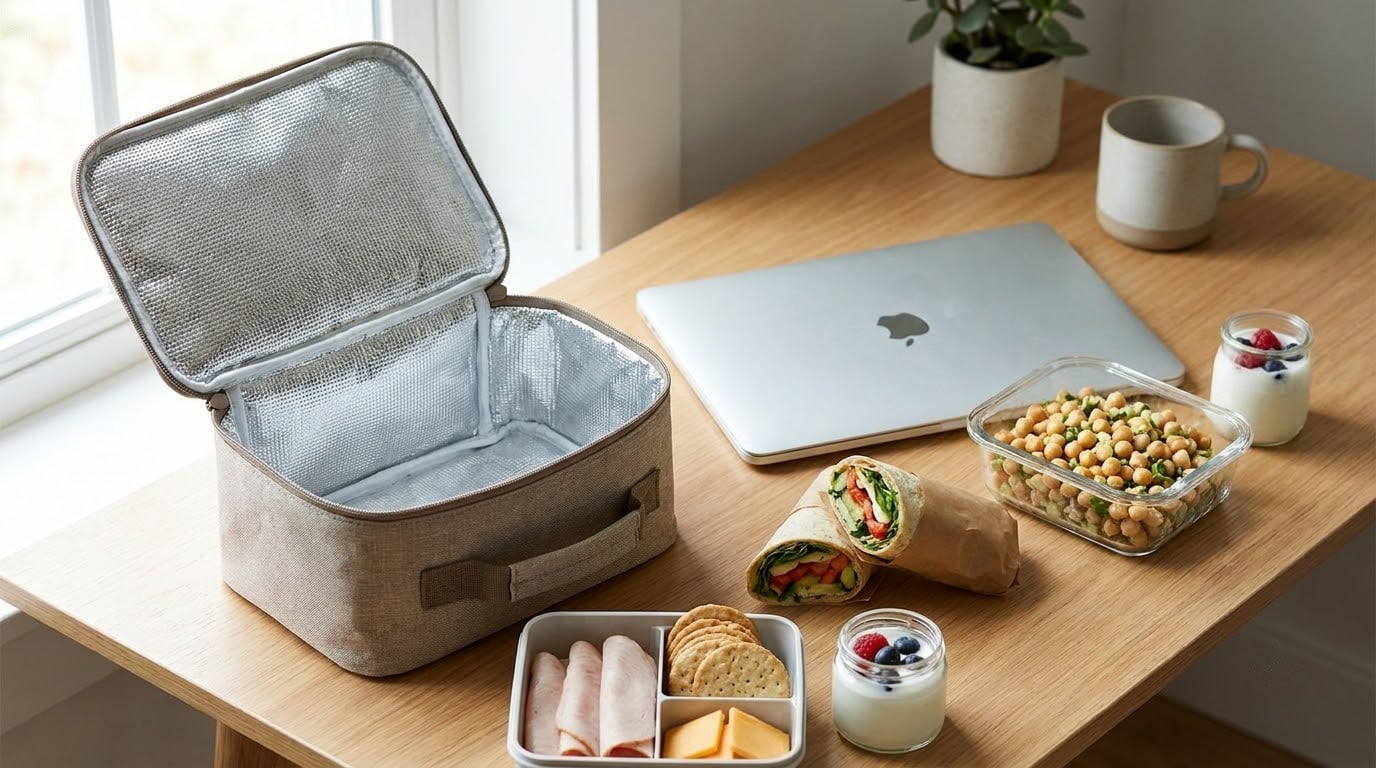
Work lunches that don’t need to be heated are packed meals you eat straight from the container: cold pasta salads, wraps, grain bowls, yogurt bowls, bento boxes and chilled noodle salads built to taste good cold or at room temperature. No microwave, no toaster oven, no queue at the shared fridge.
That covers a lot of people. Construction crews, warehouse staff, long-haul drivers, hospital workers on 20-minute breaks, teachers, students and desk workers who would rather not eat next to a refrigerator someone microwaved fish in. If your site has no microwave, or a fridge you’d rather avoid, these ten are designed for exactly that.
Many take under ten minutes to assemble, and most keep three to four days in a refrigerator, so a single Sunday batch covers most of the week. If you’re also thinking about portions and afternoon energy, our weight management support at work guide picks up where lunch ends.
Table of Contents
- Work Lunches That Don’t Need to Be Heated at a Glance
- 1. Mediterranean Chickpea Salad
- 2. Turkey and Hummus Wrap
- 3. Greek Yogurt Berry Bowl
- 4. Tuna and White Bean Salad
- 5. Caprese Pasta Salad
- 6. Peanut Butter Banana Oatmeal Cups
- 7. Tofu and Vegetable Cold Noodle Box
- 8. Deli Meat and Cheese Bento Box
- 9. Bean and Corn Rice Bowl
- 10. Overnight Oats with Nuts and Fruit
- How to Pack These Lunches for a Workday
- Frequently Asked Questions
- How long can work lunches that don’t need to be heated stay unrefrigerated?
- Which no-reheat lunches stay full and filling through the afternoon?
- What are the easiest work lunches to meal prep for beginners?
- Can I make a cold lunch the night before?
- What foods should I keep separate in a packed lunch?
- How can I keep salads and wraps from getting soggy at work?
- Conclusion
Work Lunches That Don’t Need to Be Heated at a Glance
Every idea below is eaten cold or room temperature. This table sorts them by how much effort they take and how well they travel, so you can pick before you shop.
| Lunch | Best for | Prep effort | Fridge needed | Especially filling |
|---|---|---|---|---|
| Mediterranean chickpea salad | Batch cooking, vegetarian days | 15 min plus cook | Yes | Yes, with chickpeas |
| Turkey and hummus wrap | Five-minute assembly, short breaks | 7 min | Yes | Yes |
| Greek yogurt berry bowl | No-cook mornings, small appetites | 5 min | Yes | Moderate |
| Tuna and white bean salad | High protein, low budget | 10 min | Yes | Yes |
| Caprese pasta salad | Using leftover cooked pasta | 12 min | Yes | Moderate |
| Peanut butter banana oatmeal cups | Individually portioned, no fridge at work | 10 min plus chill | No | Yes |
| Tofu and vegetable cold noodle box | Plant-based, flavour variety | 20 min | Yes | Moderate |
| Deli meat and cheese bento box | Balanced mixed foods, minimal prep | 8 min | Yes | Yes |
| Bean and corn rice bowl | Rice cooker batches, big lunches | 15 min plus cook | Yes | Yes |
| Overnight oats with nuts and fruit | Five minutes the night before | 5 min plus chill | Yes | Moderate |
One row says fridge not needed. That is your fallback when the office refrigerator is questionable or doesn’t exist.
1. Mediterranean Chickpea Salad
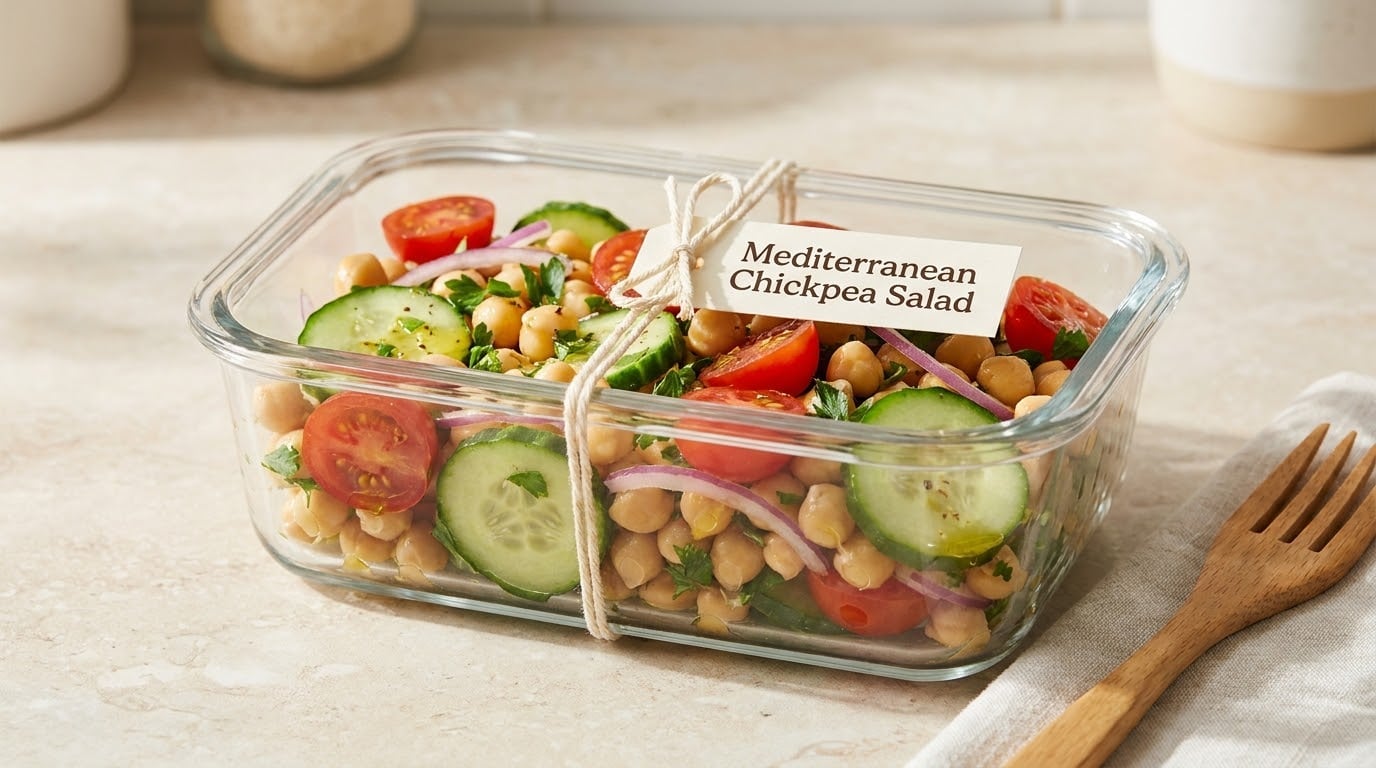
Chickpeas make this an easy cold lunch to keep. Drain a can, add chopped cucumber, halved cherry tomatoes, thin-sliced red onion, a handful of parsley, and a dressing of olive oil, lemon juice, a teaspoon of oregano and a little salt. It tastes just as good on day three as on day one.
Pack it in the same container you mixed it in and pour the dressing over at the table, right before eating. That single change is what keeps a chickpea salad from turning into chickpeas sitting in cloudy liquid by noon.
One large batch gives you three or four lunches. It travels well, it holds up without a microwave, and it is the easiest thing on this list to make if you cook for a vegetarian and a meat eater in the same house.
2. Turkey and Hummus Wrap
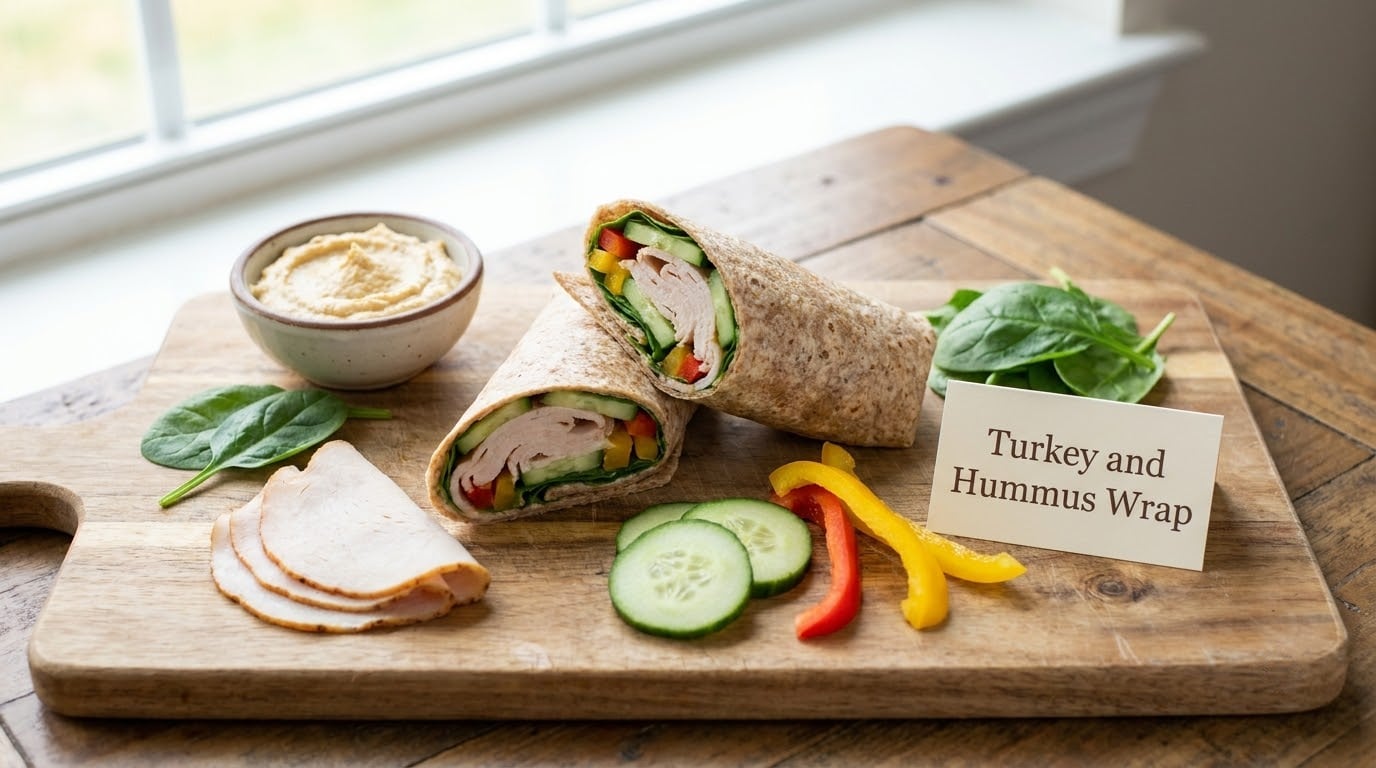
A wrap builds fast: spread hummus on a sturdy whole-grain tortilla, add sliced turkey, thin cucumber sticks, baby spinach and pepper strips, roll it tight and cut it on the diagonal. Seven minutes, one container, no cutlery if you eat it with your hands.
Keeping work lunches that don’t need to be heated from going soggy
The hummus is the whole trick. It forms a fat barrier between the tortilla and the wet vegetables, which is exactly the fix that r/MealPrepSunday users keep circling back to when they complain about lunchtime wrap mush.
Two more habits help. Pat the cucumber and tomato dry with a paper towel before rolling, and keep any dressing or wet condiment in a small separate jar rather than spreading it. Packing the wrap in parchment paper also stops it sticking to itself.
If you have a 20-minute break, this is the one to choose. Nothing needs assembling at the desk beyond unwrapping.
3. Greek Yogurt Berry Bowl
Plain Greek yogurt, a spoon of honey or a drizzle of maple, a handful of berries, and a tablespoon of seeds gets you a lunch that takes five minutes and needs no cooking at all. The protein in Greek yogurt is what carries you to a late afternoon meeting without a vending machine run.
Pack the toppings separately. Berries release juice as they sit, and a yogurt bowl that has turned pink and watery by 1 p.m. is a disappointment. A small lidded container of granola or nuts keeps its crunch and keeps the yogurt underneath clean.
This one is lighter than the rest. If you tend to get hungry by midafternoon, add a boiled egg or a small handful of almonds on the side.
4. Tuna and White Bean Salad
Drain a can of tuna and a can of white beans, then fold them together with chopped celery, red onion, a squeeze of lemon, a spoonful of olive oil and cracked black pepper. No mayonnaise, which is what makes it travel well and sit safely for a long morning.
White beans are doing the heavy lifting. They add bulk and fibre so the bowl fills you out, and a case of tins stretches further than buying lunch out every day.
For food safety, keep it chilled until you eat. USDA guidance is that cold foods should be held at or below 40 F (4 C), and if you eat it unrefrigerated, do it within about two hours of taking it out, or one hour in hot weather. Pack it with an ice pack and you are fine.
5. Caprese Pasta Salad
Cook small pasta shapes such as cavatelli or rotini, drain, rinse under cold water and let them cool completely. Then toss with halved cherry tomatoes, cubed or torn mozzarella, torn basil, a drizzle of olive oil and a splash of balsamic or red wine vinegar.
The rinse is not optional. It stops the pasta from cooking itself in the dressing and from clumping, which is why pasta salad is one of the few cooked foods that genuinely improves when eaten cold.
Chill it before you pack it. Cold pasta salad is noticeably more pleasant at room temperature than lukewarm, and it gives you a way to use a batch of cooked pasta from dinner instead of letting it sit.
6. Peanut Butter Banana Oatmeal Cups
Stir together rolled oats, milk or yogurt, a spoonful of peanut butter, a mashed banana and a splash of vanilla. Divide into a muffin tin or small jars and chill for a few hours or overnight. In the morning they are firm enough to eat from a container with a spoon.
These travel well, and in a cool workplace they need no ice at all; they last three to four days in a refrigerator. Keep the banana out if you need them to stay ambient for a full shift, or add it in the morning.
If your workplace is nut-free, swap the peanut butter for sunflower seed butter, which behaves the same way in the mix.
7. Tofu and Vegetable Cold Noodle Box
Cook noodles, rinse them under cold water and pack them with shredded carrot, cucumber ribbons, sliced bell pepper, edamame and cubes of firm tofu. A sesame or ginger-lime dressing in a small jar on the side keeps everything crisp until lunchtime.
Use a sturdy noodle rather than a very soft one, and rinse until the water runs clear. Slightly undercooked noodles turn rubbery as they cool, so pull them a minute early.
This is the one I lean on when a week of lunches has gone bland. The same box becomes a cold salad bowl, a sushi bowl with nori strips, or a peanut noodle bowl with a spoonful of satay, and none of them need heat.
8. Deli Meat and Cheese Bento Box
Think of this as a built-in variety pack. Roll slices of turkey, ham or salami with provolone and a little mustard, add whole-grain crackers, a small handful of grapes or apple slices, baby carrots, cherry tomatoes and a two-ounce container of hummus or pesto for dipping.
It works because it does not rely on any one flavour. When you have thirty minutes and no patience for a container of mixed textures, a bento box solves the problem without asking you to cook anything.
Keep it cold. Meat and cheese need an insulated bag and a frozen ice pack if there is no refrigerator at work, and cut fruit and vegetables should be packed dry so nothing turns watery.
9. Bean and Corn Rice Bowl
Cold rice works. Cook a batch of rice, cool it quickly, and pack it with black or pinto beans, corn, cherry tomatoes, shredded lettuce and salsa. Add sliced avocado just before you eat it, or pack it whole on the side with a spoon.
Two details keep this bowl from turning into rice soup. Drain the canned beans and corn well before packing, and drain the salsa in a separate container rather than pouring it over the rice at home. A squeeze of lime over the top does more for the flavour than any heavy dressing.
A rice cooker makes this nearly free in effort, and the batch gives you four lunches of the same base you can finish four different ways: beans and corn, tuna and cucumber, egg salad with dill, or leftover chicken.
10. Overnight Oats with Nuts and Fruit
Equal parts rolled oats and milk or yogurt in a jar, a spoonful of chia or flax, chopped fruit, a drizzle of honey and a small handful of nuts. Lid on, refrigerator overnight, eat it cold straight from the jar with a spoon the next morning.
No cooking, no heating, and it holds three to four days. Keep the nuts in a separate little container or add them in the morning so they stay crunchy, and use firmer fruit like apple or pomegranate over berries that release juice.
This is the five-minute option. If your morning is already busy, the jar sits in the refrigerator and you walk out the door with it.
How to Pack These Lunches for a Workday
Good cold lunches fail on temperature and texture, not on taste. Fix those two and most of the work is done.
How long is a packed lunch safe unrefrigerated?
USDA and FoodSafety.gov guidance is the standard to follow: perishable food should not sit out longer than two hours at room temperature, and that limit drops to one hour when the air temperature is above 90 F (32 C). That matters more in a truck cab, on a site in July, or anywhere without air conditioning.
Insulated bag plus a frozen ice pack is the accepted answer. Mumsnet users describe packing lunch in a small cool bag with ice blocks, and it works: the bag holds food under 40 F (4 C) for the length of a shift. If you are packing items that must stay cold and you genuinely cannot keep them cold, choose the shelf-stable options instead.
Lunches that need no refrigeration at all
Some options above work without any cold storage: the peanut butter banana oatmeal cups in a cool room, whole fruit, nuts, roasted chickpeas, whole-grain crackers with shelf-stable dips, tuna and sardines straight from the pull-tab can, dried fruit, protein bars, and dry cereal with shelf-stable milk in a small carton.
Those are the ones to buy for a long drive, a site with no break room, or a shared refrigerator you have decided to skip. Everything else on this list wants an insulated bag and an ice pack.
Keeping things crisp and preventing sogginess
Use a fat barrier. Hummus, pesto, mayo or a thin layer of olive oil on the bread keeps moisture from the vegetables soaking through.
Dry your vegetables. A paper towel on cucumber, tomato and lettuce removes the water that causes sogginess and watery bowls.
Separate the sauce. A two-ounce jar of vinaigrette, tahini dressing or hot sauce keeps everything else dry until you are ready to eat.
Stack crunch on top or hold it aside. Crackers, chips and nuts go in a separate compartment so they are still crisp at lunchtime.
Let hot food cool before you seal the lid. Packing warmth into a closed container creates condensation, which is the quiet reason a wrap goes soft in a bag.
How long these lunches stay good
Cooked pasta and rice salads, bento boxes and any lunch with dressed vegetables are reliable for three to four days in a refrigerator. A tuna and white bean salad or a chickpea salad keeps about that long. Yogurt bowls are good for a day or two, since the fruit softens.
Cook the components at home to a safe internal temperature even though nothing gets reheated at work: poultry to 165 F (74 C), ground meat to 160 F (71 C), and fish or whole cuts to 145 F (63 C). Chilling the container promptly, within two hours, is what keeps the rest of the day safe.
Still want something warm without a microwave?
Use a wide-mouthed thermos. Preheat it in the morning by filling it with boiling water and leaving the lid on for ten minutes, empty it, then add soup, stew or a curry packed hot the night before. A preheated flask holds heat for most of a morning, and a Mumsnet user notes even leftover roast dinner works if you pre-chop it and fill the gaps with hot gravy.
It is worth saying plainly that a thermos is still no-microwave lunch planning. Pack it as an occasional bonus rather than something the workday depends on.
What not to pack cold
Plain reheated chicken breast is the one most people miss, and it genuinely does not taste good cold. Same for mayo-heavy salads such as potato or tuna with mayo, and plain steamed vegetables with nothing on them.
In a small shared office, skip strongly scented fish at lunch. Smell does not stay in the container, and a cold meal is a much quieter choice than a microwave one.
Worth a minute of your break: step away from the desk to eat. Fifteen minutes without a screen does more for the rest of the afternoon than the food itself, and our guide to how to reduce stress at work without quitting has the longer version if you want it.
Frequently Asked Questions
How long can work lunches that don’t need to be heated stay unrefrigerated?
Perishable food should not sit at room temperature longer than two hours, and one hour if it is above 90 F (32 C), according to USDA and FoodSafety.gov guidance. An insulated lunch bag with a frozen ice pack keeps food at or below 40 F (4 C) and extends that window to a full workday. For lunches with no cold storage at all, choose options built from pantry ingredients instead of anything with meat, dairy, eggs or cut fruit.
Which no-reheat lunches stay full and filling through the afternoon?
Fill comes down to protein plus fibre, and the best options on this list combine both. The tuna and white bean salad, the chickpea salad, the bean and corn rice bowl and the deli meat and cheese bento box all carry roughly 25 to 35 grams of protein depending on portions. Greek yogurt bowls are lighter, so add boiled eggs or nuts if you tend to get hungry before dinner.
What are the easiest work lunches to meal prep for beginners?
Start with one format you can repeat, not ten. The turkey and hummus wrap takes about seven minutes and needs no cooking, and the rice or chickpea batch makes four lunches in one pot. Most beginners do well by cooking a single base on Sunday and changing the protein and sauce through the week, which also prevents flavour fatigue by Thursday.
Can I make a cold lunch the night before?
Yes, and most of these are better made ahead. Overnight oats and the peanut butter banana oatmeal cups are made the night before by design. Chickpea salad, tuna and white bean salad and bento boxes assemble fine the night before as long as you dress them at lunchtime rather than at packing time. Keep cut fruit and vegetables dry, and refrigerate within two hours.
What foods should I keep separate in a packed lunch?
Keep wet items apart from dry and crisp ones. Dressings, salsa and vinaigrette go in a small two-ounce jar. Nuts, crackers, granola and chips go on top or in a separate compartment so they stay crunchy. Pack tomatoes, cucumber and wet fruit in a divided container away from bread. This is what stops a wrap going soft and a yogurt bowl going pink by one o’clock.
How can I keep salads and wraps from getting soggy at work?
Use a fat barrier. Hummus, pesto, mayonnaise or a thin layer of olive oil between the bread and the filling blocks moisture from reaching the tortilla. Dry your vegetables with a paper towel before packing, keep the sauce in a separate jar, and let hot food cool before you seal the lid so condensation does not form. Pack the wrap in parchment and it arrives intact.
Conclusion
Pick one lunch and make two portions before you do anything else. The turkey and hummus wrap is the fastest to test, the chickpea salad gives you the most lunches per batch, and the bento box is the one that survives a 20-minute break without tasting like an afterthought.
Choose the cold storage that fits your workplace first: insulated bag and ice pack if you can keep food chilled, pantry-based options if you cannot. Once the bag and the ice pack are in the routine, packing a no-heat lunch takes less time than the microwave queue ever did.