
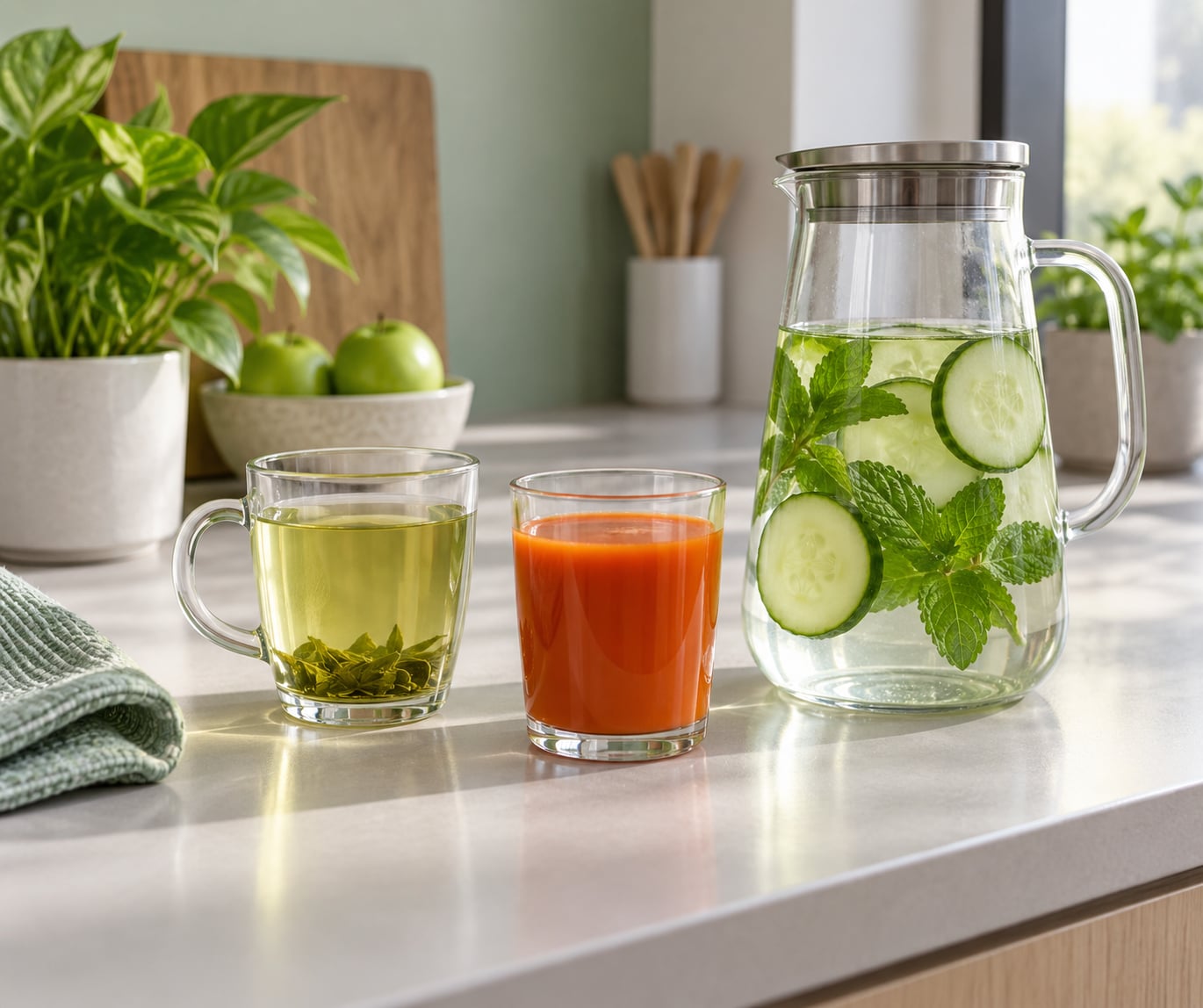
Healthy drinks besides water at work are low-sugar beverages that still count toward your daily fluid intake: unsweetened coffee and tea, fortified plant-based milk, plain yogurt drinks, low-sugar kombucha, and lightly infused water. They add taste and variety to the workday without turning into another sugary pick-me-up.
Water stays the default. The UK NHS Eatwell Guide frames the daily target as six to eight 250 ml glasses, roughly 1.5 to 2 litres of fluid, and it explicitly counts tea, coffee, low-fat milk and sugar-free drinks toward that number. The body is roughly 60 percent water, and mild dehydration reliably shows up as trouble concentrating before it shows up as thirst.
That matters more in an office than people expect. A desk day is mostly sedentary, but a commute, a walk to the printer and a warm break room add up, and most people drink far less across eight hours than they assume. If you have read our piece on water access at work and why it matters for worker health, the short version is that an unaddressed fluid deficit shows up as irritability and slower short-term memory long before anyone feels thirsty.
What follows is a working list built around the real constraints of a workplace: what survives a shared fridge, what fits in a meeting, what does not leave a smell in a small room, and what is worth labelling clearly for colleagues with allergies or dietary restrictions. This is general information, not personal nutrition advice. If you have diabetes, kidney disease, a heart condition, are pregnant, or take regular medication, talk to your doctor or a registered dietitian before changing what you drink through the workday.
Table of Contents
- Healthy Drinks Besides Water at Work: At a Glance
- 1. Unsweetened Black Coffee
- 2. Plain Green Tea
- 3. Caffeine-Free Herbal Tea
- 4. Unsweetened Milk or Plant-Based Milk
- 5. Plain Yogurt Drinks
- 6. Unsweetened Kombucha
- 7. Low-Sugar Electrolyte Drinks
- 8. Small Servings of Vegetable Juice
- 9. Fruit-and-Yogurt Smoothies
- 10. Freshly Prepared Cucumber-Mint Water
- 11. Diluted Unsweetened Fruit Juice
- 12. Unsweetened Cacao or Hot Chocolate
- Frequently Asked Questions
- Conclusion
Healthy Drinks Besides Water at Work: At a Glance
The table below covers all twelve drinks in this guide, with the practical details that decide whether something works in a shared office: the form it usually comes in, whether it contains caffeine, the situation it suits best, and what to check on the label.
| Drink | Main benefit | Typical form | Caffeine | Best workplace situation | Label check |
|---|---|---|---|---|---|
| Black coffee | Alertness with zero sugar | Shared machine, drip or cold brew | Yes, 80-200 mg per cup | Morning start, long focus blocks | Sugar added by colleagues to the pot |
| Green tea | Mild caffeine, lighter taste | Hot brewed or cold steeped | Yes, lower than coffee | Mid-morning, early afternoon | Added sweeteners and flavour sachets |
| Herbal tea | Flavour with no caffeine | Individually boxed tea bags | No | Evening and night shifts | Blended botanicals and claims |
| Unsweetened milk or plant milk | Protein and fortified nutrients | Carton at the fridge | No | Breakfast, mid-afternoon | Added sugar, fortification, allergens |
| Plain yogurt drink | Protein and a creamy texture | Chilled bottle, short shelf life | No | Morning, post-lunch | Added sugar, protein grams, use-by date |
| Unsweetened kombucha | Tart fermented flavour | Chilled bottle or shelf-stable | Varies, often low | Midday, for people who like tart drinks | Added sugar, caffeine, cold chain |
| Low-sugar electrolyte drink | Sodium and potassium for heavy sweating | Bottle or powder in water | Often yes | Hot shifts, warehouse and site work | Sugar grams, sodium mg, caffeine |
| Vegetable juice | Vegetable flavour, no fruit sugar load | Small chilled glass or bottle | No | Lunch, as a smaller alternative to soda | Sodium, added sugar, pasteurisation |
| Fruit and yogurt smoothie | Fruit plus protein in one cup | Blended on site | No | Afternoon snack replacement | Portion size, added syrup, blending hygiene |
| Cucumber-mint water | Light flavour, almost no calories | Covered pitcher in the fridge | No | Shared break room option | Freshness of the produce, cover, hours |
| Diluted 100 percent juice | Fruit flavour at half the strength | Juice mixed with water | No | Short meetings, mild cravings | 100 percent juice, no added sugar |
| Unsweetened cacao or hot chocolate | Warm drink for cold offices | Hot, from a kettle station | Yes, small amount | Winter, evening shifts | Cocoa solids, added sugar, dairy |
How to Choose Healthy Drinks Besides Water at Work
Start with the added sugar line on the nutrition panel, not the front of the carton. The FDA sets a daily added sugar limit of 50 grams for a 2,000 calorie diet, and a single 12 ounce soda commonly lands near 39 grams before you count the pastry from the same break room visit.
Caffeine is the second filter, because it accumulates silently across a day. A large brewed coffee, a pre-workout-style electrolyte drink and a chocolate bar can add up past what someone expects in a single shift. Serving size matters too: a 20 ounce coffee is not the same drink as an 8 ounce cup, and the label tells you which one you are looking at.
Then look at the practical constraints that decide everything else. Any product that needs refrigeration has a use-by date, a storage footprint and a shared-fridge etiquette problem. Anything poured into a shared pot needs to be labelled with ingredients, since one colleague’s nut allergy or another’s dairy intolerance makes an unlabelled pitcher a genuine problem. Salt content is worth a look for anyone on a restricted-sodium diet.
Finally, be honest about equipment. A blender used by twenty people needs a cleaning rule. A kettle station needs somewhere for used cups. Nobody wants a kombucha at 10 a.m. in a small meeting room, and nobody wants an office that smells like vinegar by 3 p.m. Those are the details that decide what people actually drink, month after month.
1. Unsweetened Black Coffee
Coffee is the easiest swap for people who reach for a vending machine soda every afternoon, because it delivers caffeine with no sugar. A typical 8 ounce cup of brewed coffee runs roughly 80 to 100 mg of caffeine, and a 12 ounce serving sits higher.
For an office, the practical setup is a shared drip machine or cold brew jug with a label that says what is inside, plus a jug of plain hot water for anyone who wants the ritual without the caffeine. Most workplace machines serve something closer to espresso-strength concentrate, so the honest move is to dilute it.
Two watch-outs. The first is sugar in the pot: well-meaning colleagues add it for everyone, and one spoonful is roughly 16 grams. The second is timing, since caffeine consumed in the late afternoon tends to disturb sleep, and poor sleep is the day after tomorrow’s version of the afternoon slump.
2. Plain Green Tea
Green tea gives you caffeine at a lower dose than coffee and a taste that is not bitter enough to need sugar, which is exactly why it survives an office better than most hot drinks. The flavour depends on brewing temperature, and water around 80C leaves the least bitterness.
Cold steeped green tea in a covered jug in the fridge works well in warm weather and avoids the queue at the kettle. A few hours of steeping in cold water pulls out a mild, slightly grassy drink with no bitterness at all.
Caffeine-sensitive colleagues should note that even decaf green tea is only approximately decaffeinated, and the amount left varies by brand. Matcha is a different story entirely: a single serving commonly contains several times more caffeine than a cup of brewed tea.
3. Caffeine-Free Herbal Tea
Chamomile, peppermint, rooibos and hibiscus give you flavour, warmth and aroma with no caffeine, which makes them the default for evening and night shifts. Individually boxed bags also solve the shared-pot problem, since everyone gets their own strength and flavour.
Read the box rather than the front. A plain chamomile bag lists one ingredient; a wellness blend may list a dozen, and the effect depends on which ones are in there and how much. Blended herbal products are not regulated the way medicines are, so treat sweeping claims as marketing.
Rooibos is naturally caffeine-free as well, which matters for people who want a red-coloured, robust-tasting hot drink late in the evening. Peppermint is popular after lunch, though it is not a treatment for anything and should not be described as one.
4. Unsweetened Milk or Plant-Based Milk
Unsweetened dairy milk is a reasonable desk drink because it brings protein, calcium and vitamin B12. Plain, unsweetened versions of oat, soy and almond milk are the plant-based comparison, and the differences are real enough to check the label for rather than assume. It is also one of the easiest healthy drinks besides water at work to keep stocked, because a carton holds its quality in a shared fridge far longer than most bottled options.
Soy milk generally carries the most protein of the common plant milks, oat milk is the mildest and froths well for coffee, and almond milk is the lowest in calories but also low in protein. Fortification varies too, and the vitamins and minerals in fortified plant milk do not always match dairy. Check the nutrition panel for calcium, vitamin D and B12, and confirm that it is labelled unsweetened.
Storage is the real issue in a shared office. Once opened, these belong in the office fridge, not on the counter, and they need a date written on them. Allergens are the other issue: dairy contains milk, and almond milk contains tree nuts, both of which need to be named in whatever shared space they sit in.
5. Plain Yogurt Drinks
Plain yogurt drinks are thicker and more filling than milk, and a short bottle with no added sugar gives you a few grams of protein without the afternoon crash that follows a pastry. Read the protein number on the label, because it varies widely between products and some are closer to a flavoured milk drink than to yogurt.
They need continuous refrigeration, and unlike juice or kombucha they have a short use-by window. Check the date before buying, and discard anything that has sat warm for hours. Shared fridges are the single biggest reason a good yogurt drink turns into a bad experience for someone.
People who avoid dairy have plant-based alternatives, and those vary in protein content and in whether they are fortified at all. Anyone with a milk allergy needs a genuinely dairy-free product rather than one described as low in lactose, and that is worth confirming with a clinician rather than a label skim.
6. Unsweetened Kombucha
Kombucha is a fermented tea with a tart, slightly vinegary taste, and it is popular in offices because it satisfies people who find plain water boring without tasting sweet. Look for unsweetened versions, or ones with a few grams of added sugar at most.
Contents vary more than the label front suggests. Caffeine content differs widely by brand because green tea is the base, and so does the amount of live culture, which is not required to be listed in the same way everywhere. Short refrigerated bottles need a cold chain from the shelf to the office fridge, and shelf-stable versions trade some of that freshness for convenience.
Fermented drinks are the ones most likely to cause trouble for people with sensitive digestion or a history of gut problems. If bloating or discomfort is a pattern for you, start with a small serving and see how your body responds, and talk to your doctor if it is a recurring problem. On a long video call, a fizzy fermented drink is also a gamble.
7. Low-Sugar Electrolyte Drinks
Electrolyte drinks make sense on a warehouse floor, in a kitchen or on any shift where you are sweating heavily, and they make much less sense for someone sitting at a desk all day. That distinction matters, because the drinks are sold on hydration and energy, and both of those are conditional.
Sodium and potassium help replace what you lose in sweat, and the reason the label lists milligrams of sodium rather than a percentage is that heavy sweaters can need several times the amount a desk worker does. For an office worker, water and ordinary meals cover the same ground more cheaply.
Check sugar, sodium and caffeine before you buy. Many commercial options are also energy drinks, carrying 80 to 200 mg of caffeine alongside sweetener, which defeats the purpose on a hot shift when you still need to sleep. If you are buying in bulk for a workplace, follow your heat-safety and rest-break guidance, and make sure water is available alongside anything else.
8. Small Servings of Vegetable Juice
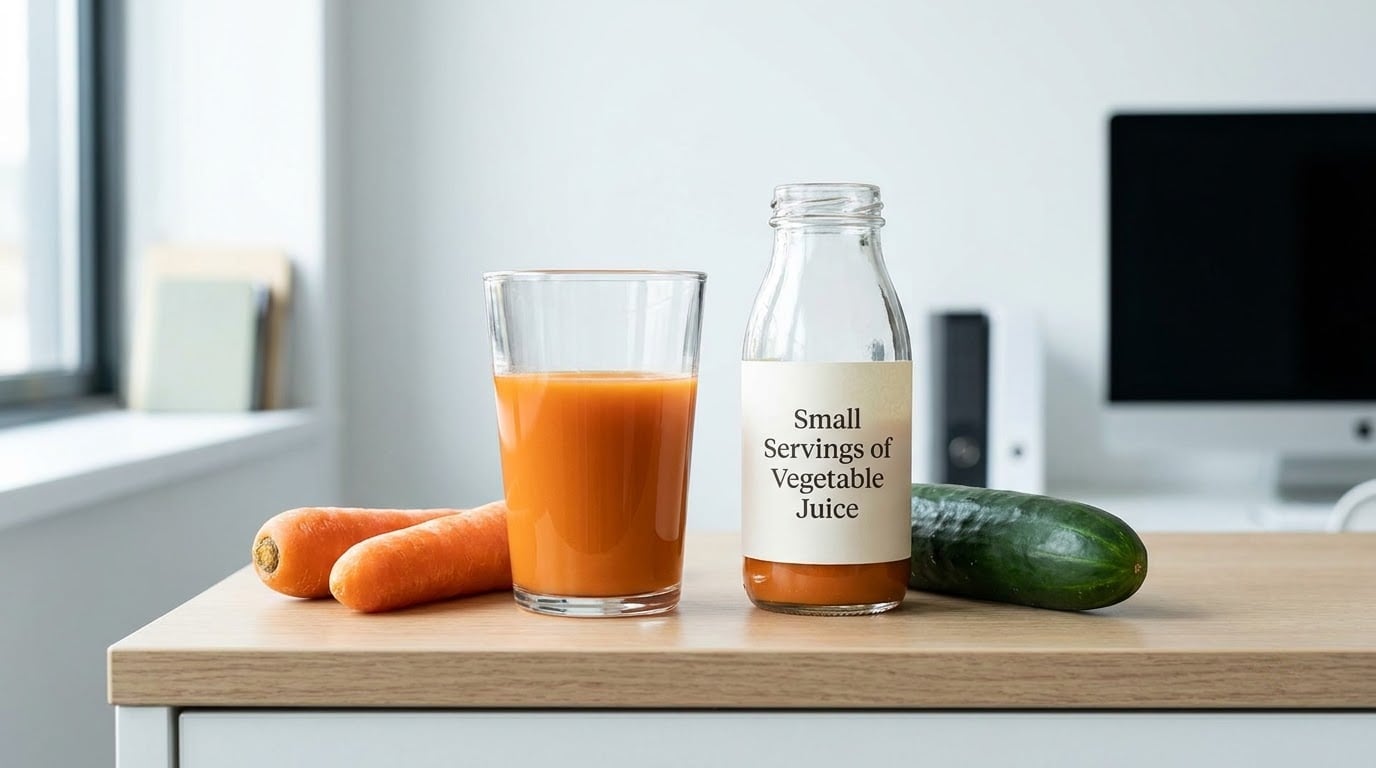
Carrot, celery, tomato and mixed vegetable juices give you savoury flavour and no fruit sugar spike, and they make a decent replacement for the sweet drink someone is buying out of habit. Tomato juice is the easiest sell in an office because people expect it to taste savoury and be salty.
Serve them small. A 150 to 200 ml glass is plenty, and a larger serving of any juice is easy to overdo. Watch the sodium on vegetable juices, since tomato and celery-based products are frequently high in salt, and check that nothing has been added beyond the vegetables themselves.
Perishability is the practical limit. Unopened pasteurised bottles keep fine; anything freshly pressed needs refrigeration and a short window, and a juice sitting out in a break room through the afternoon is a food-safety question. And be clear-eyed about what this is: juice is a drink, not a substitute for eating vegetables, and a glass of carrot juice does not do the job of a portion of whole carrots.
9. Fruit-and-Yogurt Smoothies
A smoothie built from fruit, plain yogurt and a splash of milk or fortified plant milk gives you fruit plus protein in one cup, and it is the drink that most reliably kills an afternoon vending machine run. The rule that makes it work is measured portions and no added syrup.
Use frozen fruit, a small handful of fresh, and roughly the same volume of yogurt or milk. That gives you a drink that is thick enough to count as a light meal rather than a dessert in liquid form.
On a shared blender, hygiene rules are not optional. Wash the jug between uses, never leave blended dairy sitting in a machine between shifts, and wipe the base. Anyone with an allergy needs to know exactly what went into the jug, which is an argument for blending in labelled individual cups rather than one communal pitcher.
10. Freshly Prepared Cucumber-Mint Water
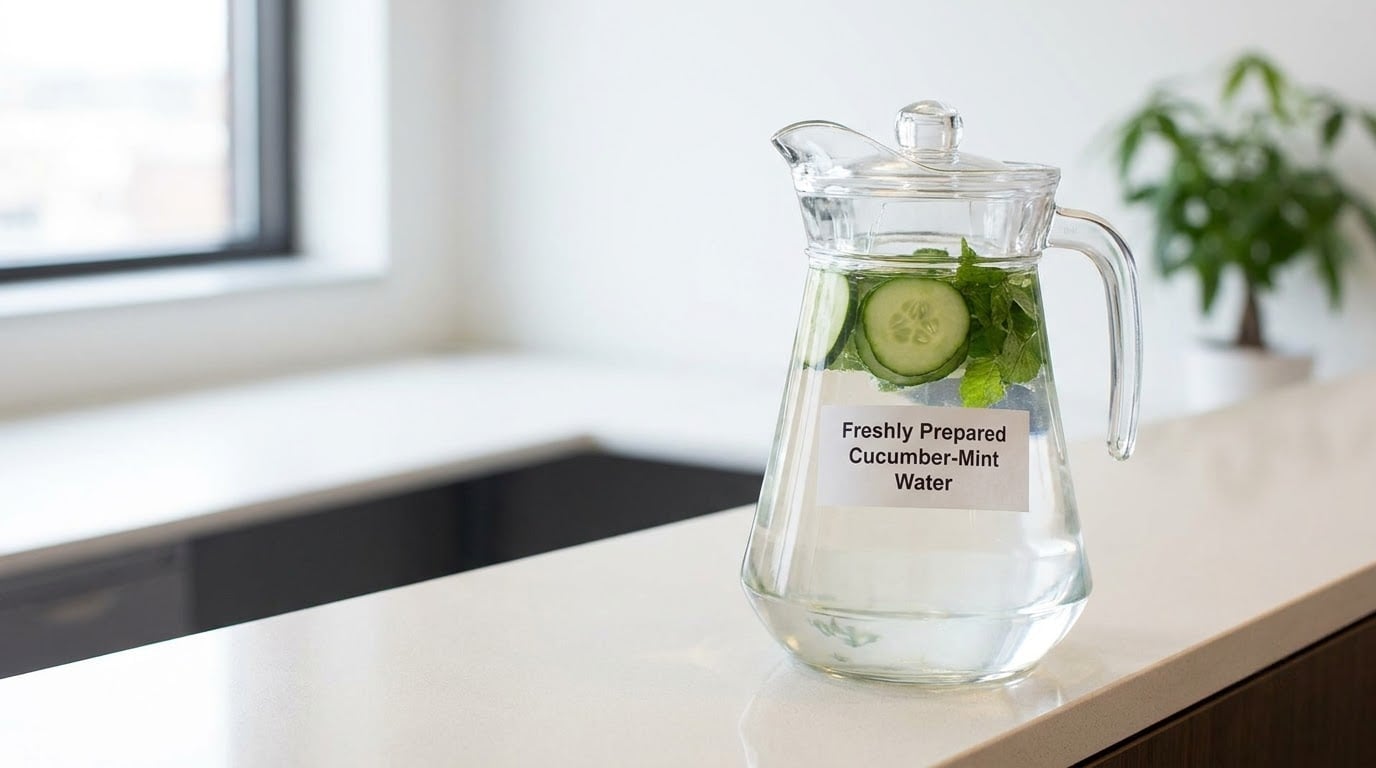
Lightly infused water solves the most common objection to drinking water all day, which is that it is boring. Sliced cucumber, a few mint leaves and a lot of ice produce a drink that tastes like something without adding meaningful sugar or calories. For a team working through healthy drinks besides water at work, it is the cheapest option on this list and the one with the fewest storage problems.
Make it in a covered pitcher and keep it refrigerated, and set a sensible limit on how long it sits. Produce left in water for two days in a warm break room is not a good idea, and the standard advice for anything cut and submerged is to use it within a day or so.
Watch the practical details. Nobody should be drinking from a shared uncovered vessel. If the smells in your office are a factor, cucumber and mint are mild compared to strong herbal blends, and if someone simply prefers plain water, there should be plain water too, not only the infused pitcher.
11. Diluted Unsweetened Fruit Juice
Diluting 100 percent juice with water is the fastest way to take the edge off something that tastes too sweet on its own. A practical starting point is one part juice to two or three parts water, adjusted until the drink is genuinely mild.
Check that the bottle says 100 percent juice with no added sugar, since many products sold as juice drinks are a small proportion of juice sweetened with syrup. Grape and apple are the most heavily diluted options available in most markets, and citrus blends tend to be lighter already.
One thing to keep straight: juice contains sugar that occurs naturally in the fruit, and the nutrition panel counts it as total sugar. Diluting reduces how much you drink, not what the sugar is. Anyone managing blood sugar should treat this as a treat rather than a health drink and discuss the amounts with their clinician.
12. Unsweetened Cacao or Hot Chocolate
Plain cacao drink is the option for people who avoid both coffee and tea, and for offices that run cold in winter. It delivers a small amount of caffeine plus a flavour that feels like a treat without needing sugar to be palatable.
Look for the cocoa solids percentage and the added sugar line, and expect some sugar in ordinary hot chocolate mixes, since it is a sweet drink by tradition. Dairy-free versions based on oat or soy are widely available and behave the same way in a kettle station.
Serving temperature matters more than people expect: too hot and nobody drinks it, and a hot drink sitting on a desk for two hours is a bacterial risk if milk is involved. Stirring powders into shared equipment also needs a spoon or a dispenser that is not the same one used for a colleague’s drink.
Frequently Asked Questions
What is the healthiest drink besides water for everyday office use?
Unsweetened tea, either black, green or herbal, is the most practical everyday answer because it needs no fridge, adds no sugar, and works in a shared kettle or coffee setup. Fortified unsweetened plant-based milk and plain yogurt drinks are the strongest options when you want protein. All of these count toward the same daily fluid target as water, roughly 1.5 to 2 litres according to the NHS Eatwell Guide.
Are zero-sugar drinks automatically healthy at work?
No. A zero-sugar label describes added sugar, not everything else in the can. Some zero-sugar drinks carry several hundred milligrams of caffeine, which can leave you jittery or awake at 3 a.m., and others contain artificial or natural sweeteners that some people find they tolerate poorly. Check the caffeine line and the ingredient list as carefully as you check the sugar line.
How much caffeine can an office drink contain?
A standard 8 ounce cup of brewed coffee usually runs 80 to 100 mg, a 12 ounce serving more, and a large 20 ounce coffee from a workplace machine can exceed 200 mg. Green tea sits well below coffee, espresso concentrates are much higher, and many commercial electrolyte and energy drinks carry 80 to 200 mg per can. The FDA advises up to 400 mg a day for most healthy adults, and less during pregnancy.
Can employees with diabetes drink flavored beverages at work?
They can, but the amount and the type of sweetener both matter, and that is a conversation to have with a doctor or registered dietitian rather than guesswork at the vending machine. Naturally sweetened drinks still contain the sugar in the juice itself, and zero-sugar options vary in what they use. Individual targets also change with medication, so advice written for someone else may not fit.
What should an employer offer for a hot or physically active workplace?
Water has to be the first and most visible option, followed by options for heavy sweating: low-sugar electrolyte drinks that state their sodium content clearly, and something with caffeine for people who need it. On a hot site, follow your heat-safety and rest-break guidance and make cool water available at the point of work, not only back at the break room.
Seeking guidance for a specific condition, or working out whether a drink suits your medication or your shift pattern, is a good reason to book time with a doctor, pharmacist or registered dietitian. They can give you numbers that apply to your body rather than to a general article, and they can tell you which warning signs are worth taking seriously rather than waiting out.
Conclusion
Start small. Offer two or three clearly labelled options that match your workforce: unsweetened tea for most people, a protein option such as plain yogurt drink or fortified plant milk, and one low-sugar option for people who want fizz. Check the added sugar and caffeine lines, keep cold items properly refrigerated and dated, and label anything shared so allergies and dietary restrictions are never a guessing game.
Leave water as the default and the most visible option in the room. Healthy drinks besides water at work are additions, not upgrades, and the ones that survive a full year in a workplace are usually the ones that need the least explaining. If you are planning what to put in a break room or a micro-market, our guide to healthy vending machine options for the workplace covers the selection and placement side, and for the wider nutrition angle there is weight management support at work.