
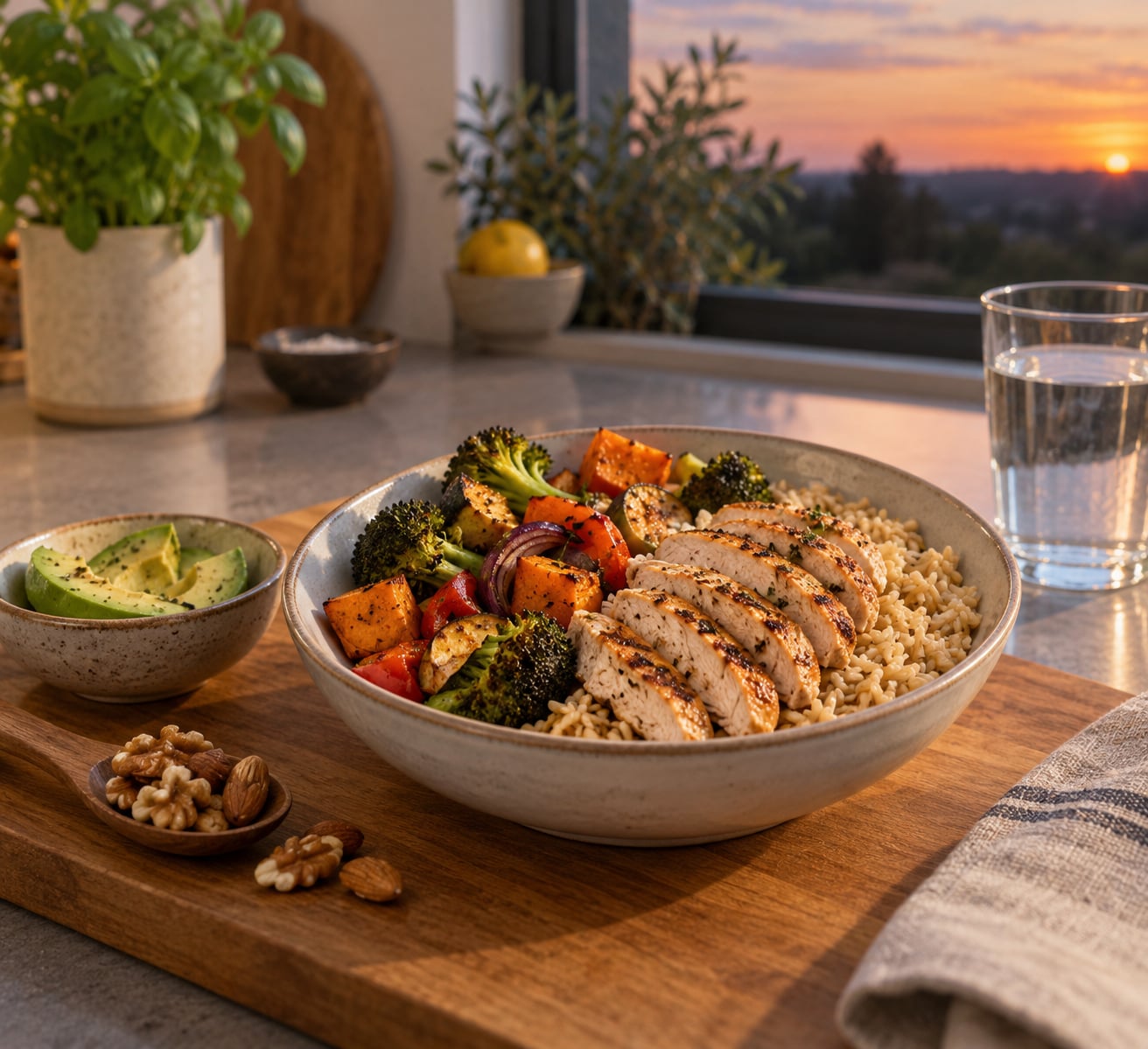
What to eat before a night shift comes down to one familiar, balanced meal: a piece of protein, a slow-release carbohydrate, some vegetables and a small amount of fat, eaten one to two hours before you clock in. Nothing exotic, nothing that sits heavily. That plate sets your energy for the whole shift and decides whether you feel fine at 4am or uncomfortable.
The reason timing matters so much is that your digestive system slows down overnight. A meal you would happily dig into at 7pm can sit badly at 11pm, and it usually sits worse at 3am when you have already been awake for eleven hours. Eat earlier than feels natural, keep portions moderate, and pick foods that are easy to digest.
This guide covers what to eat, when to eat it, what to bring when there is no fridge, how caffeine and fluids fit in, and what to do after the shift so you can actually sleep. If you have reflux, IBS, diabetes or take medication on a schedule, read the caveats near the end and talk to your own clinician, because your needs may differ from anything written here.
Table of Contents
- What Should You Eat Before a Night Shift?
- How Soon Before a Night Shift Should You Eat?
- What Foods Work Well Before Overnight Work?
- What to Eat Before a Night Shift for Different Needs
- Foods to Limit Before a Night Shift
- How to Manage Caffeine and Hydration Overnight
- How to Eat During a Night Shift Without Feeling Uncomfortable
- How to Protect Sleep After a Night Shift
- Frequently Asked Questions
- What are the best foods to eat before a night shift?
- Should I eat a large meal before starting an overnight shift?
- Is coffee a good way to get energy before a night shift?
- Can I eat a heavy meal during a night shift?
- What can I eat before a night shift if I am vegetarian?
- What if I have a sensitive stomach or digestive condition?
- Conclusion
What Should You Eat Before a Night Shift?
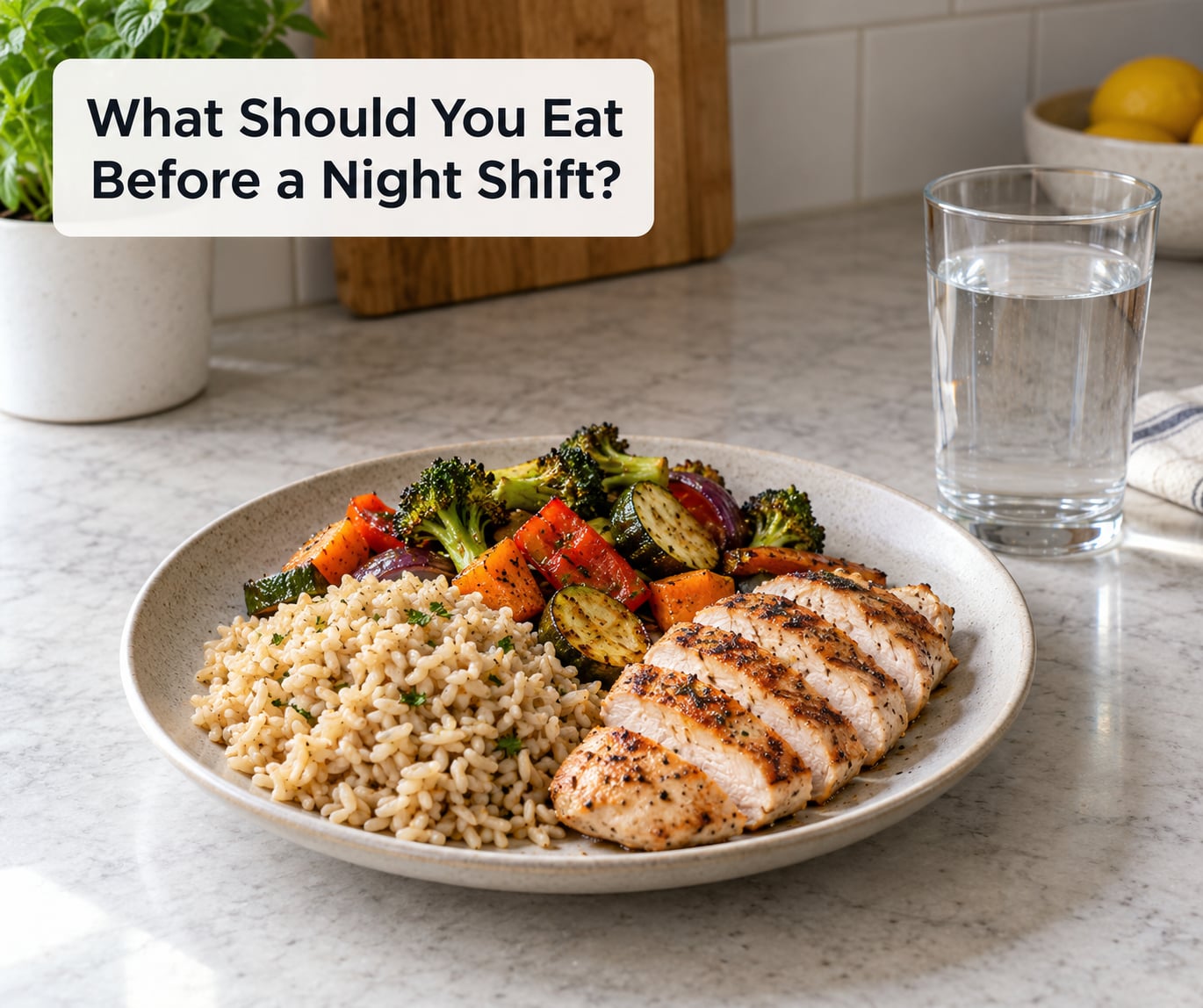
Eat a normal, balanced meal you already know your body handles well: carbohydrates for slow energy, protein to stay full, and vegetables for fibre and volume. That is the anchor meal, and it is the single most useful thing in this whole guide.
What you want to avoid is a meal that is very greasy, very large, or heavily refined sugar. Those foods digest slowly, sit flat, and tend to make an already disrupted body feel worse during the small hours. On a 12-hour shift, a heavy pre-shift meal is also the reason you feel sluggish rather than full at 3am.
Build the plate in three parts and you cannot go far wrong:
- Protein: chicken, tofu, eggs, tuna, Greek yogurt, beans or lentils. Protein keeps you satisfied and slows how fast food leaves your stomach.
- Complex carbohydrate: oats, brown rice, quinoa, sweet potato, whole-grain bread or pasta. These release energy steadily instead of spiking and crashing.
- Vegetables and a little fat: roasted vegetables, salad with olive oil, avocado, nuts or nut butter. Fibre and fat both blunt the sharp hunger that arrives mid-shift.
Most night workers find that a familiar meal beats an adventurous one. You already know how your body responds to it at 9pm, and that is valuable information when you are about to be awake until morning.
How Soon Before a Night Shift Should You Eat?
For most people, the best window is one to two hours before the shift starts. It gives your stomach time to begin working while you are still awake and upright, and it leaves a gap so you are not handling a full meal during the first hours of work.
A practical timing protocol looks like this:
- Two to three hours before: the main anchor meal. This is the biggest food event of your shift, and eating it early gives digestion a head start.
- Thirty minutes to an hour before: a small top-up if you get hungry, such as yogurt, a banana or a handful of nuts. Skip it if eating close to departure makes you queasy.
- Start of shift: water, and possibly caffeine if you use it. Not food.
- Two to four hours in: your first small snack, before the hunger dip hits hard.
- Halfway and near the end: a light meal, kept smaller than the pre-shift meal.
Individual tolerance matters more than any fixed rule. Some people feel best eating three hours out, others manage fine with ninety minutes. If reflux is an issue for you, a smaller meal further from bedtime style positioning is usually better, and if you have a condition that makes eating at unusual times genuinely difficult, your clinician can help you plan around it rather than guessing.
What Foods Work Well Before Overnight Work?
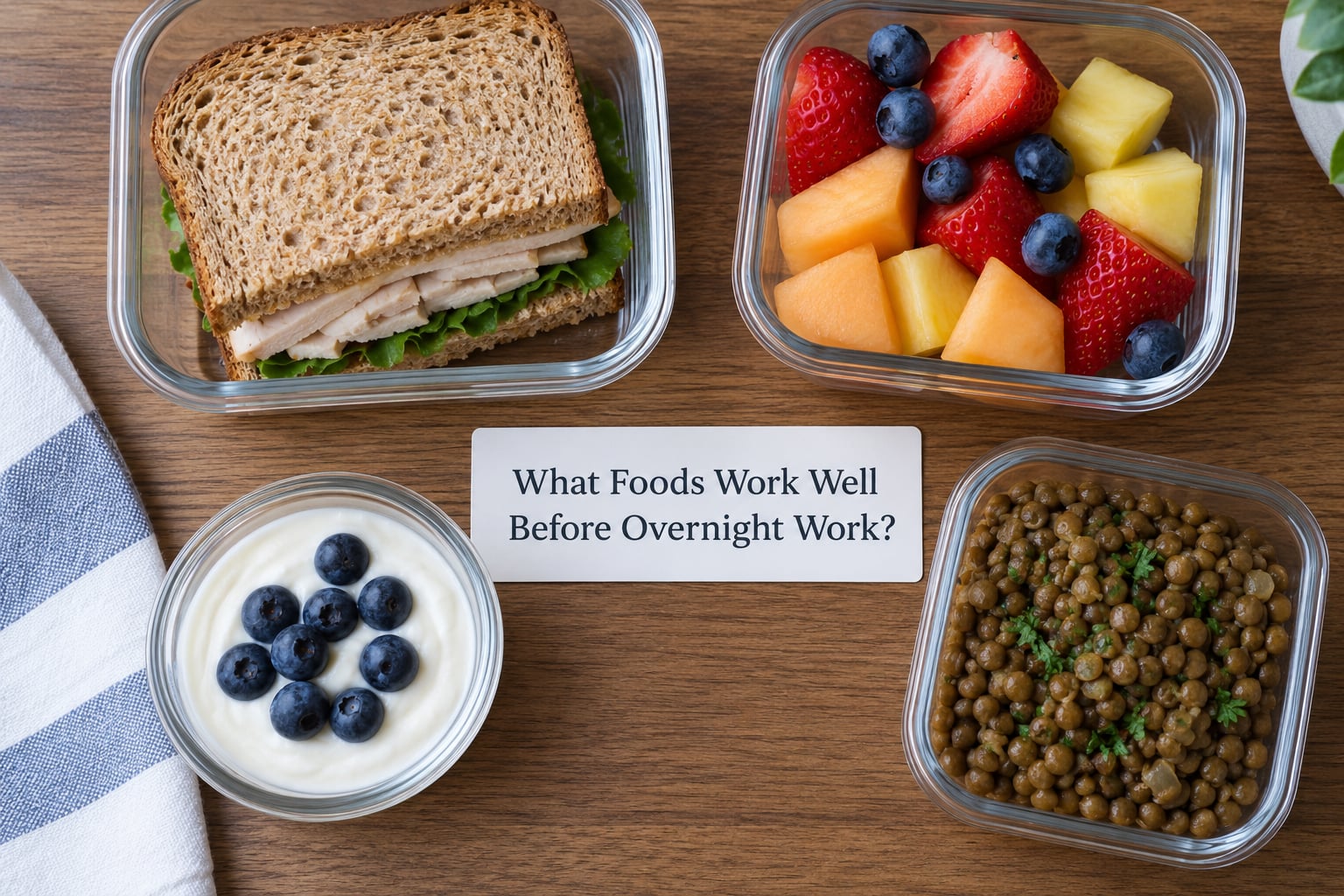
These foods travel well, keep for hours without a fridge in many cases, and tend to sit well in a stomach that is running on a strange schedule. Think of them as your rotating shortlist.
- Oats with milk and a spoon of nut butter — slow release, warm, and easy at 5pm.
- Brown rice with chicken and roasted vegetables — the classic plate, easy to batch cook.
- A sandwich on whole-grain bread with turkey, hummus or egg salad — no cooking required, holds together in a bag.
- Quinoa or couscous with chickpeas, cucumber and feta — a grain salad that is fine slightly lukewarm.
- Greek yogurt with berries and a few walnuts — high protein, low fuss, no cooking.
- Baked sweet potato with black beans and avocado — filling and fibre-heavy.
- Lentil soup with a small whole-grain roll — warm, cheap, batchable, freezes well.
- Eggs on toast with tomato — quick when you have twenty minutes.
- Rice cakes with peanut butter and banana — shelf stable and genuinely portable.
- Tinned tuna with crackers, cucumber and olives — no fridge needed for an hour or two, though a cooler bag is better if you have one.
Three of these come straight out of what night nurses and other night workers describe eating: oatmeal or toast with avocado to settle the stomach, grain plus vegetable plus protein as a repeatable template, and yogurt with fruit when appetite is low but you still need something.
What to Eat Before a Night Shift for Different Needs
A quick meal with barely any cooking
Toast with peanut butter and a banana, or Greek yogurt with granola, takes three minutes. When you are between shifts or running late, speed matters more than perfection.
Vegetarian or plant-based options
Lentil or chickpea soup with a roll, tofu and brown rice, bean and avocado wraps, or a quinoa bowl with roasted vegetables and seeds all work. Beans give you protein and fibre together, which is exactly what a long shift needs.
What to eat before a night shift with no fridge, microwave or break room
Build a shelf-stable kit: nut butter packets, rice cakes or crackers, dried or freeze-dried fruit, unsalted nuts, jerky, tuna or bean pouches, protein or seed bars, and a wide-mouth bottle. Jerky, nuts, canned fish and nut butter crackers are what shift workers most often name as the reliable backup when only a vending machine is available.
A 12-hour shift instead of an 8-hour shift
Longer shifts need more total food, not a bigger pre-shift meal. Keep the anchor meal the same and add a proper mid-shift snack so you arrive at hour ten steady rather than starving.
A light option for a stomach that gets queasy
Smaller and blander beats larger and richer. Congee, a plain rice bowl, soup with crackers, toast with a little butter, or bananas and plain yogurt are the options people reach for when they already know eating makes them ill.
A meal you eat with family before you leave
Cook one meal for everyone an hour or two before departure, keep your portion moderate, and let the family dishes be what they are. Building your own small plate first, then sitting down with everyone for twenty minutes, works better for most people than eating with the family straight from the pan.
Foods to Limit Before a Night Shift
None of this is forbidden forever. It is about what tends to go wrong at 3am rather than at 8pm.
| Instead of | Try | Why |
|---|---|---|
| A large heavy meal right before leaving | A moderate meal two hours out | A full stomach and a disrupted digestion schedule together cause bloating and nausea |
| Fried chicken, burgers, greasy sandwiches | Grilled or baked protein | Fat slows gastric emptying, so it sits far longer overnight |
| Sugary pastries, candy, sweetened drinks | Fruit, yogurt, a protein bar | Sharp sugar spikes lead to a fast energy crash mid-shift |
| Coffee on an empty stomach | Food first, then coffee if you use it | Caffeine without food can trigger nausea and jitters in some people |
| Spicy food and large amounts of onion or garlic | Mild seasoning, herbs | Common reflux triggers, especially when you lie down later to sleep |
| Carbonated drinks | Water, sparkling water, diluted juice | Carbonation adds pressure and contributes to that bloated feeling |
| Alcohol | Nothing, or a very small amount early | Alcohol disrupts sleep architecture, and you are trying to sleep within hours of finishing |
| Very high fibre in one sitting, or beans in large quantities | A smaller portion of fibre, introduced earlier | Large amounts close to the shift can produce gas and discomfort in some people |
Chewing gum, mints and smoking also set off reflux for a fair number of people. If you know one of these is your trigger, you already have the answer.
How to Manage Caffeine and Hydration Overnight
Caffeine works best as a support rather than the whole plan. Most people do best with one or two servings spread early in the shift and nothing in the final three to four hours, because the half-life of caffeine runs around five to six hours, so a 4pm coffee is still working on you at midnight.
- Drink fluids steadily across the shift rather than in one go at break. Aim for pale-yellow urine as a rough check.
- Water is the default. Add electrolytes if the shift is hot or physically demanding, or if you are on a fluid-restricted plan that your clinician has already set.
- Keep a bottle within reach. Dehydration is easier to fix before it starts than once your head is pounding at 5am.
- Watch the caffeine dose in energy drinks as well as coffee, and prefer a lower-sugar or lower-caffeine option if a large dose makes you jittery or nauseous.
- Limit alcohol entirely before a shift if you can, and note that drinking is among the common reasons night workers wake at 4am with a dry mouth and a poor night ahead.
If caffeine stops giving you the lift it used to, that tolerance effect is worth raising with an occupational health professional rather than just pushing more of it. It is also worth knowing what your employer already provides — our guide to wellness programs built for shift workers covers what a good rotating-roster program should include before you build your own plan.
How to Eat During a Night Shift Without Feeling Uncomfortable
Most night workers eat two meals across a shift rather than three or more, and it works better than constant grazing. Two meals with a snack between them keeps your blood sugar steadier and stops the boredom-driven vending machine run that so many people describe.
Split the shift rather than eating all at once. A small meal at the two-hour mark, one snack around hour five, and a light one before the end leaves you comfortable without the heavy feeling that follows a full meal at 3am.
Take a few minutes to sit and eat when you can rather than eating while walking or driving, and walk a little afterwards if you can manage it. Five minutes of gentle movement makes more difference than you would expect when the aim is to avoid that bloated feeling.
How you handle the hours in between matters too. Long stretches with nothing to do invite boredom eating, and the break room is where it usually happens. Portion what you bring, decide in advance what the snack at 3am will be, and keep something non-food to do on the break — the shift passes faster and you are less likely to make a second trip to the vending machine. Airline crews face this same pattern on overnight rotations, and we cover it in what airline crew deal with on overnight rotations.
The 3am hunger dip is real and it is mostly a combination of low blood sugar, boredom and the fact that you have been awake for a long stretch. Plan for it specifically. A planned snack of hummus with veggie sticks, popcorn with a protein bar, or crackers with cheese stops it turning into an unplanned large meal. Gingerale, crackers, pretzels and applesauce come up often as the things that help when the stomach is unsettled.
How to Protect Sleep After a Night Shift
What you eat before the shift is really about what happens when you get home and lie down at 8am. A heavy pre-shift meal may still be sitting in your stomach, and reflux when you lie flat will wreck the sleep you have just come home for. A moderate, earlier meal is easier on both counts.
Keep the routine plain: eat before you travel home if you are hungry, keep the post-shift meal light and protein-based, avoid alcohol as a sleep aid, and use a cool, dark room. Protein and carbohydrate together, such as yogurt and cereal or eggs and toast, are a common choice for the meal after a shift.
Persistent trouble sleeping on a rotating roster is worth raising with a doctor or a sleep clinic. Night work is a recognised exposure in occupational health research, and the National Institute for Occupational Safety and Health, part of the CDC, treats long-term circadian disruption as a workplace hazard rather than something workers should simply absorb. Our guide to shift work sleep problems and how to fix them goes further on the sleep side.
Frequently Asked Questions
What are the best foods to eat before a night shift?
The best pre-shift foods combine three things: protein such as chicken, tofu, eggs, yogurt or beans; a slow-release carbohydrate such as oats, brown rice, quinoa or whole-grain bread; and vegetables or fruit with a little fat. Eaten one to two hours before the shift, this mix gives steady energy and keeps you comfortable for hours.
Should I eat a large meal before starting an overnight shift?
Usually not. A moderate anchor meal two hours before the shift gives you steady energy without the heavy feeling that follows. On a long shift, extra food is better spread across the night as snacks rather than added to the meal before you leave, because digestion slows overnight.
Is coffee a good way to get energy before a night shift?
Coffee can help, but it works best as support rather than the main strategy. One or two servings spread across the early part of the shift usually help more than several at once, and nothing in the last three to four hours, since caffeine can still be active six hours later and undermine the sleep you need after.
Can I eat a heavy meal during a night shift?
You can, but most night workers feel worse afterwards. Greasy or large meals digest slowly overnight and tend to cause bloating, reflux and sluggishness. Two lighter meals spread across the shift, with a planned snack in between, keeps energy steadier and your stomach more comfortable.
What can I eat before a night shift if I am vegetarian?
Lentil or chickpea soup with a roll, tofu with brown rice, bean and avocado wraps, and quinoa bowls with roasted vegetables all work well. Beans and lentils are especially useful because they combine protein and fibre, which is what keeps you full through a long overnight shift.
What if I have a sensitive stomach or digestive condition?
Go smaller and blander rather than skipping food, since an empty stomach on nights often brings dizziness and nausea of its own. Congee, plain rice, soup, toast and bananas are gentle options that settle the stomach. If you have reflux, IBS or any diagnosed condition, a doctor or registered dietitian can help you plan meals and timings around it.
Conclusion
Start with one thing: build a familiar plate of protein, slow-release carbohydrate and vegetables, and eat it about two hours before you leave for work. Keep the portion moderate, skip the greasy and sugary extras, drink fluids steadily through the night, and eat a planned snack before the 3am dip arrives rather than reacting to it.
Then adjust. If the meal sits badly, make it smaller and blander. If you get hungry too fast, add a snack rather than enlarging the meal. After a few nights you will have the answer for your own body, and that is worth more than any list of foods anyone can give you.