
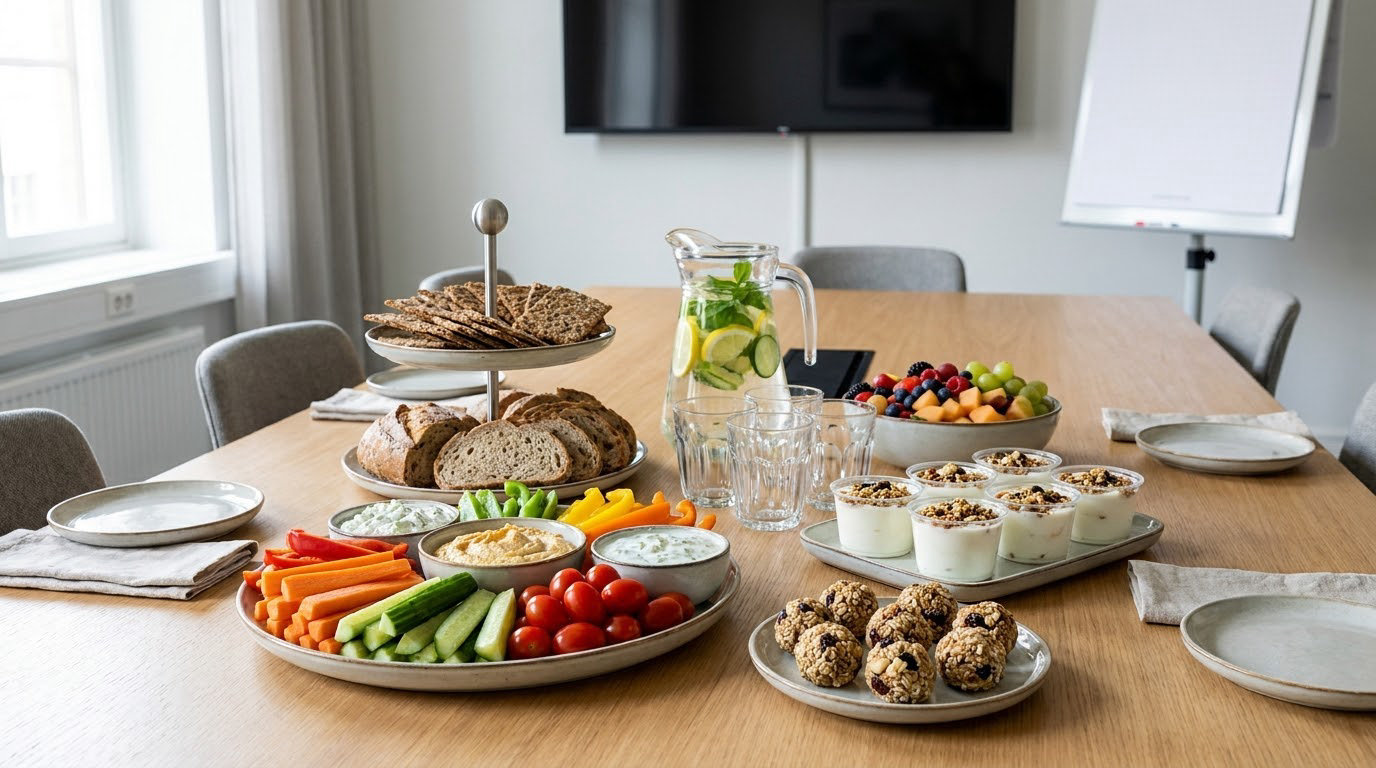
Healthy meeting food ideas are foods that can be eaten quietly with one hand while attention is still being called for: options built from fruit, vegetables, lean protein, whole grains and healthy fats, portioned so people can take a piece or two and get back to the discussion. That definition does the heavy lifting, because a meeting room imposes three limits at once that most office snacks ignore. Food has to be mess-free, it usually has no fridge, microwave or utensils available, and it cannot fill the room with smells or crumbs.
That combination is why the pastry box fails. It crumbles, it needs a plate, and by the second agenda item the whole table smells of butter. The options below all clear those three tests, and each one notes the dietary flags it carries so you can build a spread that works for a mixed room of vegetarian, vegan, gluten-free, dairy-free and nut-free guests.
This is aimed at office managers, executive assistants, team leads, and the HR or wellness people who order the food, but it works just as well for anyone bringing their own lunch to a client call or a training day. I have kept the planning practical: what a platter actually feeds, how far ahead you have to work, and what to skip.
Table of Contents
- Healthy Meeting Food Ideas at a Glance
- 1. Fresh Fruit and Berry Cups
- 2. Vegetable Crudites with Hummus
- 3. Mini Caprese Skewers
- 4. Turkey and Hummus Pinwheels
- 5. Grain Bowls with Roasted Vegetables
- 6. Greek Yogurt Parfaits
- 7. Overnight Oats Cups
- 8. Turkey, Chicken, or Chickpea Lettuce Cups
- 9. Whole-Grain Muffins
- 10. Popcorn with a Seasoned Topping
- 11. Smoothie Cups or Bottles
- 12. Healthy Charcuterie-Style Snack Board
- Frequently Asked Questions
- What kind of food should I serve at meetings?
- What are some good meals to eat for meetings?
- What are 20 healthy snacks for an office?
- What is a good food to bring for coworkers?
- What are healthy snack options for office meetings?
- What is a good finger food for a meeting?
- What are some shelf-stable snacks I can bring to the office?
- Conclusion
Healthy Meeting Food Ideas at a Glance
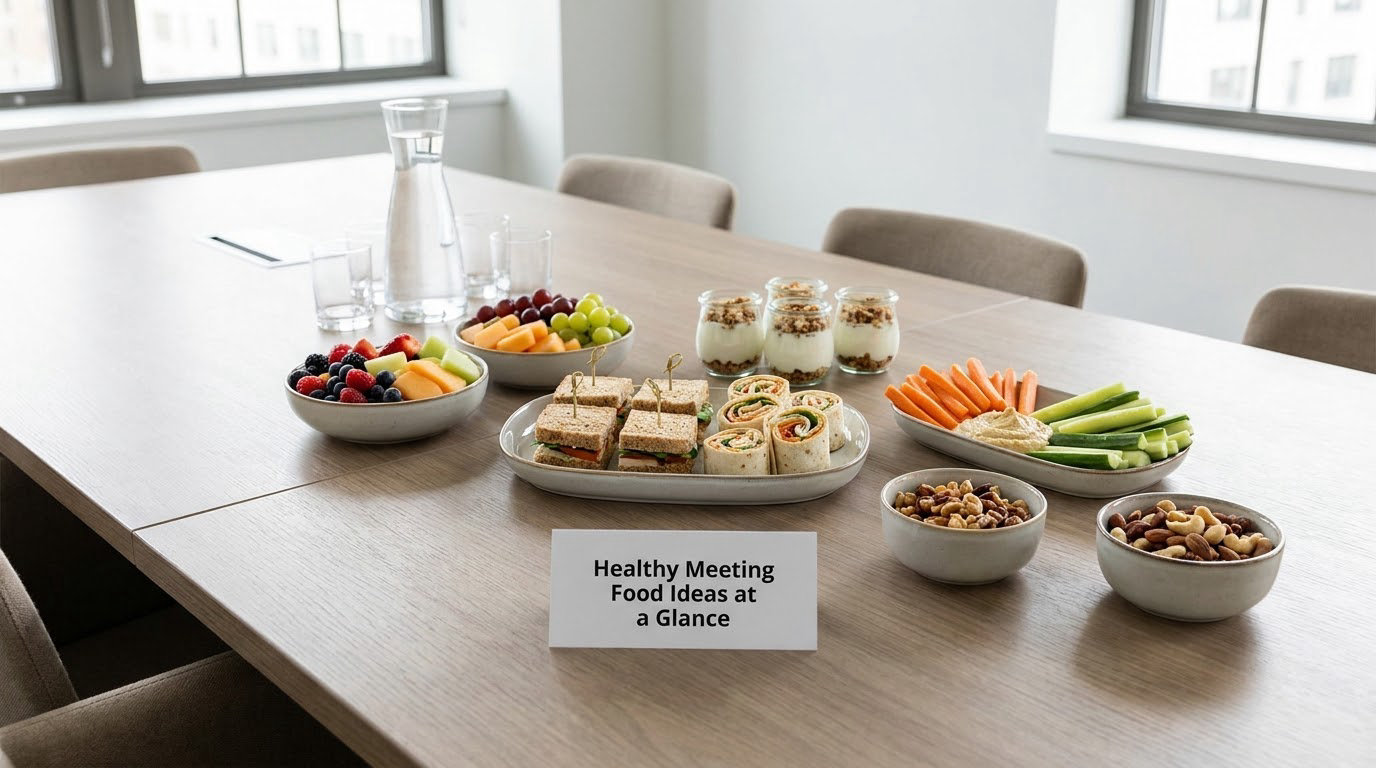
| Idea | Best for | Prep level | Dietary flags | Mess level | Fridge needed | Lead time |
|---|---|---|---|---|---|---|
| Fruit and berry cups | Any meeting, especially 9am starts | None, buy or portion | VG, GF, DF, NF | Very low | Best chilled | Same day |
| Veg crudites with hummus | Large head-count, all-hands | 10 minutes chopping | VG, GF, DF; sesame caution | Low | No | Same day |
| Mini Caprese skewers | Client and board lunches | 20 minutes, make ahead | Vegetarian, GF; contains dairy | Low | Keep cool | 4 to 24 hours |
| Turkey and hummus pinwheels | Midday meetings, training days | 10 minutes to assemble | Choose GF wraps; sesame caution | Low | No if chilled first | Same day |
| Grain bowls with roasted veg | Working lunches where people sit down | Batch cook on Sunday | VG, DF; NF with seeds | Low with a fork | Yes, insulated carrier | 2 to 4 days |
| Greek yogurt parfaits | Breakfast meetings, snack breaks | 5 minutes per cup | Vegetarian, GF; lactose-free swaps | Very low | Yes | Made that morning |
| Overnight oats cups | Early starts, no time before 9am | 5 minutes, chills overnight | VG with fortified milk; nut-free seeds | Very low | Yes | Night before |
| Lettuce cups | Warm rooms, lighter meetings | 20 minutes | GF, DF; chickpeas for vegan | Low | Keep cool | Same day |
| Whole-grain muffins | Drop-in snacks, training breaks | Bake or order | Check labels per muffin | Low | Better at room temperature | Freeze ahead |
| Seasoned popcorn | Big head-count on a tight budget | 5 minutes, air-popped | VG, GF, DF; shared-kettle caution | Very low | No, best fresh | Same day |
| Smoothie cups or bottles | Afternoon meetings, the 3pm slump | 10 minutes, blend ahead | VG, GF; nut-butter caution | Very low | Yes, keep cold | Made that morning |
| Charcuterie-style board | Conference breaks, larger events | 30 to 45 minutes | Build for DF and NF sections | Low with tongs | Yes for cheese and meat | Same day |
How to read this table
V means vegetarian, VG vegan, GF gluten-free, DF dairy-free, NF nut-free. Mess level runs from very low (a single sealed cup) to low (something that needs a napkin and a fork). Lead time is the honest amount of notice you need, from simple assembly time to a full overnight chill.
Pick two or three rows rather than all twelve. A nine o’clock review with six people needs about the first three rows and nothing else.
1. Fresh Fruit and Berry Cups
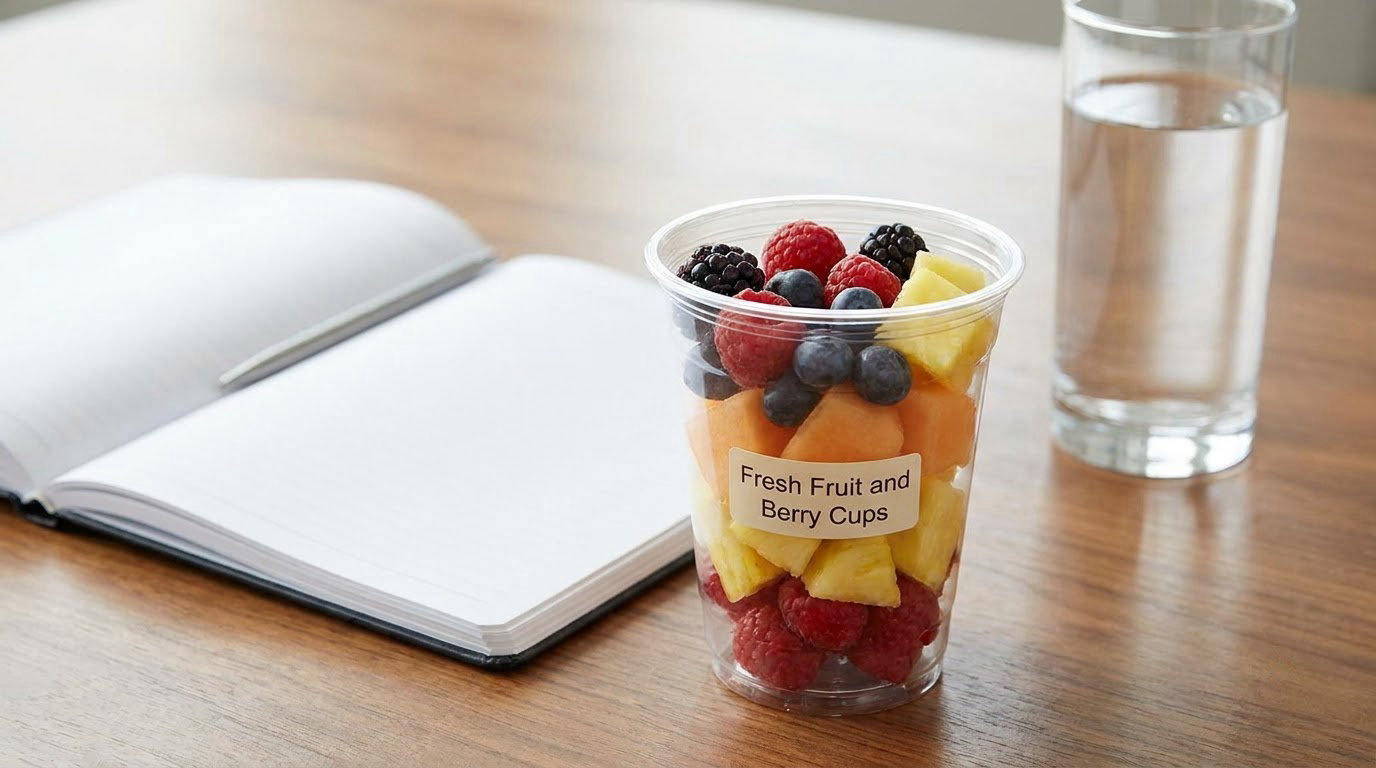
Fruit cups are the easiest thing on this list and the one people finish first. Mixed berries, melon balls and pineapple are naturally portioned, need no utensils, and do not shed crumbs or drip on a keyboard.
For an eight-person meeting I would plan about 3/4 cup per person, so roughly one large platter plus a backup bowl of whatever is in season. Keep melon and pineapple cut fresh within a couple of hours of serving, and put berries in shortly before, so nothing browns or goes soft.
If you want to lift it slightly, a small handful of plain yogurt on the bottom of each cup adds protein and stops the whole thing reading as pure sugar. Cut fruit the night before for a 9am meeting, not the night before the night before. It will not hold.
2. Vegetable Crudites with Hummus
Carrot, cucumber, celery, bell pepper and broccoli with a bowl of hummus is the lowest-effort spread you can build, and it scales to fifty people without changing the plan. Chop the vegetables the morning of and keep them in ice in the fridge, then put the dip out about 20 minutes before the meeting starts so it is spreadable rather than rock hard.
Thin sticks of carrot and cucumber are the least messy. Broccoli florets travel but shed small crumbs, so if the room has a whiteboard projector you may want to skip them.
Two allergy notes worth flagging on a label: most hummus carries sesame, and a shared spoon crossing into a nut butter platter is the classic cross-contact problem. If sesame is a concern in your group, use a sunflower seed or pumpkin dip instead and say so on the card.
3. Mini Caprese Skewers
Cherry tomato, fresh mozzarella and a basil leaf on a small wooden skewer looks like the most professional item on the table and takes about twenty minutes to build. The win is that each person gets a self-contained bite, so there is no sharing fork and no guessing who has had what.
Drain the mozzarella well and dress the skewers only just before serving; watery tomato plus watery cheese turns a platter into a puddle within ten minutes. For a dairy-free room, swap in marinated artichoke hearts or cucumber, and a balsamic glaze on the side instead of under the tomato.
Use blunt wooden skewers or cocktail picks rather than toothpicks in front of clients, and build them the day before, storing them covered and refrigerated. Let them sit out for about 15 minutes before serving so they are not fridge-cold.
4. Turkey and Hummus Pinwheels
A tortilla spread with hummus, rolled with sliced turkey and shredded lettuce, then sliced into rounds, gives you a sandwich that needs no cutting at the table and no plates. Hummus does the work a mayonnaise would usually do, and it holds moisture in the roll far better.
Read the label and pick low-sodium turkey and wraps with 3 grams or less of sodium per serving if you can; deli meat is where the salt hides in an otherwise sensible spread. For gluten-free guests, buy a certified gluten-free wrap or use thick slices of cucumber and roll those instead.
A vegetarian version is straight hummus, roasted pepper and spinach. Keep the pinwheel cold until you carry it in, and put a small compostable plate stack out, because a first bite without a napkin is where these things unravel.
5. Grain Bowls with Roasted Vegetables
Brown rice or quinoa, roasted sweet potato, broccoli, peppers, chickpeas and a simple lemon and olive oil dressing makes a genuinely balanced meal rather than a snack. This is the option to pick when the meeting has an actual lunch slot and people will sit down.
Batch cook the grain on a Sunday, roast a sheet pan of vegetables, and store dressing separately so nothing goes to mush. Portion into containers that go straight into insulated carriers in the morning, which is also what keeps the food at a safe temperature for the length of a morning meeting.
Roast with olive oil rather than frying, and keep added salt in the dressing where you can control it. If you want healthy meeting food ideas that read as generous rather than diet food, the bowls are the safest bet on a table full of skewers and cups.
6. Greek Yogurt Parfaits
Plain Greek yogurt layered with fruit, oats and seeds in a clear cup is a breakfast meeting in about five minutes of assembly. The protein in the yogurt is what holds attention through a long agenda, and the cup means nobody is balancing a spoon and a notebook.
Use plain yogurt and sweeten with the fruit rather than a flavoured variety, which often carries more added sugar than a piece of cake. Check that it is not fat-free either, since the fat is part of why it satisfies.
For a lactose-sensitive guest, soy or oat yogurt works and tastes close enough in a fruit cup that nobody asks. Build them the morning of and hold them cold; once the fruit warms the yogurt, the layers collapse into a sweet soup.
7. Overnight Oats Cups
Overnight oats solve the 8:45am problem. Rolled oats, milk or a fortified alternative, chia seeds and a little yogurt go into a lidded cup at home and are ready to eat straight from the fridge the next morning, with berries and seeds added on top once the meeting starts.
Oats are cheap, shelf-stable and endlessly variable, which solves the week-long meeting-food boredom that office staff complain about constantly. A peanut butter and banana cup one day, apple and cinnamon the next, and a savory version with cheese and chives later in the week.
Nut butters are the usual allergen, so keep pumpkin seed butter or sunflower seed butter in the mix for a nut-free table. If you need these to sit unrefrigerated, use a soy milk base and pack them with an ice pack rather than leaving them on a warm sideboard.
8. Turkey, Chicken, or Chickpea Lettuce Cups
Crisp lettuce leaves filled with chopped chicken or turkey, a little salsa, and a spoon of something creamy turn a tray of deli meat into something that looks fresh. The leaves are the portion control, so there is no sizing decision to make.
Cook the poultry to 165 degrees Fahrenheit and cool it before filling, and keep the finished cups refrigerated until they go out. Smoked or cured meat such as salami is a different food from cooked chicken, so treat it as a separate, occasional item rather than the default protein.
For a plant-forward meeting, use roasted chickpeas or a spiced tofu crumbles in the same leaves. Drain the filling well, because a wet filling turns a crisp leaf into something that has to be eaten with a fork.
9. Whole-Grain Muffins
Individually portioned whole-grain muffins are the answer when you need something that survives a training day or a client drop-in with no refrigeration and no assembly. Order them from a bakery, or bake a batch and freeze it; they come back well.
Look for muffins where the first grain ingredient is whole grain, and check the sugar line, because the fruit-and-yoghurt versions are often the sweeter ones despite sounding healthier. Blueberry, apple and carrot are reliable; a tall, frosted muffin is just a dessert in a paper case.
These are the easiest item to add to a spread for someone who has walked in without eating. They travel without a napkin, which is not a small thing in a room with a good whiteboard.
10. Popcorn with a Seasoned Topping
Air-popped popcorn with a light seasoning is the one snack on this list that genuinely replaces the crisps in the middle of the table rather than sitting next to them. You eat less of it by volume for the same satisfaction, and it leaves almost no crumbs on a tablecloth.
Portion it yourself into small paper cups rather than putting out one large bowl, because a shared bowl under a deadline is how a snack becomes the meeting. A light drizzle of melted butter with a little nutritional yeast or smoked paprika works well; a heavy coating of butter and salt is where it stops being the healthy option.
Popcorn is a shared-kernel product, so check whether your caterer uses a dedicated allergen-free kettle before offering it to someone with a nut allergy, and skip it entirely if the answer is unclear. It is also the snack people most often ask for, so put it on the list last in case the budget is tight.
11. Smoothie Cups or Bottles
A fruit, leafy green, yogurt and protein smoothie is the best available answer to the post-lunch slump, and in a sealed cup it is one-handed and completely silent. Freeze and blend the night before, or use a catering service that delivers them chilled in the morning.
Keep them cold from the moment they are made. A smoothie’s window for safe consumption unrefrigerated is about two hours, and it gets worse in a warm room, so an insulated bag with ice packs is not optional. Under two hours of meeting time, a chilled bottle is the safer choice over an open cup.
If dairy or nuts are an issue, use a fortified soy or oat base and pumpkin seed protein rather than nut butter. Avoid blending a dozen cups at once with no plan for the remainder; the last four will be warm long before the meeting is over.
12. Healthy Charcuterie-Style Snack Board
A snack board can be built as a healthy meeting spread if you change the ratios. Instead of a wall of cured meat, make vegetables, fruit and whole-grain crackers the majority, add a smaller amount of cheese and olives for interest, and finish with a plant protein such as hummus, edamame or spiced nuts.
Roast, grill or steam rather than fry, and pick crackers made from whole grain with a short ingredient list. If the room includes a guest who is gluten-free or dairy-free, build that section first, on its own board with its own serving tongs, rather than expecting the person to pick through a shared one.
Finish with water and sparkling water in chilled glass bottles, plus a smaller quantity of juice. A large hydration setup does more for a long afternoon meeting than another tray of food does, and it is the part most office hosts forget.
Frequently Asked Questions
What kind of food should I serve at meetings?
Serve food that is quiet to eat with one hand, needs no fridge, microwave or cutlery, and does not leave crumbs or strong smells in the room. Build the spread from fruit cups, crudites with hummus, pinwheels, yogurt parfaits and seasoned popcorn, then add one hot or substantial option if the meeting runs past lunch. Label anything containing nuts, dairy, gluten or sesame so people can choose with confidence instead of guessing.
What are some good meals to eat for meetings?
Grain bowls with roasted vegetables and a simple dressing are the most complete meeting meal, since they combine complex carbohydrates, protein and fibre in one container. Turkey and hummus pinwheels work when people are eating while listening. Lettuce cups with chicken, turkey or chickpeas keep a light option from feeling like a side dish. Prep the bowls a few days ahead, and pack them into insulated carriers in the morning.
What are 20 healthy snacks for an office?
Fruit and berry cups, melon and pineapple chunks, carrot and cucumber sticks, broccoli florets, cherry tomatoes, edamame, plain yogurt cups, Greek yogurt parfaits, overnight oats, whole-grain muffins, air-popped popcorn, roasted chickpeas, wholegrain crackers, oatcakes, small cheese portions, olives, hard-boiled eggs, nut or seed mixes, celery with hummus, and apple slices with nut or seed butter. Rotate them rather than buying the same tray twice in one week.
What is a good food to bring for coworkers?
A platter that feeds about three to four people per pound is a good rule, and something shareable beats a second sandwich nobody asked for. A supermarket fruit tray, a vegetable and hummus platter or a bakery muffin box covers most needs, and adding bottled water and sparkling water makes it feel deliberate. Write a short card naming the common allergens in the dip, crackers and nut mixes.
What are healthy snack options for office meetings?
Choose snacks that fill a gap rather than replace a meal: Greek yogurt with fruit for protein, overnight oats for a slow start, vegetable sticks with hummus for something salty and light, or air-popped popcorn in small cups. A single item is never enough, so plan at least three options and a drink. People notice variety, and a spread of four options is eaten more happily than a large tray of one.
What is a good finger food for a meeting?
Mini Caprese skewers, vegetable sticks with hummus, pinwheels and small lettuce cups are the four that work best, because each person can take a piece without a plate or a shared utensil. Skip anything that needs two hands to keep together or that drips if you tilt it. If you serve one finger food, make it the one with the fewest allergens so the group can share from a single platter.
What are some shelf-stable snacks I can bring to the office?
Nut and seed mixes, whole-grain crackers and oatcakes, roasted chickpeas, dried fruit, wholegrain granola bars, popcorn, apple slices with nut or seed butter, shelf-stable milk cartons and canned tuna or chickpea pouches all sit out of the fridge without much worry. Keep anything with a cream cheese, mayonnaise or cooked meat filling in an insulated bag instead. Nut mixes are the easiest thing to carry and the one to label most carefully.
Conclusion
The best healthy meeting food ideas are the ones nobody notices being eaten. Start by choosing two or three options that match the length of the meeting, the dietary needs in the room, and the equipment you actually have: fruit cups and crudites for a short morning call, grain bowls and pinwheels for a working lunch, a snack board and something cold to drink for a longer afternoon session.
Label the allergens, order or prep a day ahead, and keep anything perishable cold from the moment it leaves your hands. Change the menu every week or two and people will keep eating it.
Last updated: October 2026. General nutrition and food safety information only, and not a substitute for advice from a registered dietitian or your workplace health provider.