

A preventive care reminder is a scheduled message an employer sends to staff to prompt them to use covered preventive health services, such as annual wellness visits, age-appropriate screenings and immunizations. Done well, it is a short, voluntary nudge tied to a real calendar moment, paired with a clear next step and a promise that participation stays private. This guide covers how to plan one, which channels to use, what to say, and how to measure it without crossing privacy lines.
The honest problem is that most employers already pay for preventive care that nobody uses. Plans commonly cover it at no cost when care is in network and billed correctly, yet utilization stays low because employees do not know what is included, do not know when to go, or cannot find a time that fits. Reminders work because they fix those three gaps, not because employees need convincing that checkups matter.
If you take one idea from this page, take this: a reminder that says “book a wellness visit this month, here is the covered-service list, here is four hours of paid time, and no one at work will know whether you went” will outperform a generic wellness blast every time.
Table of Contents
- What You Need Before You Send Preventive Care Reminders
- Step-by-Step: Build a Preventive Care Reminder Campaign
- Common Mistakes in Preventive Care Reminders and the Fix for Each
- Frequently Asked Questions
- Are employers required to send preventive care reminders to employees?
- What preventive care topics are appropriate for workplace reminders?
- Can managers track which employees responded to a health reminder?
- How often should employers send preventive care reminders?
- Should a workplace reminder provide individual medical advice?
- Conclusion
What You Need Before You Send Preventive Care Reminders
You need six things in place before the first message goes out. Skipping any one of them is how a well-meaning campaign turns into noise or, worse, into a privacy complaint.
- A defined goal. One priority per campaign, not a full wellness philosophy in a single email.
- A defined audience. All employees, or a segment such as parents of school-aged children or employees enrolled in a high-deductible plan.
- Approved health resources. A covered-service list, a benefits guide page, a booking link or phone line, and a named clinical partner where one exists.
- Communication channels you already own. Email, an intranet or HR portal, a chat channel, calendar invitations, digital signage, printed mail, and manager talking points.
- Privacy safeguards. Aggregate-only reporting, clear confidentiality wording, employee choice of channel, and no individual health data reaching HR or managers.
- A review path. HR, occupational health, benefits, accessibility, and privacy or legal review before launch, with a named owner for medical accuracy questions.
Two questions worth answering in writing before you start: what does the company do with participation data, and who answers an employee who asks whether their coverage changed? Vague answers to either one will slow the campaign down.
Step-by-Step: Build a Preventive Care Reminder Campaign
1. Define the preventive care reminder goal
Narrow the campaign to a single preventive care or health-promotion priority. Flu vaccination before the season peaks, an annual wellness visit before deductibles reset, blood pressure and cholesterol checks tied to an on-site screening day, or childhood immunization dates for parents are all workable single goals.
Choose one outcome you can measure without exposing anyone’s health information. Aggregate preventive claims activity, on-site screening participation, resource-link clicks, and campaign-level response rates all work. Individual blood pressure readings or per-person appointment completions do not, no matter how useful they might look on a dashboard.
Write the goal as one sentence you could read aloud to an employee without making it sound mandatory. If the sentence needs the words “must,” “required” or “compliance,” it is not a voluntary wellness message.
2. Choose topics employees can act on safely
Workplace reminders belong to general health education. They can describe what a preventive service is, why it matters, how often it is generally recommended, and where to book. They cannot diagnose, interpret a result, or tell a specific person what to do. Anything individual belongs with a doctor, pharmacist or other licensed clinician.
The confusion that trips up most employees is what happens at the bill. Preventive care and diagnostic care look identical from the exam room and are treated differently on the claim, which is where a “free” visit can turn into an unexpected charge.
| Aspect | Preventive care | Diagnostic care |
|---|---|---|
| Purpose | Finds problems before symptoms appear | Investigates a symptom, finding or result |
| Trigger | Age, risk factors or a routine schedule | A symptom, an abnormal result or a provider referral |
| Typical examples | Annual wellness visit, routine immunizations, age-based screening | Lab work ordered to explain a finding, imaging, follow-up visits |
| Cost on most plans | Covered at no cost when in network and billed as preventive | Deductible, copay or coinsurance usually applies |
| What employees can do | Ask the office to bill it as preventive and check in network status | Expect cost, and ask about payment options up front |
Tell employees plainly that if a visit turns into a diagnostic one, costs can change, and that they can ask the clinic to confirm how it will be billed before the visit. That single sentence removes the surprise-bill fear that community discussions on workplace wellbeing keep circling back to.
Use five prevention categories as your content backbone: the annual wellness visit, age- and risk-based screening, routine immunization, blood pressure and cholesterol monitoring, and lifestyle counselling such as nutrition, movement, sleep and stress. Follow mainstream clinical guidance from the CDC, NIH or your plan’s own preventive benefits summary, and link out rather than restating clinical thresholds yourself.
3. Select channels and a reasonable schedule
Channel choice matters less than fit. A channel that reaches shift workers on a phone is worth more than a polished email newsletter nobody opens at midnight.
| Channel | Typical reach | Setup effort | Best use | Frequency cap |
|---|---|---|---|---|
| High, but dependent on list hygiene | Low | Covered-service lists, booking links, plan changes | Once a month per topic | |
| Chat channel or Teams | High among hybrid and remote staff | Low | Short, event-tied nudges | Two or three a quarter |
| Intranet or HR portal | Moderate, persistent | Medium | Long-lived resource pages | Update monthly, not daily |
| Calendar invitation or event | Focused | Low | On-site screenings, flu shot clinics, lunch-hour sessions | One per event |
| SMS or text, opt-in only | Very high among opted-in staff | Medium | Appointment and event reminders | Two or three per event |
| Printed mail or desk card | Reaches deskless and shift staff | Medium | Plant, warehouse and clinic staff | Quarterly |
| Manager one-to-one | Small, high-trust | High, needs enablement | Pointing to resources, never tracking uptake | As conversation arises |
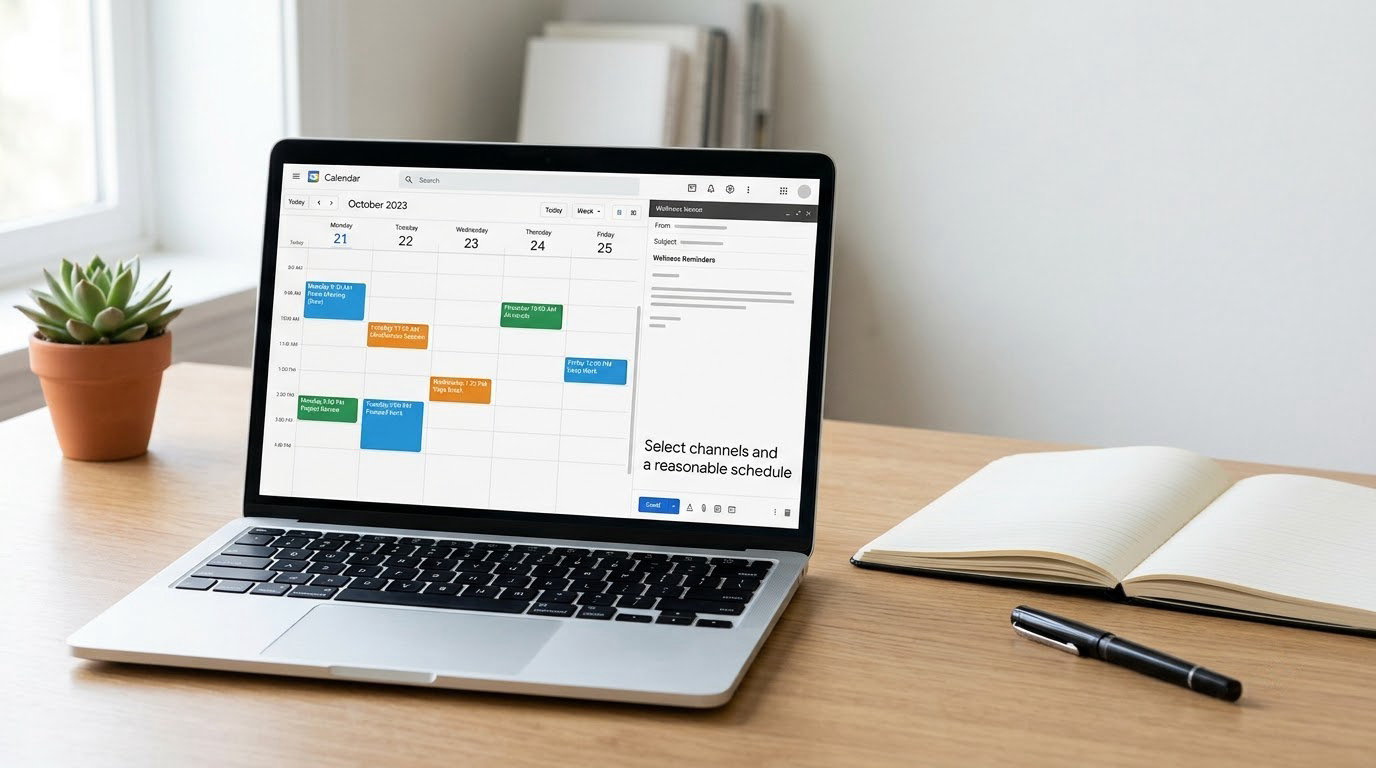
Now the cadence. Repetition across the year is what makes reminders stick, but repetition inside a month is what makes people mute the channel. Two or three touches per topic, spread out, is the working range.
| Timing | Health hook | Channel | Message angle | Owner |
|---|---|---|---|---|
| January | New year, deductible reset | Email plus intranet | Covered services at no cost in network | Benefits lead |
| February | Heart health awareness | Chat channel | Blood pressure checks and where to book | Wellness lead |
| March | Spring screenings | Email plus calendar event | On-site screening day sign-up | Occupational health |
| April | Spring vaccination | Opt-in SMS plus email | On-site clinic dates and walk-in times | Occupational health |
| May | Mental health check-ins | Manager talking points | Employee assistance and counselling access | HR |
| June | Mid-year nudge | Half-year plan check on scheduled care | Benefits lead | |
| July | Summer safety and sun exposure | Printed desk card | Heat, hydration and skin checks | Safety lead |
| August | Back-to-school routines | Email plus intranet | Family and child immunization scheduling | Benefits lead |
| September | Flu season preparation | Opt-in SMS plus calendar event | Flu shot clinic dates and coverage | Occupational health |
| October | Cold and flu season | Chat channel and signage | Where to get a flu shot this month | Wellness lead |
| November | Open enrollment | Email and intranet | Reviewing coverage before enrollment closes | Benefits lead |
| December | Year-end gap check | Email plus manager reminder | Unscheduled preventive care before plan year ends | HR and benefits |
A few timing rules that save programs from themselves. Send outside core hours for hourly and shift staff. Do not stack a reminder on top of open enrollment communications, where employees already have too many emails. Tie the message to a date that already matters to the person, like a birthday or a seasonal change, rather than sending an abstract monthly blast.
4. Write clear, voluntary, privacy-safe preventive care reminders
Every reminder follows the same formula: the health topic, one simple action, where to get the details, a clear statement that participation is voluntary, a statement that individual choices stay private, and where to ask questions. Six elements, roughly 120 words for email.
Five examples you can adapt:
- Email, annual wellness visit: “Your plan covers an annual wellness visit at no cost when you use an in-network provider. It usually takes about an hour and covers your history, vitals and any screening you are due for. Booking takes about three minutes at [benefits portal]. Everything you do is voluntary, and we only ever see group totals, never who went.”
- Text, opt-in, 160 characters: “Flu shot clinic on-site Sept 12, 9am to 3pm. Walk-ins welcome, covered at no cost in network. Details: [intranet link]”
- Chat channel post: “On-site screening day is March 14 in the main lobby: blood pressure, cholesterol and diabetes checks. Fifteen minutes each, no appointment, no cost in network. Bring your ID. Questions go to [occupational health contact].”
- Manager talking point: “Our plan covers preventive care at no cost in network. If it is useful, the benefits page has a covered-service list and a booking link. Please do not track who has been, or ask your team about it. Health choices stay personal.”
- Printed card for deskless staff: “Free in-network preventive care: annual checkup, routine immunizations, age-based screening. Ask your supervisor for the covered-service list, or read it on the break room board. Taking time off for an appointment is up to you and never needs to be explained to anyone.”
Tone matters as much as content. The loudest criticism from employees is rarely about cost or access. It is about messaging that feels like a corporate campaign rather than a benefit designed around an actual life. Nudges tied to a real event on someone’s calendar land far better than generic blasts, and the same pattern turns up in practitioner commentary about workplace wellbeing programs.
5. Review and test the campaign
Run a review pass before anything leaves your outbox. Have someone who does not own the campaign read it cold and ask whether they know what to do next. Then check the mechanical items: every link opens, the message renders correctly on a phone, the text fits in one screen, and images carry alt text.
Check accessibility deliberately. Plain language, short sentences, no jargon from the plan’s summary plan description, and language that reads cleanly when converted to text. Screen by a colleague using a keyboard, and have the design reviewed for contrast.
Then check the guardrails. Confirm the confidentiality language matches what the vendor and the plan actually do with data. Confirm nobody can see individual participation, and that managers have been told in writing not to follow up. A short voluntary test with a small group often surfaces the awkward sentences before a full launch does.
6. Launch, measure, and improve the reminders
Release in stages rather than to the whole workforce at once. A single department or site first, then a wider send once the message and links have proved themselves. Give yourself two weeks before judging anything, since most benefits questions arrive late.
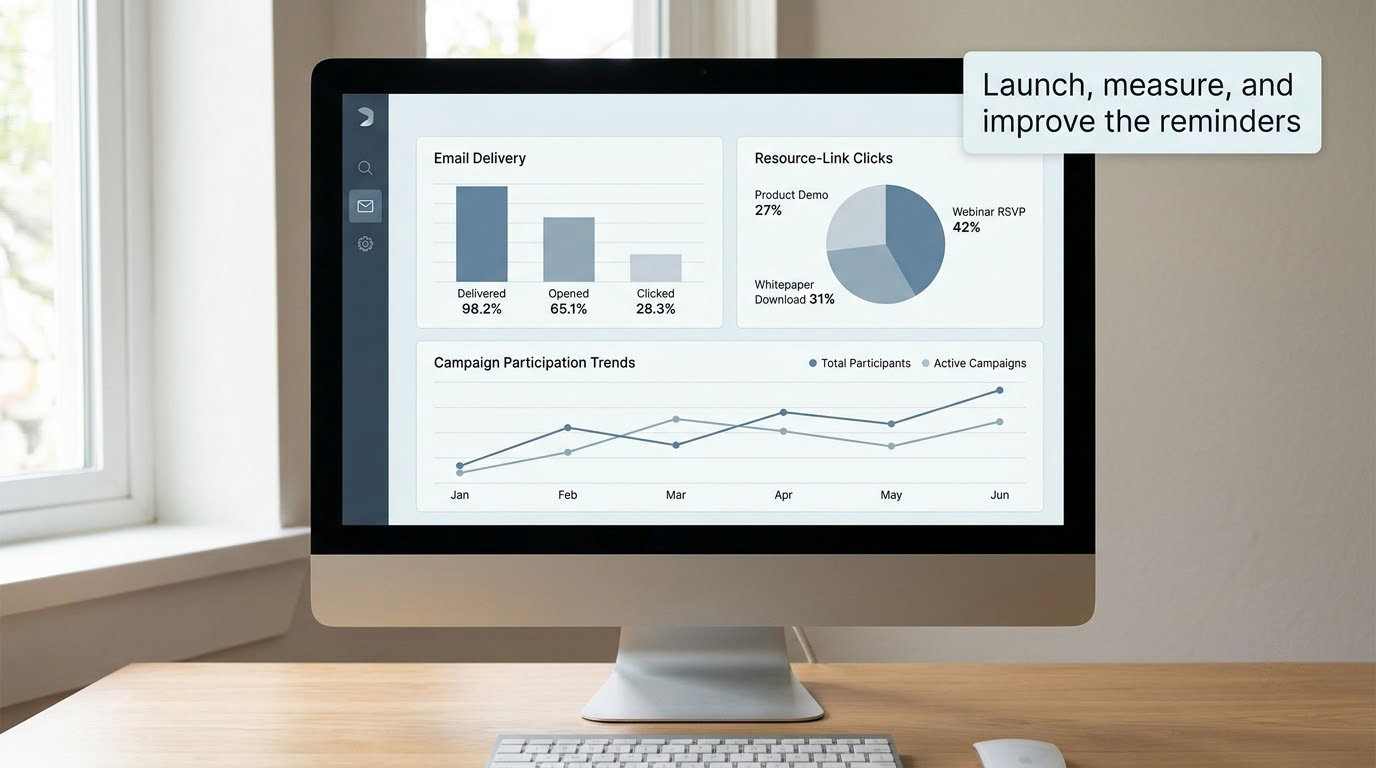
Measure at the group level and keep the metrics boring: delivery rate, resource-link clicks, aggregate screening participation, and aggregate preventive claims activity over time. Skip email-open rates as a headline metric, because they say almost nothing about whether anyone booked care.
Watch three things as you go. If participation flatlines after two touches, the channel mix is wrong, not the message. If link clicks are high and screening participation is low, the booking process is the barrier and the reminder is doing its job. If employees reply with billing questions, your preventive-versus-diagnostic explanation needs to be more prominent, not less frequent.
Gather broad feedback through a short survey or an open comment box rather than individual follow-up calls. If you want to know whether people find participation easy, the [well-being survey questions for employees](https://workhealthresearchnetwork.org/well-being-survey-questions-for-employees/) are built for that and keep answers anonymous.
Common Mistakes in Preventive Care Reminders and the Fix for Each
Most failed campaigns share a small set of causes. Each of these has a straightforward correction.
Sending reminders too often
Repeated messages with no new information get filtered out entirely, and once a channel is muted the campaign is over. Cap each topic at two or three touches, and make sure every message carries something the previous one did not.
Crossing into medical or legal overreach
A reminder that tells a specific employee what a result means, or implies non-participation will cost them something, creates real liability and destroys trust. Keep to general education and route individual questions to a clinician. Have counsel review anything that touches participation consequences.
Leaving the call to action vague
“Stay healthy” is not an action. Every reminder needs one thing to do next, one link or number, and a rough time commitment. If a reader cannot act in under five minutes, the reminder is too heavy.
Ignoring accessibility
Wall-to-wall signage only, image-only intranet posts, and jargon copied from a plan document exclude people and quietly reduce your audience. Use text everywhere the message appears, keep language plain, and make sure mailed versions reach deskless staff who never open a laptop.
Letting managers follow up on uptake
The moment a manager asks who has booked, participation stops being voluntary and the program turns into surveillance. Give managers a talking point and a resource link, then say clearly that they are not tracking individuals.
Making weak privacy promises
Saying “your information is confidential” while a vendor holds identifiable records invites distrust the moment anyone reads the vendor’s terms. State what is collected, who sees it, how long it is kept, and confirm that reporting to the company is aggregate only. Getting this right is also what separates a program people accept from one they quietly ignore.
Measuring individual health information
Per-person completion lists, individual biometric results or manager dashboards all breach the guardrails you promised in the message. If you need a per-person view for a legitimate operational reason, it belongs with the clinical partner under consent, never with HR.
On the other side, reminders alone underperform. Pairing them with practical removal of barriers, extra paid time off, telehealth access or a well-timed clinic, is where utilization moves. Our notes on [how to get employees to participate in wellness programs](https://workhealthresearchnetwork.org/how-to-get-employees-to-participate-in-wellness-programs/) and [wellness program incentives that actually motivate employees](https://workhealthresearchnetwork.org/wellness-program-incentives-that-actually-motivate-employees/) cover that side in detail.
Frequently Asked Questions
Are employers required to send preventive care reminders to employees?
No US rule requires employers to send preventive care reminders, and most state laws do not either. What does apply is plan coverage and communication duties: an employer offering an ACA-compliant plan must cover recommended preventive services without cost sharing when delivered in network, and employees generally need accurate information about those benefits. Reminders are one way to meet that. A handful of state and local rules do touch on workplace wellness programs and what data they may collect, so check local law before launching.
What preventive care topics are appropriate for workplace reminders?
Stay with general education: the annual wellness visit, age- and risk-based screening, routine immunizations and flu vaccination, blood pressure and cholesterol monitoring, and lifestyle counselling on nutrition, movement, sleep and stress. Explain what the service is, why it matters, how often it is generally recommended, and where to book. Do not diagnose, interpret results or give individual treatment guidance. Frame every message as a prompt to see a qualified professional rather than as care in itself.
Can managers track which employees responded to a health reminder?
They should not, and in most programs they cannot. Employers should receive aggregate participation data only, such as the share of eligible employees who completed a screening, and never individual results, appointment records or biometric values. Clinical partners that actually deliver care may hold identifiable records under employee consent, and that data stays with them. Write the confidentiality rule down, tell managers in writing, and keep any per-person view inside the clinical partner.
How often should employers send preventive care reminders?
Two or three touches per topic across the year is a workable range, spread out rather than clustered. Within a single campaign, three touches usually work well: an announcement, a reminder a few weeks later, and a final nudge near a real deadline such as an on-site clinic date. Email-only distribution gets missed, so pair it with one other channel. What kills a program is repetition with no new information, which pushes people to mute the channel permanently.
Should a workplace reminder provide individual medical advice?
No. Workplace reminders are general health education and signposting, not clinical care. A reminder can describe a preventive service, explain how it is covered and explain the difference between preventive and diagnostic billing. Anything individual, including interpreting a result, adjusting medication or deciding whether a symptom needs attention, belongs with a doctor, pharmacist or other licensed clinician. Always route employees who have a personal question to a clinical source rather than answering it yourself.
Conclusion
Start smaller than feels comfortable. Pick one approved preventive care topic for 2026, write a single voluntary message that names one action, one resource and one privacy promise, and test it with a small group before sending it to the whole workforce. Everything else on this page, the channel mix, the cadence calendar, the measurement plan, can follow that first message once it lands well.
Reminder programs do not fail because employees care too little about their health. They fail because the message is generic, the timing is wrong, or the privacy promise is vague. Fix those three things and the rest gets easier.