

If you are in construction, help is available right now: call or text 988 for the Suicide and Crisis Lifeline, or text HOME to 741741 to reach the Crisis Text Line. This guide covers what construction worker mental health support actually looks like on a real site, and it works as a step-by-step plan any employer, foreman or worker can start this week. The whole sequence takes about ninety days to put in place, and most of it costs nothing beyond an hour of management time.
Here is the short version. Good support is not a poster in the trailer and it is not a wellness app. It is a written policy with real confidentiality limits, supervisors trained to hold a short private conversation, at least one referral partner outside the company, check-ins folded into routines the crew already keeps, and a quarterly look at whether any of it is being used.
Construction worker mental health support matters here more than in most trades. The Center for Construction Research and Training (CPWR) reports that construction accounts for roughly 18 percent of suicides among US workers with a recorded industry, while representing about 7.4 percent of the workforce. The rate reached 41.9 per 100,000 workers in 2024, and in 2023 construction recorded 5,095 suicides against 982 fatal work injuries.
Table of Contents
- What You Need
- Step-by-Step: Build a Jobsite Mental Health Support Plan
- 1. Learn about construction-specific mental health pressures
- 2. Set a clear, safety-first support policy
- 3. Train supervisors to notice and respond
- 4. Build trusted referral pathways
- 5. Make check-ins part of normal jobsite routines
- 6. Address barriers to seeking help
- 7. Review whether the plan is helping
- Common Mistakes
- Frequently Asked Questions
- Conclusion
What You Need
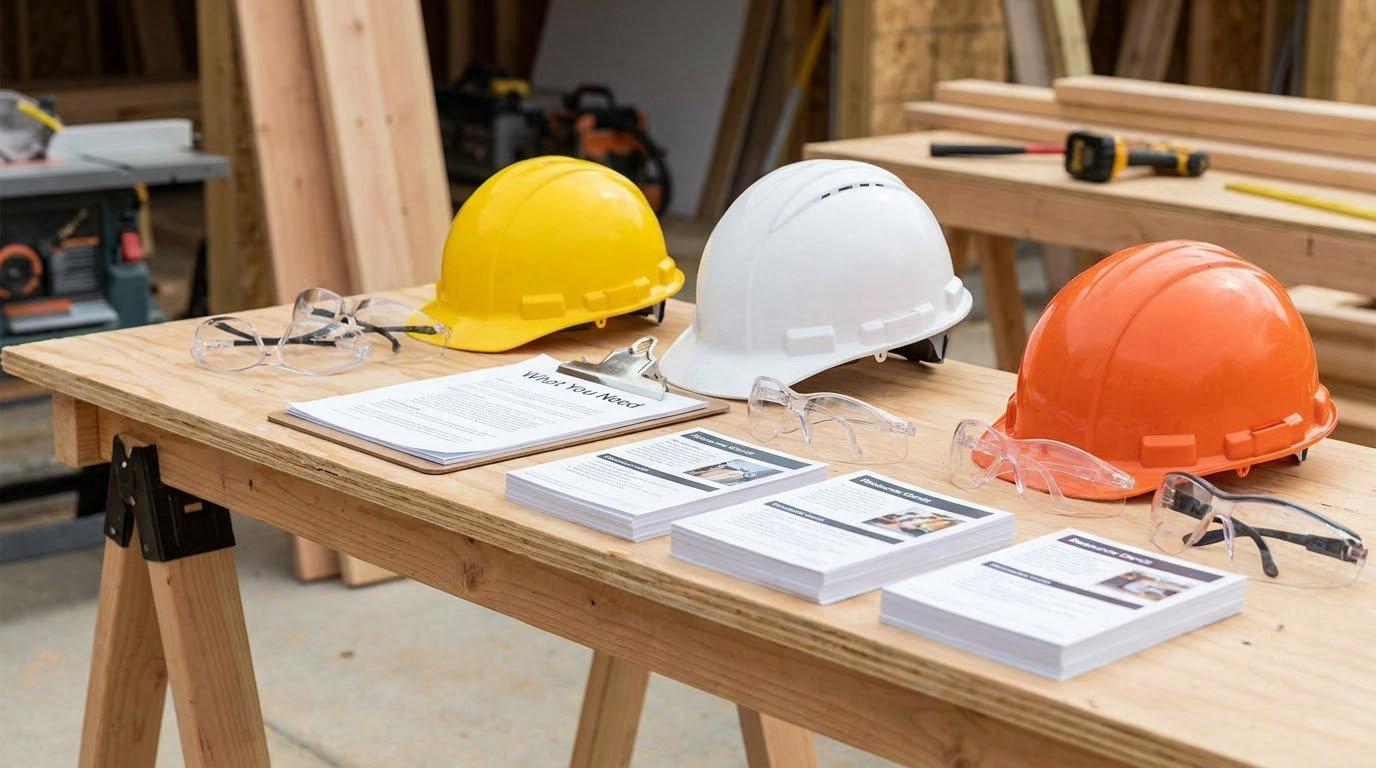
You need five things before you announce anything, and none of them require a budget line to get started.
One named owner. A principal, an HR lead, a safety director or a union steward who answers for the plan. When nobody owns it, it dies at the first busy week.
A written privacy statement. One page that says what stays private, what does not, and who to contact. You can build this into your broader how to write a workplace health and safety policy rather than starting from scratch.
At least one referral partner outside the company. An employee assistance program (EAP), an occupational health clinic, a community mental health provider, the 988 Suicide and Crisis Lifeline, and a union or assistance fund contact if your crew has one. Ideally two, so nobody is stuck waiting on a single vendor.
A coverage map of your own crew. List who is covered by the plan and who is not. Subcontractors, seasonal hires and part-time workers are usually excluded from employer benefit plans, and that gap is the single biggest structural reason construction lags behind other industries on access.
The safety routines you already run. Toolbox talks, job hazard analyses, pre-task plans, morning huddles. Support that attaches to those moments gets used. Support that lives in a separate memo does not.
Step-by-Step: Build a Jobsite Mental Health Support Plan
The seven steps below move a company from informal concern to something confidential and measurable. They build on each other, but you can run steps one and two in the same week and still have a plan that beats most jobsites.
1. Learn about construction-specific mental health pressures
Construction worker mental health support starts with naming the pressures your crews actually live with, not a generic list. The trade-specific ones include repetitive strain and cumulative pain, unstable schedules and seasonal layoff cycles, fear of injury on a high-risk task, harassment and bullying, substance misuse as a coping habit, financial strain when hours drop, and isolation on long-distance projects far from family.
Learn the language so you can hear it. A worker saying he cannot sleep, or that he drinks too much after a layoff, is describing stress, not a disorder. Supervisors should be able to describe what they observed without attaching a diagnosis. That boundary protects the worker and the company at the same time.
2. Set a clear, safety-first support policy
Write the policy as a safety document, because that is the argument that holds up in a construction meeting. Say plainly that mental health is part of a safe workplace, that asking for help is permitted, and that no worker will be disciplined, passed over or laid off for seeking mental health care.
State the confidentiality boundaries honestly in the same breath. Most support is confidential, with narrow exceptions around imminent risk to self or others, and around situations where the company is legally required to act. Promising absolute secrecy is the fastest way to lose a worker’s trust the first time it is tested. If you are writing the wider policy from scratch, our guide on workplace health and safety policy writing covers the structure.
3. Train supervisors to notice and respond
Supervisors need a five-step response model, and they need to practise it once so the words are available under pressure.
- Notice a change in attendance, tardiness, irritability, withdrawal, or work quality that is out of character.
- Check in privately, away from the crew and away from the trailer door, within the same shift.
- Listen without diagnosing. No labelling, no diagnosing, no comparing him to someone else.
- Ask what support would help, and offer two concrete options rather than an open question.
- Connect the worker to the referral partner and follow up in a few days.
What supervisors should not do is more important. Do not require disclosure, do not promise to keep it secret forever, do not use it in a performance review, and do not tell the crew. Mental Health First Aid training gives supervisors a shared vocabulary, and our broader plan for supporting employee mental health at work goes deeper on the conversation skills.
4. Build trusted referral pathways
A pathway is only real if a worker can reach it tonight. Assembled properly it looks like this:
- An EAP the worker contacts directly, usually free, usually around the clock. The worker calls the number, not the supervisor.
- Occupational health for post-injury and return-to-work questions.
- 988 by call or text, and Crisis Text Line by texting HOME to 741741. No referral, no paperwork, no cost.
- Community mental health providers for people with no insurance and no plan.
- Union, assistance fund or apprenticeship representatives who can speak for the worker.
Put the numbers on the same card as the site address and the emergency contact. Construction Working Minds, the CPWR research arm, and state or regional construction councils also publish free material crews can use for toolbox talks.
5. Make check-ins part of normal jobsite routines
Short and routine beats long and occasional. A five-minute one-to-one check-in at the start of a shift, a toolbox talk once a month on stress and sleep, a two-minute pre-task conversation before a difficult lift, and a same-day check-in after a serious near-miss or incident all count.
Two rules keep this safe. Never hold a mental health conversation in front of the crew, and never use a check-in as a performance or attendance meeting in disguise. Workers spot that switch instantly and stop talking.
6. Address barriers to seeking help
Offering an EAP does not mean workers will use it. TELUS Health research cited in trade press found that about 38 percent of construction workers report no EAP access, against 31 percent of workers overall, and that fewer than three in ten workers who are offered an EAP know what it actually covers. Awareness is the bigger blocker than availability.
Work through the real barriers one at a time. Cost and insurance gaps push people to community clinics; transport and 12-hour shifts push them off entirely; language and immigration worries stop some workers before they dial. Fix what you can, for example by scheduling evening and telehealth appointments, offering multilingual materials, sharing the number of a clinic that serves uninsured workers, and telling workers explicitly that using the EAP does not show up in their personnel file.
Chronic pain deserves its own paragraph. Roughly 34 percent of construction workers report chronic pain and about 45 percent use prescription medication for it, according to the same TELUS Health data. Pain, sleep, mood and substance use are one connected problem, not four separate ones, so referrals should include pain and addiction services rather than counseling alone.
7. Review whether the plan is helping
Review quarterly with three inputs: a short anonymous pulse question at the safety huddle, a count of referral cards handed out and numbers dialled, and a five-minute feedback conversation with each supervisor. Track whether workers know the number exists, whether they know it is confidential, and whether anyone used it and felt better served.
Do not measure what happens inside the EAP or inside therapy. Employers do not receive diagnoses, session content or therapy notes, and no data set should be built from them. If nothing moves for two quarters, the problem is usually awareness or trust in the supervisor chain, not the plan itself.
Common Mistakes

Most failed plans fail in the same six ways, and each has a straightforward fix.
Diagnosing workers. A foreman who tells a crew member he is depressed has stepped outside their role and shut the conversation down. The fix is describing behaviour: you have noticed he has missed two mornings and stopped eating with the crew.
Forcing disclosure. Asking a crew to share their mental health in a group meeting puts people in front of their peers and can cost someone their standing on the job. The fix is one-to-one, voluntary, and by invitation only.
Promising absolute confidentiality. If a worker ever needs help urgently and the supervisor promised total silence, the worker loses trust and may lose a life. The fix is to explain the limits up front, before anything is shared.
Treating distress as a performance issue. Marking someone out for attendance while they are in crisis removes the reason they would have told you. The fix is to separate the safety conversation from the production conversation, and to involve occupational health or leave administration.
Posters without a route to care. A taped flyer with no number anyone can answer, no evening appointments and no follow-up does nothing. The fix is a live, tested number plus a named person who answers it.
Relying on one supervisor as the only doorway. If one foreman holds every mental health conversation on a 40-person site, that person becomes a bottleneck and a single point of failure. The fix is to train several people, include crew members and union representatives, and publish the contact card so nobody has to ask permission first.
Two smaller habits help more than they sound like they will. Put the referral number on the back of the hard hat sticker with the site address, not on a poster in the office. And when someone does use the support, ask the supervisor to follow up in three days and say nothing about the content of the conversation.
Frequently Asked Questions
What does construction worker mental health support include?
It usually covers six pieces: prevention and awareness on the jobsite, supervisor training to recognise distress, a confidential referral route such as an EAP or clinic, workplace accommodations, a crisis plan for emergencies, and a way to check whether any of it is used. For the worker, the visible part is a phone number that works at any hour. For the employer, the visible part is a written policy and a trained supervisor.
Can an employer discuss mental health with a worker?
Yes, and a good supervisor raises it early, privately and without a diagnosis. Say what you have observed, ask how the worker is doing, and offer a specific referral. Do not demand an explanation, record it as a performance issue, or share it with the crew. If distress follows an injury, an incident or a safety concern, loop in occupational health, a clinician or your workers compensation process so the worker gets the support the situation actually calls for.
What should a supervisor do if a worker appears distressed?
Move the conversation somewhere private and within the same shift. Listen rather than fixing, and skip any attempt to name a condition. Ask one direct safety question, such as whether the worker is having thoughts of harming themselves. If the answer suggests immediate danger, stay with them and call or text 988, or 911 if there is urgent physical danger. Otherwise offer the EAP or clinic contact and follow up in three days without discussing content.
How can construction companies make mental health help accessible?
Match the service to the shift, not the other way round. Offer telehealth and evening appointments so a 6am start does not block care, print materials in the languages spoken on the crew, and keep at least one referral for uninsured workers. Say plainly who pays and who does not. Then follow up: research shows fewer than three in ten workers offered an EAP know what it covers, so awareness work matters as much as the contract.
Does confidentiality protect everything a worker shares?
Not everything, and you should explain that before a worker discloses anything. EAPs and clinicians keep counselling confidential, with narrow exceptions for imminent risk of harm and situations where the law requires action, such as a genuine safety threat on site. Employers typically receive only aggregate utilisation counts, never diagnoses or session notes. Explaining those boundaries in advance builds far more trust than an absolute promise you cannot keep.
Conclusion
Start with four actions this week. Identify a confidential referral partner outside the company and put its number on a card with the site address. Train every supervisor on the five-step response, using one real scenario from your own site. Schedule private check-ins inside shifts the crew already keeps. Then review the whole thing at the end of the quarter and ask one question: do workers know this exists, and do they trust it?
If you are the worker rather than the employer, you do not need a plan in place to get help. Call or text 988, text HOME to 741741, or ask your foreman for the site EAP number. Nothing you share through a confidential service has to reach your employer, and asking is not a career move.