
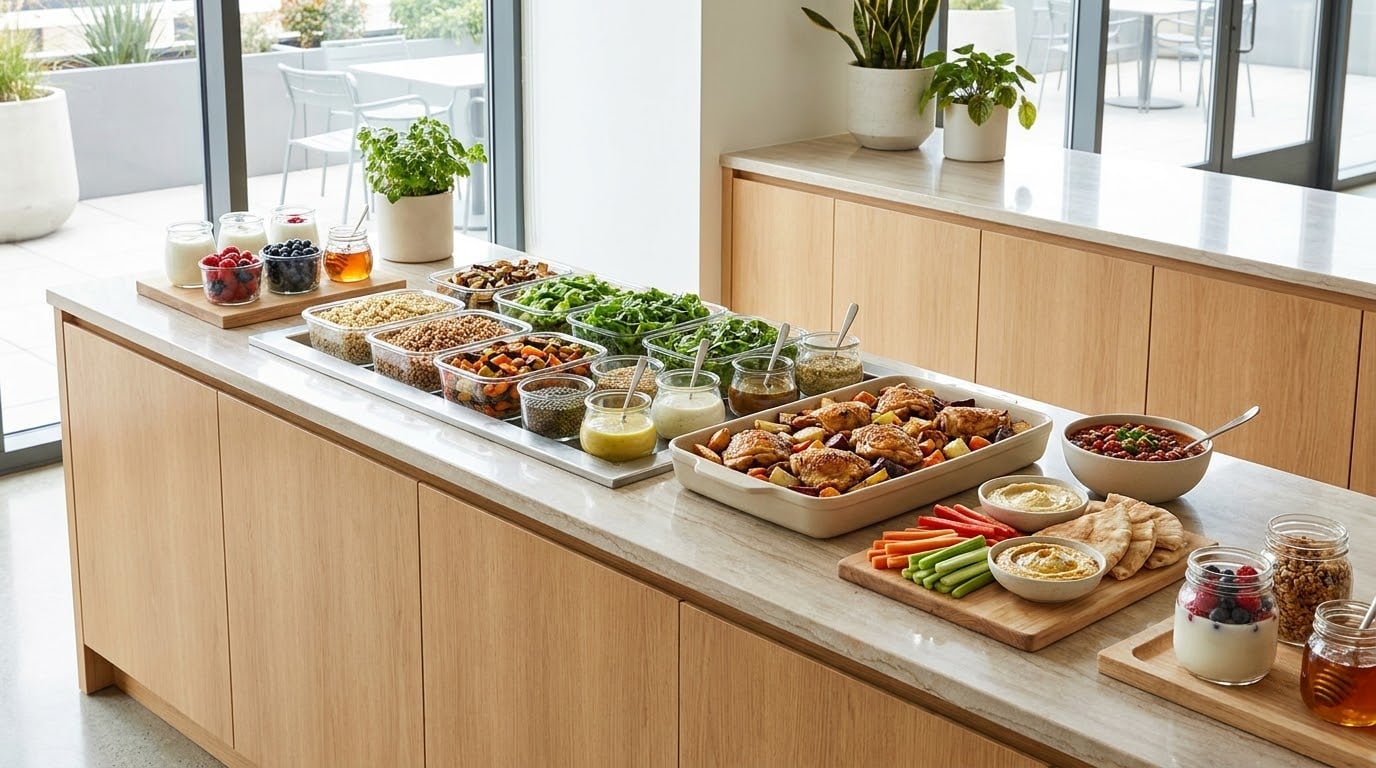
If you run a workplace cafeteria, an on-site canteen, or any employee meal program, the menu does more than fill a break. Good healthy cafeteria menu ideas for employers keep people full through the afternoon, cut down on the 2 p.m. slump, and make it easy for staff with allergies, gluten intolerance, or vegetarian preferences to find something they can actually eat. Ten dishes cover almost any operation: from a 40-person site with a full kitchen to an office that only has a microwave and a good relationship with a local caterer.
The tricky part is not finding healthy recipes. It is serving them at scale without the menu feeling repetitive by week three, and without creating a separate prep line for every restriction. The ten options below are built around shared ingredients, make-ahead cooking, and simple service stations, so one kitchen can turn out most of them.
Here is the short version: start with two or three dishes, run them for a month, and let real participation data decide what stays. Menu fatigue is the fastest way to lose a good program, and it is much easier to prevent than to fix. If your program also covers client meetings, our guide to healthy meeting food ideas for modern workplaces picks up where the cafeteria plan leaves off.
Table of Contents
- Healthy Cafeteria Menu Ideas for Employers at a Glance
- 1. Build-Your-Own Grain Bowl Bar
- 2. Sheet-Pan Chicken with Seasonal Vegetables
- 3. Vegetarian Chili and Sweet Potato Bar
- 4. Mediterranean Mezze Lunch Platter
- 5. Turkey and Hummus Wrap Station
- 6. Warm Lentil and Vegetable Soup with Bread
- 7. Salmon, Quinoa, and Greens Plates
- 8. Black Bean Tacos with Fresh Salsa
- 9. Fresh Fruit, Yogurt, and Oatmeal Snack Bar
- 10. Fresh Vegetable and Hummus Snack Platters
- Frequently Asked Questions
- Conclusion: Start With Three Dishes, Not Ten
Healthy Cafeteria Menu Ideas for Employers at a Glance
| Menu idea | Main nutritional strength | Best workplace use | Dietary notes | Serving note |
|---|---|---|---|---|
| Grain bowl bar | Fiber, complex carbs, plant protein | Daily lunch main | Vegan base, easy gluten-free swap | Labeled components, staff build their own |
| Sheet-pan chicken | Lean protein plus vegetables | Daily lunch main | Gluten-free, dairy-free | Cook poultry to 165F |
| Vegetarian chili | Fiber, protein, complex carbs | Batch main, cold-weather rotation | Plant-based, gluten-free if grains omitted | Batch cooked, served hot or over a grain |
| Mediterranean mezze | Healthy fats, fiber, whole grains | Light lunch or grazing table | Vegan with dairy-free hummus option | Cold holding at 41F or below |
| Turkey and hummus wraps | Protein, whole grains, raw vegetables | Grab-and-go, handheld | Easy dairy-free version | Pre-assembled, held cold |
| Lentil vegetable soup | Protein, fiber, low cost per serving | Budget rotation, cold weather | Vegan, gluten-free | Large-batch, paired with bread |
| Salmon quinoa plates | High protein, omega-3 fats | Smaller professional sites | Gluten-free, dairy-free | Cook fish to 145F |
| Black bean tacos | Fiber, plant protein, healthy fats | Meatless main, portable | Vegan, gluten-free with corn tortillas | Self-assemble station |
| Yogurt and oatmeal bar | Protein, whole grains, fruit | Breakfast or afternoon snack | Multiple dairy-free options | Small topping containers |
| Vegetable and hummus platters | Fiber, healthy fats, low cost | Afternoon snack, meetings | Vegan, easy nut-free | Refrigerated until assembly |
1. Build-Your-Own Grain Bowl Bar
A grain bowl bar is the single most flexible thing you can put in a workplace cafeteria. Every component is prepared separately and kept in its own pan, so one station serves vegan, vegetarian, gluten-free, and omnivore diners without separate cooking.
Stock four grains (brown rice, quinoa, farro, and a cauliflower-rice option for grain-free diners), two proteins (roasted chickpeas and sliced chicken or tofu), and four or five vegetables. Roasted sweet potato, roasted broccoli, shredded cabbage, cucumber, and edamame all hold their texture for a few hours in a hot holding unit.
A brown rice and chickpea bowl that works
Start with brown rice, add roasted chickpeas and spinach, then finish with cucumber, cherry tomatoes, and a tahini-lemon dressing thinned with a little water. Tahini carries a lot of flavor, so the sauce carries sodium and fat without a long ingredient list. Label the dressing and keep it in a squeeze bottle; people pour less than they would with a ladle.
Serve dressings on the side for anyone managing blood sugar, and keep a written ingredient list at the station. When people can see exactly what is in each pan, the questions to your staff drop off, and allergen complaints become rare.
2. Sheet-Pan Chicken with Seasonal Vegetables
Sheet-pan chicken is a low-labor main that scales almost linearly. One oven racks of chicken thighs and chopped vegetables go in together, and your only real labor is portioning, which can be done into pre-portioned containers or a steam table pan. Seasonal vegetables also help with menu fatigue: asparagus and zucchini in warm months, butternut squash and Brussels sprouts in cold ones.
Food safety is the non-negotiable part here. Cook poultry to an internal temperature of 165F and check with a calibrated thermometer in the thickest part, not near the bone. Hold finished pans at 135F or above, and if a tray sits out longer than two hours at room temperature, that goes in the bin.
For meal prep across a week, cook three trays on Monday, portion into covered containers, and refrigerate at 40F or below for the first three days. Most kitchens run out of safe refrigerator life well before day five, so plan a second cook midweek rather than banking on leftovers.
3. Vegetarian Chili and Sweet Potato Bar
A batch of vegetarian chili is the cheapest protein-forward main on this list, and it travels well. Black beans, kidney beans, tomatoes, peppers, onions, and a modest amount of cumin give you a filling bowl for a small fraction of the cost of a meat entrée.
The bar format solves portioning and preferences at once. Roast sweet potato halves in large trays, and let people scoop chili over brown rice, over a split sweet potato, or into a cup on its own with a small side of plain yogurt and chopped scallion. Same batch, three different meals, one pot to clean.
Leave out the corn and the white beans if you want a cleaner gluten-free profile, and always dust the toppings separately rather than ladling them into the pot. A little disclaimer here: if your program is responding to a specific medical condition rather than general wellness, your company health lead or a registered dietitian should review the recipe. General menu guidance is what this list covers; individual nutrition advice belongs with a clinician.
4. Mediterranean Mezze Lunch Platter
A mezze platter gives you a light lunch that looks generous on a table. Hummus, baba ganoush, cucumber and bell pepper sticks, olives, cherry tomatoes, whole-grain pita cut into wedges, and a few pieces of fruit cover fiber, healthy fats, and carbohydrates without a heavy sauce.
Balance matters for portions. A practical setup per person is a quarter cup of hummus, a slice of whole-grain pita, a generous handful of raw vegetables, five or six olives, and one piece of fruit. Small plates discourage seconds and reduce plate waste, which is one of the biggest cost leaks in a cafeteria program.
This is a cold menu, so temperature control is the whole game. Hold dips and cut produce at 41F or below, use shallow pans so the center of the pile chills quickly, and discard anything that has been on the line for more than four hours. If your site has clients or visitors eating from this table, our healthy meeting food ideas for modern workplaces guide has portioning setups that translate well.
5. Turkey and Hummus Wrap Station
A wrap station is pure throughput. Whole-wheat wraps, sliced turkey, hummus, shredded carrot, cucumber, lettuce, and a few cut apples clear a 300-person lunch line in about 15 minutes because nothing is cooked at service time. It also works well for a site with almost no kitchen, since every component arrives prepared.
Set up two lines instead of one: a line using hummus for people avoiding meat or dairy, and a line using turkey and a dairy-forward spread. Keep separate boards, separate tongs, and separate storage. That separation is what prevents cross-contamination when someone with a serious allergy is standing in the same queue as everyone else.
Wrap assembly goes wrong mostly through overstuffing. Half a cup of filling is plenty; anything more and the wrap splits at the seam. Wraps built in the morning should be held cold and served the same day, not carried into an afternoon meeting.
6. Warm Lentil and Vegetable Soup with Bread
Soup is where a cafeteria budget goes the furthest. A large-batch lentil and vegetable soup built from lentils, diced carrots, celery, onions, canned tomatoes, and a little broth feeds a big crowd at a low ingredient cost, and the leftovers taste better the next day, which is unusual in this business.
Brown the aromatics first, add the lentils and broth, and simmer until the lentils break down on their own. A registered dietitian or a company chef can set the ratio for your volume; the useful rule is that lentils should be roughly a quarter to a third of the solid ingredients by volume for a thick, protein-forward result.
Serve with a basket of whole-grain bread, plus a bowl of raw carrot and cucumber sticks on the side so the plate has a fresh component. Hold at 135F or above and stir the kettles on a schedule. If you want the same benefit without kitchen staff, compare options for healthy vending machine options for the workplace that stock low-sodium soup and fruit.
7. Salmon, Quinoa, and Greens Plates
A salmon plate is the highest-cost item on this list and the one people notice most. Baked salmon over quinoa with a side of roasted greens gives you a complete plate in a single pass, which makes it a good fit for a smaller professional workplace where a 30-person lunch is served from one hot unit.
Cook fish to an internal temperature of 145F and check the thickest portion of the fillet. Keep raw and cooked fish separated at prep, use a dedicated cutting board, and refrigerate at 40F or below. Fish left at room temperature for two hours is discarded, no exceptions.
You can stretch the cost by using larger fillets cut into portioned pieces, or by making salmon one entrée in a rotation rather than the daily default. If fish is not popular in your workforce, swap in a chicken version of the same plate and keep the quinoa and greens, which are doing most of the nutritional work anyway.
8. Black Bean Tacos with Fresh Salsa
A taco station is a meatless main that people eat with their hands, which matters in a space where people are eating at their desk. Warm corn tortillas, seasoned black beans, shredded cabbage, fresh salsa, avocado, and lime are enough for a complete meal, and each item is already a portion-sized unit.
Keep the components separate and let people assemble. That keeps tortillas warm and pliable rather than soggy, and it means a vegetarian diner and a meat eater eat the same meal at the same table. Warm the tortillas in a low oven or on a griddle station and swap them every 20 to 30 minutes so they stay soft.
Add a small bowl of plain Greek yogurt or shredded cheese on the side for extra protein, plus a cup of fruit. Hold the beans hot at 135F or above. Beans reheated from a refrigerated batch should hit a rolling boil before they go back on the line.
9. Fresh Fruit, Yogurt, and Oatmeal Snack Bar
A yogurt, fruit, and oatmeal station covers the two windows most cafeterias miss: the 7 a.m. arrival and the 3 p.m. slump. Set it near an entrance or a coffee point rather than inside the main lunch line, and people will use it without planning a meal around it.
Build it from plain yogurt in two or three varieties, cut fruit, warm oatmeal in small slow-cooker batches, and toppings in lidded containers so nothing is handled bare-handed. Offer at least one dairy-free yogurt, since a surprising number of people avoid dairy without being fully dairy-free, and label each topping with its allergen name rather than a vague term.
Keep nuts and nut-butter-style toppings physically separate, on the far end of the bar with their own dedicated scoop. That one bit of layout is the difference between a workable station and one that gets cleared out after a single nut incident. Our guide to healthy vending machine options for the workplace covers the restocking side of grab-and-go nutrition.
10. Fresh Vegetable and Hummus Snack Platters
Platters of carrots, celery, bell peppers, cucumbers, whole-grain crackers, and hummus are the cheapest item here and the one most often skipped. They need almost no equipment, they hold well, and they let a small kitchen feed a 300-person afternoon snack.
Cut vegetables the morning of service and refrigerate them submerged or covered so the cut surfaces do not dry out. Drain well before plating, since watery cucumber and pepper sit badly next to hummus and generate waste. Keep hummus in its original sealed container where possible, and hold the platters at 41F or below until they go out.
For bigger meetings, portion into small clear cups with two sticks of vegetables and a two-ounce hummus portion. It costs less than a plated side dish, travels without a plate and fork, and gives you a small catering format you can reuse for team events.
Frequently Asked Questions
How do we accommodate dietary restrictions in an employee cafeteria?
Run one line with components served separately rather than several separate meals. A grain bowl bar, a taco station, or a wrap station lets gluten-free, vegetarian, vegan, and nut-free diners eat from the same menu. Keep a written ingredient list at each station, store allergen items on separate shelves with dedicated utensils, and ask your food service vendor for written allergen handling procedures during contracting.
What calorie guidance should an employer give for cafeteria meals?
There is no single employer calorie target, and assigning one to every employee is not appropriate. A more useful approach is to make nutrition information visible: publish calories, protein, and carbohydrate content for every dish, and make sure a protein, a vegetable, and a whole grain appear in most meals. Individual weight or health goals belong in a conversation with a registered dietitian or a doctor, not in a menu board.
What food safety rules apply to a workplace cafeteria?
Follow the same standards as any licensed kitchen. Cook poultry to an internal temperature of 165F, ground meat to 160F, and fish and whole cuts of meat to 145F, checking with a calibrated thermometer. Hold hot food at 135F or above and cold food at 41F or below. Discard perishable food left at room temperature for more than two hours, and refrigerate prepared items at 40F or below within two hours.
How do we run a healthier cafeteria on a limited budget?
Start with the cheapest high-protein dishes on the menu: bean-based chili, lentil soup, and black bean tacos stretch a budget far further than any entrée with meat as the main ingredient. Build one full service station, such as a bowl bar, and rotate only two or three other dishes per week. Buying seasonal produce and reusing roasted vegetables across two menu items cuts cost and kitchen labor at the same time.
How do we know if cafeteria menu changes are working?
Track participation, waste, and satisfaction together for at least one full menu cycle. Count covers served daily, weigh or estimate food waste at the end of service, and run a short survey asking which dishes employees would keep, drop, or replace. Repeat the survey every quarter so you can separate a dish people dislike from a dish that simply appeared on the wrong day.
Conclusion: Start With Three Dishes, Not Ten
Pick three items from this list that your kitchen can genuinely execute, run them for four weeks, and change one at a time. Track daily counts, waste, and a short quarterly survey, then let the numbers decide the rotation. A smaller menu that people eat is worth more than a large menu that gathers on the tray.
If the cafeteria is one part of a broader program, our list of employee wellness program ideas for small business shows how to connect food service to the rest of your health initiatives.