

To cut back on caffeine without headaches, reduce your intake gradually over two to six weeks instead of stopping cold turkey, and replace each serving rather than just deleting it. The headache shows up because caffeine holds your blood vessels slightly narrowed; remove it and those vessels rebound open, which produces a dull, throbbing ache. A slow taper spreads a mild version of that over weeks instead of concentrating it into three brutal days.
This plan takes about ten minutes to set up and then two to five minutes a day. Most people who follow it notice their sleep improving in the first fortnight, even while their energy wobbles.
One thing worth saying up front: cutting back is not the same as quitting. Plenty of people are perfectly well served by one small coffee in the morning and nothing after lunch. You decide how far down the scale you want to go, and the pace below works whether your target is zero or a third of what you drink now.
What You Need
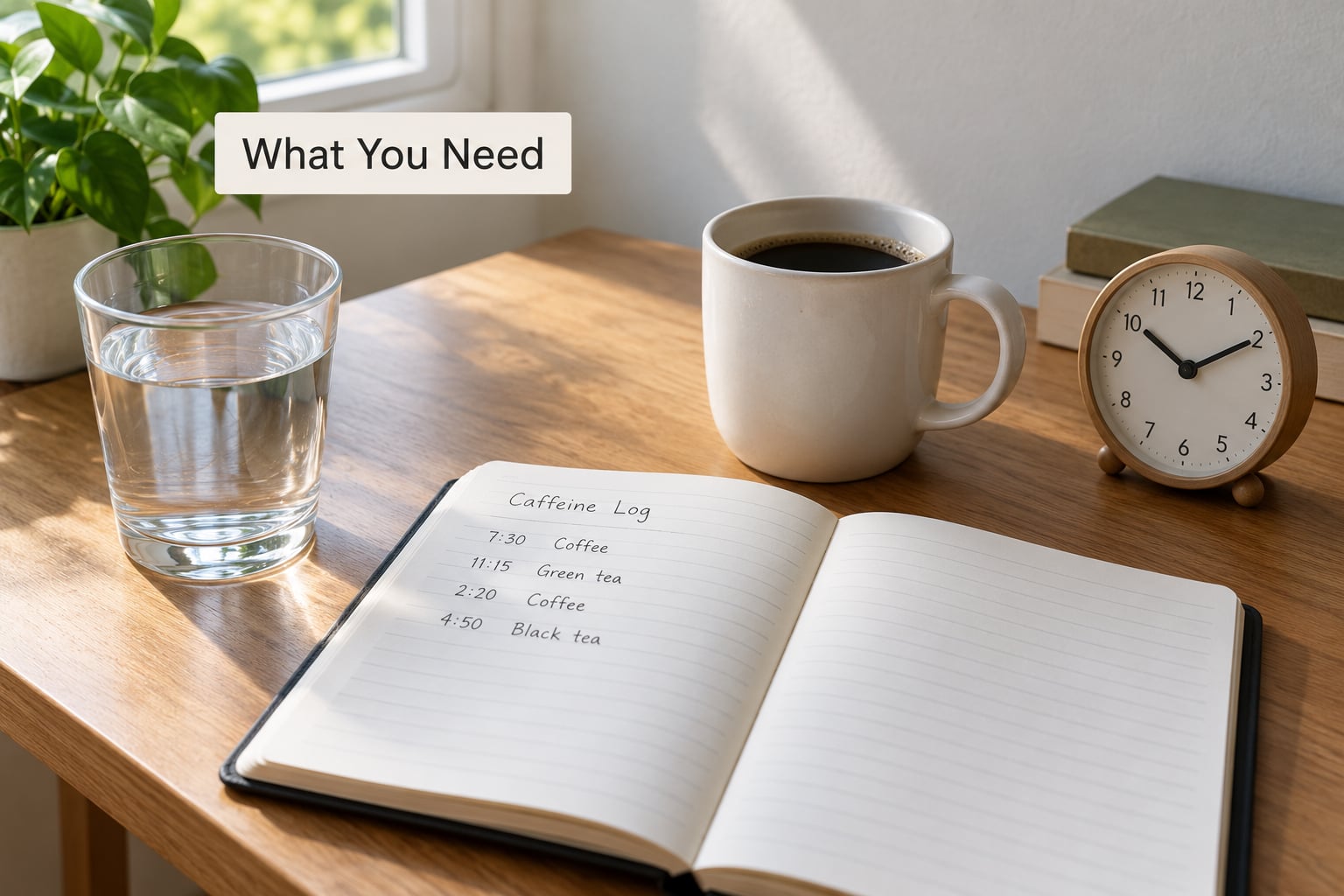
Four working days of honest tallying. That is the only real preparation, and it changes everything downstream, because you cannot taper a number you have never written down.
Then you need three things. A water bottle you can actually reach during your shift, a consistent sleep and wake time to anchor the plan, and one person who knows you are doing this, so they can ask how it went instead of assuming you are fine.
A notebook or a note on your phone is enough for tracking. No app, no calculator, no special equipment. If your workplace hands out caffeinated drinks or you work somewhere with a self-serve machine, note those too, because they are the easiest ones to forget.
Step-by-Step
Record Your Current Caffeine Routine
For four ordinary days, including one weekend day, write down everything with caffeine in it. Coffee, tea, energy drinks, cola, chocolate, pre-workout powder, supplements, pain relievers that contain caffeine, and anything from a vending machine.
Estimate rather than measure. A 12 oz brewed coffee is roughly 150 to 200 mg, an espresso about 65 mg, a standard tea 30 to 50 mg, an energy drink often 80 to 300 mg, and a dark chocolate square around 5 to 15 mg. Multiply the number of servings by the nearest estimate and you have a baseline without any medical arithmetic.
The real figure is usually higher than expected once supplements and workplace drinks are counted. Spreading the same caffeine across the day also tends to cause less jitter than one large dose, which matters when you decide how to taper.
Set a Gradual Reduction Target
Pick one number to reduce by every three to seven days. Most people land between 10 and 25 percent, and that range is far easier to live with than stopping abruptly.
Base the pace on your baseline and your calendar. If you drink about 400 mg a day, cutting 25 percent every four days gives you roughly a five-week taper. If you drink 120 mg a day, a 25 percent step every week is plenty and probably faster than you need.
Also decide your floor now, while you are calm. Zero, one decaf, or 100 mg a day are all legitimate destinations. Writing it down stops you renegotiating with yourself at 3pm on day six.
Replace Rather Than Simply Remove Caffeine
The failure mode is dropping the serving and the ritual together. Keep both, and change one variable at a time: the strength, the size, or the kind of drink.
- Brew your usual coffee with a splash more water, or ask for a half-decaf blend that mixes regular and decaf in one cup.
- Drop from a 16 oz mug to a 10 oz mug for a week before you touch the strength.
- Swap one caffeinated drink for decaf, which still tastes like coffee and keeps the cup in your hand.
- Use unsweetened tea or herbal tea as the second and third drink of the day. Green tea carries a smaller caffeine dose than coffee and adds L-theanine, which people often find smoothing rather than stimulating.
- Keep sparkling water and cold drinks in the fridge so the 3pm reach has something cold in it that is not coffee.
Environment beats willpower more often than not. If the coffee maker sits in plain view, move it, or ask a coworker to keep the second shelf stocked with tea and sparkling water instead.
Change the Timing
Where caffeine sits in your day matters as much as how much. Aim to keep a gap of roughly six hours between your last caffeinated drink and bedtime, since caffeine’s half-life is around five hours, meaning half the dose is still in your system five hours later.
If you want to keep a small amount, front-load it. Taper the afternoon intake first and the morning cup second, because the 2pm coffee is the easiest to remove and the one that costs you the most sleep. Keeping the timing consistent also makes the taper easier to follow than an erratic on-and-off pattern.
Shift workers complicate this. The rule becomes relative to when you actually sleep, so move caffeine away from the three to four hours before your sleep window, whenever that window falls.
Track Symptoms and Adjust
Each evening, note four things on a one-to-ten scale: headache intensity, fatigue, mood, and sleep quality from the night before. Add a line for concentration if work is affected.
Symptoms usually begin 12 to 24 hours after your last significant drop, peak around 20 to 51 hours in, and resolve somewhere between two and nine days. Tapered properly, you will barely notice the peak.
If a step leaves you with a headache you cannot work through, stay at that level for another week rather than pushing on. Holding is not failing; it is the mechanism working. If symptoms keep climbing, step back up by a third and try again slower. Slowing down at that point is normal, and a pace you can hold beats a fast one you abandon.
Build a Caffeine-Free Routine for Energy
The afternoon dip is real, and caffeine has been covering it rather than fixing it. Replacing the coverage takes a few habits, not one magic substitute.
- Drink water through the afternoon. Caffeine is mildly diuretic, so mild dehydration makes a headache louder and tiredness heavier.
- Eat something with protein and slow carbohydrates at lunch rather than reaching for sugar, which spikes and drops.
- Take a ten to fifteen minute walk. Movement raises alertness more reliably than a second coffee and it is free.
- Get daylight early in the shift. Daylight anchors the body clock, which makes the evening easier.
- Take an actual break. Most 3pm slumps are attention failure wearing a costume.
- Keep your wake time steady, weekends included, even while the caffeine is moving around.
Managing the work side helps too. If the taper is colliding with a heavy quarter or a difficult stretch, a conversation about workload usually beats a willpower contest. The plan for reducing stress at work without quitting has some practical scripts for the weeks when everything piles up at once.
After a few weeks, many people find they need less sleep disruption than they expected and feel clearer through the middle of the afternoon. Fatigue, incidentally, is usually the harder symptom than the headache, and it is rarely proportional to how little sleep you got.
Common Mistakes
Stopping cold turkey on a Monday. It is the most common advice given and the least useful one. Three days of headache and irritability buy you nothing that a two-week taper would not have built. Some people push through it and feel fine; plenty of others quit the attempt and drift back higher than they started.
Replacing caffeine with sugar or nicotine. Both keep the withdrawal loop running for different reasons, and neither fixes the sleep problem you were trying to solve. Swap in movement, water, and a smaller serving instead.
Cutting caffeine before fixing sleep and hydration. If you are running on six hours and two litres of water, the headache you blame on withdrawal may just be a bad afternoon. Sort the basics first and the taper becomes much easier.
Assuming every post-cutback symptom is withdrawal. Withdrawal starts within a day and eases within a week. Headache that arrives suddenly, hits hardest behind one eye, comes with nausea or vision changes, or lasts past two weeks needs a doctor, not a bigger coffee.
Also worth knowing: daily over-the-counter pain relievers taken for more than a couple of weeks can set up a rebound headache of their own, which looks a lot like withdrawal. If you have been reaching for painkillers most days, tell your doctor that before you assume the taper is failing.
Choosing an aggressive timeline. A deadline you have to meet at work is a good reason to slow down, not speed up. One performance review is not worth a month of feeling flattened, and steady beats dramatic almost every time. If a deadline is what is driving the whole attempt, it may be worth reading how to talk to your boss about burnout without conflict first, so the pressure is off the table while you taper.
Frequently Asked Questions
How long does it take to reduce caffeine without headaches?
Most people taper over two to six weeks without meaningful headaches. Cutting about 10 to 25 percent every three to seven days spreads a mild version of the symptoms across the whole period. A sudden stop produces symptoms that start within 12 to 24 hours, peak around 20 to 51 hours, and last two to nine days. If you have never been through it before, plan for four weeks and adjust.
Can I cut caffeine out completely in one day?
You can, and you will probably feel it. Withdrawal symptoms typically begin within a day, peak around two days in, and clear within a week, so a single-day quit means the worst of it arrives while you are still at work. Gradual reduction over several weeks is far easier to live with. If you do try stopping at once, expect a headache, fatigue, irritability and difficulty concentrating, and stay hydrated.
Does decaf coffee still contain caffeine?
Yes. Decaf is not caffeine-free; it usually retains roughly 2 to 15 mg per cup depending on the process used. That small amount is often well tolerated and it keeps the taste and the ritual intact, which makes it a useful stepping stone rather than a destination. Check the label for the exact figure. If you need genuinely none, look for caffeine-free herbal drinks or sparkling water instead.
What helps with caffeine withdrawal headaches?
Water first, because caffeine is mildly diuretic and dehydration makes the headache louder. Then keep your previous caffeine level steady for a few days rather than dropping again, sleep on a consistent schedule, and take a ten to fifteen minute walk. Over-the-counter pain relievers can help short-term, but daily use for more than about two weeks carries a rebound headache risk worth discussing with a pharmacist.
Will reducing caffeine improve sleep?
Usually, and sleep is the benefit people mention most. Caffeine has a half-life of around five hours, so a late-afternoon coffee leaves half its dose in your system at bedtime. Leaving a six-hour gap before sleep often means falling asleep faster and waking less overnight. The change can show up within one to two weeks of tapering, and it tends to matter more to people than the energy dip does.
When should I see a doctor while cutting back caffeine?
Get advice if a headache is sudden and severe, comes with fever, stiffness, vision changes, weakness, or follows a head injury. Also see someone before tapering if you are pregnant, managing high blood pressure, taking blood thinners, or prescribed a stimulant, since caffeine limits differ. Withdrawal symptoms that last beyond two weeks, or low mood that does not lift, deserve a professional look rather than another week of tapering.
Conclusion
Start tonight. Write down every caffeinated thing you had today, pick one number to cut by 10 to 25 percent in three days, and swap that first serving for a smaller one or a decaf so the morning still feels like yours.
Then hold the line for a week before dropping again, and keep the log. That single habit, more than any particular drink, is what keeps the taper from turning into a relapse.
This is general information, not medical advice. If your symptoms are severe, persistent, or if you are pregnant, managing a health condition, or taking medication, talk to a doctor or pharmacist before changing how much caffeine you consume.