
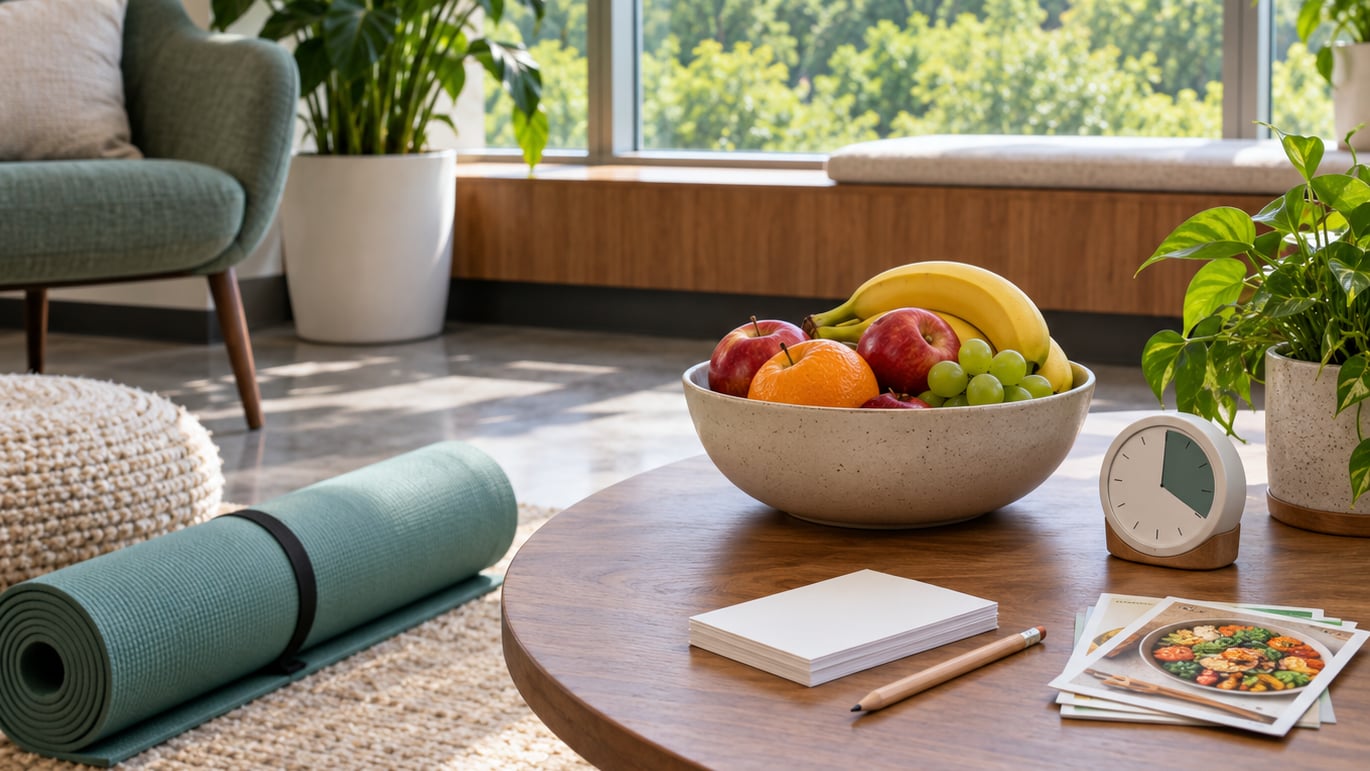
Team building activities that promote wellness are structured group sessions built around movement, mindfulness, creative expression, genuine connection or shared purpose, rather than around trust falls and problem-solving tests. The point is that people leave feeling a little steadier, not just a little closer. Below are ten of them, with the practical details an HR or people-operations lead actually needs: how long it takes, what it costs, whether it works remotely, and how to keep it open to everyone.
Most wellness team building fails for boring reasons. It is mandatory, it happens after hours, it assumes everyone can run a 5K, and it ends with a manager asking people to share how they really feel. Fix those four things and almost any modest activity does more good than an expensive off-site.
Table of Contents
- Team Building Activities That Promote Wellness at a Glance
- 1. Guided Walking or Step Challenge
- 2. Chair-Based Stretching and Mobility Session
- 3. Mindful Reset and Breathing Exercise
- 4. Cooperative Non-Competitive Games
- 5. Healthy Cooking or Nutrition Skills Workshop
- 6. Outdoor or Indoor Movement Class
- 7. Gratitude and Positive Feedback Circle
- 8. Team Problem-Solving Challenge
- 9. Sleep and Shift-Wellness Education Workshop
- 10. Volunteer or Community Connection Activity
- Frequently Asked Questions
- What are the best team building activities for workplace wellness?
- How can we make team building activities inclusive for employees with disabilities?
- Can team building activities work for remote and shift-based employees?
- How do we keep workplace wellness activities voluntary and avoid privacy concerns?
- How can employers tell whether a wellness-focused team activity is working?
- Conclusion
Team Building Activities That Promote Wellness at a Glance
The ten activities below span five wellness domains: movement, mindfulness, social connection, creative expression, and shared purpose. Each one is scored on the same four practical points below, so you can match an activity to the time, budget and group you actually have.
| Activity | Best setting | Main wellness benefit | Typical duration | Accessibility considerations |
|---|---|---|---|---|
| 1. Guided walk or step challenge | Outdoors, near the office | Movement and stress release | 20-30 minutes | Paved, step-free route; seated option at the end |
| 2. Chair stretching and mobility | In-office meeting room | Physical tension relief | 10-15 minutes | Seated by default; standing and wall-supported variants |
| 3. Mindful reset and breathing | Anywhere, including remote | Focus and perceived stress | 5 minutes | No movement; eyes-open option; no personal disclosure |
| 4. Cooperative non-competitive games | Indoors or outdoors | Belonging and communication | 30-45 minutes | No elimination, no timed sprints, seated roles available |
| 5. Cooking or nutrition workshop | Teaching kitchen or break room | Practical healthy eating | 45-60 minutes | Allergen labelling; non-cooking roles; no-cook version |
| 6. Outdoor or indoor movement class | Studio, park or remote | Fitness, mood, sleep quality | 30-45 minutes | Seated participation; qualified instructor; opt-in touch |
| 7. Gratitude and feedback circle | In-office or video call | Recognition and social wellbeing | 15-20 minutes | Pass option; written or anonymous alternative |
| 8. Team problem-solving challenge | Indoors | Creativity and psychological safety | 45-60 minutes | Verbal roles; no physical build tasks; mixed-ability groups |
| 9. Sleep and shift-wellness workshop | In-office or remote session | Sleep and recovery | 30 minutes | Education only; no medical advice; recorded for shift workers |
| 10. Volunteer or community activity | Local site or remote | Purpose and relationships | 2-4 hours | Seated tasks; opt-out; no photography without consent |
What these activities cannot do
Group activities support wellbeing, but they are not treatment. They do not manage burnout caused by unmanageable workload, they do not replace clinical care, and they are no substitute for an employee assistance program. If an employee raises something serious, the right response is a referral, not a group exercise and certainly not a public conversation.
How to tell whether one worked
Run a three-question pulse survey within 48 hours: did this leave you feeling more energised, more connected, or about the same? Did the format work for your schedule and abilities? What should we change? Two consecutive runs of the same activity with the same questions is a rough but honest read, and if motivation is the problem rather than the format, our guide to wellness program incentives that actually motivate employees is worth a look first.
1. Guided Walking or Step Challenge
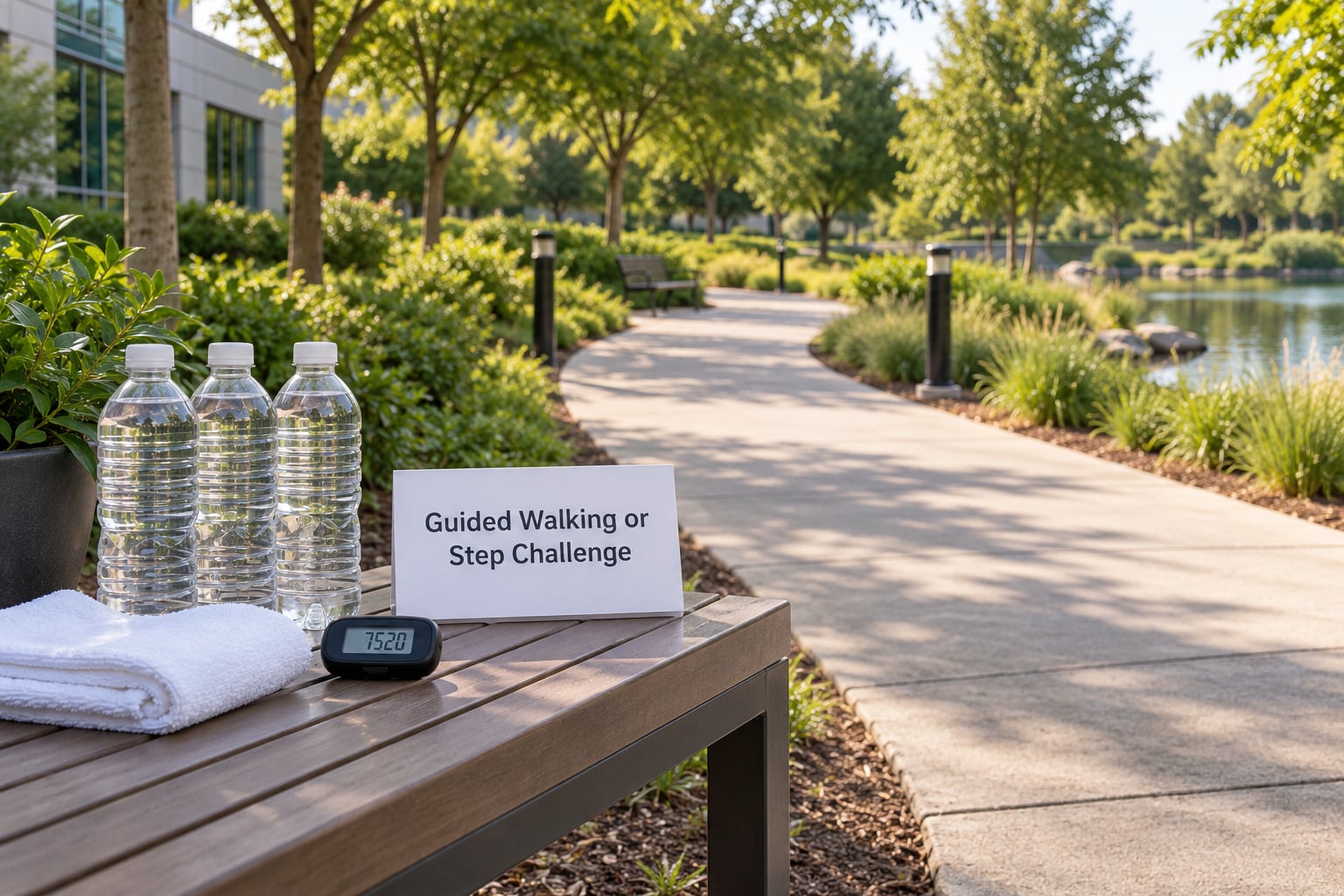
Walking is the least awkward wellness activity there is. People already know how to do it, it needs almost no equipment, and a conversation on the move feels easier than a conversation across a table. The wellness benefit comes from the combination: light movement plus low-pressure contact, at a time of day when people would otherwise be sitting still.
A lunchtime walk of 30 minutes with an optional distance goal is the version I would run first. No leaderboard, no app tracking anyone by name, and a route that is paved, step-free and has somewhere to sit halfway through.
How to run the 30-minute lunchtime walk
Start with a two-minute framing from the person organising it, then walk in loose pairs or threes rather than a single file where only two conversations are possible. Halfway, stop somewhere safe for a single prompt such as what part of your week went better than expected, then finish with a cooldown and a chance to head back.
For remote teams, run the same thing as a walk-and-talk call: everyone steps outside, stays off mute, and keeps it to 25 minutes. A shared distance you can all hit without anyone publishing their step count works better than a step leaderboard, which reliably produces one winner and a few people who opt out.
2. Chair-Based Stretching and Mobility Session
A 10- to 15-minute guided stretch does something useful that a walk cannot: it reaches the desk posture. Shoulders, wrists and the upper back are where desk work accumulates, and a short routine at the end of a long block of work tends to feel better than a bigger session planned for a Friday afternoon.
Run it seated by default. That single decision removes the fitness-level filter, because nobody has to worry about keeping up, and it includes colleagues with limited mobility, recent injury, or a pregnancy. Offer a standing version for anyone who prefers it rather than treating standing as the main event.
The routine itself is short: shoulder rolls, wrist circles, a gentle side bend using the chair back for support, and a chest opener with hands clasped behind you. Keep the language plain and avoid promising relief from pain or a medical condition. If someone has an ongoing injury or a condition that limits movement, the right place for advice is their clinician or an occupational health professional, not a workplace stretching session.
3. Mindful Reset and Breathing Exercise
Five minutes of guided breathing in the middle of a heavy week is one of the highest-return activities on this list, and one of the easiest to get wrong. Get it right and people report feeling clearer and less tense going into the next task. Get it wrong, with forced silence or a closing question about emotions, and it turns into a minute people spend looking at their phone.
Keep the structure simple. A minute of settling in, four rounds of breathing with a four-count in and a four-count out, two minutes of quiet, and an optional one-sentence prompt written down rather than spoken aloud. Eyes open is always allowed.
Frame it as attention and recovery, not as therapy. Mindfulness-based programs have their own evidence base and are delivered by trained facilitators, which is a different thing from a five-minute breathing break in a staff meeting. Nothing here diagnoses, treats or replaces support for a mental health condition.
4. Cooperative Non-Competitive Games
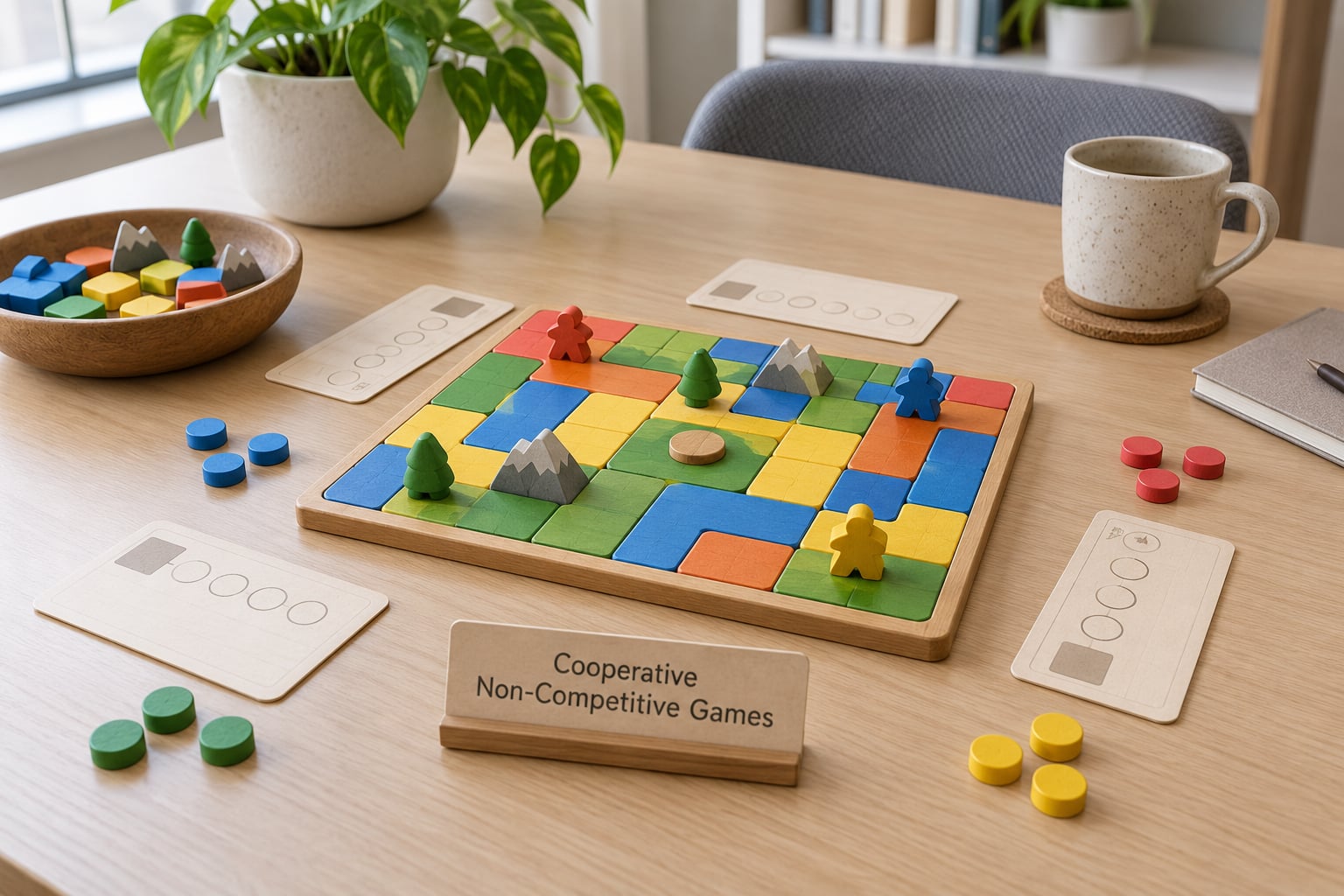
The most common failure in team games is that the winner is decided by who is tallest, fastest or least self-conscious. Cooperative games remove that entirely. The team succeeds or fails together, so success is measured by communication and patience rather than athletic ability, and a quiet colleague can be as decisive as an outgoing one.
A low-impact relay works well for groups under 20: a short set of stations that involve balance, aim or sequencing, with roles that rotate every round so nobody is stuck carrying the physical task. For larger or fully remote teams, a problem-solving course is easier, such as building a stable structure from paper and tape or assembling a shared picture from pieces only one person at a time can see.
Three rules keep these inclusive. No elimination and no “last one standing” formats. Every task needs a seated version. And the debrief is more valuable than the game, so reserve five minutes to ask what the group noticed about how it communicated.
5. Healthy Cooking or Nutrition Skills Workshop
Food is one of the few wellness topics people genuinely enjoy discussing, and a cooking session produces a takeaway that no guided meditation will match. Participants leave with a skill, a container of food and a conversation that is not about the last sprint.
A no-cook recipe is the safest default for a work setting. Overnight oats, a chickpea and vegetable salad, or a big pot of soup that everyone eats at the end work well because they need minimal equipment and no hot oil. If you do use heat, follow USDA guidance: poultry to 165°F, ground meat to 160°F, and whole cuts and fish to 145°F.
Label every ingredient with the allergens it contains, and buy a few substitutes so there is an option for common restrictions. Keep the ingredient list ordinary and budget-conscious, because a workshop built on ingredients nobody can find at a normal grocery store does not change behaviour. And offer non-cooking roles such as prep, plating and clean-up, plus a separate prep-only track for anyone who prefers not to handle food at all.
6. Outdoor or Indoor Movement Class
A shared class gives the same movement benefit as a walk but adds a reason to keep showing up, because other people expect you. The options differ more than people expect: yoga emphasises flexibility and breathing, dance-based classes are high energy and forgiving about ability, low-impact aerobics is straightforward cardio, and mobility training targets stiffness rather than fitness.
Pick one based on what your team actually needs rather than on what is fashionable. Teams reporting desk stiffness do well with mobility or yoga. Teams who want social energy tend to enjoy dance or aerobics. Frontline and shift teams often get more from short repeated sessions than from one long class.
Use a qualified instructor and put the consent question in the invitation: no touch without asking, and a seated or low-impact version of everything offered. Then record the session, because a single class at 1pm on a Tuesday excludes everyone on a different shift. If your team is remote or split across locations, the tradeoffs in how to get employees to participate in wellness programs are worth reading before you announce it.
7. Gratitude and Positive Feedback Circle
Recognition is the cheapest wellbeing intervention available, and most workplaces under-use it. A short round where each person names something specific another colleague did well builds social connection and gives managers useful signal about work that usually goes unnoticed.
Run it for 20 minutes, one round only, with three ground rules. Specific beats general, so a concrete contribution rather than a compliment about someone’s attitude. A pass is normal and no one has to explain it. And no one is asked to describe feelings, health problems or personal circumstances, which is where this format usually goes wrong.
Written cards work just as well as speaking, and for some teams they work better. Anyone who dislikes performing in front of colleagues can write a note instead, and an anonymous version lets praise land without anyone having to accept it in public.
8. Team Problem-Solving Challenge
This one sits closer to classic team building, but it earns its place when the goal is psychological safety rather than a productivity demonstration. Teams under real pressure often have never practised disagreeing with each other in a low-stakes setting, and that is usually what is breaking down in the high-stakes ones.
A shared scenario works well: present a realistic problem, such as a customer complaint, a project that slipped or a handover that keeps failing, and let small groups work out a response in 20 minutes. Another format is a physical build task with paper and tape, which reveals communication habits immediately because nobody can hold the plan and the materials at the same time.
Mix the groups deliberately so people who always work together are separated, and give the debrief as much time as the task. The useful questions are simple: where did the disagreement happen, and how did you get back to a decision. That conversation is worth more than the finished bridge.
9. Sleep and Shift-Wellness Education Workshop
Teams on rotating or irregular schedules have a specific problem that a lunchtime walk cannot touch: recovery time. A 30-minute education session covering consistent core sleep, light exposure, meal timing and how to take breaks safely covers most of what general guidance says, and it lets people ask questions without a manager listening.
Keep it to information rather than instruction. Explain how light in the morning and darkness in the evening affect sleep timing, why a heavy meal right before a short sleep period is uncomfortable, and why caffeine late in a shift changes the next night’s sleep. Then point people to their own employee assistance program, their primary care provider or a sleep clinic for anything individual.
Do not diagnose, do not recommend supplements or medication, and do not use a group session to discuss anyone’s personal sleep problems. Record it and publish the slides, and shift workers who missed the live session get the same information as everyone else.
10. Volunteer or Community Connection Activity
Shared service is the strongest of these activities for purpose and for relationships, and it is also the easiest to plan badly. Assembling hygiene kits, sorting a food drive or restoring a local green space are all straightforward, need no athletic ability, and produce something that exists after everyone goes home.
Choose a partner organisation that will actually host you and can tell you what help is useful. Give everyone a task that produces visible progress, because an afternoon spent waiting for something that never happens is worse than no activity at all. Offer seated roles for every station, and make clear that opting out costs no one anything, including references or visibility.
Remote teams can join through a digital route, such as writing cards, translating materials or funding supplies, but a shared in-person day still does something a video call cannot. Two details matter: no photography unless each participant has agreed in writing, and no one is asked to share why they chose to take part or why they did not.
Frequently Asked Questions
What are the best team building activities for workplace wellness?
The strongest options are the ones with a clear wellness mechanism and a low participation bar: guided walks, chair stretching, a five-minute breathing reset, cooperative games with no elimination, and a short recognition round. Add cooking, a movement class, a problem-solving challenge, sleep education or a volunteer day depending on what your team needs. Start with something under 30 minutes, during work hours, that everyone can do seated.
How can we make team building activities inclusive for employees with disabilities?
Design the seated version first rather than as an add-on, and make sure every physical task has one. Use step-free routes and accessible venues, share details of the format in advance so people can request adjustments, and ask directly rather than inferring. Skip competitive timing formats, keep touch opt-in, and let a wellbeing champion or occupational health professional review the plan before you announce it.
Can team building activities work for remote and shift-based employees?
Yes, with formats built for the medium rather than adapted from an in-person version. Walk-and-talk calls, recorded movement classes, breathing resets, written recognition notes and digital volunteering all work remotely. For shift teams, rotate the same activity across shifts and publish recordings so nobody misses out. Publish a schedule a quarter ahead so people working unusual hours can plan around it.
How do we keep workplace wellness activities voluntary and avoid privacy concerns?
Never collect individual health or participation data, and never let a manager see who took part. State plainly at the invitation that opting out has no effect on role, performance or promotion, then offer a real alternative contribution so opting out is easy. Avoid any format that asks people to disclose feelings, health conditions or personal circumstances in front of colleagues, and keep sessions in work hours.
How can employers tell whether a wellness-focused team activity is working?
Ask three short questions within 48 hours: did this leave you feeling more energised, more connected or about the same, did the format work for your schedule and abilities, and what should change. Track participation rates and repeat the same activity a month later to see if sentiment holds. Supplement this with anonymous wellbeing pulse surveys and existing indicators such as absence and turnover, while keeping the activity in the same healthy ratio to workload changes.
Conclusion
The principle behind every activity on this list is the same: connection plus a manageable wellbeing benefit, rather than a competition on fitness. Pick one low-risk format, run it during work hours, make opting out invisible, and ask three questions afterwards. Then adjust based on what people tell you and run the next one a month later.
If participation is the problem rather than the activity itself, the fix is usually in how the programme is run rather than in what is on the menu. Our guide to how to get employees to participate in wellness programs covers the opt-out language, manager support and scheduling decisions that decide whether people show up twice or once.