
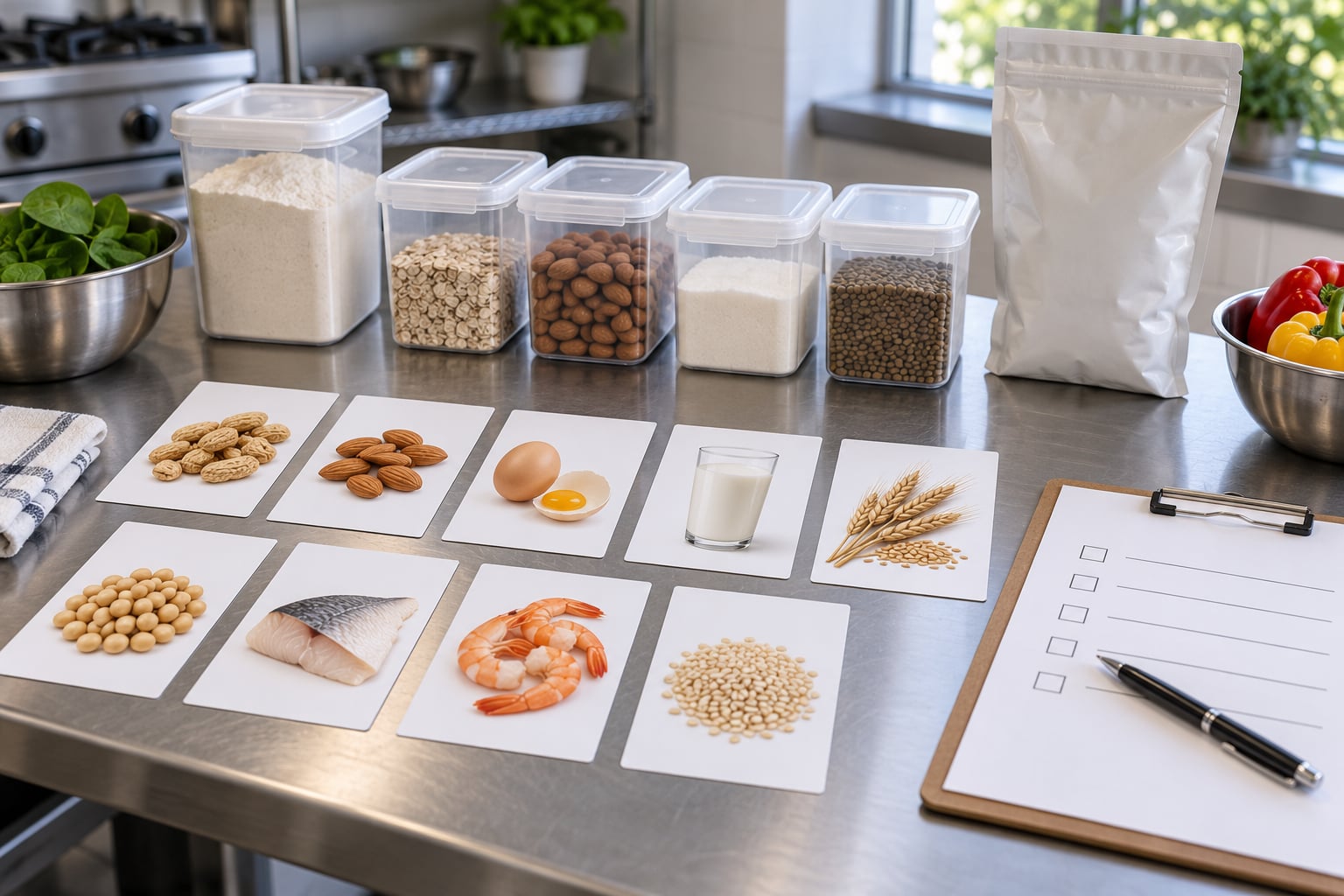
Allergen awareness training for food workers is a structured program that teaches restaurant and food-service staff to identify major food allergens, prevent cross-contact during preparation and service, recognize the symptoms of an allergic reaction, and respond correctly when something goes wrong. Done well, it is not a certificate in a folder. It is a set of behaviors every person on the line can execute in the two minutes before a reaction becomes an emergency.
Most kitchens do not fail on allergen knowledge. They fail on handoffs. A server hears the allergy, nods, writes it on a pad, and walks away. The cook sees handwriting instead of a flag. Two people each believe the other one is handling it.
This guide covers what to teach, which allergens every worker should be able to name, how to build a training program that survives staff turnover, how to check whether people actually understood, and what to do in the first minutes after a mistake. It is written for restaurant managers, kitchen managers, school and hospital food service directors, caterers and anyone else who has to answer the question “who on my team is trained on this?”
Table of Contents
- What Is Allergen Awareness Training for Food Workers?
- Which Allergens Should Food Workers Know About?
- How Do You Build a Clear Allergen Awareness Training Program?
- What Should You Teach Food Workers About Cross-Contact?
- How Can You Make Allergen Awareness Training Stick?
- How Do You Check Whether Food Workers Understand the Training?
- What Should You Do When an Allergen Error Occurs?
- Frequently Asked Questions
- How long should allergen awareness training for food workers be?
- Do food workers need allergen training in their native language?
- What is the difference between allergen awareness and food-safety certification?
- How often should food-service employees receive allergen training?
- Who should be included in allergen awareness training for food workers?
- Conclusion
What Is Allergen Awareness Training for Food Workers?
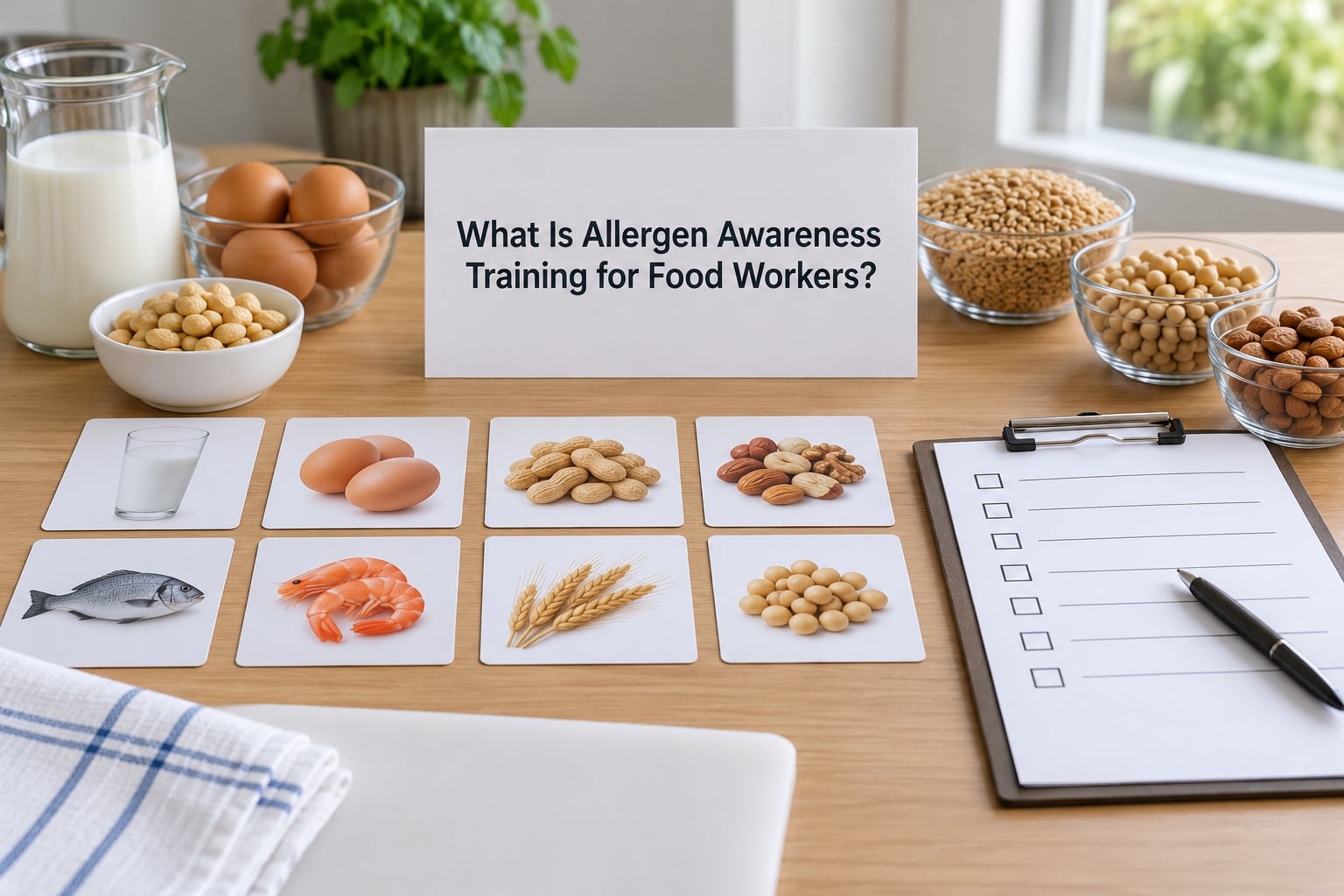
Allergen awareness training teaches food workers the nine major food allergens, the ways allergens move from one food to another inside a commercial kitchen, the symptoms that signal a reaction, and the exact steps to take when one happens. The FDA Food Code expects food employees to be informed about their responsibilities, and several states now spell out allergen training requirements in statute. The person-in-charge is the one legally on the hook for making sure it happens.
The need is real and the gap is wide. CDC figures put food allergies at roughly 15 million US adults and 4 million children, with about 3.4 million emergency department visits a year. Around one in five food allergic reactions happens at a restaurant, and 28 percent of fatal food reactions are associated with a food establishment. Fewer than half of food managers and staff report having received formal allergy training.
Restaurant workers themselves point to the same weak spot. The knowledge of allergens is not the problem; the transfer from front of house to kitchen is. Staff also report two opposite failure modes: teams that treat every allergy question as a nuisance and teams that refuse the entire menu out of fear. Neither helps the guest sitting at the table.
Allergen awareness is not food-safety certification
These get confused constantly, and the confusion causes real problems on a schedule. A food handler or manager certification covers personal hygiene, time and temperature control, cross-contamination between raw and ready-to-eat food, and cleaning and sanitizing. Allergen awareness training covers a different hazard: the transfer of allergenic proteins from one food to another, plus recognizing and treating a reaction.
Neither replaces the other. A kitchen can hold a current food handler certificate and still have no idea where the epinephrine auto-injector is kept. A team can be trained well on allergens and still be a sanitation problem. Keep the records in separate binders if you have to, but train both.
Who needs the training
Everyone whose hands or voice touch a guest’s food needs a version of this training, tuned to their station.
- Cooks and kitchen staff read ingredient labels, check substitutions, use equipment and cleaning procedures.
- Servers, bartenders and cashiers take the allergy order, confirm it back, hand it off visibly, and know when to refuse an order.
- Dishwashers and cleaning staff understand why shared wash and sanitizing steps matter and what a dedicated wash cycle looks like.
- Food handlers and prep staff follow receiving, storage and labeling rules for allergen-containing ingredients.
- Managers and the person-in-charge hold written procedures, verify records, run drills, and own the emergency plan.
Managers often assume the cooks are the only audience. The guest usually tells the server first, and if the server does not know what to do with that information, nothing downstream matters. Train the front of house as seriously as the line.
Which Allergens Should Food Workers Know About?
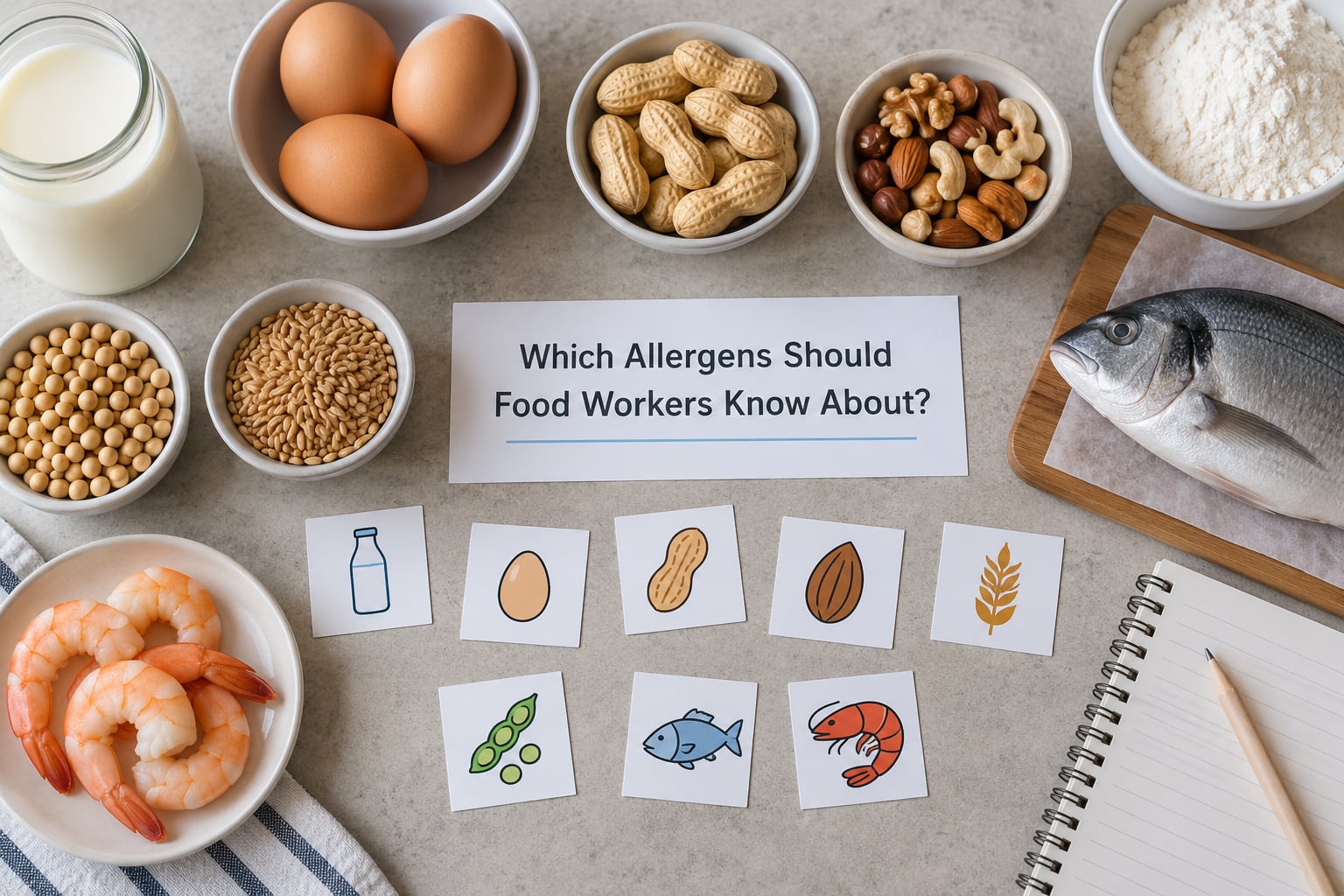
US food-service training centers on the nine major food allergens, often called the Big 9. Sesame joined the list under the FASTER Act, and it is now the allergen most likely to be missed by staff who learned the list years ago and never updated it.
| Major food allergen (US Big 9) | Where it hides in a kitchen |
|---|---|
| Milk | Cream sauces, butter in breading, cheese on a shared slicer |
| Eggs | Mayonnaise, dressings, pasta, breading binders |
| Fish | Anchovy in sauce, fish sauce, shared fryer oil |
| Crustacean shellfish | Shrimp, crab, lobster, stock bases |
| Tree nuts | Pecan in vinaigrette, nut butters, granola, fryer oil |
| Peanuts | Sauces, spice blends, fryer oil, packaging |
| Wheat | Flour dust, soy sauce, breading, crumbs, pasta |
| Soy | Sauce, oil, broth, marinades |
| Sesame | Tahini, sesame oil, seeded bread, hummus |
Europe and Canada require disclosure of a longer list. Their 14 include the same families plus celery, mustard, lupin, molluscs and sulphites. A US kitchen rarely has to disclose all of them, but a worker who has trained abroad, or a menu that serves international guests, should know the difference. The list you teach must match the current FDA and state requirements for your establishment, and it needs a date on it, because it changes.
How to teach label checking instead of memorizing
Any worker who can recite the Big 9 from memory can still fail on a product with an unfamiliar brand name. Teach the behavior, not the list: read the ingredient statement every time a product is new, every time a supplier changes, and every time a recipe is adjusted. Put a three-minute label check at the receiving dock and at the station where substitutions happen.
Gluten-free and celiac requests deserve their own note. Gluten is a wheat allergen, but celiac disease requires avoiding cross-contact with wheat, barley and rye rather than simply avoiding a wheat ingredient. Staff who equate gluten-free with wheat-free will mishandle both.
How Do You Build a Clear Allergen Awareness Training Program?
Start from the jobs, not from a course catalog. A six-step sequence works for a single-site restaurant and scales to a school district kitchen.
- List the job duties that touch allergens. Write down what each role physically does with food, from receiving dock to service pass. This tells you who needs the full program and who needs the short one.
- Define the learning outcomes in observable language. Not “understands allergens” but “reads the ingredient statement before adding a new product” and “states the kitchen handoff steps for an allergy ticket.”
- Pick the instructor and the materials. The person-in-charge usually teaches best because they know the menu. Add certified course material from a recognized provider if a state or accrediting body requires it.
- Choose the delivery format per shift. Short in-person sessions during slow service beats a locked-down online module for hands-on stations. Mixing a short online foundation with a 20-minute kitchen walk-through works well.
- Schedule refreshers before turnover eats the knowledge. New hires get trained before their first shift. Existing staff get a short recap whenever a supplier or recipe changes.
- Document completion. Keep a signed roster per session with date, topic, instructor and employee signature. Inspectors and liability insurers both ask for it.
Kitchen safety training runs alongside this, and it pays to deliver them together. A worker learning about separate cutting boards and cleaning steps is already primed for the allergen version of the same conversation, and our guide to knife safety for food service workers fits naturally into the same session.
If you are shopping for outside help, look for accreditation from a recognized accrediting body, a test that covers emergency response rather than just a video, and records you can export. Free options exist, including nonprofit course suites built for school food service staff, and several state and local health departments publish plain-language materials. Verify what your own jurisdiction actually accepts before you buy anything.
What Should You Teach Food Workers About Cross-Contact?
Cross-contact is the transfer of allergens from a food, surface, utensil or hand into another food. It is not the same as cross-contamination, which in food-safety language means transferring pathogens or biological contamination from raw food to ready-to-eat food. Both matter, and the controls overlap but do not match.
Teach the controls where the work actually happens, walking the workflow from one end to the other.
- Receiving. Keep allergen-containing products in original packaging, check for damage, and read supplier labels before the case leaves the dock.
- Storage. Store allergens separately where practical. Label containers with the allergen name and the date, not just “product.”
- Preparation. Use dedicated or thoroughly cleaned equipment and utensils, change gloves and wash hands between an allergen-free order and the next ticket, and prepare allergen-free orders before allergen-containing ones where the menu allows.
- Cooking. Avoid shared fryer oil and shared toasters for allergy orders, or state the limitation honestly to the guest.
- Cleaning. Know which surfaces need a wash-and-rinse-and-sanitize cycle, and how long to run it. Food-contact surfaces that are wiped only get a clean look, not a clean surface.
- Service and changeover. Confirm the allergy aloud back to the guest, use a visible flag or ticket system, and reset the station between an allergy plate and the following ticket.
The cleaning step is where kitchens most often cut corners, and it is also where injury comes in. Wet floors during a mandatory wash-down produce real slips, so pair the procedure with our food service slip prevention tips.
The handoff from server to kitchen
This is the step that decides whether the rest of the system works. Give your staff a fixed sequence and rehearse it in training: the server writes the allergen on the ticket, walks it to the pass, says the allergen name out loud to the person at the station, and watches for confirmation. The cook repeats the allergen back before starting. Any change to the order goes through the same spoken handoff again.
Never let an allergy ticket move on a clipboard that gets wiped, or through a screen nobody is assigned to watch. If the kitchen genuinely cannot safely accommodate an order, the trained answer is “I cannot make this safely today.” That answer protects the guest and the employee, and staff need permission to say it.
How Can You Make Allergen Awareness Training Stick?
Adults forget lectures and remember what they have done. Design the session around doing.
- Demonstrate before you explain. Ten minutes of watching a correct handoff beats an hour of slides about cross-contact.
- Run scenarios from real tickets. Use three or four orders your kitchen actually serves and ask the team what they do at each step.
- Keep visuals at the station. A laminated allergen card on the line and at the pass beats a binder in an office.
- Teach back. Ask a worker to explain the handoff procedure in their own words. If they cannot, the training did not land.
- Match the language of your crew. Materials in the language staff read at home make a measurable difference, especially for reading ingredient statements. Our guide to training non English speaking workers on safety covers the design side.
- Build refreshers into the schedule. A five-minute recap at each shift change, plus a full session when a recipe or supplier changes.
Turnover is the real threat to any of this. Knowledge that lives in one person’s head leaves the building when they clock out, so write the procedures down and post them. Then treat the newest person on the line as the audience, because next month that will be everyone.
How Do You Check Whether Food Workers Understand the Training?
Attendance sheets prove nothing. Check understanding with tasks that mirror the job.
- Observation. Watch one real allergy order during service and note whether the handoff happened as taught.
- Label-reading exercises. Hand a worker an unfamiliar product and ask them to identify every allergen on the panel. Do this monthly with a different product.
- Order scenarios. Walk through a written order with a substituted ingredient and ask the worker where cross-contact could occur.
- Short checks on the floor. Three questions at the station beat a 20-question quiz at the end of a long shift.
- Records. Log each session with the date, topic, instructor and names present, and keep prior-year records where an inspector can find them.
Avoid a pass-only culture. If the only consequence of getting a question wrong is a score, people guess, and guessing on allergens is expensive. Coach the first miss, document the second, and treat a repeated miss as a scheduling issue rather than a character issue.
What Should You Do When an Allergen Error Occurs?
Write one response procedure and drill it. When a mistake is suspected, six steps in order beat improvisation.
- Stop and hold. Stop serving the plate. Do not send it, do not let a runner take it, do not plate a replacement on the same surface.
- Tell the person-in-charge immediately. State what you think may have happened, not what you think caused it.
- Identify the likely source. Check the ticket, the ingredient labels used, the equipment, the fryer and the prep sequence.
- Follow the establishment’s emergency plan. If symptoms are present, treat them. Epinephrine goes in the outer thigh at the first sign of a serious reaction, followed by a call to emergency services. Know where the auto-injectors are and who is authorized to give them. Second doses and observation follow per the guest’s own medical plan.
- Communicate with the affected guest. If the guest is present and well, tell them plainly what happened. Hiding a near miss is how a repeat happens.
- Document it. Record the time, the dish, the suspected allergen, the staff involved, the outcome and the corrective action.
Run this as a timed drill once a year with the whole team, including the front of house. Drills surface the practical gaps, such as an auto-injector in a locked office drawer or a guest’s medication sitting in a coat pocket rather than with the person.
Frequently Asked Questions
How long should allergen awareness training for food workers be?
Most kitchens deliver it in 30 to 60 minutes for front-of-house and line staff, plus a short hands-on walk-through of the actual stations. States that require specific training may set their own minimums, and accredited courses often run two to three hours with a test. Choose a session long enough to include one real allergy order handled end to end, then repeat the core points every few months.
Do food workers need allergen training in their native language?
Where staff read English poorly, English-only training produces poor results, especially for the task that matters most: reading an ingredient statement. Provide materials and the verbal briefing in the language workers use at home, and pair it with pictures of real packaging and station layouts. Record the language used in the training log, since it supports both comprehension and your defense in an incident review.
What is the difference between allergen awareness and food-safety certification?
Food-safety certification covers hygiene, time and temperature control, cross-contamination between raw and ready-to-eat food, and cleaning and sanitizing. Allergen awareness training covers a separate hazard: how allergenic proteins move between foods, how to recognize a reaction, and how to respond. A kitchen needs both, and a certificate in one area proves nothing about the other.
How often should food-service employees receive allergen training?
Train every new hire before their first shift, no matter their experience elsewhere. Then refresh everyone at least annually, and again whenever a recipe, supplier or menu section changes. Some states specify their own renewal intervals, so confirm the requirement where you operate. After any incident or near miss, retrain the people involved and re-brief the whole team on what changed.
Who should be included in allergen awareness training for food workers?
Everyone whose hands or voice touch a guest’s food, plus the people who keep that space safe. That means cooks, prep staff, servers, bartenders, cashiers, dishwashers and cleaning staff, not only the line cooks. Managers and the person-in-charge need the fullest version because they hold the written procedures, verify training records and own the emergency plan.
Conclusion
Pick one dish on your menu that a guest with an allergy could order, and walk it end to end this week. Write down every handoff, every shared surface and every ingredient label someone has to read. Fix what breaks, teach that one dish to the whole team in twenty minutes, and date the record. One real order, taught properly, teaches more than a generic course ever will.