

Monthly wellness themes for the workplace are a year-long plan that gives every month one wellbeing focus — movement, mental health, sleep, safety, financial wellness — plus matching activities and communication. Run this way, a calendar replaces scattered one-off events with a rhythm people can anticipate, and HR gets something they can schedule, budget and actually measure.
That rhythm matters more than most wellness plans admit. A single January challenge spikes and fades by February. A theme that reappears in a different form each month gives employees a reason to keep taking part, and gives you a series of small data points instead of one annual survey.
A note on expectations before we start: participation should never be forced, and the activities below are deliberately low-pressure. Walking, screen-free breaks, walking meetings and peer thank-yous travel far better than step-count leaderboards, especially with shift, frontline and remote teams in the mix.
Table of Contents
- Monthly Wellness Themes for the Workplace at a Glance
- 1. January: New Year, Healthy Routines
- 2. February: Heart Health and Connection
- 3. March: Spring Into Movement
- 4. April: Stress Awareness and Resilience
- 5. May: Mental Health Awareness
- 6. June: Safety and Healthy Workplaces
- 7. July: Hydration and Summer Wellbeing
- 8. August: Sleep and Shift-Work Balance
- 9. September: Preventive Health and Routine Care
- 10. October: Financial and Workplace Wellbeing
- 11. November: Gratitude, Recognition, and Team Connection
- 12. December: Reflection, Recovery, and Sustainable Habits
- Frequently Asked Questions
- How do I create a workplace wellness calendar?
- How do I measure employee wellness program engagement?
- How do I run wellness activities for employees with disabilities or chronic conditions?
- Will wellness activities create privacy concerns for employees?
- How do I keep a wellness calendar sustainable when engagement drops?
- Conclusion
Monthly Wellness Themes for the Workplace at a Glance
Here is the whole year on one page. Each row pairs a theme with a signature activity, the cost level it usually runs at, and one thing you can count at the end of the month.
| Month | Theme | Primary focus | Signature activity | Cost tier | Measure of success |
|---|---|---|---|---|---|
| January | New Year, Healthy Routines | Habits | Team intention plus one weekly action | Free | Teams completing all four weekly actions |
| February | Heart Health and Connection | Cardiovascular health and belonging | Walking meetings | Free | Walking meetings held per week |
| March | Spring Into Movement | Physical activity | Movement relay or team walks | Free | Share of teams logging any activity |
| April | Stress Awareness and Resilience | Stress | Posted recovery-break schedule | Free | Teams with breaks on their calendar |
| May | Mental Health Awareness | Psychological wellbeing | Manager listening sessions | Free to low-cost | Resources opened and sessions attended |
| June | Safety and Healthy Workplaces | Safety and ergonomics | Ergonomic self-check and hazard refresher | Free to low-cost | Hazards reported and closed on time |
| July | Hydration and Summer Wellbeing | Hydration and heat awareness | Water-access audit | Low-cost | Refill points added per site |
| August | Sleep and Shift-Work Balance | Sleep | Sleep-routine session for rotating shifts | Free | Session sign-ups versus attendance |
| September | Preventive Health and Routine Care | Preventive care | Screening and vaccine clinic sign-up | Low-cost | Clinic slots booked |
| October | Financial and Workplace Wellbeing | Financial wellness | Benefits-navigation clinic | Free | Questions asked and sessions booked |
| November | Gratitude, Recognition, and Team Connection | Recognition | Peer thank-you round | Free | Shout-outs sent and read |
| December | Reflection, Recovery, Sustainable Habits | Sustainability | Year-in-review and January reset | Free | Commitments written for next year |
Six of those twelve months cost nothing but staff time, which is usually where the real participation lives. Budget talk, vendor selection and evaluation are worth covering separately — how to choose wellness vendors and what to ask before you hire one covers the questions to put to a partner, and the calendar below works fine without a vendor at all.
1. January: New Year, Healthy Routines
January works because people have just reset their own attention. Ask each team to write one intention for the year and pick one action they will repeat every week — a ten-minute walk before the first meeting, a lunch away from the desk, a screen-free last hour of the evening.
- Team intention card. Fifteen minutes in a team meeting, one line per person, posted in the team channel. Free.
- One weekly action. Same action for all four weeks, so it becomes a routine rather than four separate campaigns.
- Habit stacking. Attach the action to something already fixed, like a coffee break or a commute. Low effort, low cost.
Inclusivity: keep the action about something anyone can do, not a fitness level. No weight language, no step targets, no before-and-after framing.
Measure: how many teams completed all four weekly actions. That single number tells you whether January set the tone for the year.
2. February: Heart Health and Connection
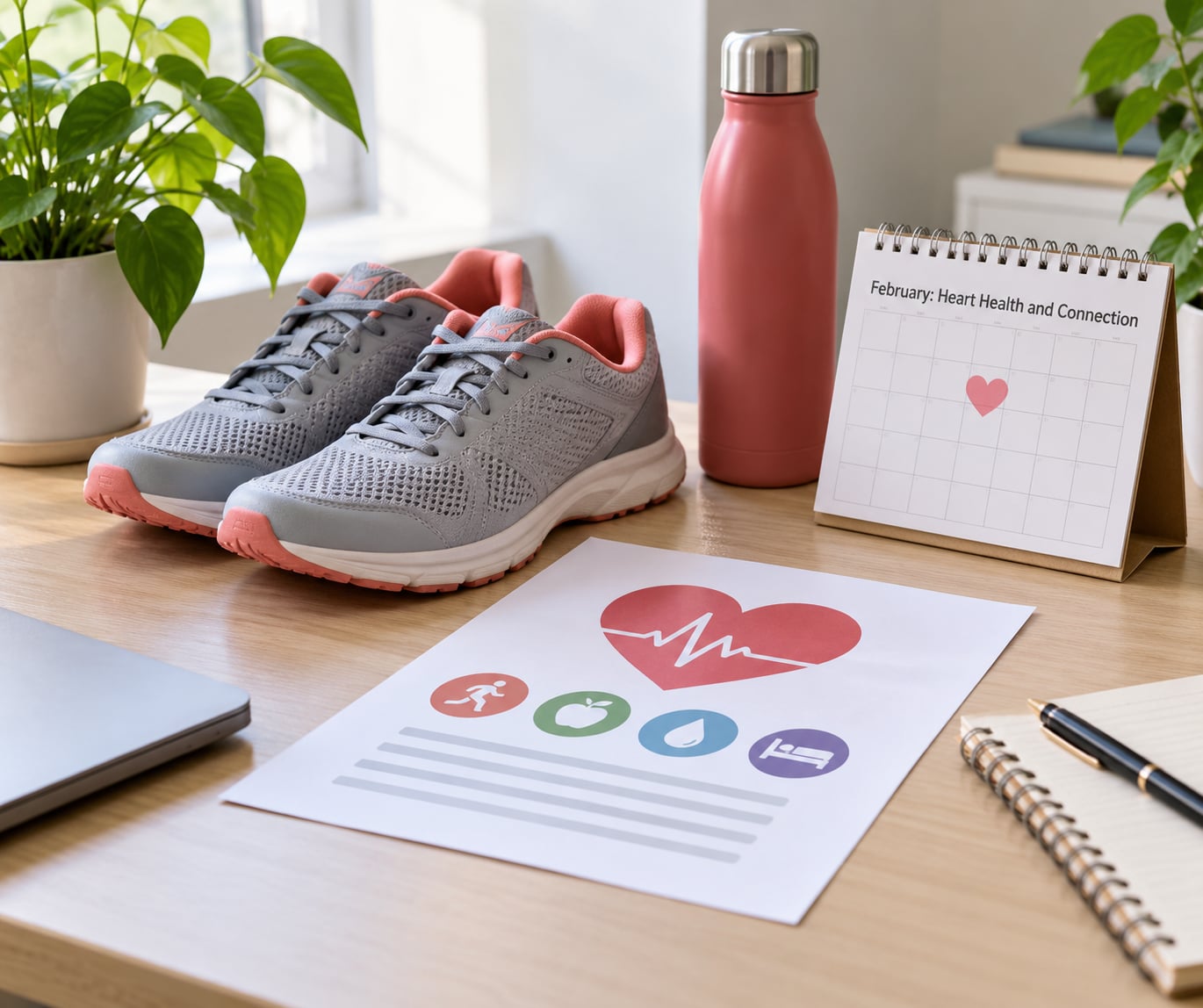
February lines up with American Heart Month in the US, which makes it the easiest theme of the year to explain. Use mainstream public health guidance for any facts you share and keep the emphasis on movement and connection rather than on any individual’s heart.
- Walking meetings. One 20-minute call a week taken outside. Free, and remote-friendly because everyone just joins a call.
- Two-minute reset breaks. A standing invitation at set times, no sign-up, no app. Free.
- Heart-health resource board. Links to your own benefits, plus publicly available guidance from established health bodies.
Inclusivity: walking is one option, not the requirement. Offer a seated movement version and let people take the break at their desk.
Measure: average number of walking meetings held per team per week, collected in one line on a pulse survey.
3. March: Spring Into Movement
Spring movement themes have a habit of turning into step-count competitions, and competitions are where participation drops out. Employees with chronic conditions, disabilities, caring responsibilities or physically demanding jobs tend to skip them entirely, then feel bad about skipping.
- Movement menu, not a race. Offer walking, seated stretching, dancing to one song, gardening, or a five-minute mobility routine. Any one of them counts.
- Stretch breaks at the same time daily. A three-minute calendar invite with three moves. Free.
- Team walk with a route option. A flat loop and a longer loop, both starting from the same point. Free.
Inclusivity: publish the menu in advance so nobody has to reveal a limitation on the day.
Measure: proportion of teams that logged at least one activity during the month. Low-bar and honest.
4. April: Stress Awareness and Resilience
April is a good month for stress because workload conversations usually surface here. Stress Awareness Month in the US gives you a reason to talk about workload that has nothing to do with breathing apps.
- Recovery-break schedule. Each team puts two short breaks on the shared calendar. Free, and it makes taking them normal.
- Workload conversation kit. Short prompts for one-to-ones about priorities, interruptions and handoffs.
- Boundary hour. One evening each week where a team member on rotation handles messages, so others can log off. Low-cost in coverage terms.
Inclusivity: stress shows up differently across roles, and shift workers often cannot use a midday break. Offer an equivalent option inside their shift pattern.
Measure: number of teams with recovery breaks actually scheduled — not announced. Schedules are the honest signal.
5. May: Mental Health Awareness
Mental Health Awareness Month in the US is crowded with corporate campaigns, so the differentiator is subtlety. Education, listening and a clear route to support beat a generic webinar every time.
- Manager listening sessions. A short session on how to hold a conversation when someone raises how they are feeling, and when to refer onward.
- Resource navigation. One page listing your employee assistance programme, community lines and internal contacts, with no sign-up required to read it. Free.
- Quiet hour. One meeting-free hour a week, no cameras, no attendance.
Inclusivity: never make participation or disclosure a condition of anything, and let people use resources without telling their manager.
Measure: resources opened and sessions attended, reported in aggregate. Never per person.
If mental health support is a priority this year, the practical mechanics of building it into an existing programme are covered in implementation science basics for workplace programs.
6. June: Safety and Healthy Workplaces
June is National Safety Month in the US, and it pairs neatly with the summer stretch. Keep one line clear throughout: wellness programming supports safety work, it never replaces a required control or a reporting process.
- Ergonomic self-check. Desk, chair and screen height, with a referral route for anyone who needs an assessment. Free.
- Hazard reporting refresher. Twenty minutes on what to report and how, aimed at new hires and temps.
- Near-miss share. A monthly slot where a reported near miss gets discussed without blame. Free.
Inclusivity: run assessments remotely for home workers, and cover night and weekend crews in their own sessions.
Measure: hazards reported and closed on time. This one has value to leadership beyond wellness reporting.
7. July: Hydration and Summer Wellbeing
July is the month people notice hydration because they feel it in the heat. Guidance is simple general advice — regular fluids, taking breaks, watching for signs of heat strain — and anything individual belongs with a clinician.
- Water-access audit. Check every floor for refill points and note which teams have none. Low-cost to fix.
- Refill reminders. A shared kitchen rota for filling the large bottles. Free, and surprisingly effective.
- Cooling break for outdoor and loading teams. Shade, water and a scheduled break in the heat of the day.
Inclusivity: some people need to limit fluid intake for medical reasons. Frame every activity around access and breaks rather than a hydration target.
Measure: refill points added per site after the audit.
8. August: Sleep and Shift-Work Balance
August is a quiet month, which makes it a good one for sleep education that does not compete with louder campaigns. Persistent sleep problems are a medical matter, and any content should say so plainly.
- Sleep-routine session for rotating shifts. Practical education on light, meal timing, caffeine and protected rest between shifts. Free.
- Dark corridor rule. Agree what the lighting looks like on the way home after a night shift. Free, and crews appreciate it.
- Right to disconnect reminder. A clear statement that rest time is not working time, with manager backing.
Inclusivity: any activity must fit the shift pattern. A lunchtime webinar is useless to a crew working 11pm to 7am, so record it and repeat it at handover.
Measure: sign-ups versus actual attendance. The gap between the two is the useful finding.
9. September: Preventive Health and Routine Care
September includes Healthy Aging Month in the US and gives you space to talk about the appointments people keep postponing. Stay on preventive education — screening, vaccinations, check-ups — and avoid anything that sounds like diagnosis.
- On-site clinic or screening day. Booked through your existing provider arrangements, with privacy handled properly.
- Appointment booking help. A short session on using your health plan and scheduling around shift patterns. Free.
- Reminder card. A single card in the payslip envelope or the monthly newsletter.
Inclusivity: offer the same information in the languages your workforce actually reads, and never require anyone to disclose a condition to take part.
Measure: clinic slots booked, not attendance recorded at the door.
10. October: Financial and Workplace Wellbeing
Is October a wellness month? It is not a standard US wellness observance, but it carries World Mental Health Day on October 10 alongside Financial Literacy Month in October, which is why it works as a combined financial and wellbeing theme. Keep it educational and point people to qualified services.
- Benefits-navigation clinic. A walkthrough of the benefits people have and rarely use. Free.
- Budget basics session. Run by a qualified provider or a nonprofit adviser, not by an internal team improvising. Low-cost.
- Payday wellbeing slot. A standing 20-minute Q&A the week pay lands. Free.
Inclusivity: this topic can be uncomfortable for some staff. Offer it as information, never as an assessment of anyone’s financial position, and allow people to attend anonymously.
Measure: sessions booked and questions asked, counted in aggregate.
11. November: Gratitude, Recognition, and Team Connection
Gratitude months can slide into forced disclosure, which backfires badly. Tie the month to recognition — which employees genuinely value — and keep it voluntary and specific.
- Peer thank-you round. One note a week to a colleague for something they actually did. Free.
- Manager appreciation list. Managers name one contribution from each report each week, in writing.
- Long-service recognition. Milestones acknowledged properly rather than mentioned in passing.
Inclusivity: no memory walls, no required sharing of personal stories. Written notes beat round-robin speaking for many people.
Measure: shout-outs sent and read. If nothing gets read, the format needs work, not the enthusiasm.
12. December: Reflection, Recovery, and Sustainable Habits

December is the month where a calendar proves itself. Year-end workload is often the highest of the year, so the honest goal is not more activity. It is recognising what worked, dropping what did not, and setting up next January without a January crash.
- Year-in-review session. Thirty minutes with one question per month: did this help, and did anyone use it?
- Drop list. Cancel every element with participation under a third of the team.
- January reset. Set up next year’s themes and owners before everyone goes on holiday. Free.
Inclusivity: hold the review once, record it, and share the notes. Not everyone is in the room on the same day.
Measure: themes dropped and owners assigned for next year. A leaner calendar is a better calendar.
How to Choose Monthly Wellness Themes for the Workplace
Choose themes using six filters, in this order. Start with what your workforce survey actually surfaced, then work through working conditions, accessibility, participation barriers, evidence quality and measurability.
- Employee needs. Use your last pulse survey or exit data rather than assumptions. Managers usually guess well; employees are more specific.
- Work conditions. A theme that ignores shift patterns, remote work or a loud warehouse will quietly exclude a third of your people.
- Accessibility. Every theme needs a version that involves no physical exertion and no disclosure of health status.
- Participation barriers. Ask whether competing activities already exist that month. Open enrolment and year-end close are not the time to compete for attention.
- Evidence quality. Prefer content your health bodies and occupational health guidance already support over anything novel and untested.
- Measurability. If you cannot count it, you will not be able to report it, and an unreported programme gets cut in the next budget round.
One principle holds all of this together: monthly themes support the systems you already have. They do not substitute for safety controls, proper leave, manageable workload or clinical care.
Once themes are running, the structured way to judge whether any of them are working is set out in how to evaluate a workplace health intervention in 8 steps.
Frequently Asked Questions
How do I create a workplace wellness calendar?
Start with your last employee survey, pick one wellbeing focus per month, and attach it to a date your workforce already knows, such as an awareness month or a seasonal low point. Give each month one signature activity, one owner and one number you will count. Publish the full year at once so managers can plan around it, then review it in December.
How do I measure employee wellness program engagement?
Count one simple number per month rather than a dashboard: teams completing the activity, clinic slots booked, resources opened, hazards closed on time. Add a three-question pulse survey at the end of each month asking whether the theme was useful and whether it was easy to take part. Report everything in aggregate, never per person.
How do I run wellness activities for employees with disabilities or chronic conditions?
Build a no-exertion version into every theme from the start rather than adding it later. Offer seated or screen-free alternatives, publish the menu of options in advance, and never require anyone to disclose a condition to participate. Keep individual participation data out of any reporting so nobody has to explain a choice.
Will wellness activities create privacy concerns for employees?
They can, mostly when health information is collected or when participation is visible to managers. Report every metric in aggregate, keep health screenings run by your provider with proper consent, and separate EAP and resource access from performance data. If a manager could see who took part, the programme will quietly lose people.
How do I keep a wellness calendar sustainable when engagement drops?
Diagnose before you cancel. Check whether the month competed with a busy period, whether the activity needed physical effort, whether it was announced well, and whether managers mentioned it. Then replace the format rather than the topic, cut anything used by under a third of the team, and drop activities without an owner rather than carrying them on goodwill.
Conclusion
Planning a year of monthly wellness themes comes down to three decisions: one accessible theme, one behaviour goal and one number you will count. Get January right, publish the full calendar so managers can schedule around it, and review it in December. Everything else is detail you can adjust mid-year once the first numbers come in.