
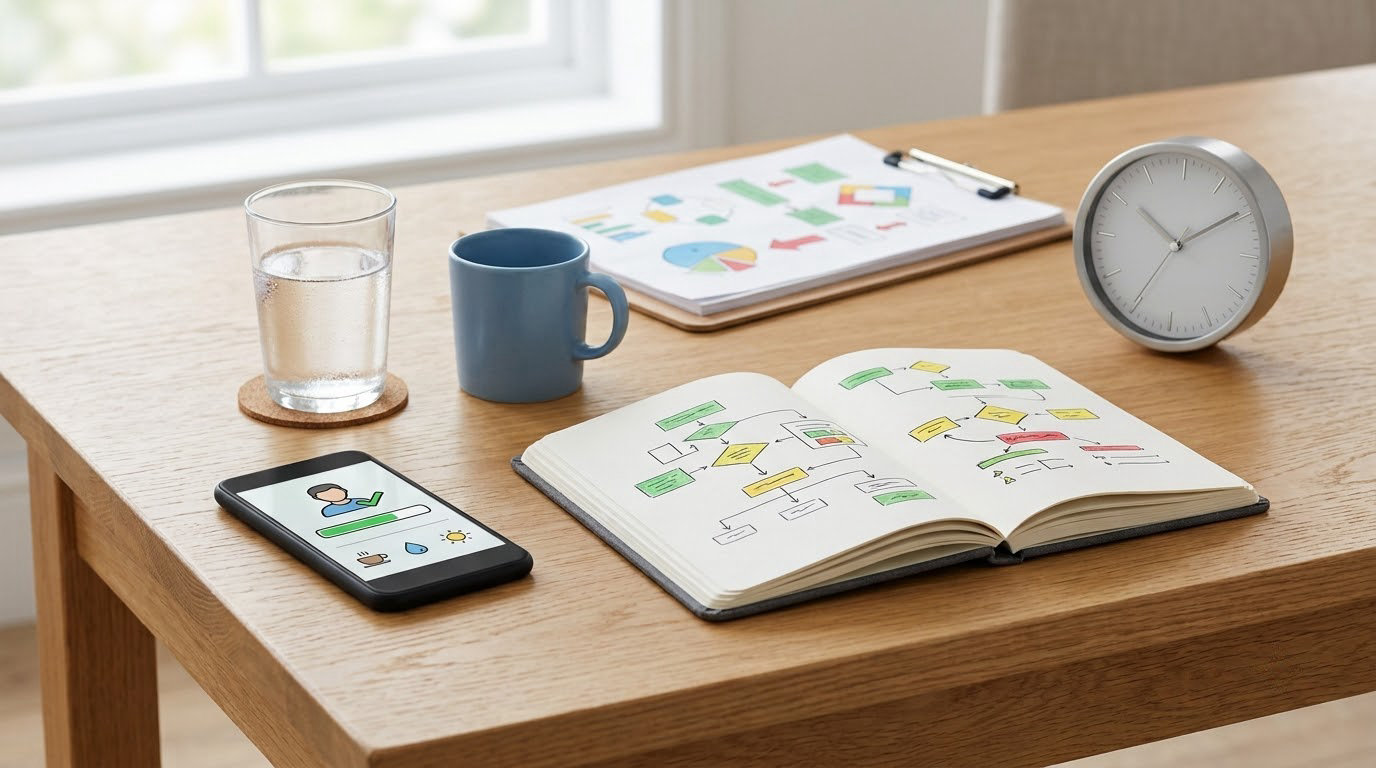
A fatigue risk management program is a documented, auditable set of policies, scheduling rules, training, reporting channels and monitoring that an organization uses to reduce fatigue-related risk on the job. It treats fatigue as a predictable, manageable hazard rather than as an individual failing. This guide walks through the fatigue risk management program basics a safety team needs to build one that fits a real roster.
Table of Contents
- What Is a Fatigue Risk Management Program?
- Why Fatigue Creates Workplace Risk
- Fatigue Risk Management Program Basics at a Glance
- How to Identify Fatigue Hazards at Work
- How to Assess and Prioritize Fatigue Risks
- What Controls Belong in a Fatigue Risk Management Program?
- How to Build the Fatigue Risk Management Process
- How to Train Employees and Supervisors
- How to Monitor and Improve the Program
- Frequently Asked Questions
- Conclusion
What Is a Fatigue Risk Management Program?
A fatigue risk management program is a written, auditable system of policies, scheduling limits, education, fatigue reporting procedures, monitoring and review that an employer uses to reduce fatigue-related risk. It manages the conditions that produce tired work, not the people who show up tired.
The distinction matters. A program that starts with a lecture about personal sleep habits puts the burden on workers to fix a scheduling problem. A program that starts with shift design, staffing and rest rules treats fatigue as the hazard it is.
Inside a typical program you will find a fatigue risk management policy, a fatigue reporting policy, an education and awareness training plan, roster and hours-of-work limits, fitness-for-duty and monitoring arrangements, and a schedule for documenting and auditing all of it.
Three parties usually own it: an executive sponsor who carries accountability, a fatigue management group that includes workers from the shifts affected, and supervisors who act on what they see. Union participation matters when a collective agreement covers hours of work, because rest limits that are ignored on the floor are not controls.
One boundary is worth stating plainly. A fatigue risk management program manages workplace exposure. Diagnosing or treating sleep apnea, insomnia, depression or another medical condition is clinical work, and it belongs with a qualified clinician, not with a safety program.
Why Fatigue Creates Workplace Risk
Tired workers slow down in ways supervisors often miss. Reaction time lengthens, scanning of the work area narrows, judgment about what can safely be deferred degrades, and communication gets shorter and blunter. None of that looks like an emergency from the outside, which is why it keeps producing incidents.
Is fatigue a safety hazard?
Yes, and the impairment numbers are unusually clear. Dawson and Reid’s work published in Nature compared performance after sustained wakefulness with performance after alcohol, and found that 17 hours awake performed about like a blood alcohol concentration of 0.05, 21 hours about like 0.08, and 24 to 25 hours about like 0.10. Injury rates on night and evening shifts run higher than on day shifts for the same work, largely because of exactly this kind of impairment.
What are the 5 P’s of fatigue?
Definitions vary a little between sources, but the version most fatigue management training uses is: Persistent, Permanent, Predominant, Precipitating and Preventable. Some sources list Present or Prolonged in place of one of those, so check the source your staff materials come from before you print an acronym on a poster.
Where the risk comes from
The main drivers are short or broken sleep, extended hours, night work, consecutive night shifts, rotating rosters that flip workers between day and night without enough recovery time, unplanned overtime, long commutes, and physically demanding work that leaves nothing left over for recovery. Cumulative sleep debt is the quiet one: five nights of six-hour sleep is a deficit that a weekend does not fully clear, and workers often do not notice the gap between how they feel and how they are performing.
Fatigue Risk Management Program Basics at a Glance
Every fatigue risk management program runs the same cycle whether it sits in a rail operator, a hospital or a building contractor. The components differ by sector; the loop does not.
- Identify hazards. Find where fatigue risk enters the operation through rosters, workload, travel and work design.
- Assess risk. Rank those hazards by likelihood and consequence.
- Implement controls. Set rest limits, staffing levels, breaks, task rotation and countermeasures for the highest exposures.
- Communicate requirements. Publish the limits, train everyone on them, and explain what happens when a limit cannot be met.
- Monitor conditions. Watch the roster data and check fatigue levels with supervisors and validated instruments.
- Investigate concerns. Review fatigue-related events, near misses and reports without blame.
- Improve the program. Audit on a fixed cycle and after any incident, staffing change or shift pattern change.
Regulated sectors tend to spell the same six components out in their own language. The table below maps them.
| Component | What it covers | Who owns it | Audit evidence |
|---|---|---|---|
| Fatigue risk management policy | Scope, accountability, statement of intent | Executive sponsor | Signed policy, current revision date |
| Fatigue reporting policy | How workers report fatigue, confidentiality, response | Fatigue management group | Reporting form, annual report volume |
| Education and awareness training | Sleep basics, recognition, personal strategies | Training lead | Curriculum, completion records |
| Rosters, scheduling and rest limits | Shift length, consecutive shifts, minimum rest, overtime | Operations manager | Roster rules, schedule variance logs |
| Fitness for duty and monitoring | Fitness checks, self-reporting, validated survey instruments | Occupational health | Survey results, fitness assessment records |
| Documentation, records, audit and review | Records retention, scheduled audit cycle, corrective actions | Program manager | Audit report, corrective action log |
Aviation names four of these directly in 14 CFR 121.495: a fatigue risk management policy, an education and awareness training program, a fatigue reporting policy, and fatigue monitoring. Australian transport training calls the set six basic fatigue management standards: rosters and schedules, fitness for duty, knowledge and awareness, duties and responsibilities of operators, documentation and records, and review and audit. Same structure, different labels.
How to Identify Fatigue Hazards at Work
You cannot control fatigue risk you have not written down. Start by pulling three months of actual rosters and looking at them, not at the intended schedule.
Schedule patterns. Count shift length, number of consecutive night shifts, consecutive working days without a break, and how quickly rosters flip from nights back to days. A worker who finishes nights on Sunday and starts days on Monday gets no recovery time at all, and that pattern is easy to miss in a spreadsheet summary.
Overtime and unplanned extensions. Track how often shifts run past the rostered finish, who absorbs them, and whether they cluster on the same small group. Voluntary overtime is often taken by the people least able to absorb it.
Staffing and break coverage. A 12-hour roster with two breaks scheduled is a 10-hour shift in practice if nobody can leave the unit. Break coverage is the most commonly broken control in a new program.
Travel and commuting. Long commutes after extended shifts put tired workers on the road. Consider both the commute to a distant site and the drive home after a night shift.
Environment and workload. Night work in the circadian low window, roughly 3 a.m. to 5 a.m., combines sleep pressure with the body temperature dip and produces the deepest performance drop of the day. Hot, cold, noisy, dusty or high-consequence work adds physical load on top of an already depleted system.
Work practices. Solo work with no second person to catch an error, unsupervised tasks, handoffs at peak fatigue times, and repetitive monitoring tasks where vigilance has to be maintained for hours are all hazard patterns rather than individual failings.
How to Assess and Prioritize Fatigue Risks
Score each hazard you found on two axes: how likely the exposure is to occur, and how bad the outcome would be if it did. Multiply them and work down the list. A four-night block in a low-consequence warehouse role and a four-night block driving a loaded truck both score as moderate likelihood, but they should not sit in the same priority band.
Three questions help you separate real controls from paperwork controls:
- Does this reduce the exposure, or does it just record that the exposure happened?
- Can the person on shift actually follow it at 4 a.m. with two staff missing?
- Who checks, and how would an auditor see the evidence?
Bring in qualified support at this stage rather than at the end. An occupational health professional can advise on fitness-for-duty processes and medical confidentiality, a safety professional on control selection, legal counsel on recordkeeping and disability interactions, and a clinician where health data is involved. Requirements vary by country and state, and rules for hours of work may sit in a collective agreement rather than in statute.
What Controls Belong in a Fatigue Risk Management Program?
Controls fall into three groups, and a program only works when all three are present. Monitoring without prevention produces data and no safety; response without monitoring catches the last hour of a bad shift.
Prevention controls
Prevention changes the conditions. Set maximum shift length, a maximum number of consecutive night shifts, a minimum rest period between shifts, and limits on quick roster flips. Plan rosters with enough overlap so breaks can actually be taken, and staff for the roster rather than for the budget. Rotate high-demand tasks with lower-demand ones on long shifts. Where night work is unavoidable, keep night rosters stable instead of rotating workers through nights constantly.
Monitoring controls
Monitoring tells you whether prevention is holding. Supervisors note observable signs during shifts, workers self-report through a no-blame channel, and short validated surveys track trends. Data without a response plan is decoration, so decide in advance what a result triggers: a roster review, a staffing change, a conversation with the worker, or an occupational health referral.
Response controls
Response controls decide what happens at 3 a.m. when someone is struggling. Define a clear procedure for a worker to call in unfit, a rule that relief coverage is arranged before the shift starts, and an escalation path for tasks that must not stop. Define what happens after a fatigue-related event, including how the investigation treats the reporting worker.
Countermeasures fit inside these groups. Controlled on-duty naps work best when kept short, because sleep inertia means the first minutes after waking are worse than before, so allow 20 to 30 minutes plus a buffer. Caffeine is a short-lived masker with a half-life of roughly five hours and should never be the plan on its own. Sleep hygiene advice, blackout curtains, cool dark rooms, consistent wake times and bright light exposure on night shifts all help, and so does eating and hydrating properly rather than living on caffeine and vending-machine food. A last caffeine dose about two hours before the end of a night shift is usually a better use of it than one at the start.
Fatigue is not the only hazard in this picture, and countermeasures are not a substitute for schedule design. Where fatigue is the driving cause of an incident, treat the roster as the primary cause and the nap policy as the backup.
How to Build the Fatigue Risk Management Process
Here is the sequence that tends to work, roughly as a 30, 60 and 90 day build.
Days 1 to 30: ownership, evidence and consultation
Name a program manager and a fatigue management group that includes workers from the shifts you are trying to change. Collect three months of roster data, run a confidential pulse survey, and map the hazards. Draft the policy and the rest limits, and circulate them for comment before you finalize. Inviting critique now is far cheaper than defending a finished policy later.
Days 31 to 60: controls, procedures and training
Set the roster limits, write the fatigue reporting procedure and the fitness-for-duty process, build the training modules for workers and for supervisors, and confirm break coverage with the people who staff it. Publish the schedule deviation procedure so supervisors know exactly what to do when a limit cannot be met on a busy night.
Days 61 to 90: run it, measure it, fix it
Start the reporting channel, run the first supervisor observation round, schedule the first monitoring survey, and hold the first fatigue management group meeting. Review what people actually did in the first quarter, correct what did not work, and put the audit date in the calendar with a named owner.
Common failure modes are worth naming now, because they are predictable. Mandating shorter shifts without giving staff a say in the roster can leave people feeling managed out of their own work. Training with no schedule change produces informed, exhausted employees. A reporting channel that traces back to the person who filed it shuts down in weeks. Monitoring that produces a number but no decision never produces a second cycle.
How to Train Employees and Supervisors
Worker training should cover what fatigue is, why circadian rhythm and sleep debt work the way they do, the common risk factors in your own operation, how to recognize fatigue in yourself and in a colleague, how to use the reporting channel, what happens after a report is filed, and a handful of practical sleep strategies that fit real life rather than an ideal life.
Supervisors need more. They need the observable signs to watch for: repeated yawning, rubbing of the eyes, difficulty focusing, dropped or repeated details, missing steps in a familiar routine, uncharacteristically short or irritable speech, and reluctance to take a break. They need practice in how to start a conversation, how to handle pushback, and the rule that a report ends with relief arranged rather than with an argument.
Say clearly who does not need to know. Workers should be told what the reporting channel guarantees about confidentiality, in writing, because trust in that promise is what determines whether anyone uses it.
How to Monitor and Improve the Program
Track leading indicators that tell you about exposure before something goes wrong: schedule deviations from rest limits, frequency of consecutive night blocks, overtime hours per person, break cancellation events, survey scores, training completion rates, reporting volume, and supervisor observations. Lagging indicators tell you about outcomes: near misses, fatigue-related events, injury rates on night shifts compared with day shifts, and vehicle or equipment incidents that cluster at particular hours.
For measurement, the Karolinska Sleepiness Scale is the most commonly used operational instrument because it is a single question and scores quickly. The Epworth Sleepiness Scale is the best-known validated self-report questionnaire for chronic sleepiness and is useful for trend tracking. The Stanford Sleepiness Scale, the Multidimensional Fatigue Inventory, PROMIS Fatigue, the Occupational Fatigue and Error Risk scale and the Brief Fatigue Inventory cover similar ground with different depth, so pick one and use it consistently rather than switching.
Run short surveys on a fixed cadence, quarterly is a common choice, and keep them confidential and anonymous so the results describe the roster rather than the person. Never use survey results to single anyone out, and never let a score become a performance record.
Review the program after any fatigue-related incident, after a change in shift patterns, staffing levels, contracts or operations, and on the scheduled audit cycle. On each review ask three questions: which exposures grew since last time, which controls were bypassed and why, and what single change would reduce the highest risk next. Fatigue risk management programs that get audited but not revised tend to drift back to where they started.
Frequently Asked Questions
Does OSHA have a fatigue standard?
No single standalone fatigue standard exists. OSHA addresses fatigue indirectly through the General Duty Clause, Section 5(a)(1), and through hazard awareness and personal protective equipment provisions that recognize extended or unusual shifts under 29 CFR 1910.132(d). Some states and some sectors have their own requirements. Check your state plan and your industry before assuming no rule applies to you.
Which industries need a fatigue risk management program?
Any operation where extended hours, night work or long periods of monotonous vigilance change what people can safely do. That includes trucking and freight, aviation, rail transit, maritime and offshore, mining, construction, warehousing, utilities, call centres, hospitals, EMS, and police and fire services. Regulated sectors have written requirements; unregulated ones still carry a general duty of care.
What should a fatigue risk management program template include?
A workable template covers eight things: the fatigue risk management policy, a fatigue reporting policy, the education and awareness training outline, roster rules for shift length, consecutive shifts and minimum rest, fitness-for-duty and monitoring arrangements, break coverage commitments, an incident and near-miss review process, and a scheduled audit with corrective action tracking. Write down who owns each one.
How do you measure fatigue in the workplace?
Use a short validated instrument on a fixed cadence, usually quarterly, plus supervisor observation and self-reporting. The Karolinska Sleepiness Scale is the most widely used in operational programs because it takes seconds to answer; the Epworth Sleepiness Scale tracks chronic sleepiness over time. Decide what each result triggers before you start collecting data.
Will workers really report fatigue?
Only if reporting is safe and something happens afterwards. Guarantee confidentiality in writing, never trace a report back to the person who filed it, and always arrange relief rather than a debrief that feels like an investigation. Reporting volume starting at zero usually means the channel is not trusted, not that the problem is absent.
How often should we review a fatigue risk management program?
On a fixed audit cycle at least annually, and immediately after a fatigue-related event, a near miss, or any change to shift patterns, staffing, contracts or operations. Reviews should end in a corrective action with a named owner and a date. An audit that produces no change is documentation, not risk management.
Conclusion
Start with the roster data, not the policy document. Pull three months of actual schedules, find the shifts and rosters that produce the most exposure, and rank them by likelihood and consequence. Name one person who owns the program and one fatigue management group that includes workers from those shifts. Then set two rest limits you can actually enforce this quarter, publish a reporting channel with a written confidentiality promise, and put the first review date in the calendar now, before 2026 gets busy.