
Learning how to accommodate workers with disabilities at work comes down to four moves: respond quickly, ask what actually gets in the way, try an adjustment, and check whether it worked. The legal part is simpler than most managers fear. Under the Americans with Disabilities Act (ADA), accommodation is a shared conversation, not a favor, and most adjustments cost nothing at all.
A workable process usually takes two to four weeks from first request to a documented decision. If you are a manager, an HR generalist, or an owner running a small team, that is the whole job: run the conversation, keep the record, adjust the work.
Table of Contents
- What You Need
- Step-by-Step: How to Accommodate Workers With Disabilities at Work
- Recognize the Request and Respond Promptly
- Meet the Worker Privately: How to Accommodate Workers With Disabilities at Work
- Identify the Functional Barrier
- Explore Multiple Accommodation Options
- Choose an Effective and Sustainable Solution
- Document the Decision and the Interactive Process
- Implement, Communicate, and Review the Accommodation
- Common Mistakes
- Frequently Asked Questions
- Do U.S. employers have to accommodate workers with disabilities?
- What medical documentation can an employer ask for?
- Can an employer fire someone for requesting an ADA accommodation?
- Is working from home a required accommodation?
- Who pays for a reasonable accommodation?
- What if the first accommodation does not work?
- Conclusion
What You Need
You need a written list of the job’s essential functions, a named point of contact for requests, and a private place to meet. That is the baseline. Everything else can be figured out during the conversation.
- The essential functions of the job. A current job description that separates core duties from preferences. You cannot decide what to accommodate until you know what the role actually requires.
- The request, in whatever form it arrived. An email, a doctor’s note left during a meeting, a comment about a noisy break room, or an existing accommodation for a past injury. Requests rarely use the word “accommodation.”
- Existing policies and resources. Your leave policy, remote work policy, IT asset process, ergonomic assessment program, and any state or local accommodation rules your handbook already covers.
- A point person. One HR contact or office manager who handles these requests so employees know where to start.
- Primary guidance. The EEOC’s ADA materials, ADA.gov, and the Job Accommodation Network (JAN), which offers free consulting to employers on individual accommodation questions.
One thing you do not need is a diagnosis. Employers are not supposed to diagnose anyone, and asking for the disease name is generally not permitted. Bring the question to a qualified employment attorney or an accessibility specialist when the facts are unusual or the stakes are high. This guide covers federal requirements in general terms; requirements vary by employer size, job, location, and the specific facts.
Step-by-Step: How to Accommodate Workers With Disabilities at Work

Recognize the Request and Respond Promptly
A request is any statement that asks for a change because something is getting in the way of the work. It does not have to name a disability, and it does not have to arrive in writing.
Common openings I see: “The open office is making my migraines worse, can I move my desk,” or “I may need a few extra breaks on warehouse days.” Someone who used a sit-stand desk after a back injury and then flares up months later is also making a request.
Acknowledge within a few days, even if you do not have an answer yet. Silence is the single complaint employees repeat most often, and it is easy to fix.
A workable reply: “Thanks for telling me. I’d like to set up a conversation this week to understand what’s getting in the way and go through some options together. In the meantime, nothing about your role needs to change.” Then start the interactive process.
Meet the Worker Privately: How to Accommodate Workers With Disabilities at Work
Hold the meeting somewhere private and away from the rest of the team. Two people in a small office or a reserved room beats a conversation in a hallway.
Ask about the work, not the body. Useful questions include which tasks are hardest right now, whether certain meetings or time of day are a problem, what happened the last time a task went sideways, and whether anything about the current setup gets in the way. Asking “the whats and whens, not the whys” keeps the conversation productive and lawful.
Let the worker lead on solutions. They have lived with the barrier longer than anyone in the building.
Identify the Functional Barrier
Translate a limitation into an observable work requirement, without making medical judgments. The barrier is a task the person cannot perform or cannot perform reliably right now, not a condition.
- “Cannot stand for more than 20 minutes” becomes “the retail counter role requires continuous standing for four-hour shifts.”
- “Gets foggy after long meetings” becomes “the role includes three two-hour planning sessions a week.”
- “Cannot hear clearly on the phone” becomes “customer calls in a shared space with background noise.”
- “Loses track of steps in a multi-stage software flow” becomes “the role requires navigating nested menus under deadline.”
Write that sentence down. It becomes the test for every option you discuss next.
Explore Multiple Accommodation Options
Bring a menu, not one solution. Offer several adjustments and let the worker pick or combine them.
- Schedule. Shifted start and end times, part-time hours, extra rest breaks, a modified shift, or split duties.
- Location. Remote or hybrid work, working from a quieter space, avoiding a commute window that is medically difficult.
- Process and task. Job carving, meaning removing or reassigning marginal duties that are not essential functions, and job sharing where two people split a role.
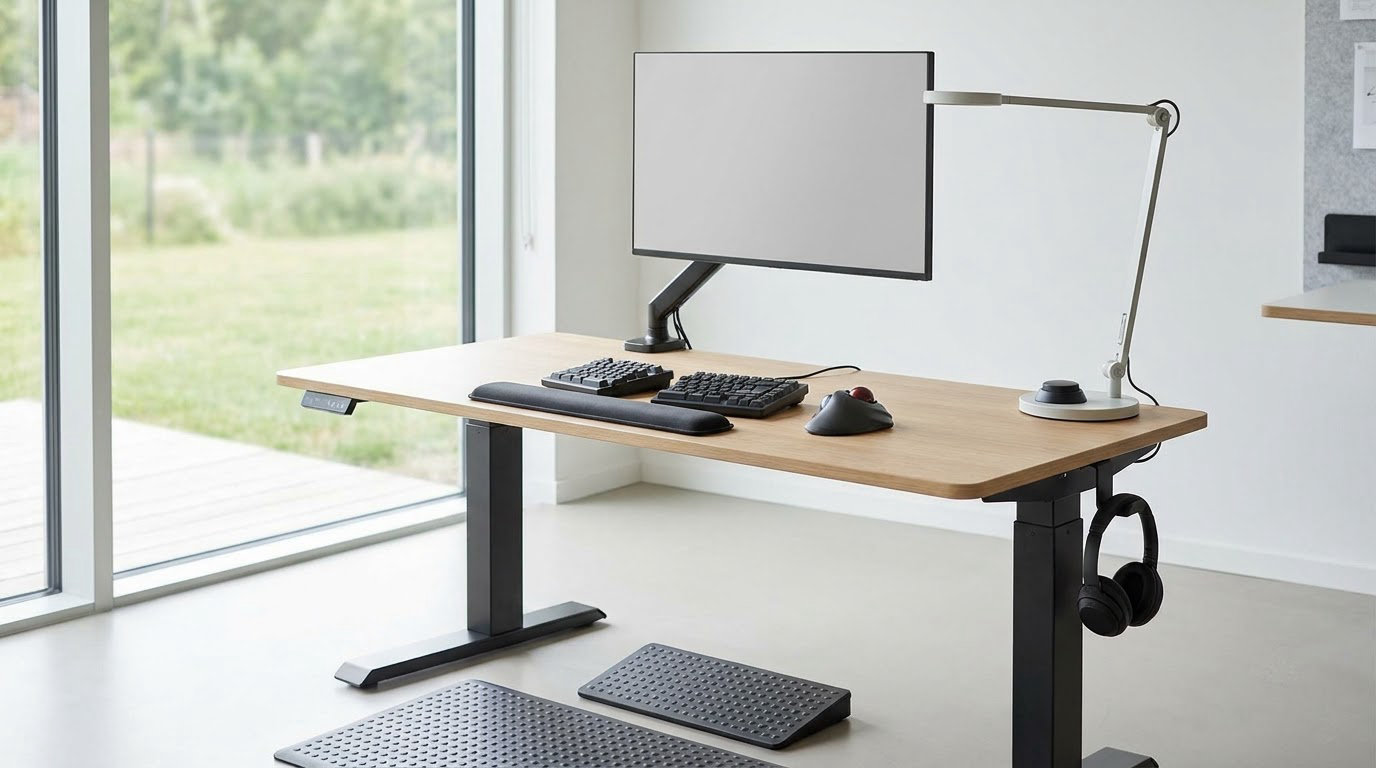
- Equipment and technology. Ergonomic furniture, an adapted keyboard or mouse, a screen reader, a screen magnifier, an assistive listening device, captioning on internal video, a hearing loop in a meeting room.
- Communication. Written follow-up after spoken instructions, agendas sent ahead of time, a sign language interpreter for meetings, plain text versions of documents.
- Environment. Relocating a workstation near a door, better lighting for photosensitivity, noise-reducing headsets, an accessible restroom or parking spot.
Work from home deserves its own note because it is heavily searched and often mishandled. Remote work can be a required reasonable accommodation, not a manager’s personal favor, if it lets the person perform the essential functions and the employer is not facing significant difficulty or expense. Deciding it is a “temporary privilege” you can withdraw later puts the employer at risk.
Choose an Effective and Sustainable Solution
Test the option against the barrier sentence you wrote. If it does not remove the barrier, it is not an accommodation, however well intentioned it sounds.
Then check the three limits: can the person still perform the essential functions, is it operationally workable for the team, and does the cost rise to undue hardship? Under EEOC guidance, undue hardship means significant difficulty or expense, and the analysis weighs factors such as nature and cost of the accommodation, the overall financial resources of the facility, and how the change affects other workers.
For perspective, a JAN survey of 781 employers found that 59 percent of accommodations cost nothing, and the median cost among the ones that did carry a cost was about five hundred dollars. Most “we can’t afford this” reactions are about an unexamined assumption rather than a number.
Pilot it when you can. A two-week trial, a check-in at day 10, and a written note that the first try may not be the right one removes most of the friction for everyone.
Document the Decision and the Interactive Process
Write it down while it is fresh. A short dated record protects the employee and the employer.
- The date, the request, and the functional barrier in plain language.
- The options considered and the employee’s preference.
- The accommodation selected, who pays for it, and the expected duration.
- A review date, and what happens if it stops working.
- Any confidentiality limits, including who inside the company needs to know.
Keep all medical information in a separate confidential medical file, never in the personnel file. Share only what a supervisor needs to know, which is usually the adjustment itself, not the underlying condition. Note that if the employee is the one who disclosed a medical condition directly to a manager, you may need to document that disclosure carefully rather than assume it was confidential.
Implement, Communicate, and Review the Accommodation
Explain the change to the employee first, in plain terms, and confirm they can do the job with it. Then tell the managers who need to know, giving them the adjustment and nothing about the diagnosis.
Fix the logistics fast. A sit-stand desk that takes six weeks to arrive is a broken accommodation, and equipment that has not been tested with the user’s actual software often does not work.
Set a follow-up date 30 days out. Ask whether it removed the barrier, whether anything new came up, and whether anything is now interfering with coworkers. If it is not working, go back to the menu. Iterating is the normal path, not a sign that someone failed.
Common Mistakes
Almost every complaint I have seen traces back to one of these six.
- Assuming the person is not eligible. The fix: run the conversation anyway. Eligibility questions come after you know the functional barrier, not before.
- Asking for more medical detail than needed. The fix: ask what limitation affects work and what adjustment would help. Do not ask for the diagnosis, the treatment, or the full medical record. If documentation is needed, keep the request narrow and tell the employee why.
- Promising a solution before discussing options. The fix: say you will explore several possibilities and come back with a recommendation by a specific date.
- Treating the accommodation as a temporary favor. The fix: describe it as an adjustment to the role, with a review date rather than an expiration date.
- Leaving managers untrained. The fix: a one-page intake process with a clear rule that any request goes to HR the same day, plus a short script managers can use.
- Skipping documentation and the review. The fix: a dated one-page record for every request, and a scheduled check-in before anything lapses.
Three habits prevent most of it. Give every request a same-week acknowledgment. Keep the written record. Say out loud, early, that the first attempt might not be the right one, so nobody experiences iteration as punishment.
Two more prevent the perception problem that drives people to hide their conditions: use person-first language, and keep the medical detail out of the room. Say “a person who uses a wheelchair,” not “wheelchair-bound,” and describe the adjustment rather than the condition when you brief the team.
Frequently Asked Questions
Do U.S. employers have to accommodate workers with disabilities?
Covered U.S. employers generally must provide a reasonable accommodation to a qualified individual with a disability, which means a modification to the job, the application process, or the work environment that lets the person perform the essential functions. The obligation applies whether or not the employee uses the word accommodation when they ask. Federal requirements vary by employer size, job, location, and facts, and state law may add more, so confirm the specifics with a qualified attorney or HR specialist.
What medical documentation can an employer ask for?
You may ask for documentation reasonably sufficient to establish that the employee has a disability and needs an accommodation, and you should say why each item is needed. You may not ask for a diagnosis you do not need, the full treatment history, a blanket release of all records, or medical information about a family member. Requests should go to HR, be limited in scope, and be kept in a separate confidential medical file rather than the personnel file.
Can an employer fire someone for requesting an ADA accommodation?
No. Requesting or using a reasonable accommodation is protected activity, and an employer cannot retaliate against someone for asking, for needing one, or for using one. The protection applies as long as the employee is qualified and can perform the essential functions with or without accommodation. Poor performance caused by an unaccommodated medical condition can still be addressed, which is exactly why documenting the request, the options discussed, and the outcome matters for both sides.
Is working from home a required accommodation?
Sometimes, yes. Remote or hybrid work can be a required reasonable accommodation when it lets the person perform the essential functions and the employer would not face significant difficulty or expense. What matters is the functional test and the undue hardship analysis, not whether a manager finds remote work convenient. If an in-office role has a genuine business reason that cannot be met another way, document that reasoning carefully and consider alternatives such as remote days on a trial basis.
Who pays for a reasonable accommodation?
Under the ADA, the employer pays for the accommodation unless it creates an undue hardship, and the employer does not get to charge the employee or deduct costs from pay. Absent undue hardship, that can cover equipment, assistive technology, workspace modifications, and interpreters. A JAN survey of 781 employers found 59 percent of accommodations cost nothing, with a median cost of roughly five hundred dollars where there was any cost at all.
What if the first accommodation does not work?
Go back to the interactive process rather than treating the failed attempt as a closed case. Tell the employee early that trying more than one thing is expected, review what the barrier was and whether the adjustment actually addressed it, and try a different option. Keep a written record of each attempt and the outcome. If several reasonable attempts have not worked, the situation needs a careful review with HR or counsel rather than an informal decision to stop.
Conclusion
If you take one thing from this guide: respond to the request within a few days and start the interactive process. Ask what gets in the way, write the barrier in one sentence, offer a menu of adjustments instead of a single idea, and give it a trial period. Then document the decision, keep the medical detail out of the personnel file, and check back at 30 days to see whether the work is actually easier now.
Most accommodations cost nothing, and the process takes a few weeks of ordinary management attention. Requirements differ by employer size, job, and location, so bring in HR or a qualified attorney when the facts are not straightforward. This guide was reviewed for accuracy in 2026 and is general information, not legal advice.