
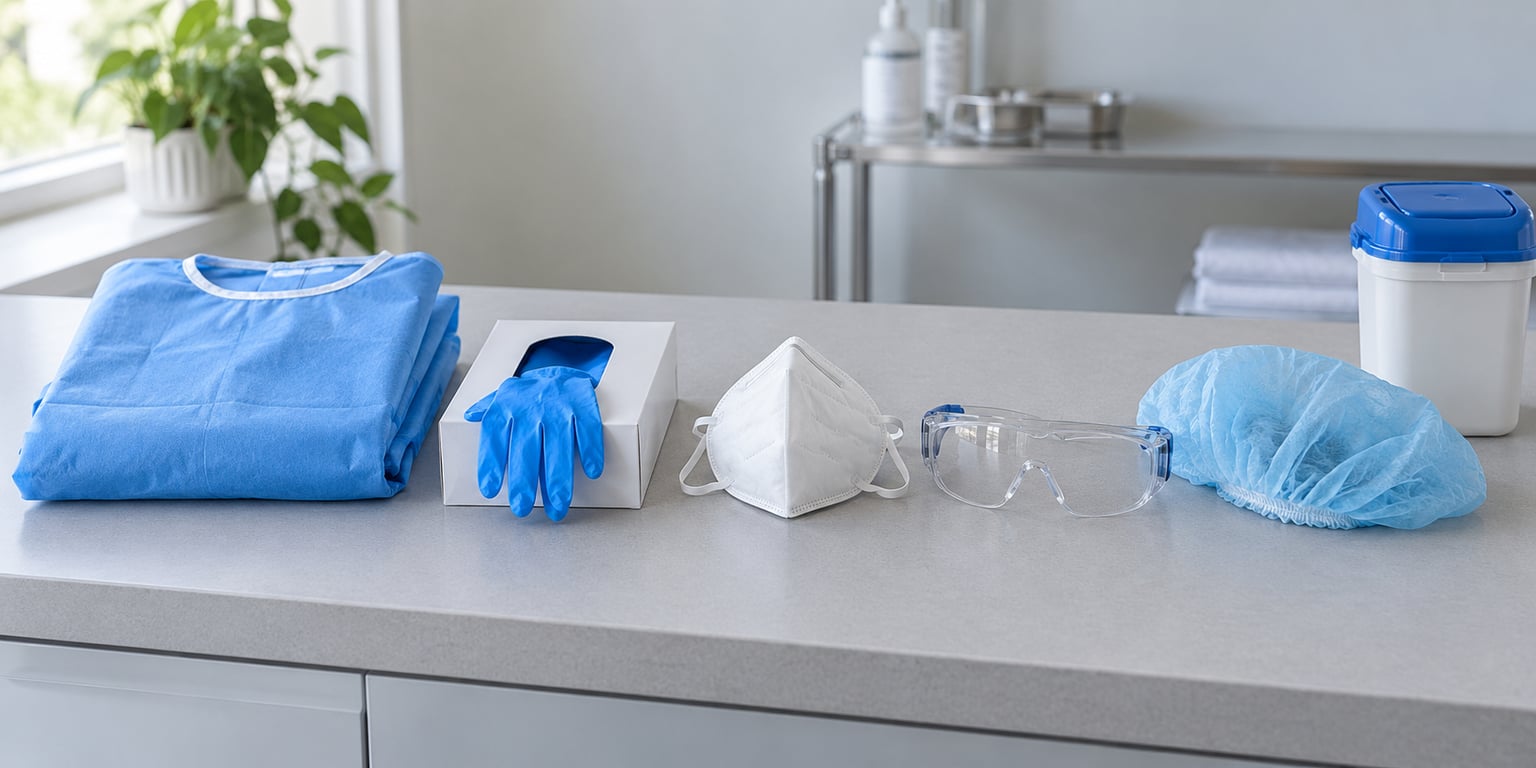
Putting on (donning) and taking off (doffing) personal protective equipment correctly means following one fixed order: gloves go on last and come off first, and the mask or respirator comes off last. CDC publishes that sequence because most self-contamination happens during removal, not while the gear is on. For a high-isolation room, a full donning and doffing cycle typically runs 20 to 25 minutes, and rushing any part of it undoes the protection.
The steps below follow CDC guidance for healthcare work and adapt it for industrial coveralls, chemical suits and home care. If your employer has a written procedure, that procedure wins — this page is here to help you read it, spot gaps, and catch the mistakes that get people exposed.
Table of Contents
What You Need
Before you touch any equipment, your workplace should have six things in place. If one is missing, that is a conversation with your supervisor, not something to improvise around.
- The hazard assessment or task-specific risk assessment for the job you are about to do. This is what tells you which PPE applies rather than which one you remember from last shift.
- The employer-approved donning and doffing procedure, written, posted near the donning area, and specific to your setting.
- Training on your specific equipment, including the manufacturer instructions for any respirator, coverall or reusable garment.
- A clean, designated donning and doffing area, arranged so you never walk back through the contaminated zone in your clean gear. One-way flow is the goal.
- Hand hygiene supplies — a sink with soap and water or an alcohol-based hand rub, stocked and working at both ends of the sequence.
- A leak-proof infectious waste or disposal container, lined and within reach of the doffing area so nothing contaminated touches a floor or a cart.
On an industrial job you also need the cartridge or filter change-out schedule, the manufacturer doffing instructions for your suit, and in many cases a partner whose only job is to help you out of the garment. OSHA 29 CFR 1910.132 requires that employers train employees on PPE use, including how to put it on and take it off, and that the training be documented.
How to Put On and Take Off PPE Correctly: Step-by-Step
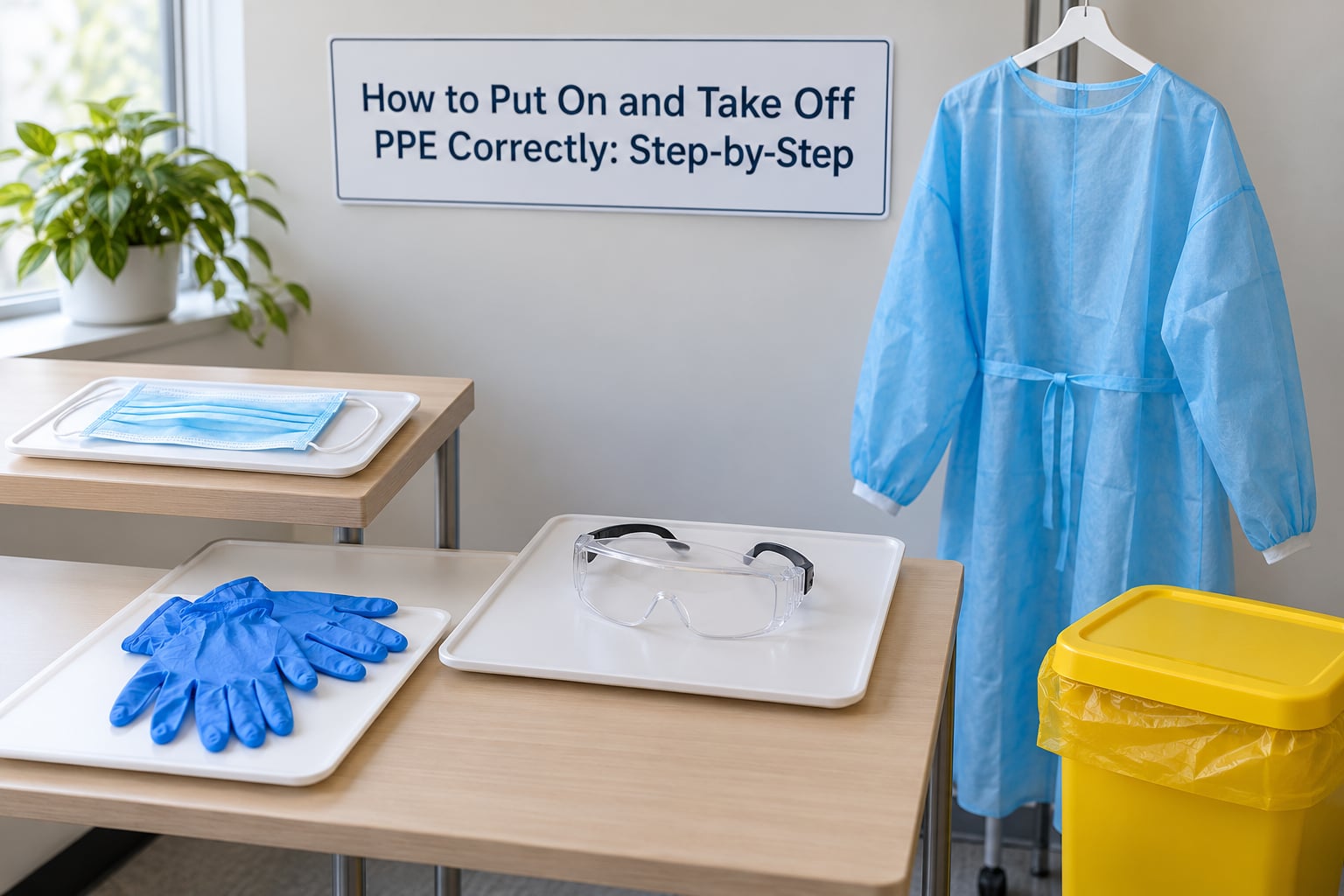
The rule behind the whole sequence is simple: donning runs from clean to dirty, doffing reverses it, and the most contaminated item — gloves — is always handled first on removal and last on putting on. Here is the order at a glance.
| PPE item | Put it on | Take it off | Why that position |
|---|---|---|---|
| Isolation gown or coverall | First | Middle | Wraps the body and blocks fluid contact |
| Hair cover | Second | After the gown | Sits close to the body, stays clean longer |
| Mask or respirator | Third | Last | Protects the airway from the very end of the task |
| Goggles or face shield | Fourth | After the gown | Removed before the mask so you are not reaching over it |
| Shoe covers | Fifth | With the gown | Disposable, handled away from clean flooring |
| Gloves | Last | First | Seals over the gown cuffs, so they are the dirtiest surface |
Prepare Before You Put On PPE
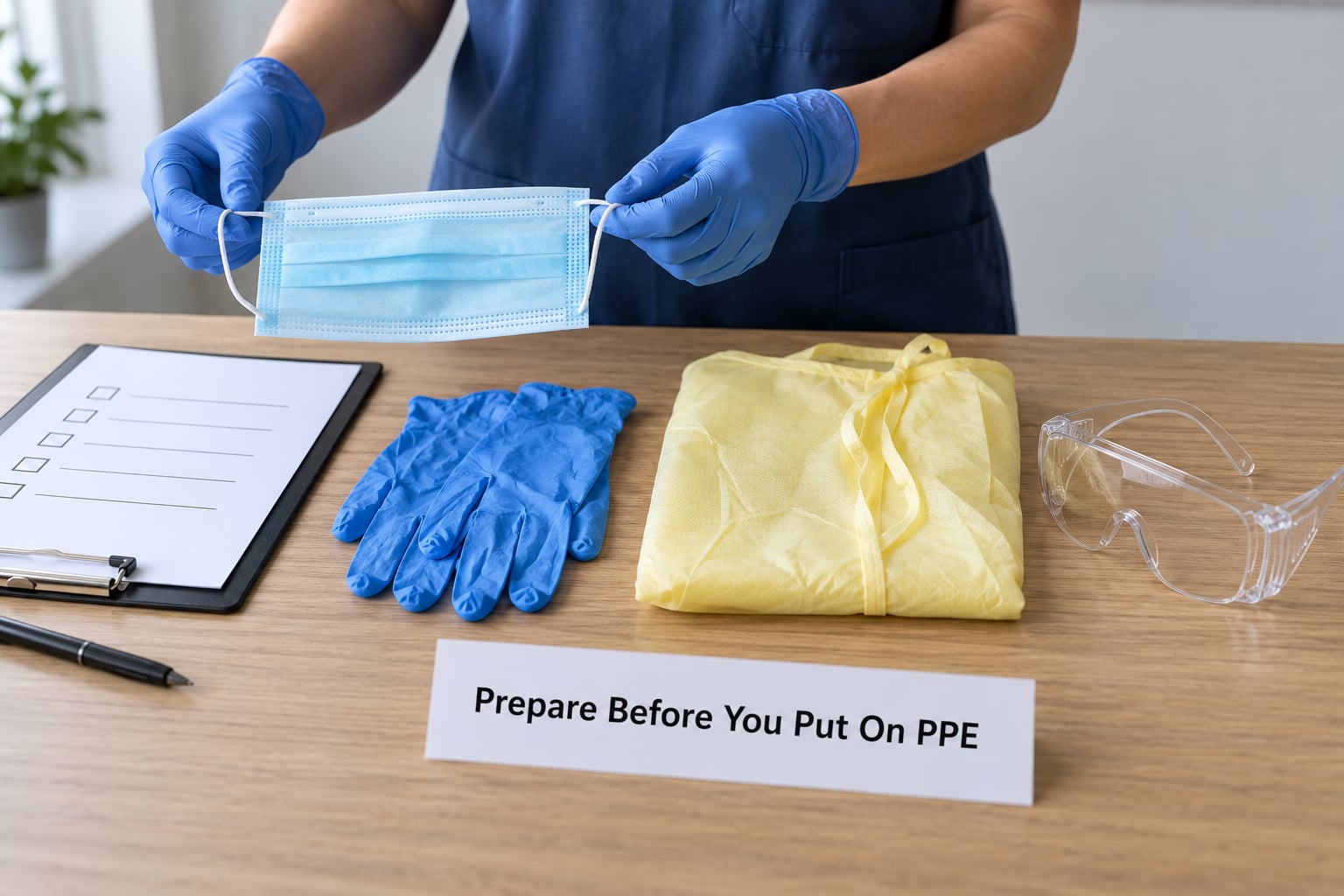
Most of how to put on and take off PPE correctly is decided before the first item goes on. Read the task, confirm the hazard assessment covers it, and pull exactly the PPE specified there.
Inspect every piece while it is still in the packaging. Look for tears, pinholes, degraded elastic, cracked lenses, a broken strap or a filter cartridge past its service life. Anything damaged goes in the discard bin, not back on the shelf — and if the item is meant for single use, it never returns to the supply area at all.
Remove jewellery, watches and nail polish, tie back hair and secure it above the cap line, and make sure ties and flaps will sit flat under the gown. Perform hand hygiene and check your phone is silent and out of the way. Gloved hands do not belong on a phone, a badge or a door handle.
How to Put On PPE in the Right Order
Donning in order keeps clean skin covered before anything contaminated comes near it. Follow your employer’s procedure, which for most healthcare settings matches the CDC sequence below.
- Perform hand hygiene.
- Put on the gown or coverall, securing all ties and fasteners.
- Put on the hair cover, if required, covering all hair.
- Put on the mask or respirator.
- Put on eye protection such as a face shield or goggles.
- Put on shoe covers, if the procedure requires them.
- Put on gloves last, extending them over the gown cuffs.
On an N95 or other tight-fitting respirator, the sequence pauses for a seal check. Cover the filter with both hands, inhale gently, and hold your breath — the face should collapse slightly inward with no air leaking around the nose, chin or cheeks. If it leaks, adjust the straps or nosepiece and check again. A respirator that fails the user seal check is not fitted, and it protects nobody.
Then check your coverage before you enter the work area. Gloves over the cuffs, no gaps at the neck, gown fastened, eye protection seated, hair contained. Look in a mirror or ask a colleague. Fixing a strap now takes seconds; fixing contaminated clothing later does not.
Remove PPE Without Spreading Contamination
Doffing is the highest-risk moment of the whole task, and nurses and care staff consistently name it as the part they watch most carefully. Leave the contaminated area first, walk one-way into the designated doffing space, then work through this order.
- Perform hand hygiene on entering the doffing area.
- Remove gloves using the glove-to-glove, skin-to-skin method.
- Perform hand hygiene.
- Remove the face shield or goggles by the headband or earpieces, not the front.
- Remove and dispose of the gown, touching only the inside.
- Perform hand hygiene.
- Remove the hair cover, touching only the outside and discarding it.
- Remove the mask or respirator last, by the ties or elastic only, and discard it.
- Perform final hand hygiene.
The glove removal is the part worth practicing. Pinch one glove near the wrist with the other hand, peel it away from the body turning it inside out, and hold it in the gloved hand. Slide two fingers under the cuff of the remaining glove and peel it off over the first glove so both ends up wrapped inside out, with only clean skin touching clean skin. Drop both into the waste container and wash your hands.
For a gown worn over an apron, CDC also describes removing gown and gloves together in one motion: pinch the gown at the shoulder, peel it forward and inside out so the contaminated front is enclosed, then roll it up and away from the body while peeling the gloves off with it.
For a disposable coverall or chemical suit, have a partner break the zipper seal and peel the suit back from the head and shoulders, turning it inside out as it comes down, stopping at the boots so your footwear stays clean. Coverall doffing goes far better with a second person watching for exposed skin than it does alone.
If your PPE is wet, torn, or breached mid-task, treat it as contaminated even if you were not near the hazard. Stop, move to the clean side, and follow the doffing sequence from wherever you are rather than finishing the task first. Replace it before re-entering.
Common Mistakes
Almost every doffing error comes from one habit: touching a contaminated surface with clean skin. Each of these has a simple fix.
- Taking off the mask by the front. Grab the ties or the elastic behind your head instead, and drop it straight into the bin.
- Removing the respirator before the gown. Your airway is the most vulnerable place you have. The respirator comes off last, always.
- Touching your face, glasses or phone with contaminated gloves. That spreads contamination to surfaces everyone else handles.
- Skipping hand hygiene between doffing steps. The checkpoints are what make the sequence work. They take seconds.
- Removing gloves by pulling them off finger-first onto bare skin. Use the glove-to-glove, skin-to-skin method so the contaminated outer layer stays enclosed.
- Peeling the gown outward and shaking it. Turn it inside out, roll the contaminated surface inward, and drop it into the lined container.
- Reusing single-use gowns, caps or shoe covers. Single use means single use. Reusable eye protection and garments get a documented disinfection instead.
- Continuing to work in damaged PPE. A hole you can see is rarely the only hole. Replace it.
Tips for Workplace PPE Training and Consistency
The most useful thing a manager can do here is remove the memory load. Staff who doff in the right sequence repeatedly report feeling safer and better prepared; staff who improvise do not. A few practices make the difference.
Post the sequence where people actually put the gear on, in the order it happens, with pictures of your specific items. Demonstration beats a poster, so run one observed practice session per new hire and one refresher per quarter, using the same script every time.
Appoint a trained observer for high-risk doffing. Their job is narrow: watch the sequence, call out missed hand hygiene and any reach toward a contaminated surface, and help with coveralls. Staff consistently rate the observer as genuinely useful rather than supervisory.
Document fit and seal checks for tight-fitting respirators, and keep records of who has been trained and when. Under OSHA, that documentation is a requirement, not a nicety.
Keep spare equipment stocked so nobody is tempted to reuse a damaged item to finish a task. When someone makes a mistake, correct the sequence in the moment and let them report it without a lecture — near-misses are how the procedure gets improved.
Frequently Asked Questions
Which item do I remove first when taking off PPE?
Gloves come off first. They are the last item you put on, so they sit outermost and collect the most contamination. Remove them using the glove-to-glove, skin-to-skin method so the dirty outer surface is trapped inside, drop them in the waste container, and perform hand hygiene before touching anything else.
Why is the mask or respirator removed last?
Because it protects your airway, which is the least recoverable route of exposure. Removing a mask before the gown releases whatever accumulated on the gown straight toward your face, and you may inhale it. Doff everything else first, wash your hands, then take the respirator off by the ties or elastic only.
How do I remember the order of donning and doffing PPE?
Use two anchors. On the way in, think clean to dirty and head to toe: gloves last, because they seal over the gown cuffs. On the way out, reverse it: gloves first, mask or respirator last, and think of peeling everything inside out so contaminated surfaces fold into themselves rather than into your hands.
When should I change my gloves?
Change gloves between every patient or task, after touching anything contaminated, after cleaning or disinfecting, after handling waste, after a break, and immediately if they tear or become wet. Gloves do not replace hand hygiene in any of those moments — clean your hands before putting on the next pair.
Can PPE be reused, or is it all single-use?
Gloves, gowns, hair covers and shoe covers are single use and get discarded after one task. Reusable items such as face shields, goggles, aprons and coveralls are cleaned and disinfected using the manufacturer’s method and stored where they cannot be confused with new stock. Disposable coveralls from DuPont Tyvek and similar brands are designed for one use.
What should I do if my PPE gets damaged or wet during a task?
Treat damaged or soaked PPE as contaminated even if you were not near the hazard. Step back, remove it using the doffing sequence starting from where you are, discard it, and perform hand hygiene. Do not attempt to repair or re-use it, and do not re-enter the area until you have replaced it.
Conclusion
Start with the first action, not the gloves: read the task, confirm the hazard assessment and your employer’s written procedure, inspect every item, then perform hand hygiene before you begin. That inspection takes about a minute and decides whether the rest of the sequence works.
After that, the whole skill reduces to two habits — gloves on last and off first, respirator off last — plus treating every outer surface as contaminated. Sequence comes from practice, training and a documented fit check, not from memory on a busy shift.