
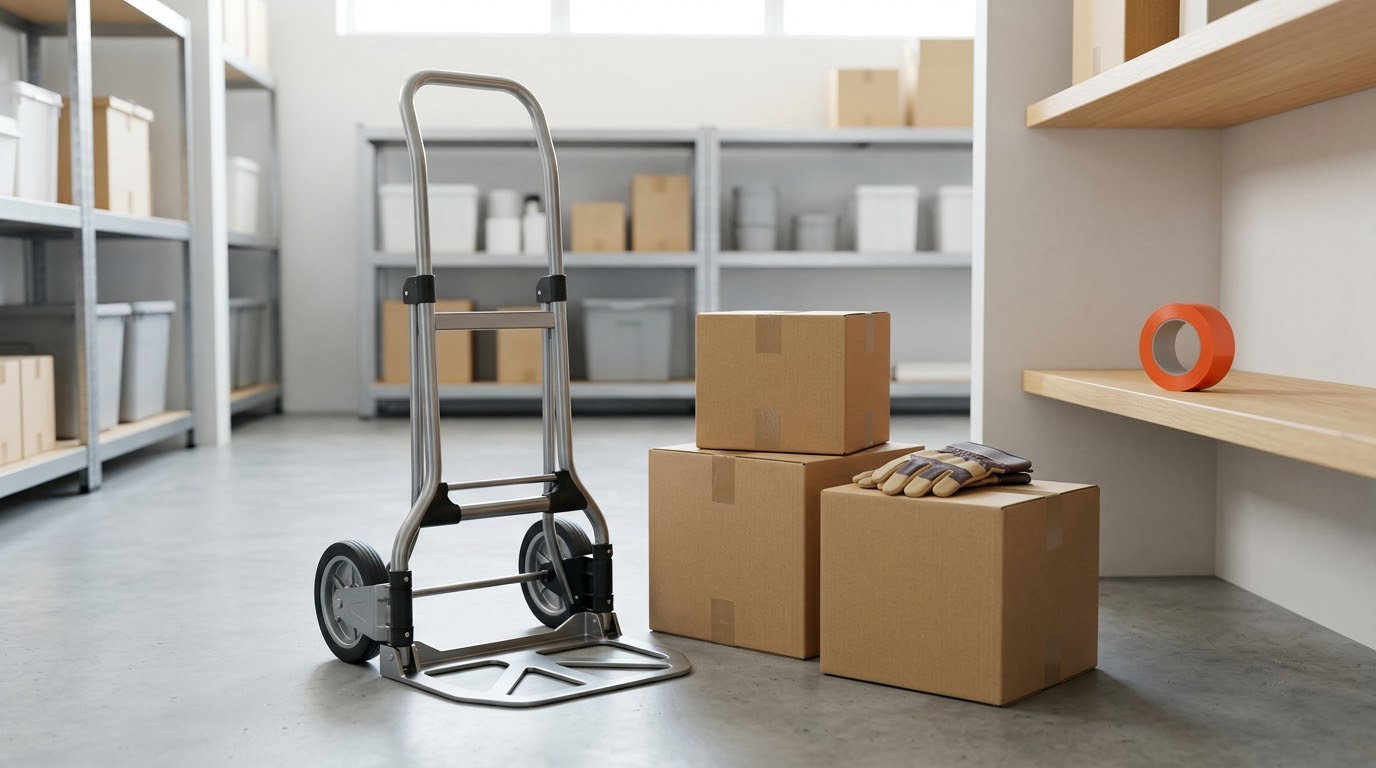
Retail worker safety tips come down to a small set of habits: clear the floor before you open, keep spills cleaned the moment they happen, lift loads with a cart instead of your back, keep an escape route from every angry exchange, and report every injury and near miss so the cause gets fixed. Last reviewed October 2026 by the Work Health Research Network editorial team, who draw on occupational health guidance from NIOSH, OSHA and provincial safety regulators.
Retail work stacks physical hazards, public contact and long hours on feet in the same shift, and the hazards arrive in predictable places: the entrance mat, the beverage cooler, the stockroom aisle, the checkout lane during a weekend sale. That makes retail safety unusually teachable.
This guide works for store managers, team leaders, safety coordinators and the frontline employees who carry the risk. Each tip lists what to do, why it matters, and a concrete store example. Where a task needs a decision from someone above you, it says so plainly instead of pretending every associate controls everything.
Table of Contents
- Retail Worker Safety Tips at a Glance
- 1. Inspect the Store Before Opening and After Closing
- 2. Control Slips, Trips, and Falls
- 3. Use Safe Lifting and Stock-Handling Practices
- 4. Operate Carts, Ladders, and Store Equipment Safely
- 5. Handle Knives, Box Cutters, and Other Sharp Tools
- 6. Stay Safe Around Deliveries, Vehicles, and Stockroom Traffic
- 7. Prepare for Violence, Theft, and Difficult Interactions
- 8. Prevent Crowding and Uncontrolled Customer Queues
- 9. Control Heat, Cold, Ventilation, and Indoor Air Quality
- 10. Use the Right PPE and Store It Correctly
- 11. Make Emergency and Incident Reporting Easy
- 12. Manage Fatigue, Breaks, and Physical Workload
- Frequently Asked Questions
- Where to Start With Retail Worker Safety Tips
Retail Worker Safety Tips at a Glance
The table below is the whole guide on one page. Use it as a shift-lead briefing sheet and as the agenda for a monthly store walk.
| Hazard | Preventive action | Who is responsible | Sign it is working |
|---|---|---|---|
| Wet floors and floor damage | Clean spills immediately, place signage first | Every employee; shift lead confirms | No unattended spill over two minutes |
| Trip hazards | Clear aisles, secure mats and cords, good lighting | Shift lead, closing team | Walkways clear at every check |
| Manual handling strains | Use carts, team lift heavy items, keep loads close | Associate lifting, manager providing carts | Fewer repeat stockroom lifts per shift |
| Falls from ladders and stools | Correct equipment, three points of contact, no overreach | User, manager maintains equipment | Damaged steps are tagged out fast |
| Cuts from blades and cartons | Guarded cutters, stable surface, correct gloves | User, manager stocks supplies | Cutters kept in drawers, not carried loose |
| Loading dock and vehicle strikes | Separate walking and vehicle routes, chock wheels | Receiving crew, dock supervisor | Marked lanes visible and respected |
| Aggressive customers and theft | De-escalate, keep distance, call for help, never chase | Associate first, manager backs up | Every shift knows the call-out path |
| Crowding at sales and queues | Queue layout that keeps exits clear, aisle clearance | Shift lead during peak | Exit lanes never queue-blocked |
| Heat and poor air quality | Monitor conditions, hydration, leave immediate danger | Manager, all staff report symptoms | Conditions logged each shift |
| Missing or wrong PPE | Match PPE to documented hazards, inspect and replace | Manager supplies and trains | Worn PPE still passes inspection |
| Delayed incident reporting | Written report the same shift, near misses included | Everyone reports, manager investigates | Reports closed with corrective action |
| Fatigue and long hours on feet | Scheduled breaks, workload rotation, supportive footwear | Manager schedules, employee speaks up | Breaks actually taken on busy days |
1. Inspect the Store Before Opening and After Closing
A ten-minute walkthrough at both ends of the day catches more hazards than any annual audit. Walk the same route in the same order so nothing hides in the routine: entrance and mats, sales floor aisles, fitting rooms, checkout lane, break room, back room aisles, receiving dock, exits, then emergency lighting and alarm panels.
Look for wet floors, damaged mats, boxes in walkways, sagging shelf tags, obstructed exits, dead lights, doors that do not latch, and equipment left plugged in or blocking a walkway. A spill near the checkout is the classic example: place the wet-floor sign first, wipe the area, then move on to the next task. Signing first takes ten seconds and protects everyone who crosses the spot before you finish.
Whoever finds a problem logs it, and the log needs three fields: what, where, and how urgent. The shift lead assigns corrective action and confirms the area is safe. If a hazard cannot be fixed immediately, barricade or close it rather than hoping people see it.
How to use retail worker safety tips during a shift
Treat these retail worker safety tips as a pause-and-act sequence rather than background knowledge. When you see a hazard, stop the task, tell your supervisor by radio or phone, isolate the area if you can do so safely, and log it in the reporting system before you return to work.
A damaged floor mat curled up at the corner near the fitting rooms is a good example: pull the mat flat or take it out of service, drop the mat into the repair request, and place a sign nearby. A fire exit blocked by stacked seasonal stock gets the same treatment, only faster, because exits are not negotiable.
If you are told to move the obstruction and the task looks unsafe, say so once in the moment and again in writing. A safety concern raised twice is usually documented twice, and documentation is what changes the schedule, the staffing or the equipment.
2. Control Slips, Trips, and Falls
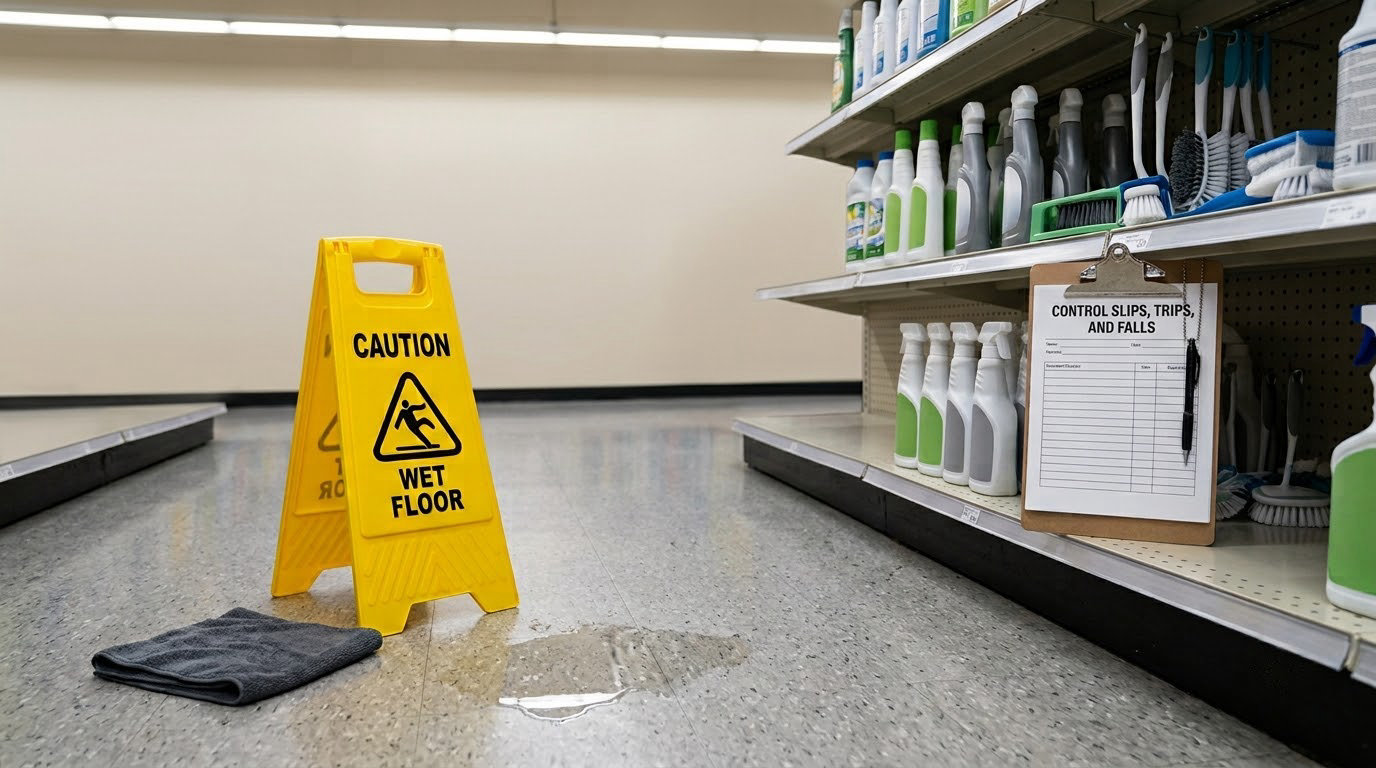
Slips, trips and falls are the most frequent injury in retail, and nearly all of them trace back to a hazard that sat there too long. Treat any liquid, any damaged flooring and any obstruction as a priority task, not a task for the end of the hour.
Floor mats belong flat and full width at the entrance, at cooler doors and at any transition between tile and sealed concrete. A mat that is too small, too thin, or rolled at the edges is a trip hazard disguised as a safety device. Check that they lie flat and get replaced before the backing curls.
Now the cooler example. A leaking beverage cooler puts water on the sales floor near a high-traffic path, adds an ice-like slick surface when it refreezes, and pushes product onto the aisle. The response sequence is: shut the cooler off if it is safe to do so, place signage, get the leak absorbent, call for a facilities fix, and follow the spill protocol your store uses. Do not leave a bus tub under it and call it handled.
Overhead lighting matters as much as the floor. A dark aisle at the back of a store hides both spills and people, and if your store is dim anywhere, report it with the specific aisle number. Lighting fixes are cheap and reduce falls, near misses and shrink at the same time.
3. Use Safe Lifting and Stock-Handling Practices
Lift with equipment, not with your spine. The decision rule is simple: if a load is heavy, awkward, unstable or far from where it needs to go, reach for a cart, a dolly or a second person rather than a heroic lift.
Before you lift, test the weight by tilting one corner slightly. If it does not move easily, do not commit to the full lift. Keep the load close to your body, stand with feet about shoulder-width apart, bend at the knees, and hold it against your torso. Move your feet to turn; twisting under load is what turns a bad lift into a back injury.
A case of bottled water is the stockroom example most associates already know. It is not heavy in absolute terms, but it is heavy relative to a repetitive shift. Ten of them in an afternoon is a different risk from one. Use a hand truck for the full case, refill from the front, and slide rather than carry when the aisle allows it.
Managers control the other half of this risk. Carts should be available and usable, heavy items should be stored between knee and shoulder height, and deliveries should arrive in manageable sizes rather than forcing one person to handle a full pallet. Our guide to manual material handling risk factors covers how to assess whether a task is safe to assign at all.
4. Operate Carts, Ladders, and Store Equipment Safely
Equipment causes fewer injuries than bad technique, but it causes sharp ones. A five-minute pre-use check on any cart, pallet jack, ladder or step stool catches the mechanical failures that turn a routine task into an ER visit.
On carts, check the wheels roll, the casters are not wobbling, and the handle is tight with no sharp burrs. On pallet jacks, check the forks for bends, the hydraulic lift for leaks, and the wheels for flat spots. On ladders, check the rails, the rungs, the feet and the spreader, and confirm the rating label is readable. Any cord, guard or handle that is missing puts the equipment out of service until it is repaired.
Tag it and pull it from the rotation. Tag, remove, and tell the shift lead, so the next person does not grab it at 7 a.m. without seeing the note.
If a pallet jack will not engage, do not try to force it or work around it. Shut it down, tag it, and report it. Manual material handling machines fail predictably: a sticking control valve or a failing brake will not fix itself between shifts. Our warehouse safety tips for new workers walk through first-week equipment checks in more detail.
5. Handle Knives, Box Cutters, and Other Sharp Tools
Most retail cuts happen while opening cartons in a cramped aisle, usually with an unguarded blade and the wrong gloves for the job. Guarded box cutters with retractable blades replace open blades wherever possible; ask your manager if your store still stocks fixed-blade utility knives.
Cut on a stable surface, not against your thigh, forearm or the heel of your hand. Open cartons on a flat surface where you have room to move the blade, and if the only space available is a narrow aisle, move the box rather than cutting it in place.
Gloves change the outcome here. Thin cut-resistant gloves for handling sharp-edged product and light work, heavier leather or cut-resistant gloves for opening cartons and handling broken glass. Ordinary cotton or thin knit gloves give a false sense of security and can slip. Our guide to choosing the right safety gloves for a job breaks down the glove types by task.
Never pass an open blade hand to hand. Pass it closed, handle first, or set it down on the surface where the next person can see it. Store cutters in drawers or on a belt loop, not loose in a pocket. And report every cut the same shift, including the small ones. A nick that seems minor today is how an infection starts, and it also tells you something about the carton-opening setup worth fixing.
6. Stay Safe Around Deliveries, Vehicles, and Stockroom Traffic
Receiving docks are the highest-consequence area in most stores, because the hazards there move at vehicle speed. Mark walking routes and vehicle routes separately, and make the separation visible with floor markings, barriers or signs rather than relying on habit.
Nobody should be standing in a trailer’s path, in front of a reversing truck, or between a vehicle and a wall. Establish dock rules: one person directs the driver from a fixed position, no one walks behind a moving vehicle, and the engine stays off with the brake set and wheels chocked whenever loading or unloading happens on a slope or near pedestrian traffic.
Keep dock doors visible and usable as exits. Stacked pallets should never block them, and the door area should be kept clear so a person carrying a box is not pushed into the path of an inbound truck.
Pallet equipment is not a ride. No passengers on forks, no standing on forks, no putting a foot between the wheels, and no improvising a ride on a dock plate. In a busy receiving period, the most common near miss is someone hurrying across the lane to clear a jam while a forklift is still moving.
7. Prepare for Violence, Theft, and Difficult Interactions
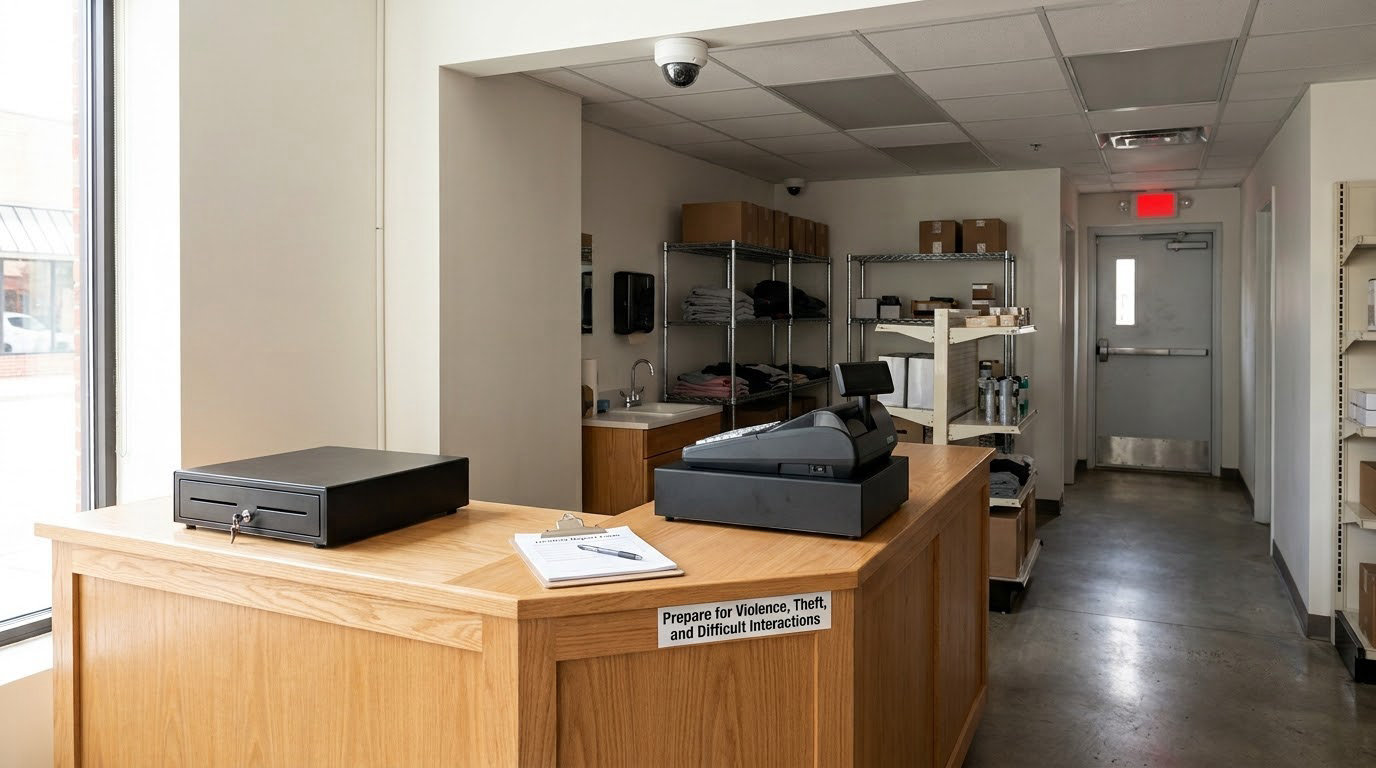
Your role in a violent or threatening situation is to get distance and get help, not to win the encounter. Keep an exit within reach, keep your hands visible and low, and never follow a shoplifter out of the store.
De-escalation starts with three things: space, voice and time. Put two arm lengths between you and the person, drop your tone and your volume, and let silence do some work. Acknowledge the complaint without agreeing or arguing: “I can see that’s frustrating” beats “calm down” every time. Interruptions and blaming the person themselves usually make it worse.
Do not confront a suspected thief. Observe, note what you can from a safe distance, and call the manager or security. Policy should never leave you alone on a register with no backup and no expectation that you intervene physically.
Know the call-out path before you need it: who answers the radio, whether a duress alarm or panic button exists and where, and whether anyone knows how to use it. Workers describe stores promising safety devices that never get installed, or installed and never explained. Ask to see it during a shift and ask to try it once. If your store’s closing procedure is the risk point, note that cash movement at night is when people describe being left alone, and raise it in writing.
8. Prevent Crowding and Uncontrolled Customer Queues
A crowd is a safety system under strain, not just a nuisance. Queues that bend across an aisle block sight lines, slow evacuation and turn a minor dispute into a crowd incident.
Plan queue layout before the rush, not during it. Keep the primary exit lane clear at all times, keep aisles to the fire aisles clear, and make sure the accessible pathway stays open. Use stanchions or floor markings to keep lines straight, and open additional registers before the queue reaches the end of the counter run.
During a weekend sale, the line that wraps past the emergency exit is the standard failure. Move the queue, open another register, or assign a person to walk the line and keep it moving. A line that moves is safer and calmer than a line that stalls.
Communicate before the peak hits: a two-minute headsup about expected crowd size, extra coverage at the exits, and which areas are off limits this shift. During the peak, whoever is on the floor should be able to summon a manager by radio without leaving the post.
9. Control Heat, Cold, Ventilation, and Indoor Air Quality
Back rooms and loading areas often run hotter than the sales floor, and conditions there change with the season and the weather. Managers should monitor them on a schedule, not react to a complaint. If your store has no way to check the back room during summer receiving, raise it; that is an equipment and process gap, not a worker failing to cope.
Hydration, acclimatization and workload pacing matter. Workers coming in from a cool street into a hot back room need time to adjust, and heavy work in heat produces more risk than light work.
Report symptoms early: headache, dizziness, unusual fatigue, cramps, confusion or nausea. Anyone with those symptoms stops work, moves to a cool area, and gets help. If a person becomes confused or collapses, call emergency services immediately and move them out of the heat if it can be done safely.
Watch for fumes and dust too: cleaning chemicals used in an occupied area, exhaust from a running vehicle in a confined dock, smoke from a nearby fire, and dust from construction or damaged ceiling tiles. Indoor air complaints often disappear once a manager walks the area at the time of day they occur.
10. Use the Right PPE and Store It Correctly
Protective equipment is the last line of defense, not the first. Gloves, footwear and eye protection protect a worker when a hazard is already present; they do not remove the hazard. If a task needs a cart, a guard or a ventilation system, that is the fix.
Match PPE to a documented hazard rather than to habit. Protective footwear with slip resistance for wet-floor work, cut-resistant gloves for blades and broken glass, eye protection for chemical handling or overhead work, and back-support or lifting aids only where an assessment supports them.
Inspect before every use and replace on condition, not on a calendar. A cracked helmet strap or a glove with a worn palm is worse than nothing, because it looks like protection. Store equipment where it stays clean and dry, with a clear replacement process and a person responsible for it.
Training matters as much as the gear. Most PPE only protects the person who knows its limits, and every worker should be able to name the hazard their gear protects against. Our guide to choosing the right safety gloves for a job covers fit and task matching in more detail.
11. Make Emergency and Incident Reporting Easy
Reporting fails when it takes more than two minutes or requires a form nobody can find. Put the reporting method on the same page as the emergency contacts, and make it work from a phone.
Know your evacuation routes, the location of the first-aid kit, the fire extinguishers and the emergency numbers before you need them. Check that exit routes are clear every shift, and that exit doors open without a key or special knowledge.
For a customer fall requiring medical assistance: call emergency services, do not move the person unless they are in immediate danger, send someone to the entrance to meet responders, and keep a witness with them. Note the time of the call, the observations and the names of staff present. Preserve the scene: keep the wet floor, the fallen display or the damaged fixture in place until a manager has documented it.
Write the report the same shift, while the details are fresh, and include near misses. A near miss is free information; it is the cheapest safety improvement available to a store. Each report should end with a corrective action and a check that someone verified it.
12. Manage Fatigue, Breaks, and Physical Workload
Standing for a full shift without a real break produces sore feet, swollen legs, back pain and reduced attention, and attention is what keeps you from handling a blade badly or missing a suspicious customer. Breaks should be scheduled, not granted on request during a rush.
Rotate the heaviest jobs across the shift, use anti-fatigue matting at checkout and at standing work positions, and allow sitting wherever the task permits it. Supportive, slip-resistant footwear is the cheapest ergonomic improvement a store can offer. Micro-breaks of a few minutes every hour help more than one long break at the end.
The overnight receiving example is the clearest failure: a small crew unloads a full truck after midnight, the same people work the morning shift, and nobody eats. Fatigue there is a scheduling problem, and the fix is crew size, rotation and a real meal break, not telling the worker to push harder.
Watch the early warning signs: slowing down, losing balance, clumsiness, trouble focusing, irritability and the urge to sit down mid-task. Stop and rest when those appear, and seek medical help for symptoms that do not settle. Address root causes rather than blaming individuals, because a tired worker is usually a tired schedule.
Frequently Asked Questions
What is the most important retail worker safety tip?
The most important retail worker safety tip is to fix hazards at the moment you find them, not later. Clean spills immediately, place signage first, clear walkways and report the problem to your shift lead the same shift. Most retail injuries come from a trip hazard that was there for minutes. If you only build one habit, make it this one.
What should an employee do if a customer becomes aggressive?
Keep two arm lengths of distance, stay near an exit, lower your voice and acknowledge the complaint without agreeing or arguing. Do not touch the customer, do not argue policy, and do not follow anyone out of the store. Call the manager or emergency services as soon as you can do so safely, and tell a colleague where you are. Debrief afterwards rather than replaying it all shift.
How can retail stores reduce slips, trips, and falls?
Respond to spills within minutes, use signage first and clean second, and keep floor mats flat and large enough to cover the full entrance. Keep aisles and fire lanes clear, fix damaged flooring promptly, and replace lighting in dim aisles. Store-level habits that help most: a named person per shift owns spill response, and every spill is logged so repeat locations get a real fix.
What jobs should never be assigned to inexperienced or young workers?
Never assign inexperienced or young workers to hazardous chemical handling, power-driven equipment such as pallet jacks or compactors, work at height on ladders, cash counting alone at closing, or overnight lone working. These tasks need training, supervision and age-restricted certification where local law applies. If you are asked to do one of these without training, ask for the instruction in writing before you start.
How should a retail employee report an injury or near miss?
Report it to your supervisor the same shift, in writing if you can, and ask for a copy or a reference number. Get medical care first if you need it, keep receipts and records, and note the time, place, witnesses and what happened while it is fresh. Photograph the hazard before it is corrected, follow up in a few days, and if nothing happens, escalate to HR or your safety contact.
Where to Start With Retail Worker Safety Tips
Start with the immediate physical hazards. Walk the store, list every spill source, mat edge, obstruction and lighting failure you find, and fix or barricade them this week.
Then fix the reporting chain. Make sure every shift has a named person for spill response, a two-minute way to report a hazard, and a written log that ends in corrective action.
After that, schedule a recurring store safety review. Monthly is enough to catch drift, and pair it with a short talk at shift handover about one hazard only.
Two rules for everyone reading this. Never perform a task you believe is unsafe, and tell your designated supervisor promptly rather than at the end of the week. If the response you get is nothing, write it down and take it to the next level of management.