
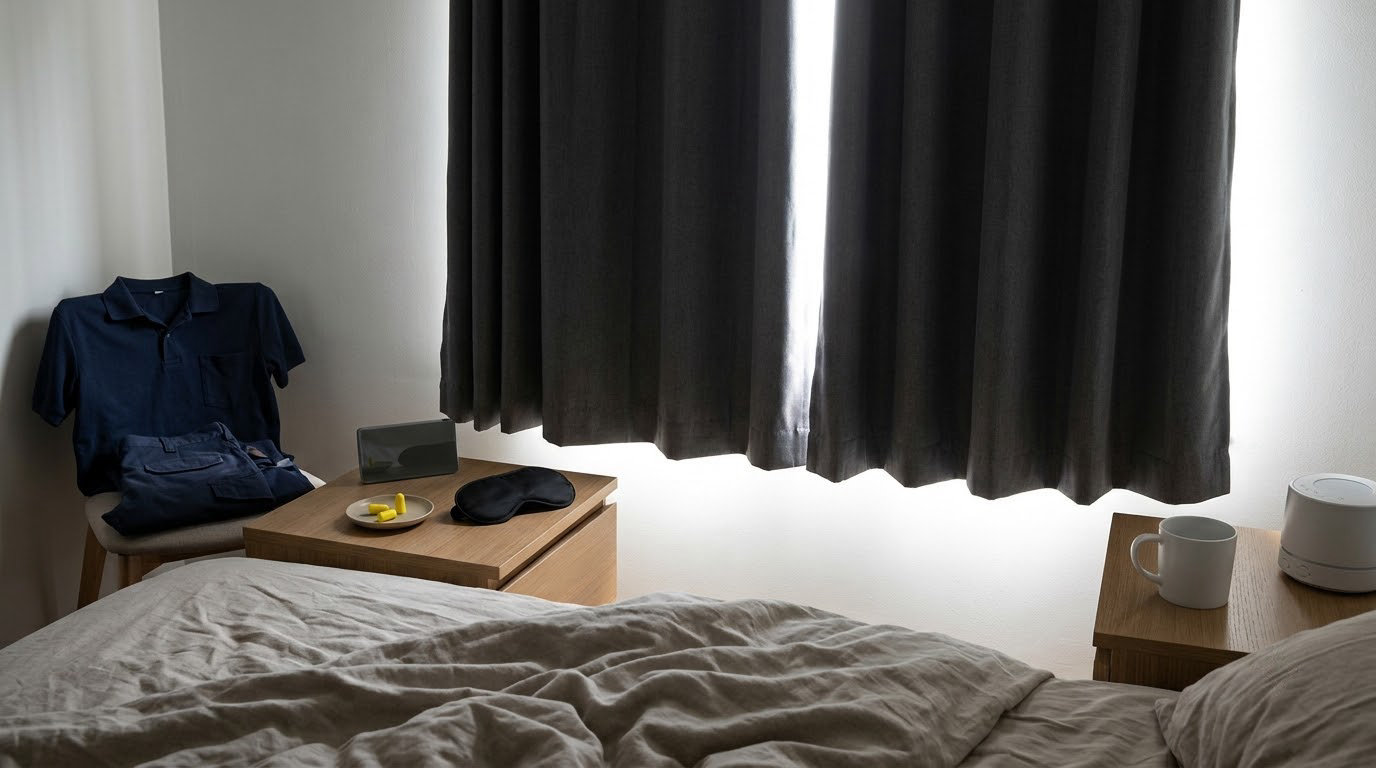
Shift work sleep problems get fixed with three things in the right order: a fixed sleep window, light at the right hours, and a room that blocks daylight and noise. Set those first, then layer in caffeine timing and planned naps. Most people see a difference in one to two weeks, and none of it needs special equipment beyond blackout curtains and a decent eye mask.
That first paragraph is the honest version of the answer. The rest of this guide is the detail: what to gather before you start, the six steps in order, and the mistakes that keep people stuck at three hours of daytime sleep no matter what they try.
One warning before we go further. This is general information, not medical advice. If you have cardiovascular disease, bipolar disorder, retinal disease, a history of substance misuse, or you drive for a living, talk to a clinician before changing light exposure or adding any supplement. Persistent insomnia or daytime sleepiness deserves the same call.
Table of Contents
- What You Need
- Step-by-Step: How to Fix Shift Work Sleep Problems
- Common Mistakes
- Frequently Asked Questions
- Can shift work cause insomnia?
- Why can’t I sleep during the day after a night shift?
- How long does it take to reset your circadian rhythm after switching to night shift?
- Should night shift workers take melatonin, and when?
- How much caffeine can you drink on a night shift?
- Is driving home after a night shift dangerous?
- Conclusion: Start with One Change That Fits Your Shift
What You Need
None of this requires buying anything clever. You need a plan and a room, and the room matters more than most people expect.
A consistent work schedule you can actually see. Put your shifts on paper for the next month so you know when the rotation changes, because a rotation that flips without warning will undo any plan you build.
A dark, quiet place to sleep. That means blackout curtains or a good eye mask, something for noise, and a cool room. If other people share the space, you need their agreement, which is its own conversation.
A reliable alarm, plus a backup. The classic night-shift failure is sleeping through the one alarm you own.
A light-blocking plan for the commute home. Sunglasses that cover your eyes, worn from the end of the shift until you are inside a dark room, do more work than most people expect.
A way to track sleep and alertness. A notebook beside the bed is enough. Note when you fell asleep, roughly when you woke, and how alert you felt at two in the morning and again near the end of the shift. Two weeks of notes tells you more than a month of guessing.
Step-by-Step: How to Fix Shift Work Sleep Problems
Work through these in order and give each one a couple of shifts before moving on. Changing everything on the same night is how people end up with a plan they cannot tell apart from the problem.
1. Build a sleep plan for shift work sleep problems
Start by naming your actual pattern: early morning, evening, overnight, or rotating. Then pick a sleep window and write it down as clock times, because vague intentions drift. Common windows that work for full-time nights are roughly 2am to 10am, or 3am to 11am. Rotating workers usually do better with a shorter protected sleep block plus one planned nap than with a heroic nine-hour attempt.
Keep your core times as steady as your roster allows. The single most common mistake on days off is sleeping until noon, which feels good and quietly moves your clock back toward nights you no longer want.
A short wind-down beats a long one. Thirty minutes of dim light, no screens, room already cool. People who arrive home wired from a shift usually need something physical to absorb the restlessness: a shower, a few stretches, or just sitting somewhere quiet with nothing to do.
Expect roughly one to two weeks per full rotation to feel steady. A permanent move from days to nights takes longer, often two to three weeks, and a reset planned in advance beats an unplanned one.
2. Use light at the right times
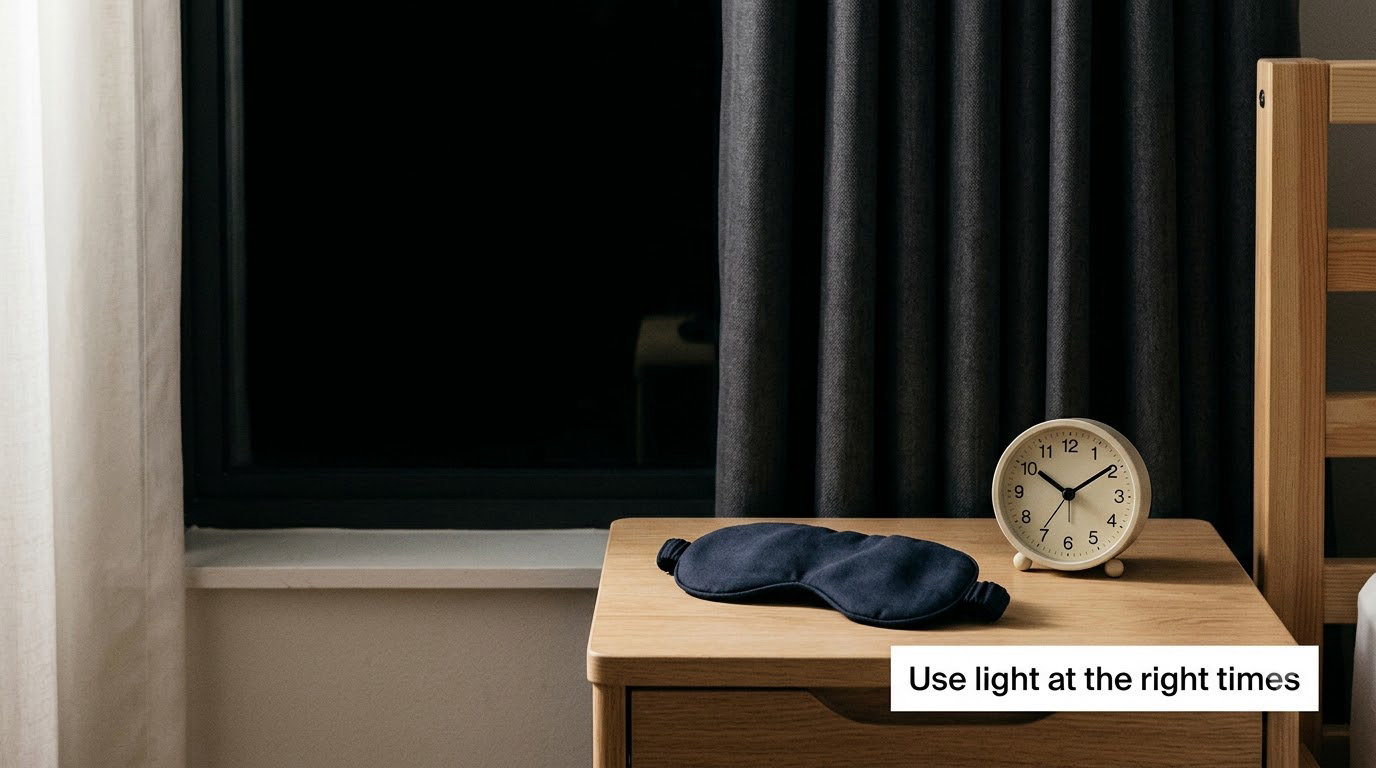
Light is the strongest signal your body clock uses, so timing matters more than intensity. Bright light in the first part of a night shift tells your brain it is morning. Darkness during your sleep window tells it the same thing again.
On shift, aim for bright light early rather than near the end. A light box, a bright overhead lamp, or light goggles worn for the opening hours can all help. Keep it away from the stretch right before you sleep, when you want the opposite signal.
Your commute home is the part people skip. Outside daylight in the morning hits your eyes at full strength and undoes an hour of careful darkness. Wear dark sunglasses from the moment you clock off until you are behind a closed curtain.
Some people do the reverse on a nap: dark goggles during the day, then bright light before a night shift. Skip bright light therapy without medical advice if you have bipolar disorder, retinal disease, or take medication that makes you photosensitive.
You will know it is working when the first hour after waking stops feeling like driving through fog and you fall asleep faster after your last shift.
3. Make the daytime sleep environment work harder
Daytime sleep fails on light and noise, in that order. Blackout curtains beat a cheap eye mask because they also block the edge glow that wakes you when you roll over. If you rent, a blackout panel that hangs over the window with suction cups is a decent fallback.
Noise needs covering, not eliminating. Looped earplugs, a fan, or steady white noise at a level you would not notice while awake all work. Steady beats silent, because a sudden siren at 4am wakes you more thoroughly than a constant hum.
Temperature does more than most people expect. A room that feels cool the moment you lie down lets you drop off faster. Start cooling it before you go to bed, not after you are already awake at noon.
Kill the phone. Notifications and the glow are both problems. Put the phone across the room rather than face down on the nightstand, and turn on a do-not-disturb schedule that actually covers your sleep window.
Your household is part of the environment. Tell people your hours plainly and ask for quiet during the block, then agree what happens when it is broken. A roommate or partner who knows the schedule will protect it more reliably than one who thinks you are free at noon.
To audit it, run one test: sleep with everything in place, then note whether you woke at all and why. Reviewers and night-shift workers repeatedly report the same pattern, a broken sleep block usually traces to one identifiable cause rather than general bad luck.
4. Manage caffeine, meals, and naps strategically
Caffeine is a tool with an expiry date. Repeated high doses across a whole shift blunt your appetite for sleep later and leave you wired when you finally lie down. Most people do better with a moderate personal amount taken earlier in the shift than with a steady top-up right up to the end.
Give it a cutoff roughly six hours before you plan to sleep. If your sleep window starts at 2am, that puts the last cup somewhere around 8pm. If you cannot manage the cutoff, move the sleep earlier rather than pushing caffeine later.
Eat regular meals at your actual shift times. People who skip food and then eat heavily right before day sleep wake up again. Keep the pre-sleep meal smaller and earlier, and get most of your fluids in the first half of the shift so you are not waking up at noon desperate.
Nap deliberately, not whenever you collapse. A short nap in the first few hours of a night shift buys alertness without costing you the daytime sleep block. Around ten to twenty minutes is the safe range; longer naps risk sleep inertia, that heavy groggy feeling that makes the twenty minutes after a nap feel lost.
Two habits backfire more often than people expect. Alcohol knocks you out but fragments the second half of the sleep block, and heavy exercise too close to day sleep leaves you wired instead of sleepy.
If caffeine, food and naps are already well handled and you still feel foggy through the shift, that is a signal to talk to a clinician, not to add more caffeine.
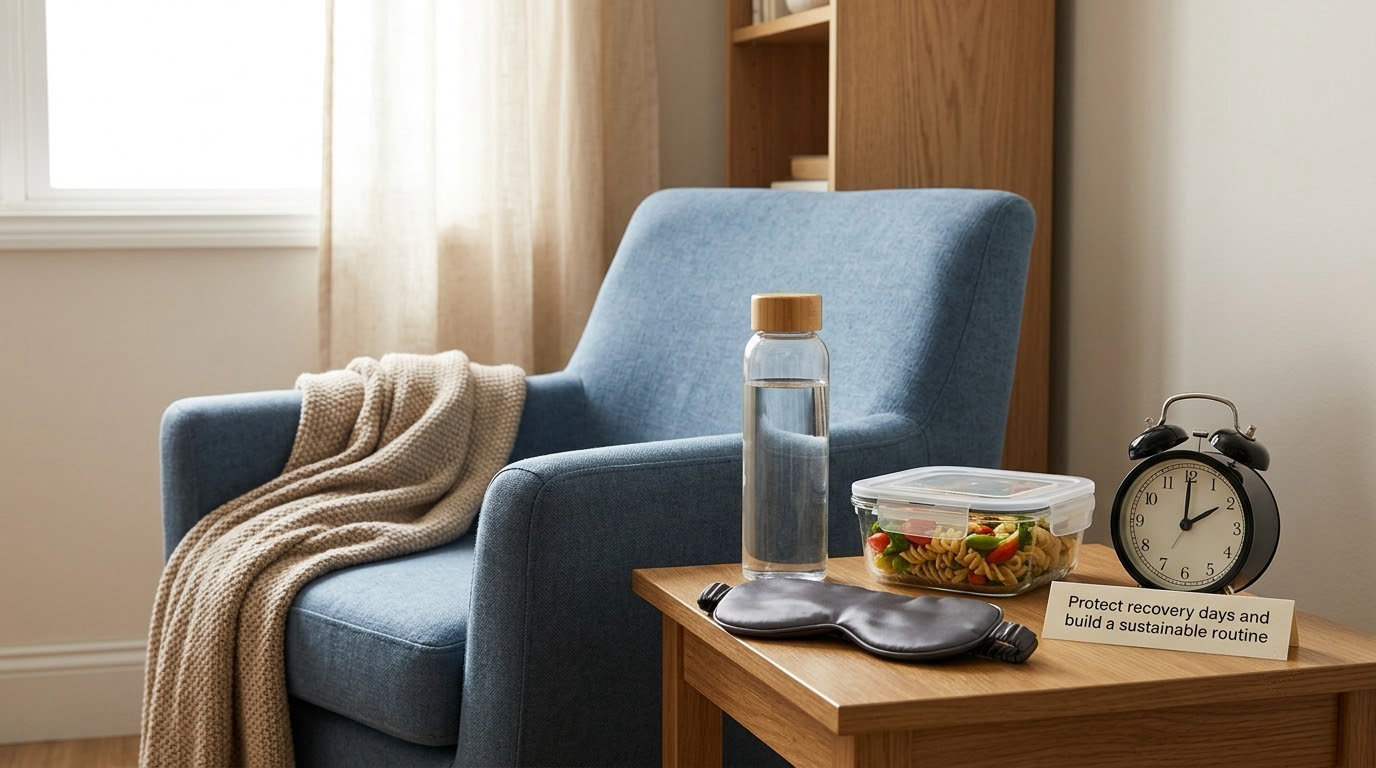
5. Protect recovery days and build a sustainable routine
The day after a run of nights is where a lot of people lose ground. Staying awake the entire day to see your family feels productive and quietly pushes your clock back toward nights. Try sleeping first, then using the rest of the day for the people and errands that matter.
Recovery time works better when it has a shape. Have food already prepared, water beside the bed, and one non-work thing booked that does not require you to be sharp. Then let the rest of the day be quiet on purpose.
Exercise is worth keeping, with a timing caveat. A moderate session earlier in your day helps mood and sleep. The same session two hours before day sleep can keep you awake, which is the opposite of what you wanted.
If you rotate, change your sleep window in steps rather than all at once. Shifting by an hour or two per rotation lets your clock follow instead of fighting, and rotating forward through shifts is generally easier on the body than rotating backward.
People who report the biggest improvements tend to be the ones with a rigid, boring schedule. Same window, same room, same wind-down, every shift. Novelty is the enemy here.
6. When to ask for medical or workplace help
Ask for help when sleepiness is persistent rather than occasional. Trouble staying awake at work, repeated errors or near-misses, falling asleep while sitting, or daytime sleepiness that affects anything beyond the shift all deserve a clinician appointment.
There is a difference worth knowing about. Shift work insomnia is the ordinary experience of sleeping at the wrong hours. Shift work disorder is a diagnosable condition where insomnia, excessive sleepiness or both are tied to a work schedule and cause real impairment. A two-week sleep diary is usually the first thing a clinician asks for, and a sleep study follows only if it is needed.
Ask your employer about scheduling too. Forward-rotating rosters, limits on consecutive nights, protected rest breaks, and a written fatigue risk management policy are all reasonable things to raise. Occupational health services exist for exactly this, and using one protects you as much as it helps.
If you drive home after a night shift and feel drowsy, that is a safety problem, not a scheduling inconvenience. Take a break, use a ride, or sleep before driving.
Common Mistakes
Treating it as a personal failure. Working nights is a physiological mismatch, not a discipline problem. People who assume they are simply bad at sleeping keep pushing harder and get the same result. Adjust the system instead of blaming yourself.
Drinking more and more caffeine. Extra caffeine late in a shift buys alertness you pay back in waking at noon. Moderate the amount, move it earlier, and set the cutoff.
Leaving the room bright and noisy. You cannot fall asleep against daylight and a busy household, however tired you are. Fix the room first; it costs nothing and changes more than any supplement.
Changing your schedule every week. Sleeping until noon on days off, then switching to a 3am start, resets you twice a week. Keep the core times close to your shift times.
Using alcohol to get to sleep. It shortens time to sleep and damages the rest of the block. You wake up at 11am feeling worse, which is exactly the feeling you were trying to avoid.
Napping for hours. A long late-day nap eats the sleep you need. Keep naps short and early in the shift.
Driving home when you can barely keep your eyes open. The commute is where shift workers take real risk. Sunglasses, a nap before driving, or a ride costs nothing.
Assuming every symptom has the same cause. Snoring, sleep apnea, and insomnia that shows up regardless of schedule are separate problems. If sleep is bad even on days when you sleep at night, that is a separate conversation with a doctor.
Frequently Asked Questions
Can shift work cause insomnia?
Yes. Working nights or rotating shifts puts your activity and light into the hours when your body clock wants you asleep, and your sleep into the hours when it expects daylight. That circadian mismatch causes trouble falling asleep, waking repeatedly, and feeling foggy during the shift. Roughly 10 to 38 percent of shift workers meet criteria for a diagnosable disorder. Persistent symptoms deserve a clinician appointment.
Why can’t I sleep during the day after a night shift?
Three reasons usually stack up: daylight leaking into the room, household noise, and a body clock that releases alertness signals during those hours. Fix them in that order. Blackout curtains or a good eye mask, steady background noise, and a cool room cover most cases. If you still wake after three or four hours with everything in place, treat that as a reason to see a clinician.
How long does it take to reset your circadian rhythm after switching to night shift?
Most people settle into a full rotation within one to two weeks, though plenty feel unsettled longer. A permanent move from day shifts to nights usually takes two to three weeks. Stepping your sleep window across by an hour or two at a time works better than changing it all at once. Keeping wake times steady on days off speeds the whole process.
Should night shift workers take melatonin, and when?
Melatonin has the strongest evidence behind it of any supplement for shift work, but timing matters far more than the size of the dose. Taken at the wrong time it can shift your clock the wrong way. Do not combine it with alcohol or sedatives, and ask a clinician or pharmacist before starting, especially if you take other medication or have a condition that affects hormones.
How much caffeine can you drink on a night shift?
There is no universal number, and pushing for one is how people end up wired at 2pm with no sleep. Most shift workers do better with a moderate personal amount earlier in the shift than with repeated top-ups, and a cutoff around six hours before your planned sleep works well. If you feel foggy despite that, more caffeine is not the fix. Talk to a clinician instead.
Is driving home after a night shift dangerous?
Yes, and it is one of the more serious consequences of shift work sleep problems. Sleepiness behind the wheel after a long night shift is a well documented accident risk. If you feel drowsy, nap before driving, arrange a ride, or take a break before getting behind the wheel. For anyone who drives for a living, raise this with occupational health rather than managing it alone.
Conclusion: Start with One Change That Fits Your Shift
Pick one sleep window and write it in clock times, then protect it for a week. After that, fix the room: blackout curtains or an eye mask, steady noise, a cool temperature, a phone out of reach. Track your sleep and your 2am alertness in a notebook for two weeks before you add anything else.
Most shift work sleep problems improve at that point, not at the first fix. If you are still waking after three hours with the room right, or still nodding off mid-shift, book a clinician. And if you feel drowsy behind the wheel after a night, get off the road first and sort it out second.