
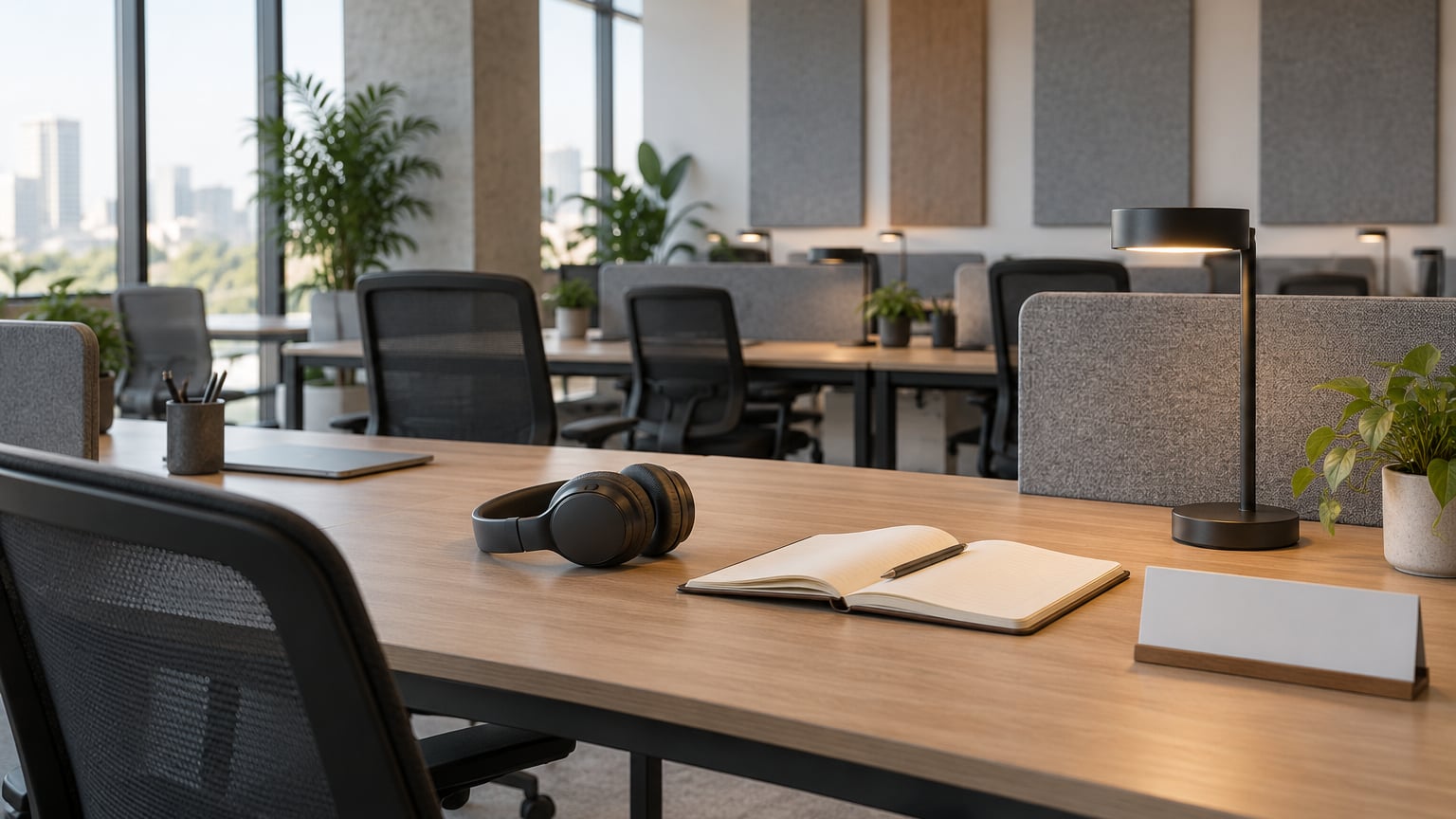
An open office is loud mostly because of speech, not machinery. To reduce noise distractions in an open office you attack four things in order: the source of the sound, the path it travels, your ears, and the layout itself. Start with what you control today, then push the bigger fixes up to your manager and facilities team.
Most offices do this in the wrong order. They hand out noise-cancelling headphones and call it done, while the printer sits in the walkway and every call happens at the desk nearest the focus seats. Here is the plan I would use, with the free steps first and the expensive ones backed by evidence you can actually show a manager.
One number frames the whole problem. Workplace research cited widely in the occupational health literature puts productivity loss from a single nearby conversation at up to 66%, and around 70% of employees report regular disruption at work. That is why this is a workplace health issue, not a comfort preference. Noise exposure feeds workplace stress and burnout in the same way that bad ergonomics does, which is the argument that wins budget approval more often than not.
Table of Contents
- What You Need
- Step-by-Step: How to Reduce Noise Distractions in an Open Office
- 1. Measure the main sources of distraction
- 2. Create quieter zones and purposeful work areas
- 3. Set team agreements for calls and conversations
- 4. Reduce predictable equipment and activity noise
- 5. Give employees tools for individual focus
- 6. Test the changes and ask for feedback
- 7. Make the quieter office the normal standard
- Common Mistakes
- Frequently Asked Questions
- Do noise-cancelling headphones work in an open office?
- Does white noise help concentration or make it worse?
- How do I raise office noise with my manager without sounding whiny?
- Are headphones all day bad for my ears?
- What can my employer change about office noise?
- How do I know whether office noise is really hurting my work?
- Conclusion
What You Need
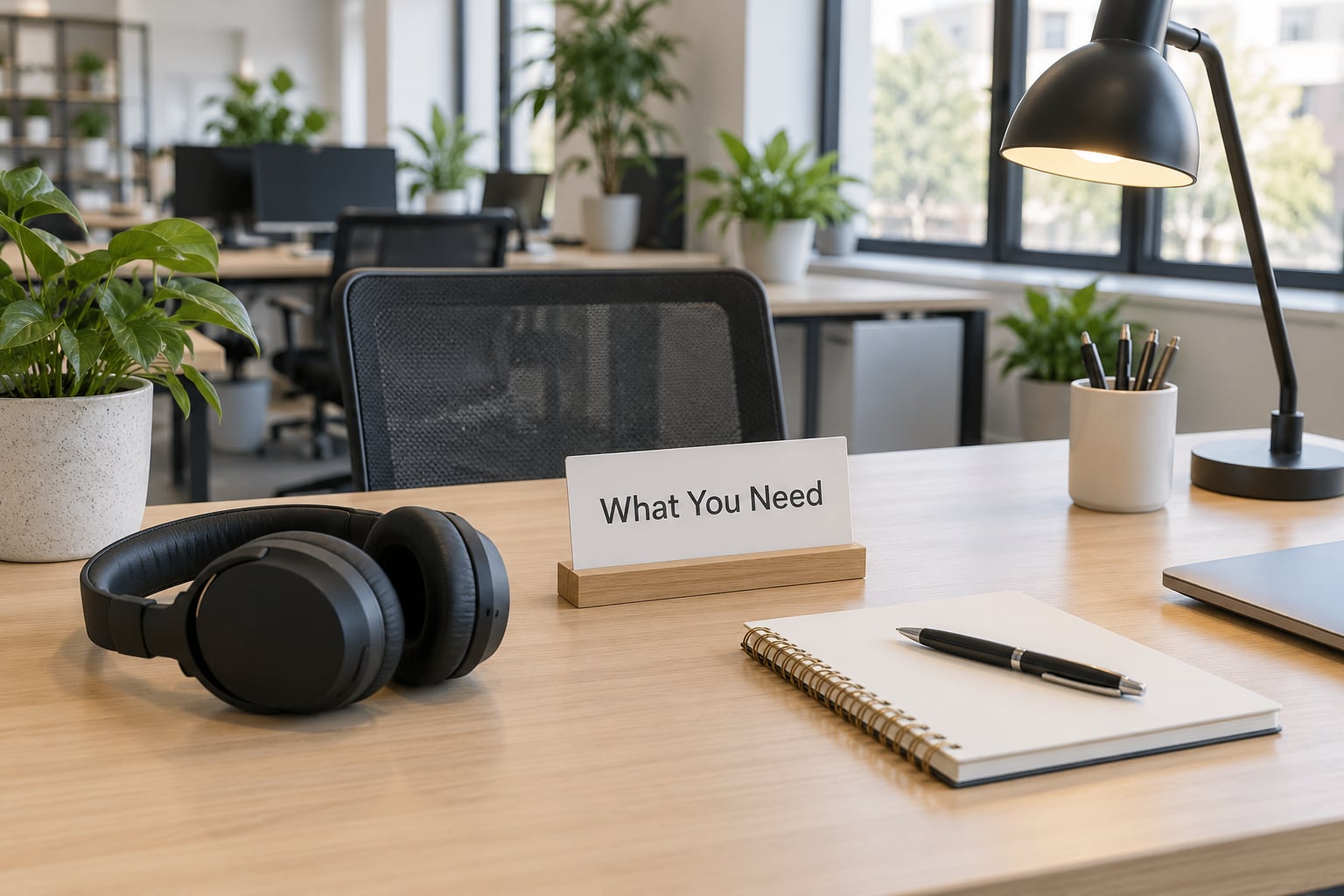
You do not need a facilities project to begin. You need four things, and three of them cost nothing.
- A one-week distraction log. A notebook or a note on your phone. Log what interrupted you, when, how long it took to get back into the task, and whether the interruption was a person, a device or a shared space.
- One signal your colleagues will read correctly. Headphones, earplugs, a desk lamp that stays off, or a small sign. Pick one and keep it consistent, because a mixed message gets ignored.
- Ear protection and a masking layer. Over-ear noise-cancelling headphones for low-frequency hum, plus foam earplugs worn underneath them for speech. This combination is the most commonly reported tactic among people working in loud open-plan floors.
- A list of the sources you cannot fix alone. Phone calls, printers, kitchen sounds, HVAC rattle, a meeting room booked over the quiet zone. This list is your evidence later.
- One willing partner. A facilities contact or office manager who can order a sound level reading, and a team lead who will pilot a change for four weeks.
If desk setup is part of the problem, our 10-step office ergonomics checklist for desk workers covers the posture side that usually travels alongside noise complaints.
Step-by-Step: How to Reduce Noise Distractions in an Open Office
1. Measure the main sources of distraction
Open office noise has four classes: speech, equipment, movement, and shared activity. Speech dominates almost every log I have seen, followed by printer and kitchen noise, then door closures and chair movement.
Log patterns for five working days. Note the time of day, the source, and how long the recovery took. Most teams are surprised by the mid-morning window, when standups, deliveries and calls overlap and the deep work block was supposed to be.
Write it as a pattern, not a complaint about a person. “Three interruptions during the 9am to 11am window, mostly from calls at the shared desk” travels further than naming a colleague.
2. Create quieter zones and purposeful work areas
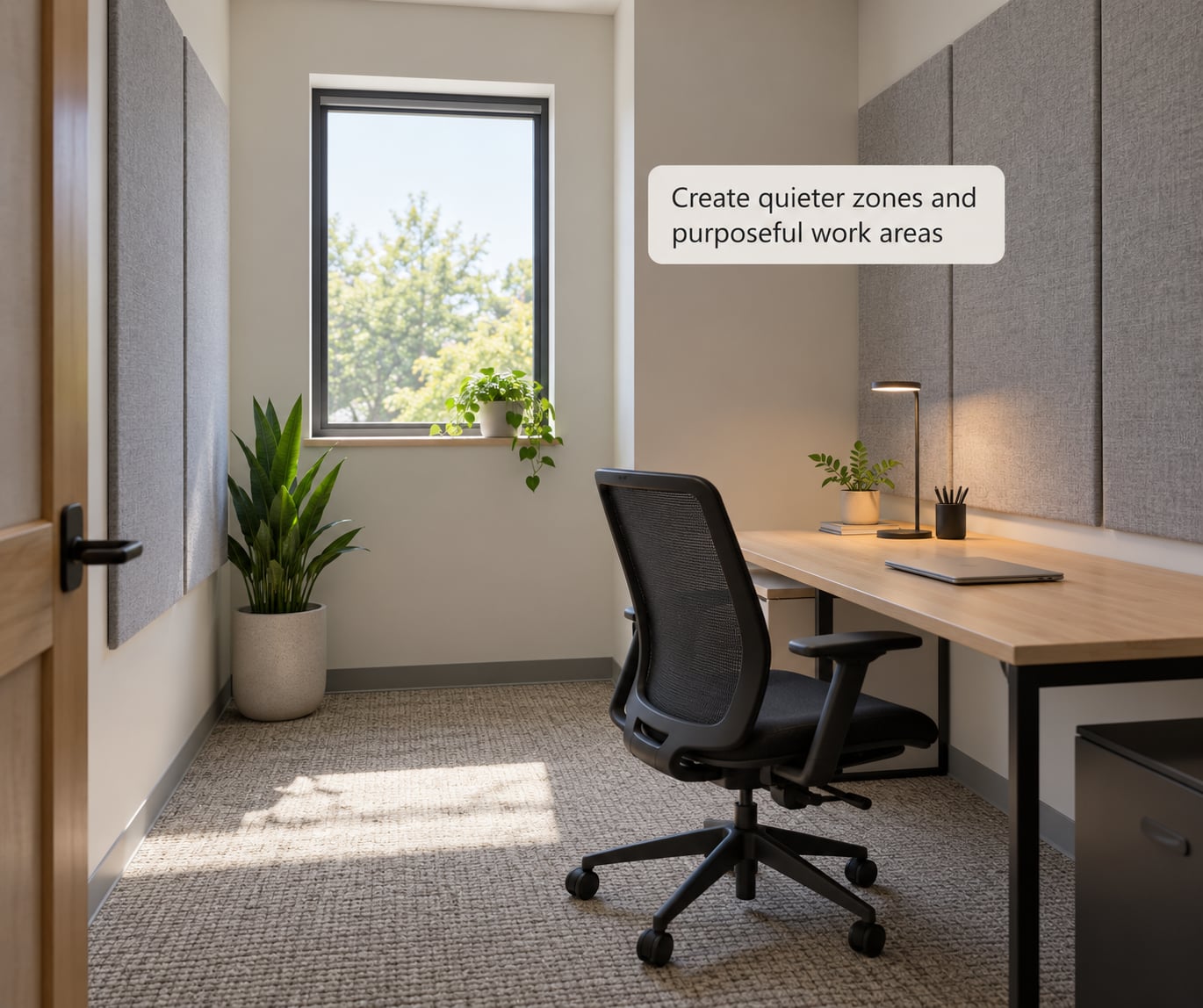
One rule does most of the work here: stop treating every seat as an equal. Most open plans mix deep work, calls, and collaboration on the same floor with no difference between them.
Split the floor into zones. A quiet zone with no calls and no meetings. A call zone near a phone room or booth. A collaboration hub where conversation is the point. Then move the tasks to the zone that matches them.
Even one small focus room, booked like a meeting room, changes behaviour more than a full acoustic refit. Workers stop taking calls at their desks because there is somewhere better to take them. If sound masking is already installed and people still cannot concentrate, the problem is usually zone design rather than volume, which is a point the office worker health risks guide also touches on.
3. Set team agreements for calls and conversations
Agreements beat reminders. Six short rules cover most floors.
- Calls longer than five minutes move to a phone room or the call zone.
- Headphones on means focus, with two earbuds as a firmer signal than one. Inconsistent signals get misread across teams, so agree the code in writing.
- One-on-ones happen away from the desk cluster, never over a keyboard at shoulder height.
- Quick questions go to chat first and become a call only if chat stalls.
- No eating at desks in the quiet zone. Repetitive sounds such as chewing and fork squeaks are among the top reported triggers, especially for people with misophonia.
- Meeting-free windows run at set times, published to the whole team.
Draft the rules with the team, not for them. A rule invented by a manager and imposed gets worked around, and the workaround becomes louder, not quieter.
4. Reduce predictable equipment and activity noise
Some noise is an accident of furniture placement. Printers and shredders land in walkways because nobody planned for sound. Relocate them to a side wall or a small print room, then soften the doors with closers and seals.
Adjust what you can: chair casters, phone ringers, desktop alert volumes, keyboard click feel, and the closing force of door swings. Schedule the noisy work. Deliveries, printer runs and deep cleaning belong at set times, not whenever someone gets round to them.
Then look up. Rattling ductwork and rattling light fittings are building faults, and they get logged as facilities tickets, not absorbed silently by your staff.
5. Give employees tools for individual focus
This is the layer people start at, and it works better than most managers expect. But choose the tool for the actual noise.
Active noise cancelling works on steady low-frequency sound: HVAC, traffic, fans, distant printer rumble. It barely touches human speech, because speech sits in the middle frequencies the technology is worst at removing. If you can follow a conversation through your headphones, they are not solving your problem.
For speech, block the ear instead. Foam earplugs worn under headphones are unglamorous and effective. Filtered earplugs are gentler for all-day wear. Keep a clean spare pair in your desk, because compressed foam plugs flatten after a few uses and stop doing anything.
Layer masking on top at low volume. Brown noise sits lower and feels less sharp than white noise. Keep it below the level of nearby speech so you are masking, not adding noise. Some people find constant broadband noise worse than the office, and reports of headaches and extra distraction are common enough to take seriously. Test for a week before you commit.
Add a visual do-not-disturb signal, batch your notifications into two or three checks a day, and schedule cognitively heavy work in your clearest window rather than wherever the calendar lands. If you want the deeper version of that last idea, the proven plan for reducing stress at work covers the routine around it.
6. Test the changes and ask for feedback
Run any change for four weeks. Noise habits adjust fast, so a shorter trial measures your own reaction rather than the change.
Repeat the distraction log in week four and compare interruptions per day and recovery time. Add a short anonymous pulse survey: two questions on distraction and one on whether the new arrangement is sustainable. Ask about the change you hoped for, and also ask what got worse, because quiet zones that isolate people generate their own complaints.
Where you have influence, ask facilities for a sound level reading at your desk, not just in the empty room. Measurements taken unoccupied make an office look better than it is during a busy Tuesday.
7. Make the quieter office the normal standard
Once something works, write it down and give it an owner. A one-page standard covering zone rules, phone room booking, quiet hours and the maintenance of panels and seals stops the whole thing decaying when one person moves teams.
Review it quarterly, and again after any layout change, because a rearranged floor undoes an acoustic plan quietly. Persistent problems go to facilities, HR or your workplace health contact with your log attached. Legal and health-and-safety duties around workplace stress vary by country and state, so ask rather than assume.
Common Mistakes
Treating every interruption as misconduct. Most people interrupting you are not being rude, they simply cannot see that you are mid-flow. That is a design problem. The fix is a visible signal and a team agreement, not a complaint to a manager.
Buying headphones before diagnosing the source. If the floor’s problem is speech, headphones will disappoint. That is why the log comes first, and why the zone rules outrank the equipment budget.
Writing rules without employee input. Imposed rules get routed around quietly. Five minutes of input from the people wearing the headphones prevents months of passive resistance.
Enforcing silence and killing collaboration. An office where nobody can talk loses the spontaneous problem-solving that justified the open plan in the first place. Zone and schedule instead of banning conversation.
Assuming masking fixes everything. Masking lowers speech intelligibility, it does not remove sound, and it can be its own distraction. Treat any installed system as a layer to test rather than a finished answer.
Measuring an empty office. Sound readings taken after hours and surveys run once, never repeated, produce numbers nobody can act on. Measure during a normal working day and keep a baseline.
Ignoring the return-to-office shift. Many employees came back from remote work with much lower noise tolerance than the office was built for. That tolerance gap is the real reason many complaints arrive at once, and it needs addressing as a design change rather than as individual fussiness.
Frequently Asked Questions
Do noise-cancelling headphones work in an open office?
Partly. Active noise cancelling targets steady low-frequency sound like HVAC, traffic and distant equipment, but it does little against human speech in the middle frequencies. For conversations, block the ear instead with foam earplugs worn under your headphones. Quick test: if you can follow a nearby conversation through them, they will not solve your main problem.
Does white noise help concentration or make it worse?
Both, depending on the person and the volume. Masking reduces how much speech you can pick out, which helps some workers a lot. Others find constant broadband noise irritating, and reports of headaches and extra distraction are common enough to take seriously. Try brown noise at low volume for a week, below the level of nearby speech, and drop it if focus drops.
How do I raise office noise with my manager without sounding whiny?
Bring numbers instead of adjectives. Log interruptions per day for two weeks, run a three-question anonymous team survey, and show which hours and which sources dominate. Then attach a cost and effort comparison so the conversation is about options rather than complaints. Ask specifically for a facilities sound reading and a four-week pilot of one change.
Are headphones all day bad for my ears?
Cumulative exposure is the concern, not a single afternoon. Keep playback at a moderate level, take regular breaks, and follow current safe listening guidance such as the WHO-ITU standard for volume and hours. Earplugs also need basic hygiene, and poorly fitting plugs can cause discomfort over time. For personal advice on your own hearing, see an audiologist.
What can my employer change about office noise?
Zoning comes first, because it is cheap and changes behaviour fastest. Then phone rooms or booths, acoustic panels and ceiling clouds, workstation dividers, softer furnishings, relocated printers, and sound masking as a later layer. Facilities teams can also supply a sound level reading for your desk during a busy working day, which makes the case much harder to wave away.
How do I know whether office noise is really hurting my work?
Count interruptions per day and time the recovery after each one. If you lose more than about an hour of recovery time daily, or you cannot finish a cognitively hard block before lunch, that is a pattern worth escalating. Repeat the log after any change. For chronic stress and sleep problems connected to the workplace, our guide to office worker health risks covers the wider picture.
Conclusion
Start tomorrow with a five-day distraction log and one consistent focus signal. That costs nothing and produces the numbers that make everything after it easier to argue for.
The combination that works is environmental change plus clear team agreements, not one or the other. Agreements stop speech at the source, zoning and panels cut the sound path, and ear protection covers what gets through. Review the result after four weeks, keep the standard documented, and treat noise as the workplace health problem it is.