
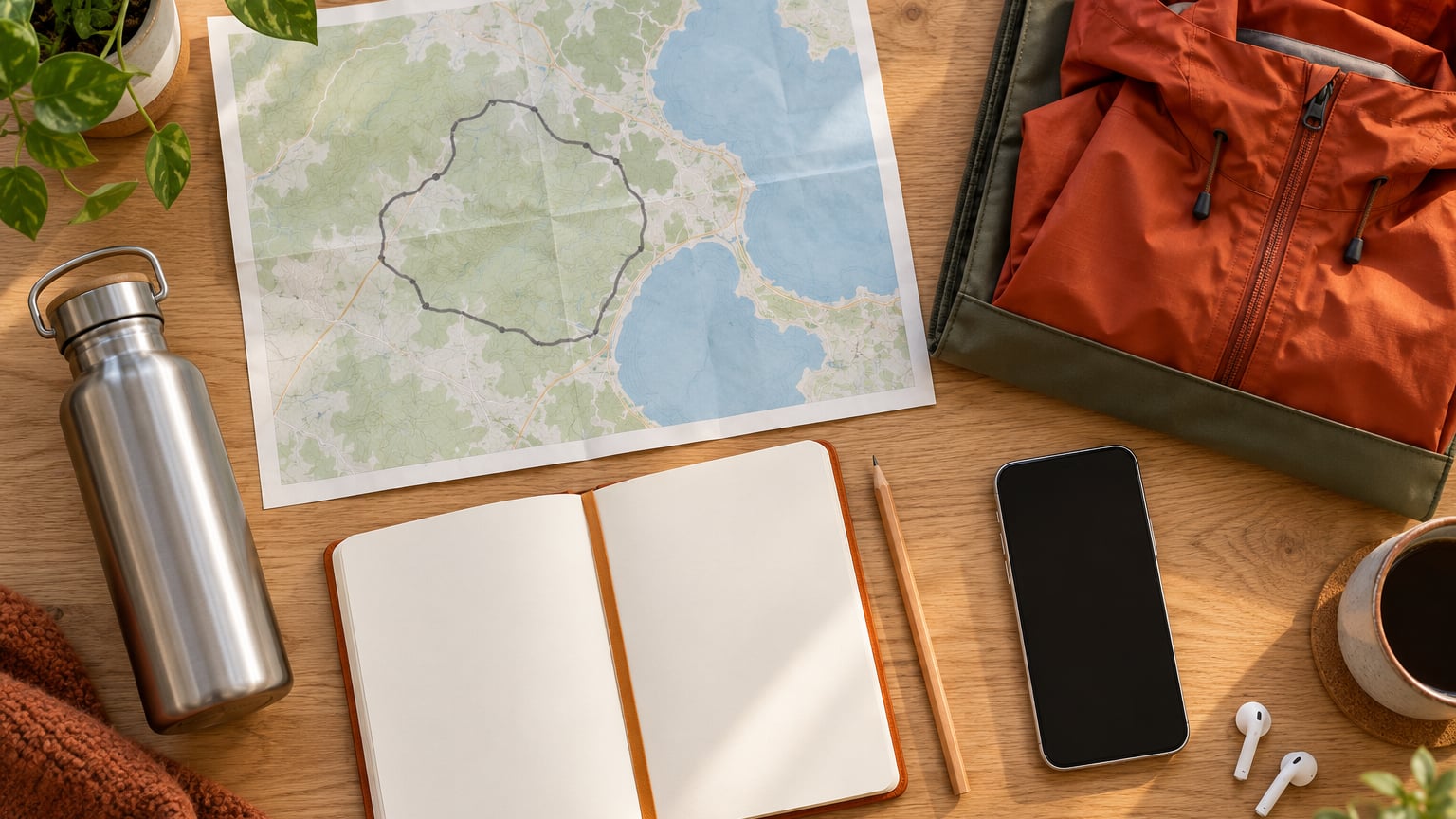
Running a walking meeting well comes down to six things: one clear purpose, two to four people, a short and safe route, an agenda shared in advance, a way to capture decisions, and a written follow-up. Get those right and the format pays off in ideas, mood and step count.
This guide covers walking meetings how to run them from the first invitation to the last email, including the parts most guides skip: accessibility, weather backups, note capture, and what to do with the people who can’t join outside.
If you need a starter agenda for other recurring meetings, my 15 safety meeting topics for monthly meetings list works well for the kind of structured conversation that still deserves a fresh-air slot.
What You Need
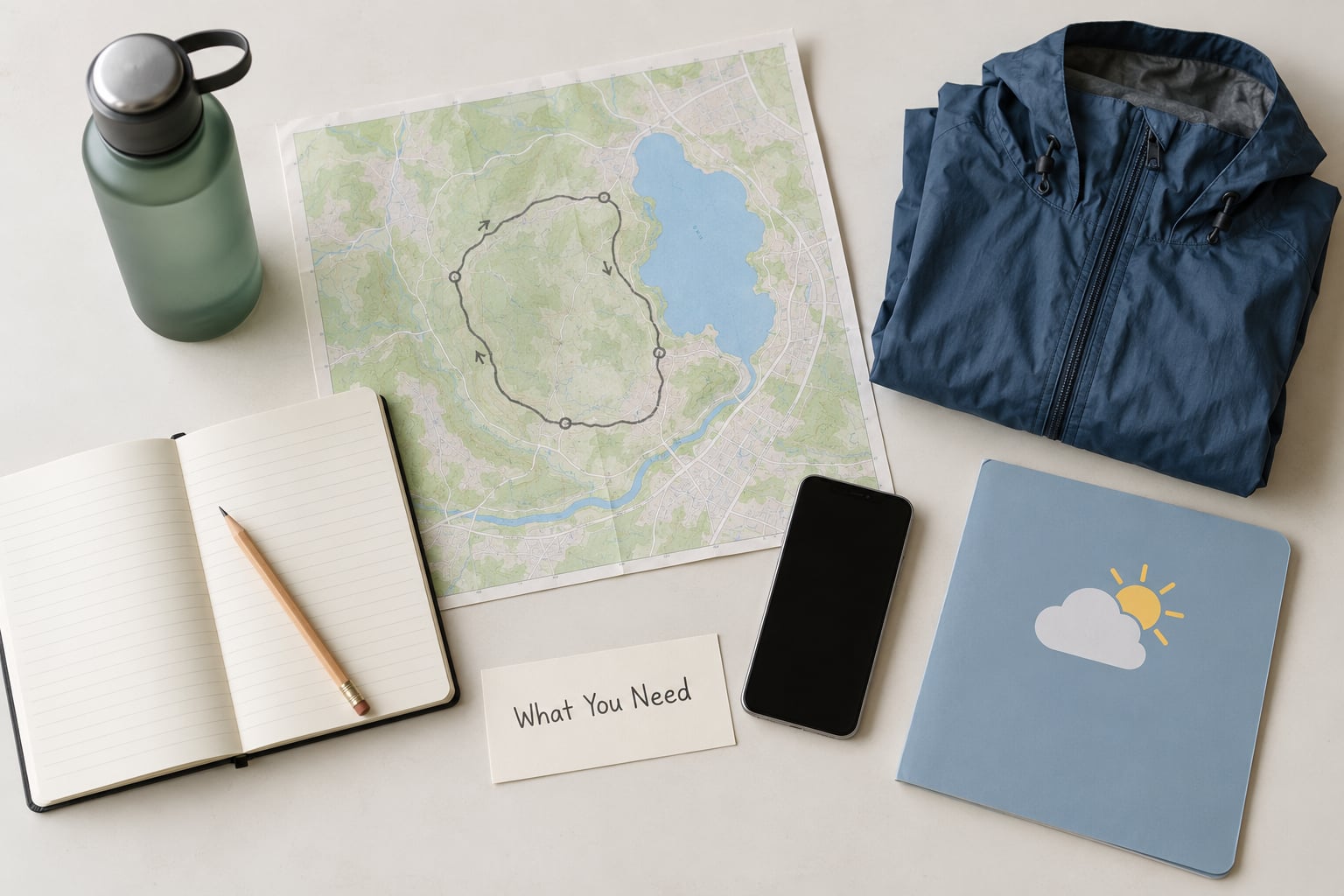
You need very little equipment and no budget line. What you need is preparation. Most people who try one walking meeting, dislike it, and quietly go back to the conference room did it because something below was missing.
A purpose that fits the format
A walking meeting suits open thinking: early ideas, a stuck problem, a one-on-one check-in, a first conversation with someone new. It does not suit anything where people need to stare at a shared screen, read a document together, or work through a long checklist. Write the outcome in one sentence before you invite anyone.
A route you have walked yourself
Pick a loop you know, ideally 10 to 25 minutes, flat, well lit, with crossings you are comfortable at in the dark. A park path or quiet block beats a busy main road every time. Walk it once alone before you bring anyone else along.
A time that protects energy
Mid-morning and just after lunch work for most people. Late afternoon works when it doubles as a transition out of work mode. Pick a slot that does not eat into anyone’s break, and treat that slot as the meeting’s real end time.
One way to capture decisions
Choose before you start: a shared document someone types into, a voice memo you transcribe later, or a phone assistant that records and summarises. Decide who owns it. On a walk, the person holding the phone cannot also be the one deciding what matters.
An accessibility check and a fallback
Ask in advance whether anyone needs a seated option, and offer one without apology. If mobility, heat, cold, air quality or weather is a factor, that is a normal workplace-health planning item, not a favour anyone has to request twice.
Step-by-Step
1. Define the meeting purpose and desired outcome
Decide the kind of conversation you are having: a decision, feedback, creative exploration, or connection. Those four need different meeting shapes and different amounts of walking. A decision meeting walks shortest and ends at a bench. A creative session can go longer and wander a little.
Write the outcome as one sentence and put it in the invite. “By the end we pick three candidate names” is useful. “Team bonding” is not.
You know it worked when the invite gets a one-line reply from everyone confirming they saw the objective, or nobody asks what the meeting is for.
2. Choose a safe, accessible route and time
Walk the route yourself first. Note where the crossings are, where the lighting drops off, where there is somewhere to sit, and where a wheelchair or stroller would struggle on soft ground. Two benches on a loop is plenty.
Set the window before you set the meeting. Twenty to forty minutes suits most conversations; anything over an hour gets tiring and people start drifting. Send the start point and expected finish point in the invite so nobody has to guess where to show up.
Watch the weather for the day, not the season. Have the indoor fallback written into the invite with a decision time and a named person who makes the call. That single habit removes most of the cancellations people complain about.
You know it worked when the group arrives within two minutes of each other and nobody stops to check the route.
3. Invite only the people who need to attend
Walking means side by side, so the quality drops fast past four people. Send the invitation with the format stated plainly: outdoors, walking, about 30 minutes, come dressed for it. Advance notice matters because shoes and weather change how a person feels about being outside.
Ask about accessibility needs when you send the invite, not at the door. Offer a seated indoor version for anyone who wants one, and include it as a normal option in the invite rather than a private favour. People who join remotely should get the agenda in the same document at the same time.
You know it worked when everyone arrives knowing what the meeting is, and nobody spent the first five minutes asking what they should have brought.
4. Set the agenda and discussion norms
Keep it short. An opening, two or three discussion points, then a decision or takeaway period. Walking meetings lose structure fast because nobody is facing the group and there is no table to look at.
Share the agenda at least a day ahead so people can arrive with an opinion rather than a warm-up. If a topic needs a shared document or a screen, that topic does not belong on this walk.
Norms worth stating out loud: one conversation at a time, phones down except for the person capturing notes, ask before extending the route, and anyone who needs to slow down says so without apologising. Ten minutes of norms at the start saves half an hour of awkwardness later.
You know it worked when the first ten minutes contain actual topic discussion rather than weather small talk.
5. Start the meeting and manage the conversation
Begin standing still. Say the objective, the finish time and the finish point, check that everyone is comfortable with pace and weather, then start walking. Starting on the move means the first question arrives before anyone has settled.
Match pace to the slowest person and keep the group in a loose single file on busy paths rather than a tight cluster. Pause at a bench when a topic needs focus. Those pauses are where the real thinking happens, and they are a normal part of the format rather than an interruption.
Watch for the common failure mode where a walking meeting turns into a walk with silence. If two people have been quiet for a stretch, ask them directly by name. If a disagreement shows up, slow down or stop, because walking while heated is how people say things badly.
You know it worked when most people are talking within the first five minutes and everyone is walking at the same speed.
6. Capture decisions and end with a follow-up
Assign a decision owner in the first minute. That person captures the outcome and sends the follow-up within the hour, while the conversation is still fresh and nobody has returned to a desk full of other work.
End at the point you promised, not wherever the conversation lands. Summarise three things as you arrive: what was decided, who owns each next step, and by when. Then send a short note with decisions, owners and deadlines. A walking meeting that produces no written record is just a chat with extra steps.
You know it worked when the follow-up needs no editing and nobody has to ask what they agreed to.
Common Mistakes
Picking meetings that need note-taking
Review, budget, contract and technical deep-dives belong at a desk. Fix: match the format to the task. Walk for thinking, sit for detail.
Walking too far, or too long
Over an hour on hard pavement turns a nice idea into a sore-ankle complaint. Fix: 20 to 40 minutes, flat route, agreed finish point.
Skipping the accessibility and weather check
Cold, heat, poor air quality or mobility needs turn a good idea into an exclusion. Fix: ask before the invite goes out, write the fallback room in the invite, and name who makes the weather call.
Inviting the whole team
Side-by-side conversation works for two to four people. Beyond that, voices disappear. Fix: keep the walk small and let the rest join from a written summary.
Moving at one person’s pace without asking
Somewhere in walking meetings how to run them, pace is where good intentions go wrong. Fix: agree the pace out loud, split into two groups for part of the route, or switch to a seated catch-up for the detail.
Letting the outcome live only in conversation
Fix: one named note-taker, decisions summarised at the end, written follow-up the same day. For teams already juggling odd hours, the timing of that walk matters more than the distance. My piece on shift work sleep problems and how to fix them covers why an early walk can cost more than it gives.
Frequently Asked Questions
What is a walking meeting?
A walking meeting is a work conversation held on foot instead of at a table, usually with two to four people for 15 to 30 minutes. It works best for open thinking: early ideas, a stuck problem, feedback, or a check-in. Anything needing a shared screen, a document read aloud, or a long checklist belongs at a desk.
How long should a walking meeting be?
Twenty to forty minutes is the useful range. Shorter and the warm-up eats the conversation. Longer and people tire, spread out and drift. Set a finish point and a finish time before you start, and treat the time as the real end of the meeting so nobody feels cut off mid-sentence.
How many people should be in a walking meeting?
Two to four. Side-by-side conversation needs room, and past four people the slower speakers get left behind while the confident ones set the pace. For a larger group, take the walking conversation with the people who matter most and share the outcome with everyone else in writing the same day.
Is it okay to talk while walking?
Yes, and it is the whole point, but the physics are real. Easy-paced walking while speaking raises the sound of your voice and makes people breathe harder, so slow down when the topic matters. Stop at a bench for anything sensitive or heated, and choose a route away from traffic noise.
Can you run a walking meeting with a remote team?
Yes, though it needs more care. Send the agenda early, put remote participants on the call before anyone starts walking, and agree that in-person walkers stay in open space where signal is decent. Expect more audio problems than usual, so keep the discussion conversational and write the notes as you go.
How do you take notes while walking?
You mostly do not write while walking. Put the capture method in place before you start: a shared document with one person typing, a recorded voice memo transcribed afterwards, or a phone assistant that summarises at the end. Whichever you use, name the owner and send the summary the same day.
Conclusion
Start with one meeting, one purpose and one route you have already walked. The first action takes five minutes: pick a conversation that needs fresh thinking, write the outcome in a single sentence, and send an invite that states the format, the duration and the meeting point.
Walking meetings earn their place when the work is open-ended, the group is small and the follow-up is written down. They lose it when the topic needs a screen or the note-taking becomes an afterthought. Run the first three as a trial, send the summaries either way, and let the record decide whether the format stays.