
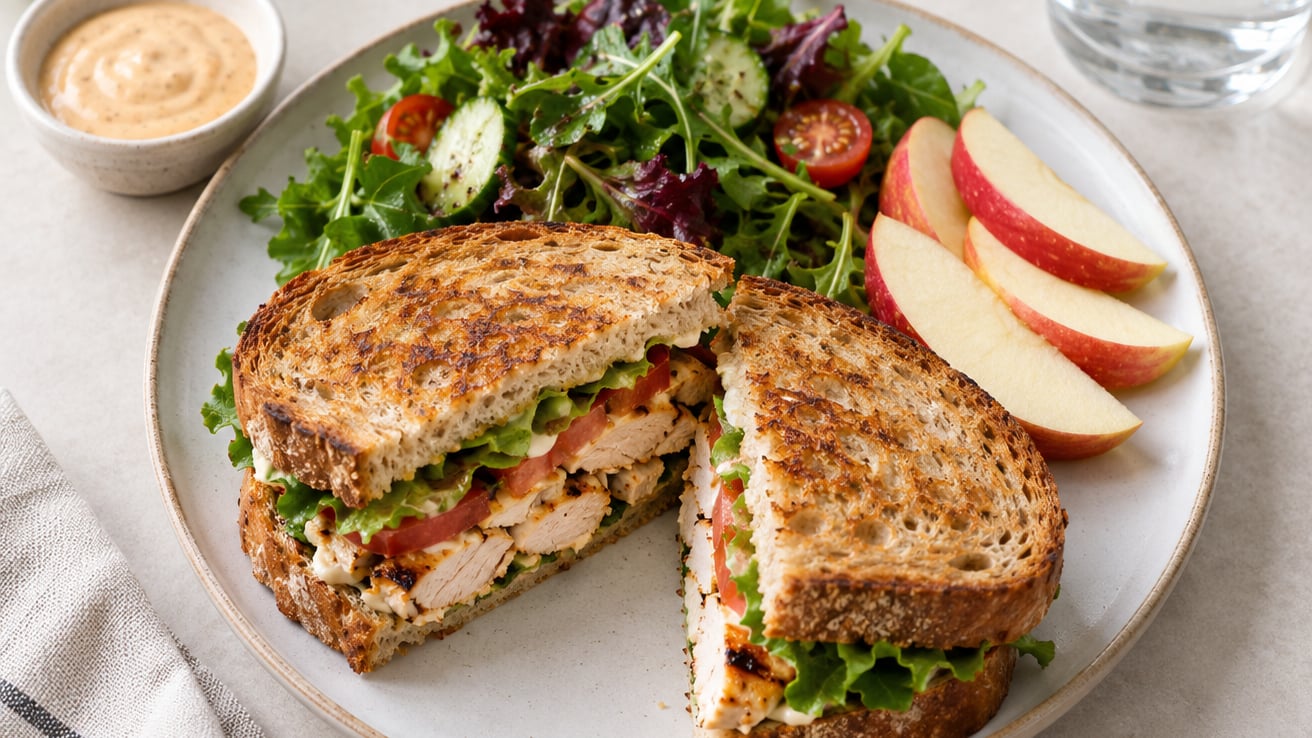
Knowing how to eat healthy at fast food restaurants comes down to four changes at the counter: choose grilled or roasted protein instead of fried, size the order down, add vegetables while keeping heavy sauces to a few bites, and drink water or unsweetened tea. Make those four moves and a drive-thru meal can still fit an ordinary day without feeling like a compromise.
None of it requires tracking every calorie or giving up the foods you like. It takes about a minute of thought at the window, and it works as well on a work lunch break as it does on a two-hour road trip.
Table of Contents
- What You Need
- Step-by-Step
- Step 1: Decide What the Meal Needs to Include
- Step 2: Check the Calories, Not Just the Headline
- Step 3: Build a Balanced Order
- Step 4: Customize High-Calorie Extras
- How to Eat Healthy at Fast Food Restaurants When Choosing Sides
- Step 5: Choose a Drink That Supports the Meal
- Step 6: Eat Mindfully and Adjust for Next Time
- Common Mistakes
- Frequently Asked Questions
- How can I make a fast-food meal healthier without removing everything I enjoy?
- Are salads automatically the healthiest choice at fast food restaurants?
- Can I eat fries while still making a balanced fast-food meal?
- What should I do if a restaurant does not publish nutrition information?
- How do I choose a fast-food meal for a specific dietary restriction?
- When should I consult a doctor or registered dietitian about my eating plan?
- Conclusion
What You Need
You need less than most people expect.
- Nutrition information for the menu, wherever the restaurant publishes it: a posted panel at the counter, the chain’s website or app, or a calorie-tracking app.
- A rough sense of your own daily calories and sodium limit, so you can tell whether a meal fits. A working number is enough, and no food diary required.
- Willingness to make three small requests: a smaller size, sauces on the side, and no added salt. Cashiers handle these all day long.
- One backup snack for genuinely long gaps between meals, such as nuts, fruit or a yogurt cup kept in a desk drawer or a small cooler.
You do not need a restrictive diet, a gym membership, or a supplement. Fast food menus are built mostly from protein, grain and vegetables, so the real work is selection and portion, not substitution.
Step-by-Step
Six steps, in order. They take about as long as reading the menu board.
Step 1: Decide What the Meal Needs to Include
A satisfying meal has four parts: a lean protein, a vegetable or piece of fruit, a high-fiber carbohydrate, and a drink. Decide on those four before you look at any single item, and most of the ordering decisions make themselves.
Lean protein means grilled, roasted or blackened chicken, a single beef patty, beans, or egg. Vegetables and fruit mean a side salad, apple slices, a fruit cup, or the peppers and onions already inside a burger. The carbohydrate is a bun, a modest portion of fries, beans, or a grain. The drink is water, unsweetened tea, or plain milk.
Build it that way and the meal holds together even when the restaurant is not cooperating.
Step 2: Check the Calories, Not Just the Headline
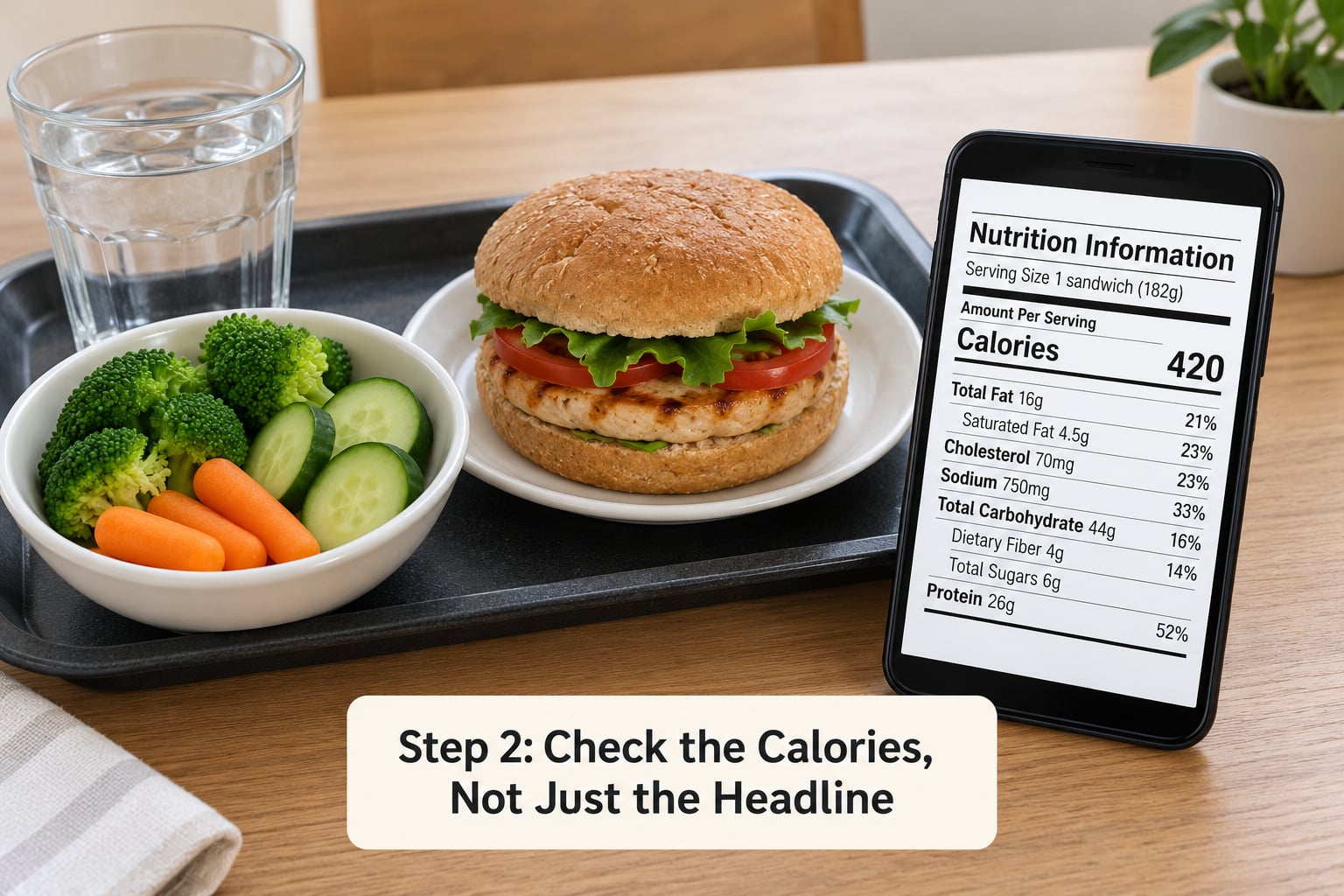
Chain restaurants publish their nutrition information. It is posted at the counter, listed on the company’s website and app, and mirrored in most calorie-tracking apps. Find that panel before you order rather than after.
Read three lines, not the whole label. Calories tell you the size of the meal. Sodium tells you whether you will be thirsty and heavy by mid-afternoon, which matters if you are watching blood pressure. Saturated fat and added sugar tell you how much of the order is doing nothing for you.
Compare two similar entrees instead of memorizing numbers. If two chicken sandwiches sit at 320 and 720 calories, the decision takes two seconds and no arithmetic.
Step 3: Build a Balanced Order
Four combinations cover most drive-thrus and counter-service menus.
- A grilled chicken sandwich on a bun with lettuce and tomato, a side salad or fruit cup, and water or unsweetened tea.
- A single burger with lettuce, tomato and onion, sauce on the side, and either a small side salad or a small portion of fries.
- A salad bowl with grilled protein, beans, corn, salsa and dressing on the side. The bowl beats a wrap, which is mostly tortilla.
- A grain bowl with a protein, roasted vegetables and a light dressing, which is the easiest balanced order when a chain offers one.
The pattern in each one is the same: protein first, vegetables included, starch portioned, sauces separated. Anyone learning how to eat healthy at fast food restaurants can run this checklist in a few seconds.
Step 4: Customize High-Calorie Extras
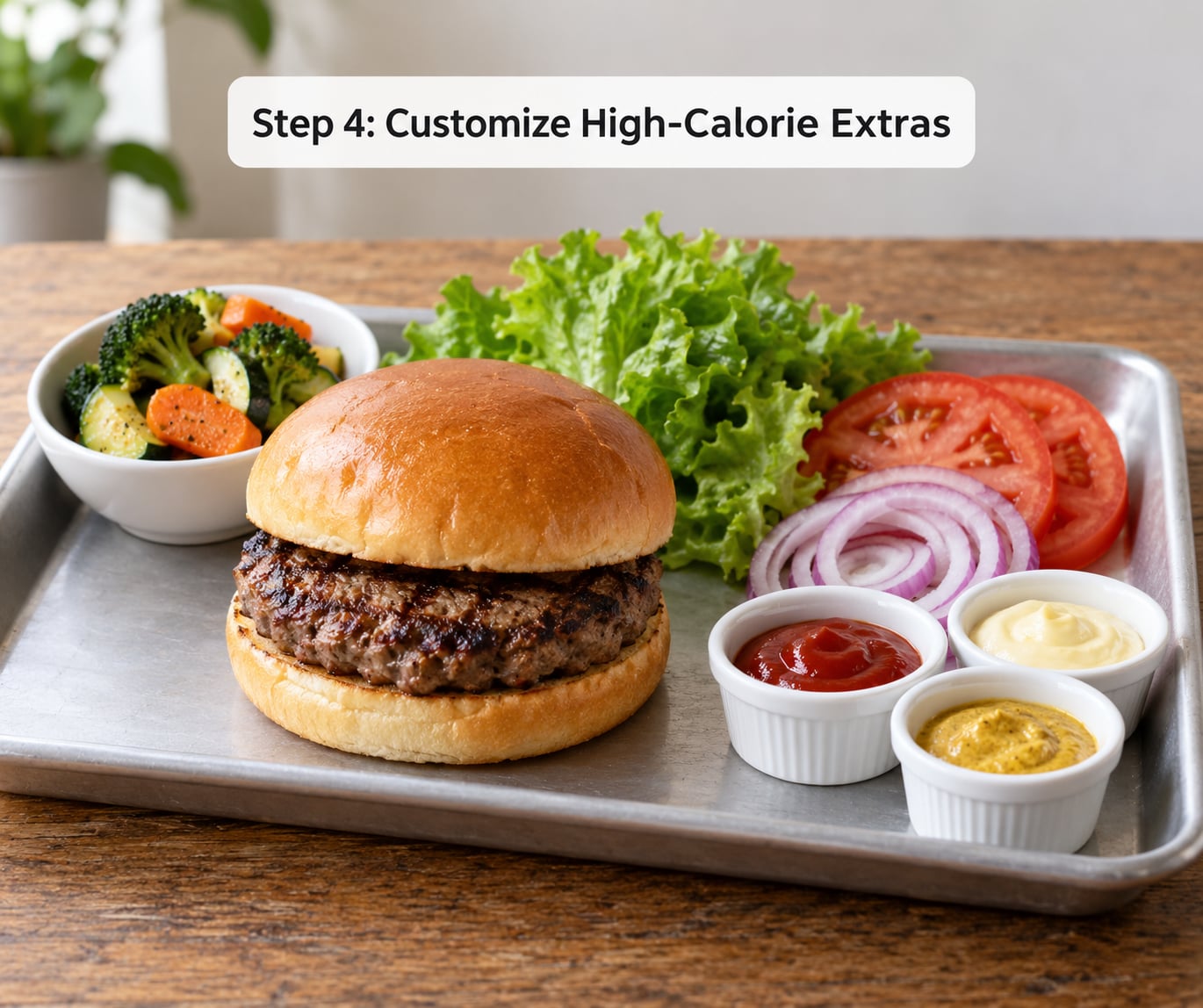
Extras are where a sensible order turns heavy. A sandwich that looked fine picks up several hundred calories from bacon, cheese, mayonnaise, and a sauce added without asking.
- Ask for sauces, dressings and gravies on the side, then use a few bites instead of drizzling.
- Skip bacon, and ask for light cheese or none rather than the default stack.
- Add vegetables. Extra lettuce, tomato, onion, peppers or cucumber costs almost nothing and makes the sandwich bigger without adding meaningful calories.
- Ask for no added salt where the counter can manage it, and choose a small size instead of the value combo, which usually bundles the largest fries and a full-size drink.
- Use ordering words that travel across chains: fresco style, lite, no cheese, sauce on the side, no mayo.
Not every swap is an improvement. A salad loaded with croutons, fried toppings and creamy dressing can outweigh a plain burger, and a “light” dressing can still be a large pour.
How to Eat Healthy at Fast Food Restaurants When Choosing Sides
Sides decide about half the calories in a typical combo. Here is how the usual options stack up.
- Vegetables and a side salad are the strongest everyday choice: volume and fiber with very little added fat.
- Fruit cups and apple slices deliver sweetness without the added sugar of a soda or a dessert.
- Baked beans add fiber and protein, and pair well with a burger that already carries a bun.
- Small portions of fries are fine when you want them. Ask for the small size and skip the large.
Here is the rule I fall back on: if you want a richer entree such as a burger or fried chicken, take the vegetable side. If you chose a salad bowl or a grilled sandwich, a small portion of fries fits without much fuss.
Step 5: Choose a Drink That Supports the Meal
Ranked from best to perfectly fine:
- Water. No calories, no sugar, and it does the job.
- Unsweetened tea or black coffee, also calorie-free. Watch flavored and creamy coffee drinks, which can carry as much sugar as a soda.
- Plain milk, which adds protein and calcium.
- Lightly sweetened drinks, when you simply want sweetness.
Regular soda is the item that quietly undoes the rest of the order, and the drink is where learning how to eat healthy at fast food restaurants pays off fastest. Sugar accumulates fast across a meal and faster across a week, and a large fountain drink is one of the highest-calorie things at any fast food counter. Zero-sugar drinks cut the sugar, though some health experts suggest keeping artificial sweeteners moderate rather than treating them as unlimited.
Step 6: Eat Mindfully and Adjust for Next Time
Sit down for the first few bites when you can, and put the phone away. Fast food is easy to finish in four minutes, and eating speed matters more than most people expect.
Stop when you are comfortably satisfied rather than when the container is empty. Saving half an order for later is the portion-control habit that people report sticking with longest.
Then pay attention to what actually worked: steady energy through the afternoon, no thirst spike, no heavy feeling. The combination that worked three times in a row is a keeper. The one that left you foggy at your desk is worth breaking into pieces to see which part caused it.
Treat one heavy meal as one meal, not a failed day. Nothing about ordering well at lunch gets undone by dinner.
Common Mistakes
Most unhealthy fast food orders are not the result of bad intentions. They are four or five predictable defaults.
- Choosing by the menu name. Words like garden, fresh or wholesome do not reliably mean fewer calories. Fix: check the posted numbers for the two items you are actually weighing.
- Taking the default combo. Value combos bundle the largest fries and a full-size drink. Fix: order the entree on its own, then add a small side and water.
- Drinking the whole beverage. A full-size soda can carry more calories than the burger next to it. Fix: order water, or drink half and set the cup down.
- Treating every side as equal. A side salad and a large order of fries are not interchangeable. Fix: pick one side deliberately, and pick the small size when it is the fried one.
- Assuming grilled means small. A grilled sandwich with cheese, mayo and a large fry is still a large meal. Fix: keep the add-on rules even on the healthier entree.
- Rewarding the order afterward. People who feel they compromised tend to add chips, a shake or heavy condiments to feel entitled. Fix: order what you actually wanted the first time and skip the apology meal.
Quick Tips for a Better Fast-Food Order
These are the shortcuts for the moments when you have no time to think.
- Preview the menu on your phone before you pull up, so the order is decided before the speaker crackles.
- Favor the simplest sandwich on the board. A plain grilled item with vegetables is easy to reason about; a specialty build with nine toppings is not.
- Treat sauces as condiments rather than ingredients: request them on the side and dip.
- Share a large fry between two people instead of ordering two. You get the taste and half the oil.
- For a 7 a.m. start, eat a real breakfast first. A pastry and a coffee is not a meal, and hunger by mid-morning sets you up for the value combo at noon.
- On days with a genuinely long gap between meals, keep one satisfying snack within reach, such as nuts, seeds, fruit or yogurt, so the drive-thru becomes a stop rather than a rescue.
Frequently Asked Questions
How can I make a fast-food meal healthier without removing everything I enjoy?
You rarely need to remove foods. Keep the entree you want and change four things around it: order a smaller size, ask for sauces on the side, add vegetables instead of bacon and extra cheese, and swap the drink for water or unsweetened tea. Those changes remove most of the calories and sodium while leaving the meal recognizable and satisfying.
Are salads automatically the healthiest choice at fast food restaurants?
Not automatically. A salad with fried toppings, croutons and a creamy dressing can carry more calories and saturated fat than a plain burger, and restaurant salads often arrive already dressed. Ask for dressing on the side, skip fried toppings, and add a protein such as grilled chicken, beans or egg. Then the salad earns its name.
Can I eat fries while still making a balanced fast-food meal?
Yes. A small portion of fries fits inside a balanced meal, especially when your main is a salad bowl or a grilled sandwich. Ask for the small size, skip extra salt if you are watching sodium, and pair it with water rather than a soda. If your main is already a burger or fried chicken, take the vegetable side instead.
What should I do if a restaurant does not publish nutrition information?
Ask, and use what the chain publishes online. Most large chains post full nutrition information on their website and app even when the counter panel is missing, and calorie-tracking apps mirror it. If nothing is available, order from the pattern instead: grilled protein, vegetables, one small side, and water. That combination holds up even without numbers.
How do I choose a fast-food meal for a specific dietary restriction?
Start with what the kitchen actually substitutes rather than what the menu name implies. For low sodium, grilled items without cured meat, seasoning packets or extra sauce beat anything brined, battered or cured. For low carb, a bowl or salad without a bun or tortilla works. For vegetarian, a bean or grilled-vegetable bowl is the dependable choice. Staff can explain the grill and fryer setup.
When should I consult a doctor or registered dietitian about my eating plan?
See a doctor or registered dietitian if a condition you manage is affected by diet, such as diabetes, high blood pressure, kidney disease or heart disease, or if your goals involve weight change, pregnancy or a history of disordered eating. Bring the restaurant nutrition information with you. General ordering guidance suits most people; personal plans should not be built from an article.
Conclusion
The best way to eat healthy at fast food restaurants is not finding a perfect item. It is building a simple meal you can repeat: grilled or roasted protein, vegetables added, one modest side, water, and sauces on the side.
If you change one thing tomorrow, add vegetables. The next, choose water. After that, portion a single indulgent extra instead of three. That sequence alone does more than any label reading.