
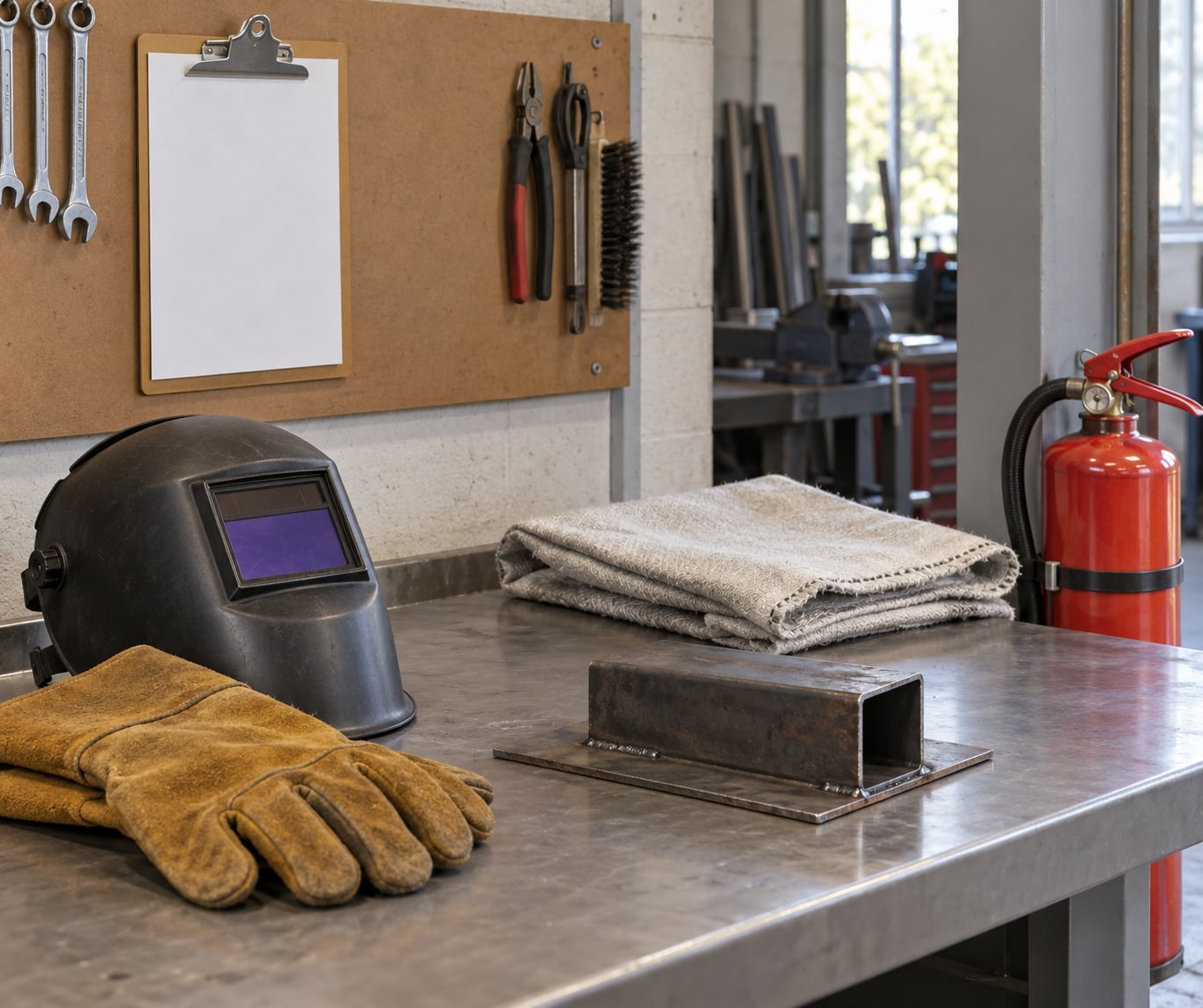
A hot work permit is a written authorisation that a named person signs before welding, cutting, grinding, brazing or any other spark- or flame-producing job starts. It records where the work happens, what could catch fire, which controls are in place, and who is watching for fire while the work runs. Direct answer first: hot work permit how it works comes down to a short chain — request, hazard assessment, control planning, sign-off, posting, fire watch, close-out.
Most sites that use permits end up with the same seven-step rhythm, so it is worth walking through it once. If you are also trying to understand how chemical hazards sit alongside the fire risk on a job, our solvent exposure health effects at work guide covers that side.
Table of Contents
- What Is a Hot Work Permit?
- Hot Work Permit How It Works Step by Step
- What Jobs Require a Hot Work Permit?
- Who Approves and Uses the Permit?
- What the Hot Work Permit Must Document
- How Fire Prevention and Fire Watch Controls Work
- How to Close Out a Hot Work Permit
- Common Hot Work Permit Mistakes
- Frequently Asked Questions
- How long is a hot work permit valid?
- Do all hot work activities require a written permit?
- What qualifications must the fire watch have?
- Can a contractor use the same hot work permit as the employer?
- When should gas testing be required before hot work?
- What should happen if hot work stops before the permit expires?
- Conclusion
What Is a Hot Work Permit?
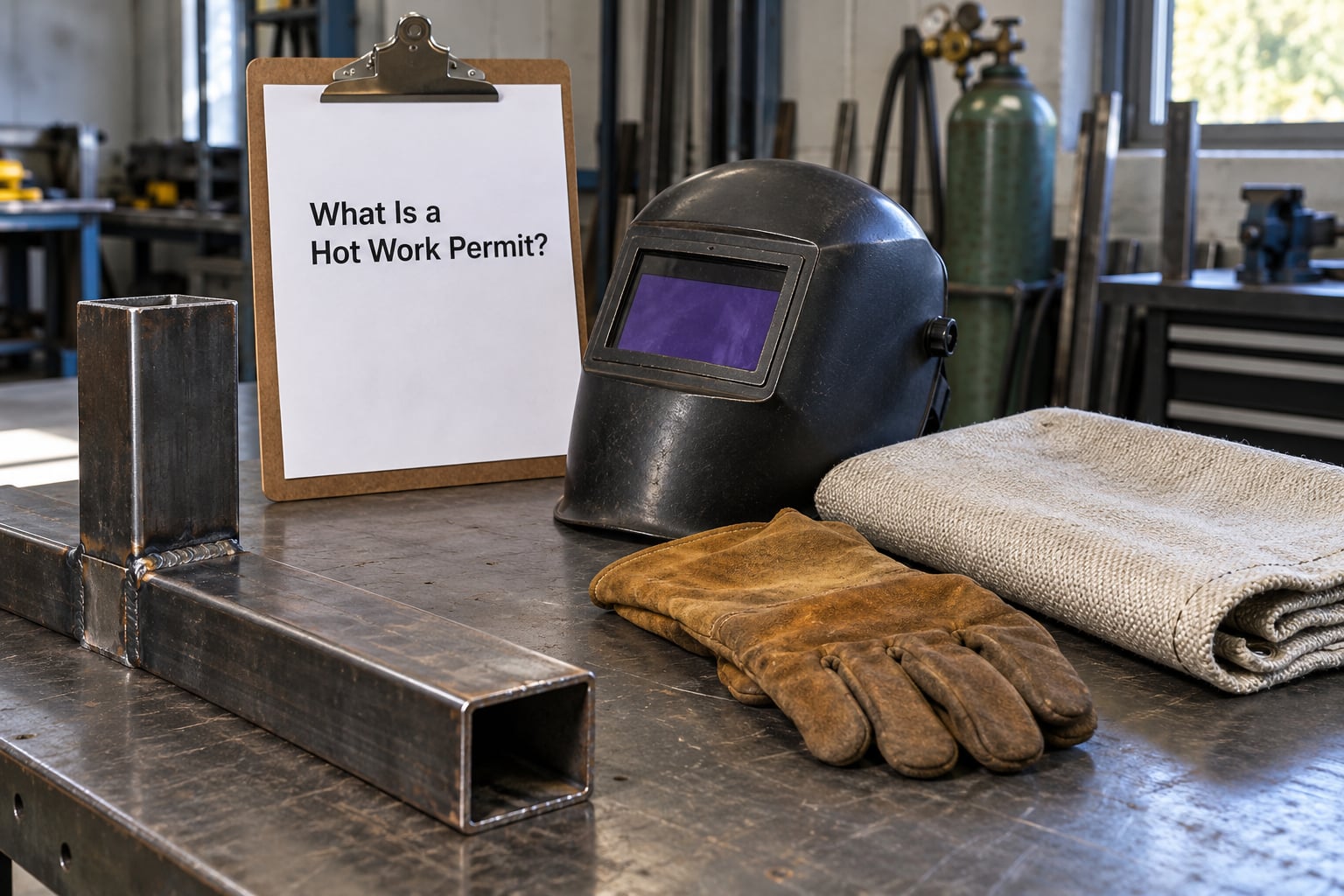
Hot work is any work that produces heat, sparks, flame or molten metal. A hot work permit is the document that says a competent person inspected the specific job, confirmed the fire controls are actually in place, and authorised the work to proceed for a stated period.
It is not a general work order and it is not a substitute for safe procedure. A work order tells a crew what to build. A hot work permit tells everyone in the building that an ignition source is live in a particular spot until a fire watch says otherwise.
Typical examples include arc and gas welding, oxy-fuel cutting, brazing, soldering, arc gouging, grinding that throws sparks, open-flame heating, and using a torch on a roofing membrane.
Hot Work Permit How It Works Step by Step
- Identify the activity and location. The requester names the equipment, the exact area, and the duration expected. Vague locations like “north bay” are where permits go wrong.
- Assess the hazards. A hazard assessment covers what is in and around the 35-foot work radius: combustible materials, flammable storage, piping carrying flammables, floor and wall openings, and nearby operations that might spread fire.
- Plan the controls. Materials are moved, protected or wetted down, openings are covered with fire-resistant material, fire doors are closed or fire watchers posted, and cylinders are stood upright and secured.
- Complete and sign the permit. The permit issuer signs only after physically inspecting the area, and only after confirming the issuer is authorised to hold that role for that location.
- Post it at the work area. The permit goes where everyone entering the area can see it, not on a clipboard in a supervisor’s truck.
- Monitor conditions while work runs. If the job drifts from the plan, the atmosphere changes, or work pauses and restarts, the permit is re-verified and re-signed before work continues.
- Close it out. After the work stops, the fire watch holds the post-work period, the area is inspected, and the permit is signed off and filed.
The document proves the controls are in place. It does not create them.
What Jobs Require a Hot Work Permit?
Welding, cutting and brazing are the obvious ones, because the arc or flame itself is the ignition source. Grinding deserves more attention than it gets: a wheel grinding a concrete floor throws sparks well beyond the operator.
- Arc, gas and MIG welding — molten metal and slag drop through floors and start fires in spaces below.
- Oxy-fuel cutting and torch work — open flame near anything combustible, including roofing membranes and timber.
- Grinding and cutting of metal — sparks that ignite dust, rags, sawdust or solvent residue.
- Brazing and soldering — lower heat, but the same approval habit keeps the rule consistent.
- Open-flame heating and bitumen boilers — sustained flame, usually on roofs or near timber structures.
- Spark-producing power tools — angle grinders, cut-off wheels and abrasive saws.
Work inside a purpose-built, designated hot work area is often exempt because the area is already engineered for it: non-combustible surfaces, fixed extraction, a designated extinguisher point, and trained staff. Exemptions are defined by your own hot work program, so check the rule rather than assuming. Some employers require a permit everywhere, including the welding shop, purely for consistency.
Regulatory definitions also drive requirements. OSHA 29 CFR 1910.252 and Subpart Q cover welding and cutting in general industry, NFPA 51B sets the fire prevention standard, and EPA risk management programs treat hot work on covered processes as a regulated hazard.
Who Approves and Uses the Permit?
The requester starts the paperwork and describes the work accurately. The supervisor confirms the job is scheduled, the crew is trained, and other trades in the area know what is happening.
The area authority or operations representative controls access to the space. The safety or environmental representative checks that the hazard assessment covers the real site conditions, particularly gas testing and confined space entry.
The permit issuer is the person with authority to approve hot work for that area. That authority is designated in writing, and it is not automatically the most senior person present. Several employers keep a formal list of permitted issuers because an unsigned-by-an-authorised-person permit is worthless during an audit.
The fire watch is a separate duty from the welder. Their only task during the watch is to watch for fire, keep the area clear, and raise the alarm. Practitioners say the same thing repeatedly: the fire watch role fails when it gets combined with other jobs.
The workers performing the job hold the permit conditions too. If the area changes, they stop and ask rather than adapt on their own.
What the Hot Work Permit Must Document
How to fill out a hot work permit form
Most hot work permit forms follow the same logic: who, what, where, when, and how it is controlled. Field by field, a complete permit records the following.
- Job details — date, start and expiry time, exact location, and the nature of the work.
- People — the person doing the work, the fire watch, and the signature of the authorised permit issuer.
- Equipment and materials — welding machine, gas cylinders, fuels, and the condition of hoses and regulators.
- Hazards present — combustibles within the work radius, flammable storage, pipelines, openings, adjacent equipment.
- Controls applied — what was moved, covered, wetted down, isolated or shut down.
- Isolation points — which valves, circuits or drains were closed, and under whose lockout.
- Fire protection — extinguisher locations and type, fire blankets, fire-resistant tarps, hose and water supply.
- Atmospheric test results — readings, instrument, time taken and who took them, when an enclosed or confined area is involved.
- Close-out — end of work time, fire watch completion time, and closing signature.
A blank box is a finding. Auditors treat missing fields as the easiest thing to cite, because it proves the issuer did not check what the form asked about.
How Fire Prevention and Fire Watch Controls Work
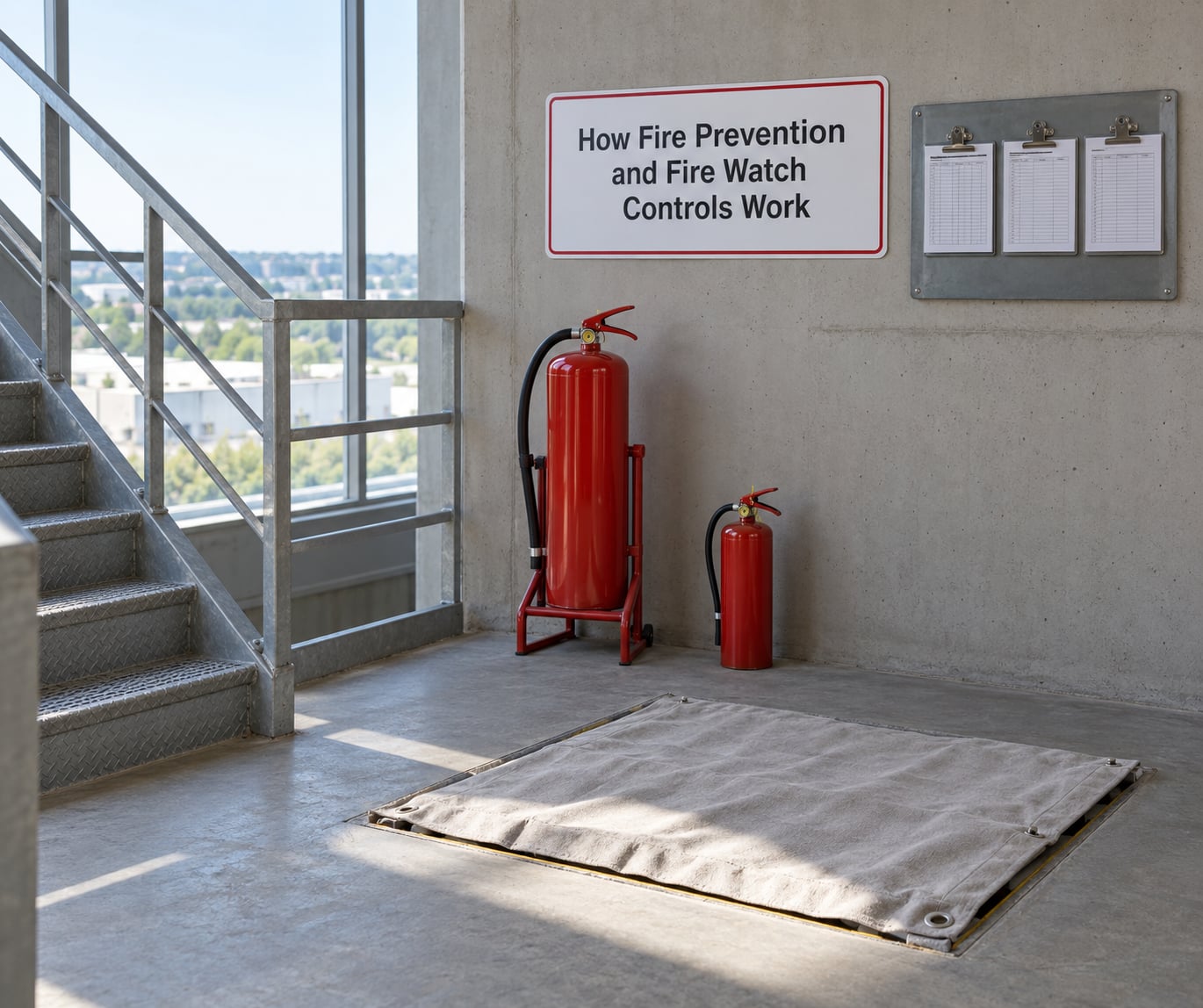
The 35-foot clearance rule is the most recognised requirement in hot work permit how it works guidance: move combustibles out of the area, or protect them with fire-resistant blankets, tarps or metal shields where they cannot be moved.
Where removal is not possible, protection has to actually cover the surface. Dampening down sawdust or rag piles helps, but it does not replace covering. Floor and wall openings get fire-resistant covers or fire watchers stationed on the other side, because sparks travel further than most people expect.
Flammable atmospheres are tested before work starts, and accepted readings are specific:
| Reading | Accept for hot work | Action if outside |
|---|---|---|
| Oxygen | 19.5% to 22% | Ventilate and retest; do not enter or work |
| Lower explosive limit | Below 1% LEL | Purge or ventilate and retest |
| Carbon monoxide | Below site and instrument alarm limits | Evacuate, investigate combustion source, retest |
| Hydrogen sulfide | Below site alarm limits | Evacuate, ventilate, retest before re-entry |
Testing happens where residue or vapour can accumulate: tanks, vessels, sewers, ducts, sumps and any confined space. A four-gas meter used at the door and nowhere near the bottom of a vessel proves very little.
How long the fire watch stays
Fire watch duration is the most confused requirement in the whole process, because different sources give different numbers. None of them contradict each other once you read them as minimums layered on top of each other.
| Standard | Minimum watch after work stops | When it applies |
|---|---|---|
| Regulatory minimum | 30 minutes | Baseline requirement under OSHA-aligned practice |
| Insurer and industry practice | 60 minutes continuous | Common loss-prevention recommendation and many employer standards |
| Extended monitoring | 60 minutes watch plus further monitoring, often up to 3 hours | After-hours work, unoccupied buildings, concealed spaces, adjacent areas |
While the watch runs, the fire watch stays at the work area, keeps it clear, checks for heat in adjacent spaces and behind walls, and does not take on another task. If the fire watch needs to step away, the work stops.
Once the watch is complete, the supervisor makes a final inspection of the area and the space below or beside it before the permit is closed. Concealed spaces and fire-resisting construction are the reason many programs extend the period.
How to Close Out a Hot Work Permit
Close-out is where most permits are treated as an afterthought, and it is where hidden fires start. Shutting down first: kill power to welding equipment, close regulators and cylinder valves, disconnect hoses and return cylinders to storage.
Then confirm nothing is smouldering: slag and spatter are swept, hot metal is allowed to cool in place, fire-resistant blankets stay down until they are cool, and the area beneath and adjacent to the work is checked.
The fire watch signs with the end time of the watch. The permit issuer or supervisor makes the final inspection, signs the close-out block, and the permit is filed for the retention period your program specifies. Retaining completed permits is often the simplest evidence an organisation has that its program runs as written.
Anyone working in the area after closure should know the permit was signed off, which is why the closed permit either stays posted until cleared or is handed to the area authority.
Common Hot Work Permit Mistakes
- Incomplete forms. Missing location detail, no expiry time, no fire watch name. Cheap to fix, and the first thing an auditor finds.
- The fire watch wanders off. Designated to watch and then sent for parts. The watch and the task cannot be the same person at the same time.
- Working past expiry. The permit lapses mid-shift and nobody notices because the form is in a pocket. Suspend or re-authorise instead.
- Skipping gas testing in vessels. Residue in a tank is the classic explosion scenario, and it is exactly where testing gets skipped for time reasons.
- No re-check after conditions change. Wind carries sparks into an adjacent bay, another trade starts grinding nearby, a solvent container is opened. Each of those needs a fresh permit decision.
- Treating the permit as paperwork. Signed from a desk without walking the area. It provides no protection at all in that state.
- Contractors working under a host permit without orientation. The crew does not know where the flammable storage or the nearest isolation valve is.
- Ignoring the designated area exemption. Or the reverse, assuming it applies when the area is not actually cleared and supervised.
Short-notice repair work is the pressure point. Emergency repair still needs a permit, but a pre-approved standing procedure for routine low-risk jobs saves more time than arguing about forms does.
Substance use and fitness for duty are part of the same control picture. Our trades worker substance misuse prevention guide covers what supervisors can reasonably do on a crew that is doing this work.
Frequently Asked Questions
How long is a hot work permit valid?
Validity is set by the permit itself, and most forms are written for a single shift rather than an open-ended period. Common windows run a few hours to the end of the working day. What matters more than the number is what happens at the end of it: work stops and the permit is re-authorised, or a fresh one is issued. Never treat an expired permit as a formality.
Do all hot work activities require a written permit?
Not always. Work carried out inside a designated hot work area, where the space is purpose-built, non-combustible, supervised and equipped for the task, is commonly exempt under employer programs. Outside those areas, welding, cutting, brazing, torch work and spark-producing grinding generally require a permit. Employer procedures can be stricter than the regulatory minimum, so the written rule is what counts.
What qualifications must the fire watch have?
The fire watch needs to understand the fire risks of the job, know where the nearest extinguishing equipment is, know how to raise the alarm, and be able to recognise when something is wrong. They also need the authority to stop the work. Crucially, they must have no other duty during the watch period, and they should be trained on what to inspect beneath, behind and around the work area.
Can a contractor use the same hot work permit as the employer?
Usually the host site issues the permit for its own premises, because the host controls the area and its hazards. The contractor still supplies trained welders and its own fire watch where the site requires one, and the contractor crew has to be briefed on the site layout, flammable storage and isolation points. Some large operators issue permits under their own program and require contractors to conform to it in writing.
When should gas testing be required before hot work?
Test before hot work begins in any enclosed or confined space, and anywhere vapours could accumulate, such as tanks, vessels, sewers, ducts and sumps. The usual acceptance criteria are oxygen between 19.5% and 22%, and a lower explosive limit reading below 1%. Testing at the entrance is not sufficient. Record the readings, the instrument and the time on the permit, and retest if work pauses long enough for conditions to change.
What should happen if hot work stops before the permit expires?
The permit stays open and the fire watch continues through the post-work period, because smouldering material does not respect schedules. If work is finished for the day, record the stop time, complete the watch and close the permit out properly. If work will resume later, most programs require a new permit with fresh checks of the area and atmosphere rather than reusing the old one.
Conclusion
A hot work permit works when it is filled in by someone who walked the area, signed by a person with authority to approve it, and closed out properly at the end. Start with the seven steps above, keep the fire watch free of other duties, and treat an expired permit as a stop rather than a technicality. That single habit prevents most of the failures that turn a routine welding job into a building fire.