
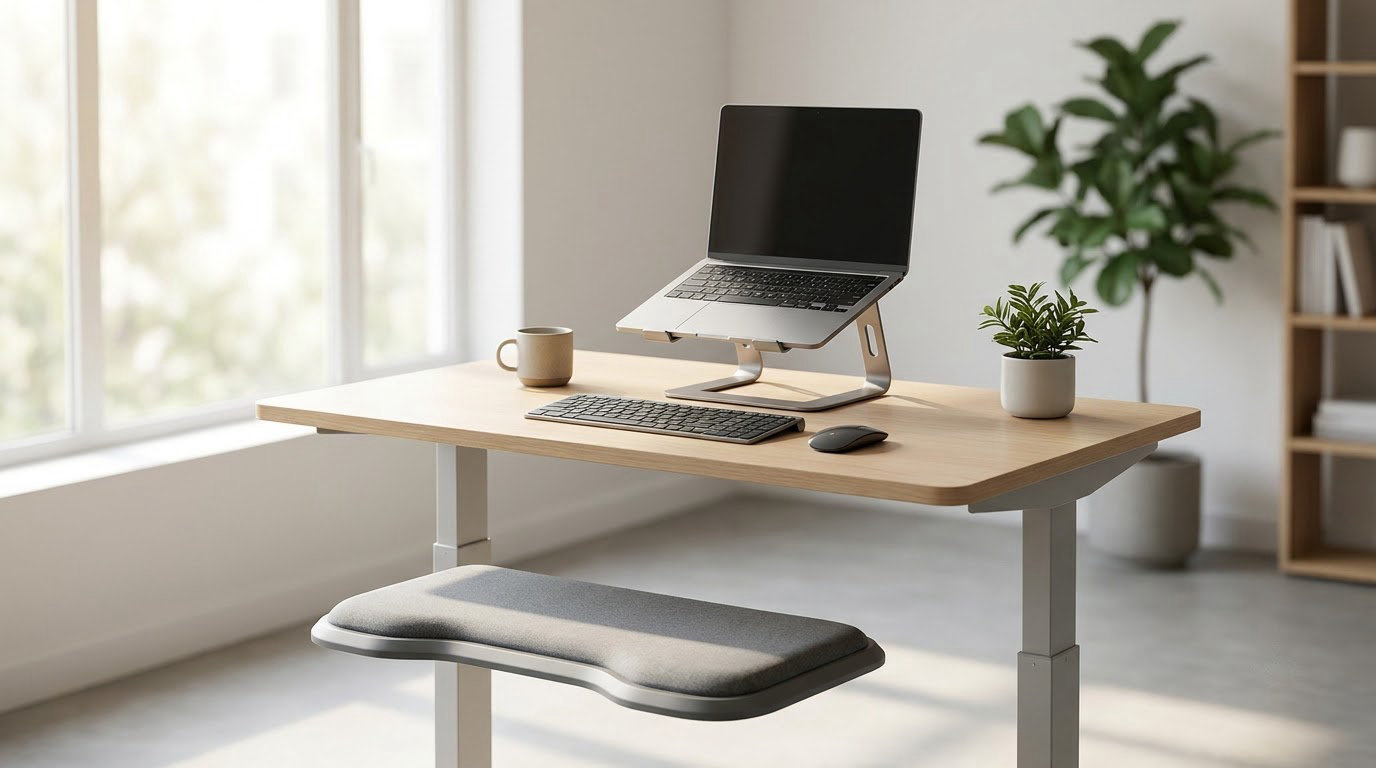
Sedentary behavior at work is any waking activity spent sitting or reclining at low energy expenditure, and the practical way to reduce it is to build small, frequent movement into real job tasks rather than chase a gym membership. Short standing or walking breaks every half hour, sit-to-stand desk options, walking or standing meetings, and a written break norm that managers actually protect do more for a desk-based day than almost anything else. This guide covers what to measure, which changes work for which roles, and how to keep them going past week two.
The advice here is general workplace information, aligned with guidance from the WHO, the CDC and the NIH. It is not medical advice. If you have pain, a chronic condition, are pregnant, or are recovering from an injury, ask your doctor or a physical therapist before changing how you work.
Table of Contents
- What You Need to Reduce Sedentary Behavior at Work
- Step-by-Step: How to Reduce Sedentary Behavior at Work
- Step 1: Measure the Problem Without Monitoring Employees
- Step 2: Identify the Work Tasks That Keep People Sitting
- Step 3: Build Movement Into the Workday
- Step 4: Change Meetings, Calls, and Communication Norms
- Step 5: Make Movement Safe and Inclusive
- Step 6: Support the Change With Leadership and Policy
- Step 7: Review Results and Adjust
- Common Mistakes When Trying to Cut Sitting at Work
- Frequently Asked Questions
- How often should employees move during the workday?
- Is standing all day healthier than sitting all day?
- How can I reduce sedentary behavior for desk-based employees?
- What workplace changes help workers in sedentary jobs?
- How should employers measure whether a sedentary-behavior program works?
- When should employees ask a healthcare professional for advice?
- How to Make Your Plan Stick
What You Need to Reduce Sedentary Behavior at Work
You do not need a wellness vendor to start. You need five things.
- A rough baseline. Ask staff which parts of the day are unavoidable sitting and which are habit. Two weeks of self-report is plenty to begin.
- Leadership support. If managers treat a movement break as lost time, nobody will take one. This is the single biggest predictor of whether any of it sticks.
- Sit-to-stand options. Height-adjustable desks, a phone or laptop perch for standing calls, a meeting table you can stand at.
- An accessible place to move. A stairwell that is pleasant, a corridor with space to walk, a route to the printer that does not involve standing still while waiting.
- Aggregate measures. Participation counts and survey responses, not individual activity logs. Health data at work has a way of turning into performance surveillance very fast.
If you only have one hour a week to spend on this, spend it on the break norm in Step 6. Everything else is secondary to whether people are permitted to stop working.
Step-by-Step: How to Reduce Sedentary Behavior at Work
Step 1: Measure the Problem Without Monitoring Employees
Start with a voluntary, anonymous baseline. Ask staff to estimate their longest unbroken sitting block, or to mark their typical day on a simple timeline. Focus groups work well because roles differ more than people assume.
Avoid wearables and browser plugins that report individual sitting minutes to a manager. That data tends to end up in a performance conversation, and once staff believe it will, participation drops and the numbers get useless.
Evidence the baseline is working looks like a clear map: for example, knowledge workers sitting eight-plus hours in blocks over 90 minutes, while warehouse staff sit less but stand more for the same total strain. You now know the two problems are different.
Step 2: Identify the Work Tasks That Keep People Sitting
Map sitting to actual job demands. The fix that works for a software team usually does nothing for a receptionist who cannot leave the desk, a driver, or a nurse on a ward round.
Typical buckets: computer work, back-to-back meetings, driving, warehouse picking, reception and switchboards, clinical and bedside work, and security or control-room roles. For each bucket, separate habitual sitting from unavoidable sitting.
Habitual is the printer at the elbow, the calendar with no gaps, the stand-up that happens seated. Unavoidable is a two-hour client call where audio quality matters. Only the first category is worth redesigning first.
Step 3: Build Movement Into the Workday
The single most useful habit is a short break roughly every 30 minutes, and you do not need it to be a workout. Standing up, refilling water, or walking one flight of stairs counts. The point is interrupting the bout, not replacing sitting with exercise.
Cornell’s 20-8-2 regimen makes this concrete: over each 30-minute cycle, sit for 20 minutes, stand for 8, and stretch for 2. Across a 7.5-hour day that works out to about 5 hours sitting, 2 hours standing, 30 minutes of movement, and roughly 16 sit-to-stand transitions. Do the arithmetic yourself and you will notice one thing immediately: the transitions are the useful part, not the standing.
Set the desk so it changes height every half hour on its own, so you do not have to decide. Put the printer across the office. Take the stairs. Take the long call standing if it suits you. Self-monitoring with a timer or reminder app is consistently reported as the most reliable trigger, because sitting is the default state and most people honestly do not notice it.
The evidence backs the general shape of this. A meta-analysis of 38 workplace interventions covering 26 studies and more than 10,000 participants found that interventions targeting sitting time itself performed better than ones nudging general physical activity.
Step 4: Change Meetings, Calls, and Communication Norms
Meetings are where desk jobs lose the most movement, because they add sitting on top of sitting. Set a default for 30 minutes rather than 60, and put an agenda in the invite so people can tell whether their presence is needed.
Then offer options. A walking meeting works best outdoors, kept short and voluntary. A standing meeting works for ten-minute updates in a room with a tall table. A phone-free movement period lets a call run while people walk or make tea, which suits anyone who would rather not perform alertness on camera.
Rooms fitted for standing meetings have been reported to run roughly 34 percent shorter, partly because people will not stand for a long hour. Make sure every option has a seated equivalent and that nobody is marked down for taking it.
Step 5: Make Movement Safe and Inclusive
Accessibility decides whether this plan is kind. Standing all day is not an upgrade; it brings its own problems, including leg fatigue, and it can be genuinely painful for anyone with limited mobility, a recent injury, or certain conditions. Standing desks should always be sit-stand, never fixed standing, and the sit position has to be the default.
Pregnancy, chronic fatigue, post-surgical recovery, and long shifts all change what a reasonable movement break looks like. Offer a shortened break, a seated stretch, or a different task instead of one rule for everyone.
Physically demanding jobs are the other half of this. Someone who lifts all day does not need a movement program; they need recovery. Judge sedentary load separately from overall physical load, which is why the mapping in Step 2 matters.
And keep participation optional. A plan that makes movement mandatory stops being a health measure and becomes a discipline problem.
Step 6: Support the Change With Leadership and Policy

Write the break norm down. If staff are told to be reachable every minute, no amount of encouragement will help, and packed calendars are named again and again as the thing that blocks real change.
Managers model it. A manager who takes walking calls and stands for one-on-ones makes it normal; a manager who calls people into a chair during a “quick check-in” undoes it. HR sets the policy, facilities decide where the stairs and walkways go, and an occupational health professional should sanity-check anything physical.
The framing matters most here. If reducing sedentary behavior is presented as a personal wellness choice, it lands as another thing employees should manage on their own time. It is an organisational condition, so the fixes belong to the employer.
Step 7: Review Results and Adjust
Run a trial of six to twelve weeks, then ask three things: how many people took part, what did they think, and what got dropped. Participation rates tell you whether the change reached people. Perceived usefulness tells you whether it survives contact with a real workload.
Keep the options people used and quietly retire the ones nobody touched. Then run it again, because desk and staffing arrangements change faster than any program you write.
One honest limit: workplace interventions have been reported cutting occupational sitting by around 40 minutes per eight-hour day, which sounds modest, and health-outcome evidence for sit-stand desks specifically remains mixed. Sitting time drops reliably; the health benefits are harder to prove. None of this replaces medical care for anyone with a health condition.
Common Mistakes When Trying to Cut Sitting at Work
Handing out gym memberships. Employees tell researchers that “just exercise more” feels dismissive of a desk-bound day. Evidence points the same way: the Lancet analysis found high activity volume does not fully offset high sitting time. Correction: target the sitting itself. Tip: measure sitting hours before you measure step counts.
Prescribing one break schedule for every role. A driver and a developer cannot take the same two-minute stand. Correction: map tasks first, then set role-specific options. Tip: pilot with two contrasting teams, not the whole company.
Tracking individual sedentary time. Once staff think movement data feeds their review, honest participation stops. Correction: report only group-level numbers. Tip: ban any tool that emails an individual manager a daily activity digest.
Ignoring job design. Nine hours of back-to-back meetings cannot be fixed with reminders. Correction: shorten meetings, move the printer, add a standing table. Tip: change one environmental default a month and let it take hold.
Making movement compulsory. Forced walking meetings and mandated stretching get resented, and long or forced walking meetings are specifically criticised. Correction: offer options, never require one. Tip: ask staff which option they would actually use and drop the rest.
Overlooking accessibility. Standing-only advice excludes people with mobility limits, chronic pain, fatigue or pregnancy. Correction: sit-stand as standard, seated equivalents always available. Tip: have someone outside the usual demographic test the plan before launch.
Judging success by participation alone. A well-attended program that nobody can fit into a real week is a failure. Correction: ask whether people could keep doing it after the pilot ended. Tip: run the survey at week twelve, not week one.
Frequently Asked Questions
How often should employees move during the workday?
Most workplace guidance suggests getting up and moving briefly every 30 minutes or so, and avoiding unbroken sitting stretches longer than about an hour. The exact threshold matters less than the habit of interrupting long bouts. Short transitions count: standing, stretching, or walking to another room. Over a full day, frequent short breaks tend to matter more than one long break, and the goal is variation in posture rather than exercise volume. If you have a medical condition, ask your clinician what is appropriate for you.
Is standing all day healthier than sitting all day?
Not necessarily. Standing replaces sitting, but holding one position for hours creates its own problems, including leg fatigue, swelling and lower back discomfort. Evidence supports sit-stand desks, where alternating between sitting and standing is the goal, over fixed standing desks that force one position. The most useful element is the transition itself: the change in posture between sitting and standing is where much of the apparent benefit appears. Treat standing as an option to vary into, not a target to hit.
How can I reduce sedentary behavior for desk-based employees?
Combine several small changes rather than one big one. Offer height-adjustable desks that switch position every half hour, set a default of 30-minute meetings with agendas, allow one walking or standing option per call, and protect a genuine break window in the schedule. Self-monitoring with a timer helps because sitting is otherwise unnoticed. For remote staff, replace the lost cues of a commute by building movement into start-of-day and end-of-day routines and scheduling walking calls.
What workplace changes help workers in sedentary jobs?
Environmental changes tend to outlast willpower. Put printers and bins away from desks so walking has a reason, make stair routes pleasant and obvious, and furnish some meeting rooms with standing-height tables. Reported figures suggest workplace interventions can cut occupational sitting by around 40 minutes across an eight-hour day, and standing meeting rooms have been linked to meetings roughly 34 percent shorter. For remote roles, the equivalent is a standing desk plus scheduled movement cues, since the missing commute removes incidental activity.
How should employers measure whether a sedentary-behavior program works?
Use participation and experience measures, not individual monitoring. Track how many people used the available options, survey whether they were workable in a real week, and watch whether sit-to-stand desks and meeting practices stay in use after a pilot ends. Avoid wearables or plugins that send individual activity data to managers, because that destroys trust and the data quality with it. Health-outcome effects for standing desks remain mixed in the research, so set realistic expectations around sitting time rather than promising clinical benefits.
When should employees ask a healthcare professional for advice?
Ask a doctor, physical therapist or occupational health clinician before starting a movement plan if you have persistent back or neck pain, a chronic condition such as diabetes or cardiovascular disease, are pregnant, are recovering from surgery or injury, or have mobility limitations. The same applies if an existing condition makes standing or walking uncomfortable, since a generic program built for able-bodied desk workers may not suit you. Workplace occupational health services can often adapt workstation assessments, and a doctor can advise on safe limits specific to your situation.
How to Make Your Plan Stick
Ask employees this week where sitting is unavoidable and which of it is habit. Pilot one or two changes inside a real workflow, such as 30-minute meetings by default and a standing option in one room, rather than announcing a program. Protect the participation time in policy so nobody has to spend it on guilt, then come back in eight weeks and ask whether it was workable. Expand only the options that people kept using.
Updated for October 2026. If any part of this applies to a health condition you have, your doctor or occupational health clinician can tell you which parts to adjust.