
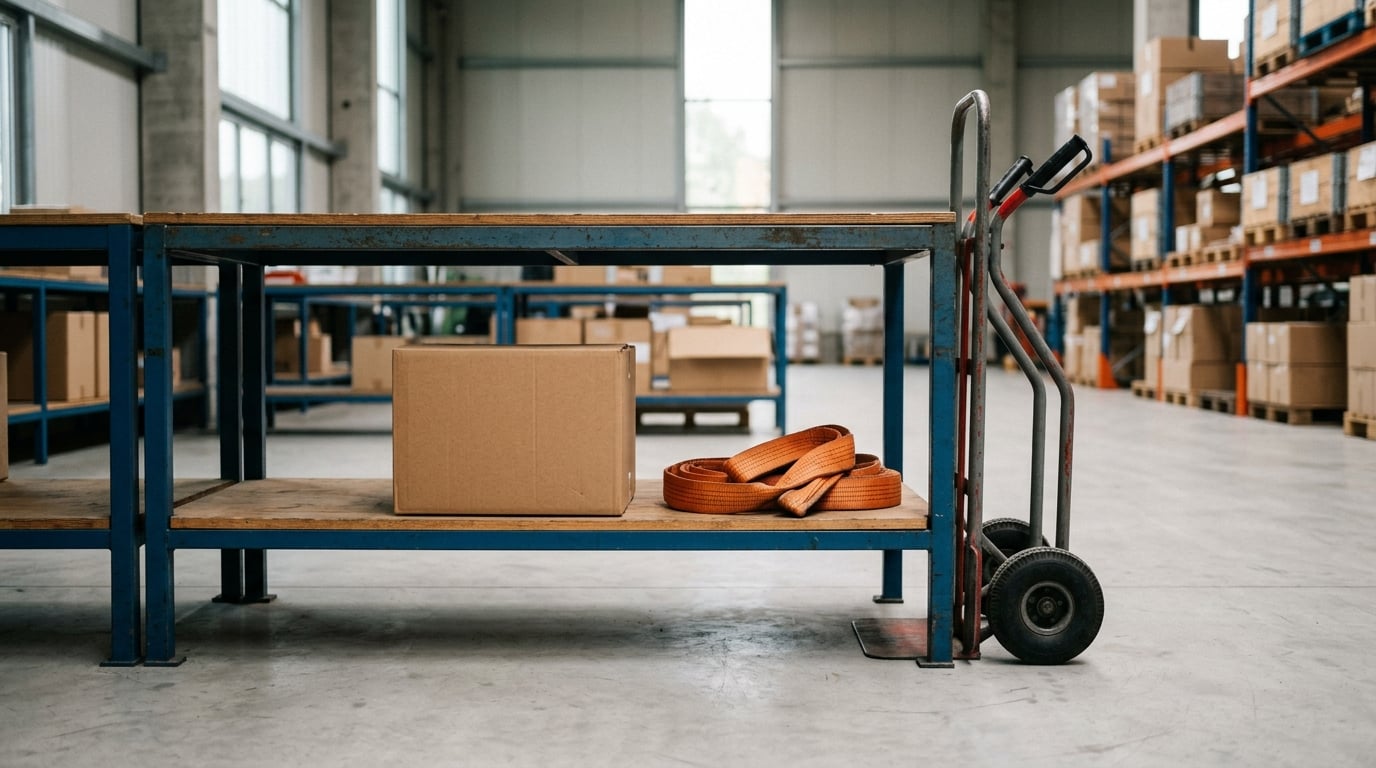
Most back injuries from lifting happen because three things collide: a load that is heavier than it looks, a technique that puts the spine through a bad position, and a body that is already tired. Learning how to prevent back injuries from lifting comes down to controlling those three in that order, and the good news is that most of the control sits with the task, not with heroic effort from the worker.
Below is the sequence I would put in a workplace handbook or a toolbox talk, written for employers, safety teams and the people doing the lifting. It takes about fifteen minutes to read and about a week of practice to make stick.
Table of Contents
- The Key Actions for Safe Lifting
- What You Need
- Step-by-Step: How to Prevent Back Injuries From Lifting
- Common Mistakes
- Frequently Asked Questions
- How much weight should I lift at work?
- Is it better to squat or hip-hinge when picking something up?
- Do back braces prevent back injuries?
- How do I tell if a back injury is a muscle strain or something more serious?
- What should I do if my back hurts after lifting something heavy?
- How do I get a whole team to lift safely in practice?
- Conclusion
The Key Actions for Safe Lifting
These are the actions that do most of the work, in the order they matter.
- Bend at the hips and knees, not at the waist, to keep the spine in one long line.
- Keep the load close to your body so the force stays near your centre of gravity.
- Turn with your feet, never by twisting through the lumbar spine under load.
- Set your feet shoulder-width apart for a base of support you can actually balance on.
- Test the load with a tilt before you commit to carrying it anywhere.
- Rest before fatigue, because tired technique is the technique that fails.
A second group matters just as much: use a cart, dolly or pallet jack when one exists, split a heavy item into smaller pieces, use a step stool to raise the load instead of lifting it higher, and ask a partner rather than attempting an awkward solo lift. Prevention is not one movement repeated correctly. It is the whole setup around the movement.
What You Need
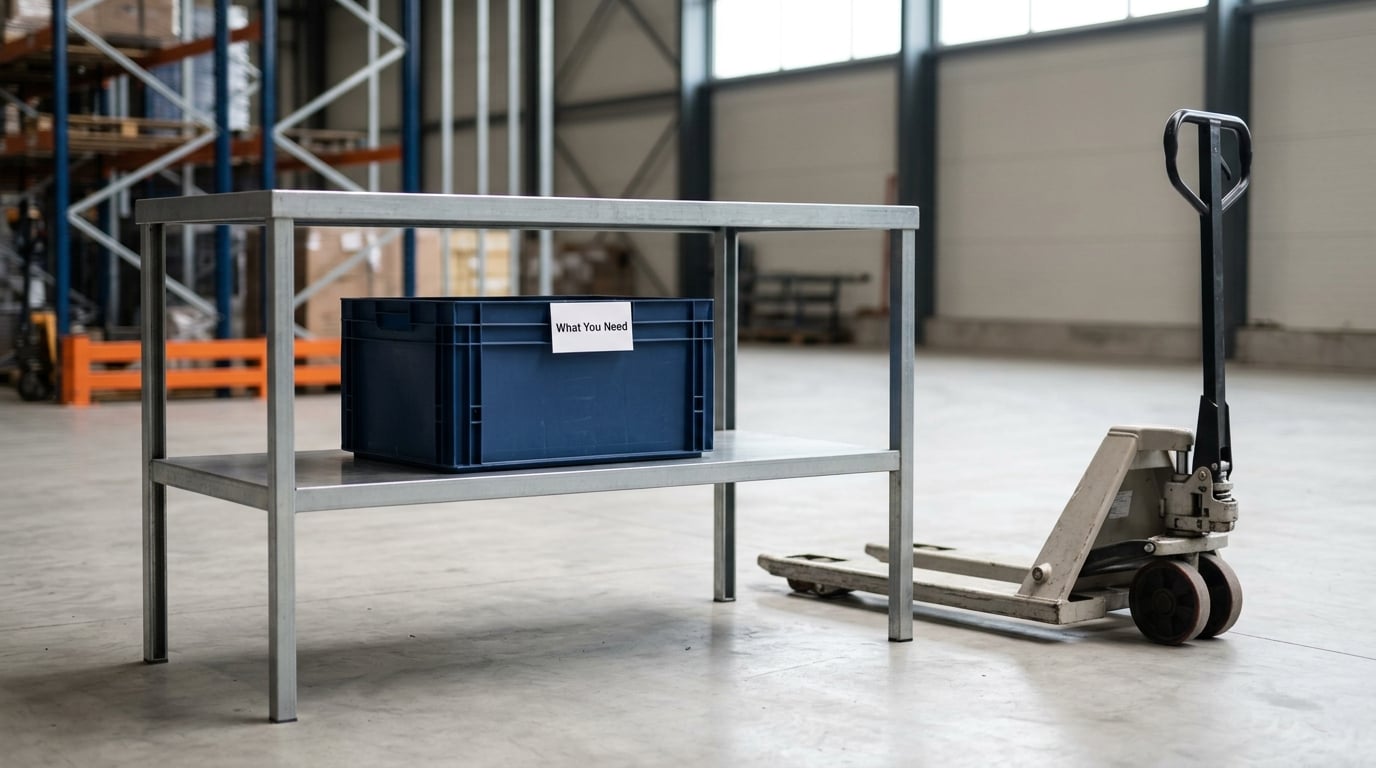
You cannot fix lifting injuries with technique training alone, which is the point most safety meetings miss. A worker who is handed a 50 kg sack at knee height in a cramped truck bay will get hurt whether or not they remember to keep their back straight. The equipment and the workspace are not supporting detail. They are the intervention.
Mechanical aids
Whatever moves the load without a spine gets first priority: a wheeled cart or platform trolley for anything that travels, a hand truck or sack barrow for bags and bins, a pallet jack or scissor lift table for repeated picks, and a lifting strap or hoist for loads that cannot be split. A footstool or adjustable platform is cheap and removes more lifts per shift than any training session.
Workspace conditions
Look at where the lift actually starts. Loads stored on the floor force the worst possible start position, so bring the heavy items up to waist height as a rule, not an exception. You also need enough clear floor and elbow room to take a step back without tripping, decent lighting so you can see the base of the load, and footwear with a closed, non-slip heel.
Training, supervision and a reporting route
Practised, coached technique beats a poster. One-off toolbox talks decay within weeks, while supervised practice with feedback on real loads holds. Employers also need a named person workers can go to when a load is beyond them, and a route for reporting early symptoms that does not feel like a career move.
Simple written limits
Write down your own numbers so nobody has to guess mid-shift. A single page covering the maximum solo load, the rule that anything awkward or above shoulder height is a two-person job, and the equipment available on each floor removes most of the ambiguity. The most common complaint in occupational health conversations is not ignorance. It is not knowing where the line sits.
Step-by-Step: How to Prevent Back Injuries From Lifting
1. How to Prevent Back Injuries from Lifting Before the Lift
Most injuries are decided before the object leaves the ground, during the three seconds when a person decides whether they can handle it. Decide deliberately rather than by optimism.
Where is the load going? If it needs to travel more than a few steps, a cart is faster and safer than carrying. Can it be split? A stack of ten folders or a case of water becomes two manageable loads instead of one bad one. Then test it: put a hand on the edge and tilt it. If the contents shift, slide or pour, the load is not a solid object and it does not get carried.
Use this as a rough guide for solo manual handling, and treat every value as a ceiling rather than a target.
| Situation | Treat it as a two-person or mechanical job when | What to do |
|---|---|---|
| Floor to waist height | Over 23 kg (50 lb), or awkward to grip | Use a lift aid or a step platform to start higher |
| Waist to shoulder height | Any load you cannot hold within a few centimetres of your body | Get it down or get a second person |
| Overhead or above shoulder height | Almost always | Use a step stool, rack, or hoist. Do not stack a load on a load |
| One-handed or single-arm loads | Always | Split the load or use both hands on a stable grip |
| Repetitive, under 23 kg but every few minutes | Repetition itself, more than the weight | Rotate the task, add a cart, shorten the cycle |
| Bags of loose material, bins, patients | When the load shifts or deforms | Contain it, split it, or use a mechanical aid |
The 23 kg figure is not a magic number. It is the practical stand-in most employers use for a two-person threshold, and it assumes a good grip, a clear floor, an unlimited time budget and a fresh worker. Remove any one of those and the ceiling drops.
2. Set Up a Clear, Stable Workspace
Clear the landing area first. Cable runs, bins in the walkway, a pallet in the wrong place and a scissor lift parked across the aisle all turn a controlled lift into a stumble with a heavy object in your hands.
Then position the load. Approach it on the foot side rather than the handle side, so the base of the load is visible before you commit. Make sure you can stand square to it with your feet clear, and that you will not need to step backwards while loaded.
Check the light. A shadow across the floor is how people put a hand into a stack of steel or misjudge a step. If a work area is dim, it is a lifting hazard, not a lighting preference.
3. Use a Neutral Back and Safe Body Mechanics
Neutral spine means one long line from ear to shoulder to hip, with a slight natural curve rather than a flattened or rounded back. You are not trying to lock into a shape. You are trying not to end range on the lumbar spine while holding something heavy.
Two lifts get you to the floor. The hip-hinge pushes the hips back and folds at the hip, which is the better default for most floor-level picks and for anyone who finds deep knee bends painful. The squat drops straight down between the knees and rises back up, which works when knee clearance is generous and the object sits low and centred. If a 20 kg object has to travel, reach slightly far out, or land in a narrow truck bed, the hip hinge is the honest answer.
Whichever you use, keep the load within a few centimetres of your torso. The multiplier on spinal load rises steeply as an object drifts away from your centre of gravity, and the difference between holding a box at your chest and holding it at arm’s length is larger than most people expect.
Brace before you lift, take a full breath, and drive up through your hips and legs with a smooth, continuous effort. Jerking, snatching and twisting while loaded are what turn a heavy task into an injury. To change direction, step and pivot with your feet. When you set the load down, reverse the same sequence under control rather than dropping it from height.
One honest note: clinicians increasingly emphasise capacity over perfect form. Repeated lifting you have built up to is less dangerous than a single heroic lift, and there is no single correct lifting technique for every body and every task. Capacity and technique are complements, not substitutes.
4. Coordinate Team Lifts and Heavy or Awkward Loads
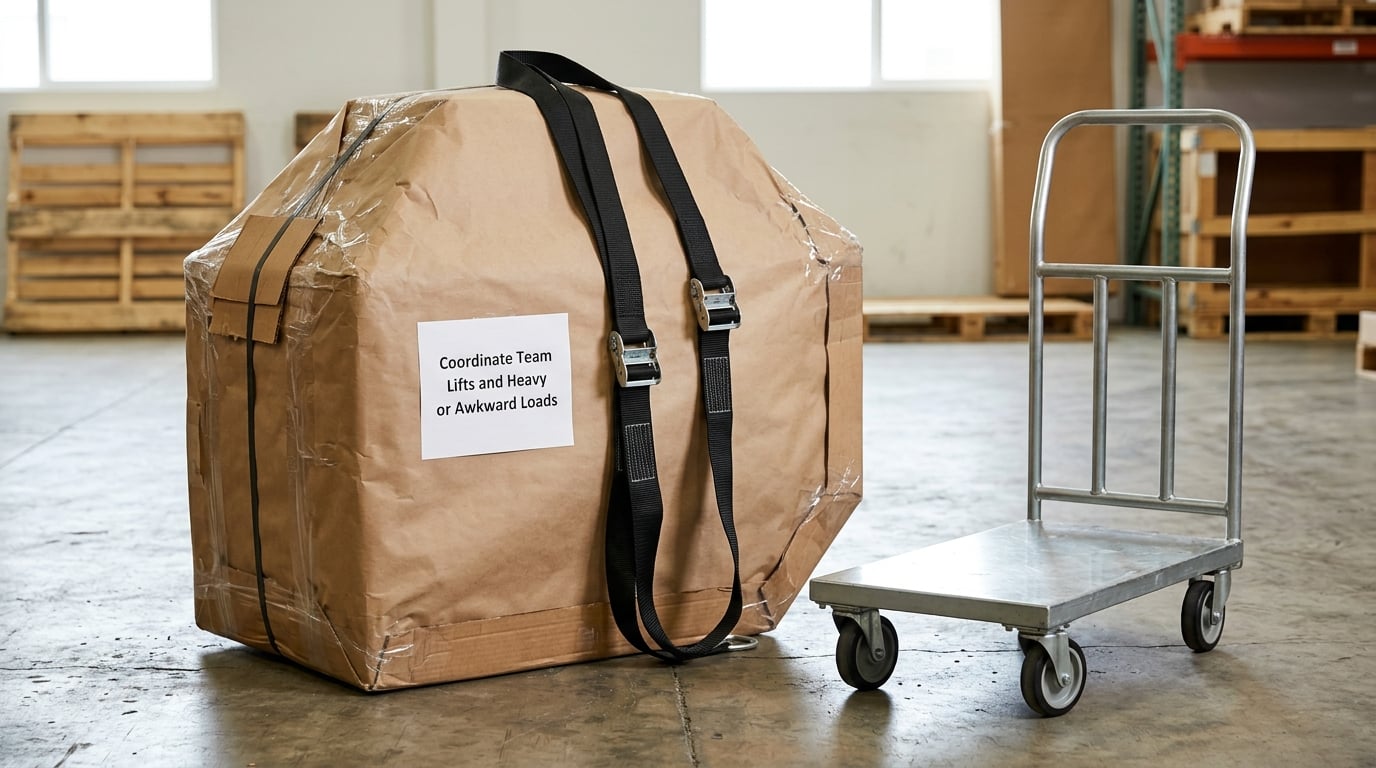
Team lifts fail on communication far more often than on strength. One person counts, both people grip, both people lift on the count, both walk in step, and one person calls the set-down. Match your heights where you can, and agree the route before you lift rather than after.
Have a rule for stopping. If a grip slips, the path becomes blocked, or one person’s view is obstructed, everyone sets the load down on the count. That has to be a normal sentence to say out loud, otherwise nobody says it. Awkward shapes, flexible bags and moving patients belong in the two-person or mechanical category even when they are light, because the difficulty is in the object, not the number on the label.
Workplaces also need to give people permission to decline a load without it becoming a performance issue. In many teams the real hazard is social, not mechanical: the person who asks for a hand is treated as slow, so they go ahead alone. A safety manager who wants to prevent back injuries has to change that norm explicitly, in writing, where the hero gets congratulated.
5. Build Safe Lifting Into the Workday
The last hour of a shift is when the worst lifts happen, because attention, grip strength and the willingness to ask for help are all at their lowest. Fatigue is a load multiplier that no technique corrects. Build breaks in before you need them, and rotate repetitive picking tasks so the same spinal movement is not repeated for hours.
Adjust the workload rather than the worker. If a zone’s pick rate assumes a two-person lift and the team is down one person, the answer is a rate change or a cart, not a pep talk. Supervisors need training on what to watch for, because a technique error caught in the first ten seconds is a conversation, and the same error caught on a video after the fact is a disciplinary meeting.
Refresh the training on a schedule and re-run practical sessions when tasks, equipment or layout change. Keep housekeeping on the checklist as a lifting control, not a tidiness matter, since a clear floor is what makes a controlled set-down possible. And log near-misses. A record of the loads that nearly went wrong tells you which equipment to buy next, which is a far better use of a safety budget than a generic training rollout.
Common Mistakes
Each of these comes with a fix you can observe and coach, which is what separates useful training from a poster.
Twisting while loaded. The fix is to move the feet. Step and pivot, keep the load at waist height, and if the path requires a sharp turn, set the object down and re-plan the route.
Reaching too far. People lean because the near end of the load is not a handhold. Fix the storage, not the spine: bring items closer, use a platform, or accept that an awkward reach means an aid.
Rushing under time pressure. Deadline lifts carry more load and more twist. The fix is a buffer at the end of the cycle, a slightly lower rate near shift end, or a rule that a rushed lift gets abandoned and started over.
Lifting with one hand or one arm. Carrying a box on the hip or under one arm is a long lever through a rotated spine. Fix it with smaller loads, a cart, or a shoulder-height carry with both hands for short distances only.
Ignoring the first twinge. A sharp pain during a lift is information. Stop, do not repeat the lift, and get it assessed. Most of the worst outcomes come from a person finishing the task anyway.
Treating training as paperwork. A completed training record is not a lifting programme. If the technique is never practised under load with feedback, it will not appear when a shift gets busy and the cart is broken.
Two more worth naming. Belts and back braces feel reassuring, and workers report that they do not change injury rates, so treat them as comfort rather than protection. And the old instruction to always keep your back perfectly straight is too simple to serve as a whole technique, which is why coached practice beats slogans.
Frequently Asked Questions
How much weight should I lift at work?
Most employers use 23 kg (50 lb) as the ceiling for a solo two-handed lift at waist height with a good grip and a clear route. Treat it as a maximum, not a target. Overhead loads, one-handed loads, awkward shapes, repetitive cycles and a tired worker all push the safe figure down. Anything above your site limit should go to a cart, a hoist or a partner.
Is it better to squat or hip-hinge when picking something up?
Use the hip hinge for most floor-level picks, especially if deep knee bends are painful, and use the squat when the load is low, centred and you have clear knee room. Neither is safer on its own. The deciding factors are grip quality, how far the object sits from your body, whether you can stand square to it, and whether the object will shift once lifted.
Do back braces prevent back injuries?
Support belts are common in manual handling, and workers report that they feel reassuring, but they have not been shown to reduce injury rates on their own. They can help with comfort and confidence, and some people use them for lifting support during rehab under clinical guidance. They do not replace load limits, mechanical aids or practised technique.
How do I tell if a back injury is a muscle strain or something more serious?
A strain is usually localised pain on one side or in the middle of the back, worse with movement, and it settles within days. Get urgent medical help if you have numbness in the saddle area, difficulty passing or controlling urine, loss of bladder or bowel control, leg weakness that is getting worse, fever, or pain following significant trauma. See a clinician if pain is not improving after a week or two.
What should I do if my back hurts after lifting something heavy?
Stop lifting, and do not test it by repeating the movement. Change position gently, use heat or ice as you prefer, and keep moving with comfortable range. Seek assessment if the pain is severe, radiates down a leg, or is accompanied by numbness or weakness. Report it at work so the task gets reviewed rather than the same lift being handed to the next person.
How do I get a whole team to lift safely in practice?
Practise the technique on real loads with feedback, not in a one-off toolbox talk. Set written limits, make equipment the default choice, and give people explicit permission to call for help or decline a load without it counting against them. Rotate repetitive tasks, schedule breaks before fatigue, and review near-misses to decide where to spend the next part of the safety budget.
This article is general information about manual handling and workplace safety. It is not medical advice. If you are managing an existing back condition, are returning to lifting work after an injury, or have ongoing pain, speak with a doctor, physiotherapist or occupational health professional before changing your lifting limits.
Conclusion
Start with the load, not the technique. Clear the floor, raise the pick height, test the object with a tilt, and reach for a cart, a hoist or a partner the moment it is heavy, awkward, overhead or repetitive. Keep it close, hinge at the hip, turn with your feet, and stop when you are tired rather than when you are finished.
Then treat the first twinge as a report, because learning how to prevent back injuries from lifting is mostly a matter of deciding early, in writing, where the line sits. The teams I have seen do best are the ones that buy the equipment first and train second.
Reviewed for accuracy in October 2026.